The cybersecurity leader shares how its Apex One solution adds value for customers across the globe
Trend Micro Incorporated a global leader in cybersecurity solutions, announced that it has been named a Leader in Gartner, Inc.’s 2019 Magic Quadrant for Endpoint Protection Platforms, in evaluation of its Apex One endpoint security solution.
Trend Micro has been named a Leader in every Gartner Magic Quadrant for this category since 2002 and believes this latest recognition proves how its strategy and performance continue to meet the evolving demands of global customers.
“We are delighted to once again be named a Leader in Gartner’s Magic Quadrant for Endpoint Protection Platforms,” said Wendy Moore, vice president of product marketing for Trend Micro. “Our Apex One solution redefined endpoint security by combining automated detection and response with a comprehensive range of threat defense capabilities, all available from a single agent. From our perspective, this recognition is a testament to our commitment to innovation and performance in an ever-changing market.”
Apex One is powered by industry-leading threat intelligence and leverages Trend Micro’s cross-generational layered approach to security, known as XGen, to apply the right threat defense technique at the right time.
Trend Micro’s comprehensive support for both current and legacy/out-of-support operating systems and global presence combined with localized support to help meet regional regulatory and technical needs are also standout offerings.
The endpoint is increasingly the frontline in the war against cyber-threats and IT teams are overwhelmed by the volume of alerts they must manage. Following the success of Apex One, Trend Micro has launched its XDR solution, becoming the first to offer detection and response capabilities integrated across email, network, endpoint, server and cloud workloads.
VMware has confirmed signing definitive agreements in Cloud Computing space to acquire Pivotal Software and Carbon Black for close to $2 billion each
Leading Cloud and Mobility provider VMware has scooped two mega-acquisition deals for a combined total of $4 billion (approx.). With these acquisitions, VMware has further expanded its horizon into Cloud-native IT networking and security solutions powered by Big Data and emerging Cloud Computing technologies. While Pivotal Software would help VMware deliver the most comprehensive enterprise-grade Kubernetes-based portfolio for modern applications, Carbon Black’s expertise in cybersecurity would help secure VMware’s Cloud-native framework with the Endpoint Protection Platform (EPP).
Endpoint Protection Platform (EPP) _ Carbon Black
Two Cloud Computing Acquisitions — Both Focusing on Developing IT Leadership around Cloud and Security
Cloud ecosystem is transforming at a massive scale, especially with the applications of AI and ML becoming the core of all major IT functions.
VMware is acquiring Pivotal and Carbon Black to address key strategic IT priorities. These priorities focus on “building apps with a modern approach and protecting enterprise workloads and clients.”
In an official press release, VMware has laid out the roadmap for the future of Cloud and IT Security. It stated —
With Pivotal, VMware will be able to deliver an integrated modern apps portfolio combining Pivotal’s next-generation developer platform and VMware’s Kubernetes portfolio.
With Carbon Black, VMware will be able to provide a next-generation security cloud with Carbon Black’s protection suite and VMware’s intrinsic security assets.
CB ThreatHunter
We are speculating that Carbon Black’s unique Partner Program would benefit VMware customers in the coming years.
Adding these companies to VMware’s portfolio will allow VMware to deliver software solutions that enable customers to build, run, manage, connect and protect any app, on any cloud and any device.
In an interview with AiThority.com, StackState CTO Lodewijk Bogaards said, “Modern IT landscapes are large and can generate petabytes of data in small periods of time. Applying AI on these amounts of data is impossible without Cloud technologies. Having access to infinite resources, a good understanding of how elements of the landscape are connected, while at the same time being able to reason transparently about costs are key aspects that make it possible to make well-informed decisions on how to spend resources on AI tasks.”
Pivotal’s Role in Transforming VMware’s Container Service with Sophisticated Cloud Computing
VMware and Pivotal share a long history of collaboration and joint innovation. Pivotal, with its leading-Edge of modern software development, has been enabling organizations with a powerful set of assets including a leading developer-centric platform, tool, and services that accelerate modern app development. Additionally, Pivotal is a major contributor to the Spring developer framework, which sees more than 75 million downloads per month. The company is fully embracing Kubernetes with the recent launch of Pivotal Spring Runtime for Kubernetes and the upcoming Pivotal Application Service for Kubernetes.
As VMware’s latest addition, Pivotal would be a key element in furthering the collaboration that played out in 2018 as VMware Pivotal Container Service (PKS).
VMware has increased its Kubernetes-related investments over the past year with the acquisition of Heptio, and the Kubernetes founders, to become one of the top three contributors to Kubernetes. The combination of Pivotal’s developer experience and assets with VMware’s IT expertise and infrastructure will help deliver a comprehensive portfolio of products, tools, and services necessary to build, run and manage modern applications on Kubernetes infrastructure with velocity and efficiency.
At the time of this acquisition, Pat Gelsinger, CEO of VMware, said —
“Kubernetes is emerging as the de facto standard for multi-cloud modern apps. We are excited to combine Pivotal’s development platform, tools and services with VMware’s infrastructure capabilities to deliver a comprehensive Kubernetes portfolio to build, run and manage modern applications.”
Pat added, “Importantly, adding Pivotal to our platform, accelerates our broader Any Cloud, Any App, Any Device vision and reinforces our leadership position in modern multi-cloud IT infrastructure.”
Rob Mee, CEO, Pivotal, added,
“The time is ideal to join forces with VMware, an industry leader who shares our commitment to open source community contributions and our focus on adding developer value on top of Kubernetes. VMware has a proven track record of helping organizations run and manage consistent infrastructure in support of mission-critical applications, and our two companies have already built a strong foundation on our successful VMware PKS collaboration. We look forward to continuing our work with VMware to provide even more value to customers building modern applications.”
“The VMware Board of Directors is committed to creating value for all stockholders,” said Karen Dykstra, Chairperson of the Special Committee of VMware’s Board of Directors.
Karen stated —
“After a thorough and independent evaluation with its advisors, and working closely with the VMware management team, the Special Committee recommended the Board approve this transaction with Pivotal given its strong strategic and long-term value to the company and its customers.”
List of VMware Acquisitions
VMware recently completed the following acquisitions.
Avi Networks, a leader in multi-cloud application delivery services, that will further enable VMware to bring the public cloud experience to the entire data center—automated, highly scalable, and intrinsically more secure with the ability to deploy applications with a single click.
Bitfusion, a pioneer in virtualization of hardware-accelerated devices with a strong focus on GPU (graphics processor unit) technology, which enables VMware to make GPU and FPGA capabilities efficiently available for AI and Machine Learning workloads in the enterprise.
Uhana, a company that is pioneering the use of Deep Learning and real-time AI in carrier networks and applications, to automate network operations and optimize application experience. Uhana brings AI techniques into VMware’s software approach for the telecom industry, helping them accelerate their journey to 5G.
Veriflow, an innovator in network verification, assurance, and troubleshooting, which helps customers model, analyze, and verify their hybrid networks to allow IT teams to operate, increase the security of, and build resilient networks. Veriflow’s technology provides problem detection for critical network issues (physical and virtual).
This section highlights VMware‘s recent business-related strategic announcements.
Geographical Market Expansion
VMware Cloud on AWS is now present in 16 regions globally, with the recent addition of the Seoul and Sao Paulo AWS regions.
Technology Integrations
In July, Google Cloud and VMware announced Google Cloud VMware Solution by CloudSimple, a new service that will allow organizations to run their VMware workloads in Google Cloud Platform, providing customers with choice and flexibility to run VMware workloads on-premises, in a hybrid architecture, or in the cloud.
VMware unveiled VMware HCX Enterprise, which accelerates large-scale live migrations of VMware vSphere and non-vSphere workloads to help customers operationalize multi-cloud and hybrid cloud transformations. VMware, Inc.
In June, VMware Secure State was made available on CloudHealth by VMware. VMware Secure State solves problems such as those recently seen in the industry, providing a security solution for DevOps-friendly cloud-native applications.
In addition, VMware was recognized in the Leaders quadrant in Gartner’s Magic Quadrant for Unified Endpoint Management Tools1 .
VMware Essential PKS 1.15 was made generally available in July, shipping upstream Kubernetes 1.15.1 and adding support for Project Harbor.
The Never-ending Confusion between Demand Generation and Lead Generation:
The reason many B2B marketers even look-up for the meaning of Demand Generation is often to distinguish it withLead Generation. Some even use the terms interchangeably. But, there is a solid line between the functions of both these terms. Nevertheless, Lead Generation can be considered as a subset of Demand Generation. We will come to this later.
To make things clear:
Demand Generation is all about creating awareness/interest about your company and its products/services. Here, you give away content freely just to build awareness about your company, products, or services.
On the other hand, Lead Generation deals with using content and various otherMarketing tactics to collect details of prospects so that you can contact them in future.
Generally, “gated” content is provided in order to collect the contact information of the leads. For e.g., providing a research report after prospects fill in a form with their names and e-mail IDs.
Demand Generation basically deals with creating a want for your offerings.
But Demand Gen doesn’t stop here! It may or may not amount to closed deals, but supports the entire Marketing and Sales cycle. It covers every touchpoint right from initial prospect toLead Nurturing and Sales Enablement.
Demand Gen goes all the way to the first sale and cross-sell, and beyond that. It deals with all visible and non-visible touchpoints before a lead even enters your Sales funnel, and ends at client retention initiatives.
Marketo says, if done properly, Demand Generation can create awareness around the issues most relevant to your business, provide Sales the qualified leads it need to close deals, and position Marketing as a revenue generator instead of a cost center.
33% of professionals stated that generation ofMarketing Qualified Leads (MQL) was their primary metric for determining success of a Demand Generation campaign, a report revealed.
Four Important Stages of Demand Generation
Among the various touchpoints across the buyer journey, there are four important stages that form part of a Demand Gen strategy:
ØBrand Awareness
ØInbound Marketing
ØSales Enablement
ØClient Retention
Brand Awareness
It is the very first stage in the Demand generation process.Brand awareness denotes the degree of consumer recognition of a product or service by its name. It measures a potential customer’s ability to recognize a brand image and associate it with a certain company’s products or services.
Methods of Brand Awareness:
Brand identity and image
Thought leadership
Events and seminars
Social Media presence
PR management
Comprehensive Product development
Events have been proven to generate the most number of leads in the B2B ecosystem, a report by MarketingCharts says.
Again, many marketers think Inbound Marketing and Demand Generation are the same. But these aren’t.
Inbound Marketing is a strategy that utilizes many forms of pull Marketing to create brand awareness and attract new business. It helps attract qualified prospects to turn them into leads and eventually, into paying customers.
As per Gartner,Sales Enablement consists of “the activities, systems, processes, and information that support and promote knowledge-based Sales interactions with clients and prospects.”
In a nutshell, Sales Enablement is all about providing your sales teams with the required knowledge, tools, and training to help them sell better and sell more.
Demand Generation forms part of any B2B, B2C, or B2G Marketing campaign. It directly contributes to the revenue of the organization owing to its capability of combining the marketing and sales verticals. In a time when thebuying process is changing rapidly, it makes sure your Marketing efforts are relevant and influential to the core.
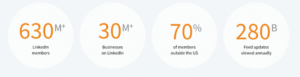
LinkedIn announced the launch of their LinkedIn Insights and Research page to provide better Marketing Insights to Marketing and Sales teams. This is a new feature within LinkedIn’s existing platform – Success Hub for Marketers. Currently, LinkedIn has 645 million members and 30 million businesses from across the globe. Marketing Insights’ launch further empower Marketing teams to promote their connection and ideas at a central destination for professional networking. With this launch, LinkedIn has ensured that every data-driven marketer has access to a robust source of insights around people, industries, and advertising.
In an official LinkedIn blog, Jennifer Brett, Head of North American Insights, Marketing Solutions, wrote –
“With so much data, though, we know it can be difficult to wrap your arms around everything and pinpoint the most valuable information for your needs.”
Jennifer continued,
“Great Marketing is both an art and a science. The former is fueled by the creativity and unique skills of your team. The latter is driven by high-quality data that’s both accurate and actionable — this is where LinkedIn can lend an assist. In the Insights and Research hub, you’ll find a wealth of useful information divided across three categories.”
What LinkedIn’s Marketing Insights Do?
LinkedIn Insights would power Marketing, Sales, Advertising and related efforts to drive business growth. For Marketing teams of any size, LinkedIn can lend an assist with the Insights and Research hub. This hub is an accessible repository of useful information divided across three categories.
To learn about your audiences on LinkedIn at an aggregate level and to target them with campaign strategy and drive more effective reach and engagement.
People Insights also taps location data, skill matrix and the kind of influencers they follow, which makes Marketing Insights even more relevant to promote content that is most likely to resonate with specific audiences.
A key addition to Marketing Insights, Industry-related content is available here. It also provide including vertical specific insights from MarTech and SalesTech ecosystems. Marketing teams can work with “ample data pertaining to an assortment of verticals such as Financial Services, Tech, and Healthcare.”
Industry Insights at LinkedIn would enable marketers to dive deep into industry-related practices and ascertain what leaders and benchmark companies do to demonstrate their effectiveness in targeting various audiences at different ‘buying’ stages.
This section is designed to help you fully understand the LinkedIn advertising landscape from every angle so you can measure and maximize your Marketing impact.
– Guidance on sophisticated performance measurement so you can better match your ad strategy with core business objectives
– Exploration of branding techniques, tactics and measurement on the platform
– Research and advice on aligning your Sales and Marketing departments to develop a cohesive approach on LinkedIn
According to MarTech RADAR, we find top companies increasingly focusing at driving their quality and quantity of content through various platforms. LinkedIn is among the top destinations to access benchmark Marketing Insights relate to various audiences, industries and geographies.
New CMO Council Study Reveals Regardless of Generation, Region or Gender,
Omnichannel IS the Critical Channel of Choice
It’s official – Physical and digital engagement is paramount for effective customer engagement. No matter what age, gender or location, consumers around the world agree that when it comes to brand interactions, personal, trusted and reliable omnichannel engagement is THE preferred option and choice.
Over 85 percent of 2,000 global consumers surveyed by the Chief Marketing Officer (CMO) Council, in partnership with Pitney Bowes, reveal that a blend of both digital and physical channel experiences is the preferred way of interfacing with brands. Yet, only 13 percent of consumers believe that brands are fully meeting this expectation and delivering across both physical and digital channels.
Bucking the assumption that younger generations are digital-only, 87 percent of Millennials (born between 1981-1996) and GenZ (born after 1997) say they prefer an omnichannel choice of communications. Across all generations, key omnichannel touchpoints are an expectation, not an option. These include access to email, phone, web, in-person engagements, video, social media and printed mail. The overwhelming majority of consumers – 91 percent – suggest that omnichannel experiences are either important or critical, with 29 percent suggesting that companies should be “where I want, when I want, ready to share and communicate how I expect.”
Among the key generational shifts identified by the study:
When it comes to channels consumers can’t live without, all but GenZ reached for their phones. For GenZ, they simply cannot part with social, which they are likely accessing on their phone.
Social emerges as a key channel of discovery and influence for Millennials and GenZ, while GenX (born between 1965-1980), Boomers (born between 1946-1964) and the Silent Generation (born between 1928-1945) rely on websites to discover new products, and they admit that web is also the biggest influence on buying decisions.
Think ONLY GenZ is an open book? Think again. Across all generations, the majority of consumers are comfortable sharing some data with brands, especially consumers in Europe who have been well-educated about data and its uses and benefits. In exchange, consumers expect to understand what is collected and how it is used. Specifically, Millennials are slightly more inclined to share more data in exchange for better personalization.
Everyone gets frustrated when asked to re-start conversations with a brand after they shift to a new channel. But Boomers hold a grudge, as 78 percent – the highest across all ages – say that this frustration has led them to question why they do business with the brand at all.
“It is easy to assume that a single generation will embrace or reject a single channel as we see individual adoption rates soar or plummet year over year,” noted Liz Miller, SVP of Marketing with the CMO Council.
“But we also live in an age where we are seeing incredible creativity being applied across both digital and physical channels – where digitally native brands like Google, Casper and Harry’s Shave Club are looking to disrupt consumer behavior and consideration patterns with beautiful printed pieces pulled from a mail box and extend the reach and impact of email, mobile and in-store experiences. We can’t afford to ignore or discount physical experiences by assuming digital is the only channel of engagement. Consumers are not focused on channel. They are focused on their own needs, requirements and preferences. The call to action is to meet them in their moments and not in ours,” she adds.
One example of how channels are evolving to increase influence and disrupt behaviors can be seen in consumer reaction and reliance on video. Consumers indicate that control, personalization and the ability to “build-their-own-adventure” were all ways to their hearts and wallets. Nearly half of respondents (48 percent) said they want to engage with videos that reflected specific products and services they own or are interested in. Another 43 percent stated they would like video to be more interactive, allowing them to decide what information they can view and when.
“It’s incredible to note how even the newest and most exciting of digital channels continue to evolve as consumer preference fully embraces the omnichannel opportunity,” noted Jeff Winter, VP of Marketing & Communications, Pitney Bowes. “Whether by traditional means of communication, or more modern means like video and chatbot, one constant remains: everyone wants to be treated as an individual and it is up to us to deliver on that promise. The amount of data and emerging technologies available today make this an attainable goal for our industry. But it’s those brands who embrace these capabilities that will stand out as leaders in the future.”
National Staffing Firm Mondo Reveals that GDPR Compliance, AL/ML-Powered Tech, and Reactive Design are also Top Marketing Priorities for 2019–2020
Seventy-six percent of respondents indicated that video marketing was their top priority for 2019-2020, according to a new survey of more than 1,000 creative and digital marketing decision-makers by Mondo. The Mondo Creative & Digital Trends survey also revealed GDPR compliance (55%), Artificial Intelligence/Machine Learning-powered tech or services (41%), and reactive design (38%) are top priorities as well. Mondo, an Addison Group Company, is a national staffing agency that specializes in creative, digital marketing, and tech talent.
Survey respondents indicated that experiential marketing (31%), micro-moments (28%), motion design (24%), visual search (21%) and voice search (10%) were also important marketing strategies for their organizations in 2019-2020. When it comes to SEM, survey respondents ranked audience targeting (86%) as the element that will inform paid search strategy most within 2019-2020, followed closely by keywords (83%) and remarketing (76%).
“With the changing needs of marketing organizations, specialists have emerged as the most valuable members of the team, whether it is a professional with expertise in UX design, customer experience, or SEM,” said Stephanie Wernick-Barker, President of Mondo. “We have seen a spike in demand for marketing professionals that excel with the multifaceted skill sets within design as companies better understand the growing connection between good design and revenue growth.”
Video Marketing Trends
According to the survey, the video marketing types marketers plan to invest in most for their 2019-2020 strategies are Instagram stories (66%) and newsfeed videos (62%). The prioritization of these two video marketing types differed for B2B marketers and B2C marketers, with newsfeed videos getting the top ranking from B2B marketers and Instagram stories being the highest priority for B2C marketers. Other top video marketing types for 2019-2020 include: gifs (52%); cinemagraphs (31%); live streaming (28%) and IGTV (21%).
Voice search is not a top priority for digital marketers currently, with only 17% indicating that they already have or plan to optimize their websites for voice search within the next 12 months. For visual search, 35% have or plan to optimize their websites for visual search.
Looking at Search Engine Management (SEM) trends, the technologies informing strategy most over the next 12 months are audience targeting (86%), followed by keywords (83%), remarketing (76%), video (55%), interactive content (41%) and automation/AI (28%).
Design Trends
The value of good design and impact on a company’s bottom line is clear, with reactive design ranked number four out of overall 2019-2020 marketing priorities. As companies focus on producing quality design, the top design priority was for 2019-2020 is UX design, followed by graphic design, UI/visual design, interactive design, reactive design, and motion design.
SurveyMonkey a leading global survey software company, today announced that SurveyMonkey Audience, the company’s “do it yourself” market research solution, launched a new premium services bundle, SurveyMonkey Audience Premium, to help customers scale agile market research programs.
Insights professionals that already use SurveyMonkey Audience as their go-to solution for fast, global, cost-effective market research can now gather deeper insights with greater speed and reach. With SurveyMonkey Audience Premium, companies receive enhanced research support including:
Dedicated account management
Team-wide product trainings
Access to B2B and low-incidence niche targets on multiple panels to reach the right respondents efficiently
Tracker management so customers can focus on making decisions guided by market trends.
SurveyMonkey Audience provides a fast DIY market research solution. Built right into the SurveyMonkey platform, Audience is integrated with panels in over 100 countries to enable global market research. Companies can target respondents by demographics, firmographics or custom screening questions, and start seeing results in a matter of minutes.
Customers use SurveyMonkey Audience for a variety of market research use cases, including market sizing, brand tracking, ad testing, customer profiling, product development, content marketing, investment research, and more.
World’s largest mobile data network operator to use Guavus solutions to deliver a superior customer experience and intelligent automation
Jio, the world’s largest mobile data network service provider, and Guavus, a Thales company and the leader in AI-powered analytics for communications service providers, announced a partnership centered on AI-driven analytics. Guavus’ AI-based solutions will provide real-time customer experience analytics, predictive analytics to automate network troubleshooting, and key marketing insights to Jio. As a result, Jio will be able to offer superior service to its customers while addressing critical service operations with intelligent automation.
Jio is one of the world’s largest and fastest growing data service operators with more than 300 million subscribers. The Indian service provider, which has disrupted the market with its affordable data plans and unlimited calling benefits, has created a completely digital experience for its users – ranging from data services on smartphones, to gigabit Internet at home, along with a portfolio of media offerings and IoT devices such as smart speakers and switches for the smart home.
“Our networks generate 4 to 5 petabytes of data each day. If this data can be properly analyzed in real-time using big data analytics and predictive analytics techniques, we can both improve the health of our network through intelligent automation and offer multiple, customized personal services to our customers. Guavus’ solutions enable us to do this – we can make data-driven decisions that allow us to deliver a great experience to our customers while bringing intelligent automation to our operations,” said Anish Shah, President of IT, Reliance Jio.
“Guavus provides us data analytics technology and out-of-the-box analytics solutions for intelligent operations and marketing – but they’re not just fishing for us, they’re giving us the ability to fish. Our teams will be able to take advantage of a ‘self-service’ platform to build custom analytics applications that are tied very closely to their areas of the business and to deliver quality new products much faster,” said Kiran Thomas, President, Reliance Industries.
Said Anukool Lakhina, Guavus Founder and President, “Guavus has been a pioneer working on AI-powered analytics solutions with service providers around the world. The rapid growth, range and affordability of Jio’s service offerings and their innovative use of AI and analytics is transformative for their customers and India. We’re thrilled to be partnering with Jio to provide the AI and analytics foundation for the digital services revolution in India.”
This September, BlueVenn, the original omnichannel Customer Data Platform (CDP) provider, is offering an organization the chance to win a FREE annual license of the award-winning BlueVenn UNIFY Customer Data Platform, worth up to $270,000.
The prize, which includes free setup and configuration, can be won by visiting BlueVenn, in person, at one of three qualifying events and filling out a competition slip. These events are b.telligent’s CDP Workshop (Cologne, Germany), September 12, MarTech East (Boston, US), September 16-18, and Technology for Marketing (London, UK), September 25-26. Entries will close at 23:59 on September 30 and the draw will take place on October 1.
BlueVenn’s Customer Data Platform won the best ‘Data Driven Product or Service (Data Titan)’at the Data IQ 2019 awards ceremony in London last month, so there’s no doubting the value of the prize on offer.
BlueVenn’s CEO, Steve Klin, said: “Earlier this year we ran a global CDP research study that found CDP-equipped organizations overachieved on their 2018 marketing goals 2.5x more than those without. We’re therefore offering a lucky winner 12 months’ free use of the BlueVenn CDP technology, which will allow their company to realize the value of unified, clean and trustworthy data. This is unheard of in the marketing technology world, but we’re really offering the chance to win $270,000 worth of software for free!”
BlueVenn UNIFY is a Customer Data Platform that enables an organization to ingest data from every online or offline source across the business, then match, cleanse and de-duplicate every contact to create a Single Customer View for use in cross-channel campaigns. It will:
Unify all your online and offline customer data into a trustworthy and de-duplicated Single Customer View.
Provide you with 24/7 access to all your customers, transactions and interactions in one compliant, integrated database.
Create a cleansed, enhanced and compliant ‘Golden Record’ that can be activated for true real-time, cross-channel marketing.
The Conversation Intelligence leader delivers role-based suggestions, users automatically see important moments from hundreds of meetings
Chorus.ai, the leading Conversation Intelligence Platform for high-growth sales teams, announced a new AI-based feature to its arsenal, Recommendations, for deals, meetings, reviews and coaching. Recommendations uses Chorus’s AI technology to provide role-based suggestions that help users automatically see important moments from hundreds of meetings. Highlighted moments can include calls that managers need to coach reps on, deals that need to be reviewed based on value or risks, and conversations from which others can learn.
According to the State of Conversation Intelligence report H1 2019, a 20-rep team will conduct more than a hundred meetings each week, which means sales managers are challenged to weed through every sales call to find the ones that need their attention. Recommendations surfaces the most important moments of the day to under 10 of the biggest priorities, flagging them inside Chorus and through email alerts. “AI-based recommendations are as great a game changer as our original Conversation Intelligence product, said Roy Raanani, CEO and co-founder of Chorus.ai. “Once a team has full visibility into thousands of customer interactions you are overwhelmed by the firehose of information. Recommendations cuts through the noise to find the signal each manager should pay attention to”
“We use this feature every day internally — our sales managers use Recommendations to uncover calls with coachable moments, while our reps use it to handle crucial deals and personal training,” said Joe Caprio, VP of Sales at Chorus. “The reality is most sales managers days are filled to capacity which pushes all coaching to the bottom of the priority list. This can negatively impact a rep’s growth, quota and even retention at the company since 60% of sellers say they’ll leave an organization if their manager is a poor coach.”
Chorus.ai’s Recommendations highlights the most important calls and moments for each rep and manager to review, allowing everyone in the organization to benefit:
● Manager: Chorus surfaces calls that require attention specific to coaching and identifies which deals are most at risk or that need attention due to high-value.
● Sales Enablement: Automatically highlights low scoring skills for the team and identifies which managers need to coach more.
● Reps: The latest calls and key conversation metrics are featured for quick review and self-improvement.
Chorus.ai has worked with hundreds of customers to increase quota attainment and shorten new hire ramp times by creating visibility and analyzing prospect-facing meetings at scale.
The company’s proprietary AI automatically identifies and curates such moments for sales and customer success teams, thus freeing sales representatives to focus on building relationships that impact selling outcomes and use those insights for real-time sales coaching and to replicate sales best practices.
We store cookies on your computer to improve your experience and provide more personalized services, both on this website and on other sites. For more information about the cookies we use, see our Privacy Policy. We won't track your information when you visit our site. We will have to use at least one cookie to ensure that you won't have to make this choice again.AcceptDeclinePrivacy Policy