Home Blog Page 5539

XCMG Sets New Standard for Smart Manufacturing with Digital Factory Solutions

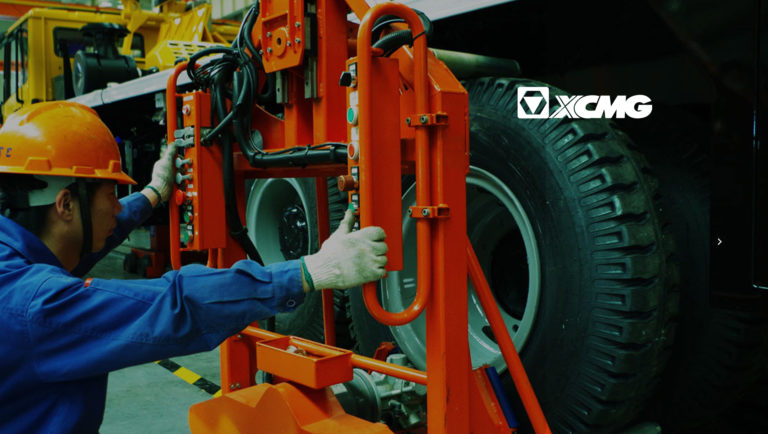
XCMG, the world’s leading construction machinery manufacturer, has become the only producer of large-tonnage loaders in China with a full life-cycle smart manufacturing (SM) system covering five major sectors of product design, production, logistics sales and services. This achievement, along with its robust R&D capabilities, places XCMG at the leading edge of construction machinery producers not only in China but around the world.

By transitioning from traditional manufacturing to digital, networked processes, XCMG has realized astounding savings and enhanced quality in its production lines. The company’s Earth Moving Machinery Business Unit, for example, has seen a bump of 25.8 percent in production efficiency through workshop and production line simulation optimizatioand upgrades to its equipment and logistics software, as well as implementing a new smart scheduling and information management system. The company also has the largest single unit combined factory building in Asia.

Read More: Decoding The Current State of SDR Automation Platform Powered by AI

“Our investments have paid off,” said Wang Min, Chairman of XCMG. “Thanks to our relentless focus on R&D and the development of our production capabilities, as well as our team’s flawless implementation of our modernization strategy, XCMG now stands at the pinnacle of SM in China and has cemented its status as a world leader in heavy machinery manufacturing.”

Read More: Real-Time Action Models: AI-Driven Selling’s Emerging Evolution

XCMG’s use of smart manufacturing equipment, especially NC equipment, along with welding and painting robots, has significantly improved production and ensured long-term stability for the company. For example, XCMG has re-developed its SAP, MES, SRM, and CRM systems to ensure that every facet of the on-site production and marketing execution plans are controllable in real-time, enabling the company to transform from a product supplier to a product and service provider.

After two years of R&D and four months of construction, XCMG has also created the world’s first smart welding line for the production of large structural components. The 100-meter-long production line can produce 40 products a day and boasts annual mileage of 1,933 kilometers (1201 miles) and docking accuracy of 0.01 degrees.

Read More:  Sales Call Analytics Is the Difference Between Winning and Losing Customers

AMP Agency Develops Proprietary Consumer Identity Strategy Designed to Drive Purchase

Releases white paper showing how brands can maximize every consumer interaction to build better personas based on true consumer behaviors

Full-service advertising company AMP Agency has built a proprietary Consumer Identity Strategy (CIS) that can influence customer behavior online, in-store, and through purchase. Today they released their learnings in a white paper, The Power of Behavioral Analysis and The Consumer Identity Strategy.

“Using behavioral data to create a Consumer Identity Strategy is no longer for the Amazons, Walmarts and Googles of the world,” said Greer Pearce, vice president of strategy at AMP Agency. “It’s for every retail brand that has a physical, digital and mobile presence. Those brands that don’t focus their marketing dollars on Consumer Identity Strategies immediately will find themselves playing catch up in the years to come.”

Read More: Decoding The Current State of SDR Automation Platform Powered by AI

AMP Agency’s CIS is unique in that it is not simply audience modeling. The agency’s analysis enabled it to move beyond self-reported consumer data to build better personas and journeys with behavioral data. Instead, the agency complemented that information with how consumers behaved, both online and offline.

Both sets of information help brand marketers to leverage owned behavioral data from website analytics and CRM to in-store foot traffic to see how consumers are actually interacting with their brands’ brand across owned properties both on- and off-line.

For example, AMP worked with a fashion brand known for its laid-back SoCal style to build and expand the consumer base. Traditionally, marketers must make assumptions about its brand audience by building surveys and assembling focus groups.

Read More: Real-Time Action Models: AI-Driven Selling’s Emerging Evolution

AMP Agency did not make assumptions about the client’s consumers and eschewed legacy research. Instead, the agency built a proprietary version of doppelgängers—personas based on actual shoppers.

AMP Agency’s media team geo-fenced each of the brand’s and their competitors’ physical locations so they could observe the behaviors of real shoppers on a large scale. They were also able to create more perfect personas, identify underserved target consumers, build new shopper profiles and weed out low-value customer types. By doing this, AMP Agency was able to make the client’s budget go further.

By layering in this behavioral data, AMP Agency discovered profound insights that changed the client’s preconceived notions about their consumer targets.

Read More:  Sales Call Analytics Is the Difference Between Winning and Losing Customers

Instead of seeing shoppers from the Midwest, as expected, AMP Agency found that the client’s actual shoppers were much more likely to be from coastal states. While the expected audience was a 35+ stay-at-home mom or teacher, only 4% of shoppers were seen in school zones, and the majority were observed working in corporate office buildings.

There were also a significant number of younger shoppers browsing, but not buying – a signifier of a new audience segment for the brand.

Read More: Why Delivering ABM-Focused Conversations at Scale to Your Customers Matters in the Buying Process

These, along with many detailed behavioral data points and insights, shaped a new marketing strategy for the brand — one that couldn’t have been developed solely using traditional research methods.

By using a custom CIS, AMP Agency uncovered insights about existing consumers, and identified potential new customers. By also using physical location data to identify media opportunities (where to place out of home OOH media or conduct an event) the agency had input into the brand’s real-estate and investment decisions.

“This is a breakthrough approach to linking digital and physical data and helping us identify the customer touchpoints most likely to lead to sales conversion,” added Pearce.

Read More: Interview with Sandie Overtveld, Vice President Sales, APAC at Zendesk

LiveRamp Partners with Inscape to Add Smart TV Data into Omnichannel Identity Platform

The Partnership Would Improve  Marketing Campaigns, Advertising Creative and More Accurately Target, Optimize and Segment Specific and Relevant Interactions Based on Smart TV Data

Inscape, the leading provider of smart TV viewing data and LiveRamp®, an Acxiom® company, have announced a partnership to bring Smart TV data for omnichannel identity resolution. This would help to connect LiveRamp’s IdentityLinkTM ID with Inscape’s ACR-generated, glass level insights from nearly nine million smart TVs. Further, this will allow marketers to better understand and connect with their customers. In turn, consumers will be able to benefit from more relevant brand interactions that are coordinated across digital and traditional channels.

This partnership brings the largest screen in the home, the TV, into the fold of devices measured for data-driven marketers and provides a holistic view of consumer audiences with TV viewing data that has granularity, precision, and scale. Bringing together the largest independent deterministic identity graph in the market from LiveRamp with the largest single source of opt-in smart TV viewing data from Inscape, allows platform partners and marketers to match online and offline data to smart TV viewing data. This intelligence helps inform marketing campaigns, advertising creative and more accurately target, optimize and segment specific and relevant interactions with consumers.

At the time of this announcement, Allison Metcalfe, General Manager of the TV at LiveRamp, said, “This is a very strategic integration that brings the speed, scale and transparency of Inscape’s smart TV viewing data to LiveRamp’s ecosystem platform partners, agencies and brands who leverage LiveRamp for identity resolution.”

Read More: Why Delivering ABM-Focused Conversations at Scale to Your Customers Matters in the Buying Process

Allison added, “By tying viewership to LiveRamp’s IdentityLink ID, LiveRamp is making it possible for marketers to take a data-driven approach to better plan, target and measure their omnichannel marketing efforts.”

Marketers can map granular program or ad viewing data at the device level to any IdentityLink matched data set. Matching against near-real-time smart TV data gives marketers access to the information needed to better personalize and optimize marketing campaigns, understand ad exposures against cross-device/platform KPIs and measure business outcomes. LiveRamp platform partners can ingest smart TV viewing data tied to IdentityLink and bring TV touchpoints into their services offered for cross-platform analytics and measurement.

“As new advanced television efforts and initiatives evolve, having a strong identity link between device-level television viewing data and first and third-party data sets is imperative,” said Greg Hampton, VP of Business Development at Inscape.

Read More: Interview with Sandie Overtveld, Vice President Sales, APAC at Zendesk

Greg added, “LiveRamp is making it possible for marketers to plan future marketing initiatives based on real data and better understand the results of omnichannel campaigns.”

Currently, Inscape is a TV intelligence company that captures highly accurate, up-to-date viewing data from millions of smart TVs. The company is a leading provider of automatic content recognition (ACR) technologies and comprehensive cross-screen metrics. Inscape’s TV audience viewing data is leveraged by OEMs, brands, agencies, networks, measurement companies, DMPs and marketing technology platforms to power massive transformations in the industry. Its glass-level insights bring a new level of speed, transparency, and actionability to the global TV marketplace.

Read More: CRM Data Is Still Numero Uno Block in Building “the Path to Sales Mastery”

comScore Launches Enhanced Custom Reporting to Advance Mobile Capabilities

New comScore Enhancements for Mobile Provide Deeper Mobile Insights and Broader Competitive Intelligence for Marketers

comScore, a trusted partner for planning, transacting, and evaluating media across platforms, announced substantial enhancements to its custom reporting for mobile, providing clients with deeper insight into an increasingly competitive mobile landscape. The new mobile capabilities would offer clients deeper insight into an increasingly competitive mobile landscape. These are based on a massive measurement sample and will afford customers greater visibility into consumer engagement with content, products, and services through mobile devices, including smartphones and tablets.

Currently, comScore is recognized globally as a trusted partner for planning, transacting and evaluating media across platforms. With a data footprint that combines digital, linear TV, over-the-top and theatrical viewership intelligence with advanced audience insights, comScore allows media buyers and sellers to quantify their multiscreen behavior and make business decisions with confidence.

New Mobile Capabilities Are a Key Part of Our Mission to Help Clients Drive Smarter Business Decisions

At the time of this announcement, Dan Hess, Chief Product Officer at comScore, said, “Advancing our mobile roadmap continues to be a major strategic initiative—one that our customers increasingly rely on as consumer behavior has shifted to this channel.”

Dan added, “Our new mobile capabilities are a key part of our mission to help clients drive smarter business decisions.”

comScore’s newly expanded mobile coverage provides even greater ability for marketers to:

  • Benchmark traffic quality, cross-shopping and other key mobile app and site metrics against competitors to identify strengths, threats, and opportunities
  • Identify key consumer segments through demographic and behavioral patterns in web and app usage
  • Analyze consumer journeys over time and across information sources
  • Fine tune acquisition efforts through analysis of competitive search and other marketing efforts
  • Understand competitive loyalty patterns to attract, retain and engage users

comScore Would Further Expand the Custom Mobile Insights for Marketers

For more than 16 years, comScore has provided advanced custom analytics and reporting to leading marketers across industries, including automotive, financial services, retail, travel, and consumer packaged goods. The new scale and granularity of data will significantly expand the custom mobile insights comScore delivers to marketers.

comScore is a proven leader in measuring digital and set-top box audiences and advertising at scale. comScore is the industry’s emerging, third-party source for reliable and comprehensive cross-platform measurement.

Technology Enables Us to Automate Certain Tasks, But We Remain Bullish on Human Interaction

0

We can no longer define the world as B2B or B2C, but rather H2H – Humans to Humans. Technology enables us to automate certain processes and tasks, but we remain bullish on human interaction.

From growing up in Kyrgyzstan to finding a sales technology-driven e-commerce company, Olga Vidisheva, Founder and CEO of Shoptiques.com, considers in-person sales still remains a top competency for any business leader. She chats with us about her mastery of sales strategy to stay on top of the sales game.

Tell us about your journey into digital sales community?

I have to start by telling you that I love sales. I really believe that to be successful in life you need to be good at sales and persuasion in some capacity. I grew up in Kyrgyzstan, where from a very young age, I would organize neighborhood theatre performances and would convince older and younger kids to join me. I think this was one of my earliest lessons in sales, persuasion and team building. From Kyrgyzstan, we moved to America, where I graduated from Wellesley College.

Applying to school definitely teaches you lessons in story telling and positioning yourself, which is a very helpful skill in sales. Upon graduation, I joined Goldman Sachs in their Investment Banking Division in New York and spent two years as an analyst.

GS provided their young employees with a tremendous amount of exposure to senior leaders, both within and outside of the organization. That helps tremendously to see case studies of successful leaders and how they drove change and progress in their respective organizations.

I later attended Harvard Business School and upon graduation, I started Shoptiques.com. In Shoptiques’ early days, I engaged in door-to-door sales to sign-up boutiques. I walked the Nolita and Soho neighborhoods of New York City and would convince store owners to join the platform that didn’t yet exist: there was no website, no press, no traffic, but I had a big idea.

I think the early in-person sales really helped me develop my sales pitch and the product by listening to the boutique owner’s objections and concerns. I believe that the best sales leaders lead by example, so my journey to digital sales is filled with trial and error. I believe in constantly iterating the sales process, testing new strategies and quickly changing if the product or the sales pitch doesn’t resonate with our customers or boutique owners.

I now consider Sales to be one of our core competencies and excited to stay ahead of the curve.

How do you leverage sales technologies to stay on top of your game?

I minored in mathematics when I attended Wellesley College.

I love Sales for the same reason I love Math. It is black and white.

I can look at the metrics and have a hypothesis about why someone isn’t performing. Of course, nothing can replace actually listening to your team members speak with potential clients and helping them that way – but metrics are tremendously important in Sales.

So, we use CRM called close.io to track all the performance of our leads and conversion funnel by each rep. It comes with an ability to listen to each call after the fact that enables our Sales Managers and Leaders to provide ongoing feedback and training, even if they are not actively at the meeting. We also empower our Sales team to use data to monitor their performance. In addition to close.io, we have an internal proprietary technology we built to make our Sales team successful.

Tell us a little more about the recently launched – Point of Sale Technology (POS)? How does it provide stores with an omnichannel solution?

Shoptiques launched our new Point of Sale solution in January of this year, and it is quickly becoming one of the best (if not the best) solutions out there to run a boutique. We build POS specifically for boutiques, so it is a very targeted solution. Because we have been working with thousands of stores for over 6 years, we were able to build a Board of Advisors of Store Owners who helped us develop their “dream” solution.

One of their frustrations was that there was no solution that handled everything for them: employee management (including hours worked tracking), online sales, inventory management, analytics, email marketing – so we built a comprehensive solution that incorporates all of the demands of the boutique owner’s day-to-day into a top solution.

Furthermore, the system connects seamlessly to Shoptiques.com, which gets a boutique owner access to 1mm+ shoppers, allowing them to drive more traffic and awareness without extra work.

How do you deliver conversations at scale to your customers?

It really depends on the type of conversation/message we need to deliver. We send out emails to our boutique owners to update them on changes to technology we have made, products that are selling very well or customer requests. We have also developed a Knowledge Base that stores can access.

If a message is an urgent one (even at scale) – we prefer to give a boutique owner a phone call to ensure email didn’t get lost. We also aim to build a community of our boutique owners, so we hold meet-ups and events to engage the stores locally.

As a CEO, what pointers do you rely on for an impeccable Customer Success?

Great question! I try to always make myself available to my team and to our stores. Because many store owners have my personal cell and email, I hope that if there is an escalation or a frustration, that my team has not been able to resolve to their satisfaction, they would reach out to me. Our team is also trained to bring up all product requests or escalations to our weekly meetings. We love and listen to our customers – they provide the best roadmap for our product and ensure we are an integral part of their business.

We also use a technology solution called Stella Service – where after someone interacted with our Customer Success Team, they are sent an email to rate the experience with this particular Customer Success Managers. This allows us to track the performance of each rep over time, QA the low-scored tickets and provide feedback. BSTers (Boutique Success Team Members) love it as well because they are able to see live how the Boutique Owners are rating their interaction. We do the same on the Consumer-end as well.

Lastly, I made it my priority to have monthly check-ins with a few stores to ensure I keep a pulse on their experience and their needs.

How do you plan to compete against the established giants in ecommerce – Amazon and Macy’s? What’s your secret recipe?

I think the reason local boutiques, and hence, Shoptiques are able to compete with established giants is the uniqueness of their inventory. For example, we work with a boutique called Pinkyotto with a few stores in New York and Boston – the only place you can buy their products is their stores and through Shoptiques. That’s exciting to a consumer who doesn’t want to look like everyone else around them. Shoptiques also enables a consumer to discover products from other countries and jet-set around the world (without the jetlag).

How do you define and build “The Path to Sales Mastery” using CRM and automation tools?

Everything I talked about so far in this interview is pertaining to sales on our boutique side of the business. There, we are very methodical on how we use CRM and the frequency of follow-ups. One thing worth noting that our sales is a bit different because we conduct interviews with each store to determine if they would be the right partner to Shoptiques.

Define the ‘State of Sales Transformation for Ecommerce’ in 2018? How do you leverage People Management resources to adapt to this transformation?

I think as a start-up in 2018, the only limit is imagination and resources. Technology enables us to execute on the ideas that we never used to think were possible. Technology enables us to automate certain processes and tasks, but we remain bullish on human interaction.

For example, we continue to offer Personal Styling Appointments for our customers to enable them to speak to someone or meet with them in person and our boutiques still are being called by a real person who understands their business and wants to learn about them.

Given the current shift in analytics and customer intelligence, what skills and knowledge do sales teams need to close deals faster?

I think 2 necessary skills that every salesperson needs to have today is persistence and the ability to read people. Today, we are constantly bombarded by emails, texts, chats, what’s apps, phone calls, video games, Instagram, likes etc – we are constantly stimulated by something going on around us. So, to get through that clutter is a lot harder than it used to be – so I think persistence is key. That means not giving up, that means being organized to know when to follow-up etc.

The second skill is the ability to read people. To close the deals faster, you need to know when to push and when to let the client breath. In sales, every minute is gold, so you don’t want to waste time on a lead that won’t close until next month and should move on to someone who will do it this month.

What’s the most exciting part of using sales technologies and intelligence? Could humans ever match in sales what virtual assistants and call tracking analytics deliver?

I think the relationship is closely complimentary and I think you need to have both to be successful in sales.

Sales is extremely mathematical and methodical – you have to make xx number of phone calls to reach x number of store owners to close x number of deals. Once you know those conversion metrics, you can work backward of how many leads you need etc. I am not sure you need to waste time figuring out that analytics by hand when you have the modern technology which makes it so easy.

How could AI in sales and marketing further disrupt SaaS platforms? How do you prepare for the disruptive sales ecosystem at Shoptiques?

I believe we can no longer define the world as B2B or B2C, but rather H2H – Humans to Humans. Perhaps because we work with local boutiques who value personal interaction in their in-store business (you come to a boutique for that personal touch) and from everyone, they work with – we really focus on providing the best human connection with every interaction we do. I think AI is far from replacing a human understanding and perhaps in some businesses can help, but we are not jumping on that bandwagon yet.

Thank you, Olga, for chatting with us about your journey into sales and how you see technologies in Sales Transformation for e-commerce!

Dealers United Acquires What’s Next Media

On July 20, 2018, leading digital automotive company Dealers United announced a final agreement to acquire Seattle-based media and video production company What’s Next Media for an undisclosed amount. What’s Next Media provides dealerships high-quality automotive video content, including video consulting and assets for Facebook and YouTube advertising, which Dealers United will integrate into their existing digital and social media campaigns through its extensive dealer network.

Both What’s Next Media and Dealers United have quickly grown over the past seven years in correlation with the auto industry’s adoption of digital marketing trends. What’s Next Media’s unique video strategies have helped dealerships identify and motivate customers’ actions, which complements Dealers United’s car shopper targeting on channels like Facebook and Instagram. The What’s Next Media team will now work hand-in-hand with Dealers United to produce stronger, more accessible video messaging for auto dealers nationwide.

Read More: Decoding The Current State of SDR Automation Platform Powered by AI

The two companies will operate together, with What’s Next Media’s main office remaining in Seattle, WA as a West Coast satellite office to Dealers United’s headquarters in Sarasota, FL. The acquisition will add an innovative team with automotive experience and a variety of key players, including WNM’s co-founders, in order to continue scaling Dealers United’s digital marketing campaigns.

“I am so proud of what we have been able to build and do for our clients,” said Andrew Myers, COO and co-founder of What’s Next Media. “We reached a point where the opportunity was bigger than our ability to go after it on our own. Dealers United has been a partner of ours from the beginning – we’ve always had an aligned vision for putting our dealers first and building at scale. This move allows us to leapfrog our competition entirely, creating ads faster with our shared automation, access to data, powerful content, and knowledgeable teams. We couldn’t be more excited for the future.”

Read More: Real-Time Action Models: AI-Driven Selling’s Emerging Evolution

Dealers United has historically resold What’s Next Media videos, and now will incorporate all of What’s Next Media video campaigns into their product suite. The company’s main offerings include model-line walkaround videos to better showcase dealership inventory, Facebook and Instagram video ad series to strengthen customer relationships, and custom video for use on any website or third party.

Pete Petersen, CEO of Dealers United, and his team have recently focused their product line around helping auto dealers reach car shoppers through Facebook and Instagram advertising. As one of nine Oracle Data Cloud Auto Elite Data Marketer partners, Dealers United has access to in-market automotive data targeting and other leading data sets within Facebook. In addition, the company has worked closely with Facebook’s Automotive division to develop and test the most effective ad types and strategies specifically for auto dealers. Through Dealers United’s ads, dealerships are able to transform their vehicle inventory into first-party website traffic and leads by delivering the right vehicle ad to the right shopper.

Read More:  Sales Call Analytics Is the Difference Between Winning and Losing Customers

Petersen is eager to have the powerful video storytelling techniques from What’s Next Media closer to the fold so they can help dealers position what makes them unique and yield stronger messaging online.

“No one can deny video’s role in this industry,” said Petersen. “Video is engaging; it’s personal. It brings the customer onto the dealer’s lot and into their newest model, it introduces their team, it tells the story of why a shopper should choose their store instead of the dealer down the street. With car shoppers on average visiting a single dealer before buying, dealers have to get their story out to buyers faster and online, and WNM has really nailed turning storytelling into results. We’re incredibly excited by What’s Next Media joining our team. What we have built together is so powerful – and we’re just ramping up.”

Read More: Why Delivering ABM-Focused Conversations at Scale to Your Customers Matters in the Buying Process

SOCAR Accelerates International Expansion with NetSuite

Car sharing startup scales its business with successful launch in Malaysia

SOCAR, a South Korean car sharing startup, has implemented Oracle NetSuite to support its rapid growth and international expansion. With NetSuite, SOCAR has been able to successfully launch its service in Kuala Lumpur, Malaysia, and scale its business to support rapidly growing demand that has seen 72,000 new members added in just five months at the end of January this year. SOCAR has also seen over 24,000 usage hours recorded on its platform per month from Malaysia to date.

First launched in South Korea in 2011, SOCAR is an on-demand, keyless car sharing service that offers customers the convenience of a car without the commitment of ownership. With the SOCAR mobile app, customers can book a car, from anywhere and at any time, and then use it to meet their individual transport needs. After signing up more than 3.4 million members in South Korea and offering over 8,200 cars in 3,200 zones throughout the country, SOCAR decided to launch its service in Kuala Lumpur in January 2018. By partnering with the local government to strategically place cars at major public transport hubs, SOCAR has grown rapidly. To manage this growth and the complex requirements of its business model, SOCAR selected NetSuite.

Read More: CRM Data Is Still Numero Uno Block in Building “the Path to Sales Mastery”

“The car sharing market is rapidly growing and by reducing car ownership, it can help us live in cities with cleaner air, less traffic and more accessible parks, gyms and schools,” said Leon Foong, CEO, SOCAR. “Our business has grown rapidly in South Korea and we are seeing huge demand in Malaysia. We plan to have more than 1,000 cars available in Malaysia by the end of this year, which is a big increase from the 240 cars we started off with, and NetSuite is playing a huge role in supporting that growth.”

Read More: Interview with Sandie Overtveld, Vice President Sales, APAC at Zendesk

With NetSuite, SOCAR has been able to drive efficiencies, improve decision-making and successfully scale its business. By replacing a manual, Excel-driven process for reconciling and tracking financial transactions, NetSuite has enabled SOCAR to achieve a complete view into critical business information and efficiently manage its high volume of expenses, revenue and sales transaction data. As a result, the SOCAR accounting and finance teams now have accurate cash flow data and access to the general ledger at any time and from anywhere, which is crucial for any business to grow.

“The car sharing market will experience exponential growth in the future, with 35 million users expected to sign up for 25 million hours of driving time each month by 2021,” said Ronen Naishtein, general manager, Asia, HK and TW, Oracle NetSuite. “SOCAR is perfectly positioned to ride that growth and with NetSuite, the SOCAR team has a flexible and integrated approach to support its changing business requirements and expand into overseas markets quicker.”

Read More: Wordapp.com Integrates with Hyperwallet to Unlock Streamlined Global Payouts

AS Roma Football Club Scores Big with Egnyte

Modernising Infrastructure and Creating Secure Collaboration for Their Global Organisation

Egnyte, the leading provider of secure content collaboration and compliant data protection, today announced the deployment of their award-winning platform to the AS Roma football club. AS Roma is using the Egnyte platform to modernise their infrastructure as they move to the cloud, creating secure collaboration across their entire organization.

Headquartered in Trigoria, Roma, with employees throughout EuropeNorth America, and Asia (and over 87 million fans worldwide), AS Roma is the definition of a global organization. As a SaaS-based platform that was built for businesses from the ground up, Egnyte understands the challenges associated with collaborating in distributed workforces and was able to show an immediate impact on the AS Roma organisation.

Read More: Why Delivering ABM-Focused Conversations at Scale to Your Customers Matters in the Buying Process

“Egnyte came in and transformed the way we approached collaboration across every department, from sales and marketing to operations and IT, making us more mobile and more efficient than we’ve ever been before,” said Fabrizio Preti, Chief Technology Officer at AS Roma. “Egnyte has also significantly improved our security, giving us the visibility and control to make sure the right people have access to the right content at all times. When it comes to a complete solution, there is no other platform out there that provides both the performance and the protection that Egnyte does.”

Read More: CRM Data Is Still Numero Uno Block in Building “the Path to Sales Mastery”

AS Roma chose Egnyte over other competing vendors for their ability to deliver:

Hybrid performance – AS Roma can maintain fast, local access with on-premises infrastructure, which is also used for file backup. Simultaneously, they utilise the cloud to provide remote access for traveling employees such as sales and marketing members who need to be highly collaborative on the go.

Enterprise-grade security – Egnyte provides complete end-to-end encryption – in transit and at rest in respective storage environments. In addition, Egnyte’s password-protected link feature allows the AS Roma team to share their most sensitive content anywhere in the world, ensuring only those with the proper credentials can access the content.

Read More: Wordapp.com Integrates with Hyperwallet to Unlock Streamlined Global Payouts

Permission-based sharing – AS Roma wanted to make permissions as granular as possible, all the way down to the sub folder level. Egnyte allows IT to centrally manage permissions from the top level all the way down to the individual file level, providing the best permissions model on the market. Egnyte’s real-time auditing gives their IT department complete visibility of all user and file activity.

User Experience – One of the most important asks, AS Roma needed a solution that their employees would be willing to adopt. The intuitive interface of Egnyte is easy-to-use and provides a seamless desktop and mobile experience across Windows, Mac, Android and iOS devices. Maximising adoption was important for ROI, but also important for combating Shadow IT.

“We take a lot of pride in creating meaningful relationships with the organisations we work with, really partnering with them to make sure we have a complete understanding of their pain points and their needs so that we can create solutions that have a valuable impact on their business,” said Rajesh Ram. “That was truly on display here with AS Roma, a professional soccer club with a rich history and a lot on the line in terms of their brand and their content. Our team was able to come in and really transform the way they thought about collaboration and security, being more flexible without having to relinquish the control and protection they needed. This is the kind of partnership we love at Egnyte, where everyone comes away a winner.”

Read More: CRM Data Is Still Numero Uno Block in Building “the Path to Sales Mastery”