The first thing people think of when they hear the word blockchain is Bitcoin and other cryptocurrencies. It’s true, though, because cryptocurrencies like Bitcoin are built on blockchain technology. However, various facets in the business world are changing right now, and during the past few years, more and more companies have realized the potential of this technology.
The transition is taking place across the retail sector as a result of modern digital revolution. Blockchain technology has been used for a while now by large retail behemoths like Alibaba and Amazon to improve the traceability of their products. Additionally, they are providing managed blockchain networks to other retailers. The statement that blockchain is crucial to the future of retail is very accurate.
Let’s understand what blockchain technology is, why it is utilized in the retail business, what advantages it offers, and much more:
What is blockchain technology?
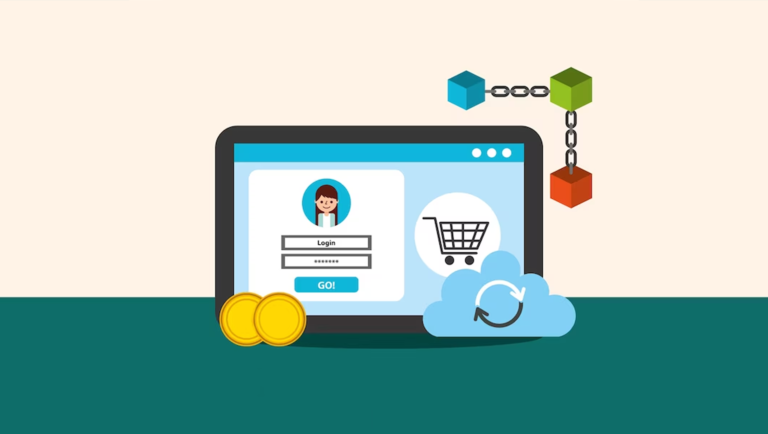
Blockchain technology is a distributed ledger that is decentralized, allowing several parties to keep a safe and open transaction history. Data and transactions are protected so that a centralized authority or middleman cannot meddle with them.
It was initially created to be used in the Bitcoin cryptocurrency, but there are a lot more uses for it that are still in progress.
Transactions and data are organized into blocks on a blockchain and added to the chain in a logical and chronological order. A cryptographic hash of the previous block is included in every block, establishing an irreversible record. This ensures that the ledger is open and reliable and makes it difficult for anyone to alter the data or the chain as a whole.
As blockchain technology is decentralized it can offer a high level of security and transparency. Thus, fraud, hacking, and other types of malicious activities can be eliminated. Blockchain technology has the capability to transform different industries and retail is one of them.
Read More: SalesTechStar Interview with Krish Mantripragada, Chief Product Officer at Seismic
What blockchain accomplishes in retail and what do businesses need to learn about this technology?
The development of trust between retailers, payment gateways, and customers is made possible by blockchain technology. As a result, it boosts trustworthiness, openness, and confidence when conducting business.
Due to the popularity of online shopping, the increased trust could benefit the retail industry. Because blockchain can track, trace, and authenticate items or record contracts, it ensures that transaction records and the movement of information across the entire value chain can deliver benefits in the form of cost savings, enhanced trust and transparency, and safer or higher-quality products.
Consequently, what blockchain accomplishes is
- For consumers: It enhances and safeguards the consumer experience
- For supply-chain. : Improves supply chain process efficiently
- For payments and contracts – Increases transactional efficiency and assures the legality and execution of contracts
Businesses need to understand how blockchain fits into their entire strategy and the possible additional commercial value it might produce. Depending on the strategic goals of the company, the impact of blockchain can be divided into four categories:
- Trial projects: Compared to other possibilities, these have a more limited blockchain use and less instant benefit.
- Investigate: These prospects are similar in complexity and cost to trial initiatives, but they offer greater value in the immediate term.
- Wait and watch: These prospects are more difficult and expensive to implement, and they are currently less useful than other blockchain options.
- Plan: These possibilities have the greatest potential for reward.
Using blockchain as a tool to accomplish strategic goals is essential if you want to get any real benefits from it. Businesses that prioritize serving customers and have the appropriate resources and skills ought to look into how they may make use of blockchain technology.
Reasons to use blockchain in Retail:
Many people doubt and wonder if blockchain technology is actually necessary for the retail sector. The industry, despite doing reasonably well in comparison to other sectors, confronts a number of internal issues that need to be immediately resolved. Blockchain technology is essential for the sector because of this urgency. So, let’s discuss the reasons to use blockchain in retail:
-
Changing consumer Expectations:
When it comes to volatility, the retail sector is not an exception, particularly when it comes to consumer expectations, as these tend to shift quickly and make it difficult for businesses to stay up. Numerous factors, including holidays, trends, seasonal changes, and other factors, are to blame for the change in consumer taste. In order to remain relevant, the retail sector needs to be aware of this subtlety. Forecasting with precision is still difficult.
-
Not appreciating the loyalty of customers:
Creating a great customer experience is a key component in fostering brand loyalty. But many businesses find it difficult to retain their current clientele and believe it will be simple to attract new ones. In the long run, this attitude can be harmful and hinder the growth of businesses. While discounts, specials, and promotions might draw customers in, retailers frequently fall short in personalizing their offers, leaving clients feeling unappreciated.
-
Breakdown in Internal Communication
Effective management of large retail firms’ many divisions is frequently a challenge. Internal communication can be difficult and expensive to maintain, which can cause corporate processes to be disrupted and impair customer satisfaction. This issue may continue if there isn’t a suitable automated communication system. Technology implementation can aid in resolving this problem.
-
Technology Advancements Are Limited
Numerous technologies are created specifically for particular industries and, when used properly, can provide considerable advantages. While some lack any internet presence at all, many retail businesses have failed to fully embrace technology. In a world where e-commerce is a major force, this severely disadvantages them. Some merchants struggle to use technology efficiently or select the incorrect solutions, which results in inefficiencies and resource waste.
-
Retail Price Growth
Consumers are less likely to spend because the cost of everyday basics is increasing while their money for luxuries is diminishing. Changing retail pricing and high price tags deter consumers from purchasing goods. Retailers should offer discounts and unique deals to draw customers, but the expenses are too expensive.
Due to increased manufacturing costs brought on by a lack of automation and planning, retail prices increase. If retailers want to scale, they shouldn’t keep pricing above what customers would expect to pay.
-
Ineffective modern marketing tactics:
The use of the internet is becoming increasingly popular among retail businesses, but because there is a lack of knowledge in this field, there are significant investments made with little return. There are several more methods to advertise things to clients; merely relying on social media marketing is insufficient.
Likewise, consumers prefer individualized involvement from their favorite brands nowadays. Customers may stop being interested in a retailer’s brand if they are unable to offer this functionality. Additionally, retailers may overpromote goods, displeasing customers.
-
Fake products and dishonest practices
The proliferation of fake goods and fraudulent operations poses a serious threat to the retail sector. The reputation that shops work so hard to establish is damaged by the prevalence of counterfeit items on the market. Revenue is also harmed by internal fraud. Customer unhappiness is brought on by the difficulty of identifying counterfeit items. Retailers must address this problem right away to avoid losing both customers and sales.
Customer unhappiness is brought on by how challenging it is to detect counterfeit items. Retailers must address this problem right away to avoid losing both customers and sales.
-
Cyber Attacks
The growing incidence of cyberattacks is another challenge for retail businesses. Hackers can easily access vital data thanks to the common client-server networking approach used by most shops. Customer’s personal information that retailers hold, such as credit card and bank account numbers, is vulnerable to manipulation, which can result in serious security breaches and financial losses. The brand’s capacity to protect customer data will also lose the trust of the consumer.
Advantages of Blockchain in the retail industry:
Blockchain technology in retail offers many advantages that businesses may make use of to strengthen their supply chains and enhance the customer experience. These advantages include reduced costs, safe payments, and greater openness.
- Get deeper insights: The capacity of blockchain technology to gather data and offer deeper insights into various supply chain components is one of its key benefits. Customers can verify that organizations are adhering to ethical standards thanks to the enhanced openness, which also strengthens their relationship with the businesses they do business with.
- Effective Inventory Control: Retail businesses must manage their inventories well if they want to become more efficient overall. Businesses may track their items, including expiration dates and consumer preferences, with effective inventory management, helping them to prevent losses. Companies can manage their inventories more effectively and save money by using blockchain in the retail sector by automating the process of product scarcity or surplus based on real-time consumer demand. The retail sector would benefit greatly from this use case.
- Eliminates fraud: Blockchain technology also adds an extra layer of protection by tracking payments and keeping an eye on digital assets to spot any irregularities that might be signs of fraud. Furthermore, companies can create access-control rules for blockchains, ensuring that only authorized users can carry out certain operations and view certain data.
- Quick Payments: Payments are now quicker and easier thanks to blockchain technology. Retailers now have the option to include well-known cryptocurrencies like Ethereum and Dogecoin into their payment systems thanks to the development of digital currencies.
- Payment in Bitcoins: A fantastic additional use for blockchain in the retail sector is the usage of cryptocurrency payments. Future money will be based on cryptocurrencies thanks to the expanding cryptocurrency markets and the impending introduction of central bank digital currencies. Retail businesses may stay competitive by officially accepting existing cryptocurrencies as payment for their goods, providing customers with a safe and open digital payment option.
Businesses using blockchain platforms may instantly set up cryptocurrency wallets and take payments through websites, mobile applications, and online marketplaces without the requirement for clients to be physically present.
Use cases of Blockchain Technology and which brands have adopted this technology for innumerable benefits:
Blockchain technology has emerged as a game-changer for businesses across multiple industries, and retail is no exception. Big brands such as Walmart and American Express have recognized the potential of blockchain and have been actively exploring its use cases in retail.
Large retailers are investigating blockchain technologies to make use of their resources and forward-thinking strategies. Second only to the People’s Bank of China (PBOC) with 68 files, Alibaba submitted 43 of the 406 blockchain-related patent applications in 2017. As a leading supplier of blockchain-as-a-service (BaaS), Amazon is advancing in this field by pushing its Blockchain on AWS service.
It has been claimed that Walmart, the biggest discount retailer in the world, is about to launch its blockchain application for its live food business. In addition to actively researching this technology, other major behemoths like Facebook, Google, and Apple have committed considerable resources and top talent to their blockchain initiatives.
Read More: Staying Ahead of the Fall: How Sales Teams Can Be Proactive When the Economy Tightens
Here are four use cases of blockchain in retail and five examples of big brands like Walmart and American Express that have adopted blockchain technology.
Use Case 1: Supply Chain Management
Supply chain management involves the coordination and management of various activities involved in the production and delivery of goods and services. With the increasing complexity of global supply chains, it has become essential to incorporate advanced technologies such as blockchain to enhance transparency, efficiency, and security. Blockchain is a distributed ledger technology that provides a secure and transparent platform for recording, verifying, and sharing data across multiple entities. In recent years, blockchain has gained popularity in supply chain management due to its ability to increase visibility, traceability, and trust in the supply chain.
One of the key benefits of blockchain in supply chain management is the increased transparency it provides. By using a decentralized, shared database, blockchain enables all parties in the supply chain to view and track transactions in real-time. This level of transparency can help to reduce the risk of fraud and counterfeiting, as all parties can see the origin, movement, and ownership of goods at every stage of the supply chain. For example, using blockchain, a manufacturer can track the origin of raw materials, verify the authenticity of the products, and ensure that they are not sourced from unethical suppliers.
Another benefit of blockchain in supply chain management is the increased traceability it provides. By recording all transactions on a shared database, blockchain enables all parties to track the movement of goods from the point of origin to the final destination. This level of traceability can help to reduce the risk of supply chain disruptions, as companies can quickly identify and address any issues that arise. For example, a retailer can use blockchain to track the movement of products from the manufacturer to the warehouse to the store, ensuring that products are delivered on time and in good condition.
Blockchain also enables the secure sharing of data across multiple entities in the supply chain. By using a decentralized database, blockchain eliminates the need for intermediaries such as banks, brokers, or logistics providers. This can help to reduce the cost and time involved in transactions, as well as improve the security of data sharing. For example, a manufacturer can use blockchain to securely share production data with suppliers, ensuring that they have access to the information they need to optimize their operations.
Finally, blockchain can help to increase trust in the supply chain. By using a shared database, blockchain provides a tamper-proof record of all transactions, ensuring that all parties have confidence in the integrity of the data. This level of trust can help to reduce the risk of disputes and improve collaboration among different entities in the supply chain. For example, a retailer can use blockchain to verify the quality and authenticity of products, ensuring that customers have confidence in the products they are purchasing.
Example 1: Walmart
Walmart has been one of the early adopters of blockchain technology in retail. The company has developed a blockchain-based supply chain solution called the Walmart Food Traceability Initiative. The platform allows Walmart to track the journey of food products from the farm to the store shelves. The blockchain-based platform enables Walmart to quickly trace the source of any contaminated food product, reducing the time taken to identify the source of the problem from weeks to just a few seconds.
Example 2: Nestle
Nestle, the world’s largest food and beverage company, is using blockchain to improve transparency and traceability in its supply chain. The company has partnered with OpenSC, a blockchain-based supply chain platform, to track the journey of its products from the source to the end customer. The blockchain-based platform enables Nestle to provide consumers with information about the origin, journey, and quality of their products, increasing transparency and trust.
Use Case 2: Loyalty Programs
Blockchain technology has revolutionized various industries by providing a decentralized platform for secure and transparent transactions. One of the industries that have benefited significantly from blockchain is loyalty programs. Loyalty programs are marketing strategies aimed at rewarding and retaining customers who frequently buy a company’s products or services. The use of blockchain in loyalty programs provides several benefits, including secure and transparent transactions, fraud prevention, and improved customer experience.
One of the main advantages of using blockchain technology in loyalty programs is its security. Blockchain technology uses a distributed ledger system that ensures secure and transparent transactions. Each transaction in the blockchain is encrypted and recorded in a public ledger, which cannot be tampered with or altered by anyone. This means that loyalty program transactions are secure and free from hacking and fraud.
Blockchain technology also provides transparency in loyalty programs. Customers can track their loyalty program points, rewards, and transactions in real-time. This enables them to understand their status in the program and the rewards they are entitled to. Additionally, businesses can track customer behavior and use this information to personalize the rewards and promotions offered to their customers.
Another benefit of using blockchain technology in loyalty programs is the prevention of fraud. Loyalty program fraud is a significant problem for businesses, with fraudsters exploiting loopholes in the system to gain access to customer rewards. Blockchain technology prevents fraud by creating a tamper-proof record of all loyalty program transactions. This makes it difficult for fraudsters to exploit the system and ensures that only legitimate transactions are rewarded.
The use of blockchain technology in loyalty programs also improves the customer experience. Blockchain technology enables businesses to personalize their rewards and promotions based on customer behavior. This means that customers receive rewards that are relevant to their needs and preferences, which in turn increases their loyalty to the business., Blockchain technology provides a fast and efficient way for customers to redeem their rewards, making the process convenient and hassle-free.
Example 3: American Express
American Express has partnered with blockchain-based loyalty platform, BlockFi, to launch a new loyalty program. The program enables American Express cardholders to earn bitcoin as a reward for making purchases using their cards. The blockchain-based platform enables American Express to provide a secure and transparent loyalty program, ensuring that cardholders receive the rewards they are entitled to.
Use Case 3: Payment Processing
Blockchain technology is revolutionizing the way we handle payment processing, offering new solutions to issues like security, speed, and transparency. Blockchain technology can be used to create a decentralized payment network, which can be used to transfer funds between two or more parties without the need for a central authority like a bank.
One of the biggest advantages of blockchain technology is its security. When a transaction is made on a blockchain network, it is encrypted and recorded on a public ledger that is maintained by a network of computers. This makes it extremely difficult for hackers to manipulate the data, as they would need to hack into every computer on the network to do so. Furthermore, every transaction made on the network is verified by other nodes on the network, making it virtually impossible to fake or tamper with transactions.
Another advantage of blockchain technology in payment processing is its speed. Traditional payment processing methods can take several days to complete a transaction, while blockchain transactions can be completed in a matter of seconds. This is because there is no need for intermediaries like banks or payment processors to verify and process the transaction, as the blockchain network handles this automatically.
The use of blockchain in payment processing also offers greater transparency. Every transaction made on a blockchain network is recorded on a public ledger, which can be accessed by anyone with an internet connection. This means that anyone can see the transaction history of a particular address or wallet, making it easier to track payments and prevent fraud.
One of the most popular use cases for blockchain technology in payment processing is through cryptocurrencies like Bitcoin or Ethereum. These digital currencies operate on a blockchain network, making them decentralized and secure. They can be used to send and receive payments around the world without the need for a central authority or intermediary.
Another use case for blockchain in payment processing is through smart contracts. Smart contracts are self-executing contracts with the terms of the agreement between buyer and seller being directly written into lines of code. Smart contracts can be programmed to automatically execute a payment when certain conditions are met, making it a faster and more secure way to handle payments.
Example 4: Walmart
Walmart has filed a patent application for a blockchain-based payment system that would enable customers to make payments using digital currencies. The system would eliminate the need for intermediaries, reducing transaction fees and increasing transaction speed. The blockchain-based payment system would also create a more secure payment system, reducing the risk of fraud and improving customer trust.
Use Case 4: Digital Identity
Digital identity is a critical component of our online lives, allowing us to authenticate our identity and access various online services. However, the current digital identity systems have several drawbacks, including a lack of privacy, security vulnerabilities, and centralization. Blockchain technology, with its decentralized and immutable nature, provides a promising solution to these problems. In this article, we will explore the use of blockchain in digital identity and its potential benefits.
Blockchain is a distributed ledger technology that allows transactions to be recorded in a secure and transparent manner. Each transaction is recorded in a block, and once it is added to the chain, it cannot be modified or deleted. This feature ensures the integrity and immutability of the data stored on the blockchain. By leveraging this technology, digital identity can be created and managed in a secure and decentralized way.
One of the primary benefits of using blockchain for digital identity is enhanced security. Blockchain technology provides a tamper-proof system that is resistant to hacking and fraud. Each transaction is verified by a network of nodes, making it difficult for a single party to manipulate the data. Additionally, blockchain uses cryptographic algorithms to ensure that data is encrypted and only accessible to authorized parties. This reduces the risk of identity theft and other cybercrimes.
Another benefit of blockchain-based digital identity is increased privacy. Traditional digital identity systems often require users to share sensitive personal information with multiple parties, including government agencies and private corporations. This can put users’ privacy at risk, as their data may be vulnerable to misuse or abuse. With blockchain-based digital identity, users can maintain control over their personal information and choose who has access to it. Additionally, blockchain provides anonymity by using public keys instead of personal information, further protecting users’ privacy.
Blockchain technology also offers a decentralized identity management system, which eliminates the need for a central authority. This means that individuals can create and manage their digital identities independently, without the need for intermediaries. This increases accessibility, reduces bureaucracy, and eliminates the need for costly and time-consuming verification processes.
Finally, blockchain-based digital identity offers significant cost savings. Traditional identity management systems require significant resources to maintain and secure the data, which can be costly. With blockchain technology, the decentralized nature of the system eliminates the need for a central authority, reducing the overhead costs associated with managing identity data.
Example 5: LVMH
LVMH, the world’s largest luxury goods company, has launched a blockchain-based digital identity platform called AURA. The platform enables consumers to verify the authenticity of luxury goods using a blockchain-based digital identity system. The platform allows customers to access information about the origin, authenticity, and journey of their luxury products by scanning a QR code on the product with their mobile devices. This provides a unique and transparent way to track the entire supply chain of the product from manufacturing to delivery.
How to choose blockchain Tools and Software that can help the retail industry:
Before selecting the software or solution for their retail firm, retailers need to carefully examine their operations. There are numerous blockchain tools for the retail sector on the market, however, those that can provide the following capabilities and blockchain technology can be helpful to retailers:
- Payment Processing: Blockchain technology can be applied to the development of a reliable and effective system for processing payments that accept cryptocurrencies and other digital assets. This could lower transaction costs, boost security, and shorten the time it takes to process payments.
- Anti-Counterfeiting: Blockchain can be utilized to build a safe and impenetrable system for confirming the legitimacy of goods. Businesses can track the movement of goods and avoid counterfeiting by recording product information on a distributed ledger.
- Smart Contracts: These are self-executing agreements that are kept on the blockchain and have the ability to automatically initiate payments, refunds, or other activities when specific criteria are satisfied. Numerous corporate procedures may be automated to save money and boost productivity with smart contracts.
- Building a secure system: Blockchain technology can be applied to supply chain management to build an open and secure system. Organizations can follow the flow of products, lower fraud, and boost efficiency by keeping all transactions on a distributed ledger.
- Loyalty Programs: Blockchain can assist businesses in developing safe, open, and rewarding loyalty programs for their consumers’ purchases. Retailers can use blockchain to verify that incentives are recorded accurately and cannot be copied or tampered.
Retail shops can benefit from the many blockchain technologies and programs that are now on the market. IBM Blockchain, Ethereum, Hyperledger Fabric, and Ripple are a few well-liked alternatives. Depending on the sort of application being built and the specific needs of the merchant, a particular tool or piece of software will be selected.
Growth Of Blockchain in the retail sector:
In the past few years, the retail sector has seen a growth in the use of blockchain technology, which gives retailers the chance to boost customer experience and operational efficiency.
Here are some figures and development patterns regarding blockchain in retail:
- Market size is anticipated to increase from USD 80 million in 2020 to USD 2,339 million in 2026, at a Compound Annual Growth Rate (CAGR) of 58.9% during the course of the forecast period, according to a study by ResearchAndMarkets.
- Retailers may manage their supply chains more effectively and transparently with the help of blockchain technology. 74% of respondents to a Deloitte survey said that blockchain may improve supply chain visibility.
- Using blockchain, retailers can lessen chargebacks and prevent fraud. Retailers could save up to $31 billion by 2024 by embracing blockchain for fraud prevention, according to a Juniper Research analysis.
- Retailers may offer more secure and individualized loyalty programs thanks to blockchain. According to a PwC report, 84% of consumers are open to sharing their data to create more individualized loyalty programs.
- Blockchain technology can help retailers handle payments more quickly and securely. The blockchain payment market is expected to increase from USD 230 million in 2021 to USD 1,411 million in 2026, at a CAGR of 43.4%, according to a MarketsandMarkets analysis.
So, retailers have a lot of room to expand thanks to blockchain technology in a number of areas, including supply chain management, fraud protection, loyalty programs, and payment processing. Retailers who utilize blockchain technology will probably enjoy a competitive advantage as its popularity continues to rise.
This market’s growth is being driven by factors such as the rise in e-commerce, the adoption of blockchain by online retailers, the growing need to improve food safety through a transparent retail supply chain, and the rising demand for cost savings, quicker payments, greater transparency, and improved security. But given the unorganized retail sector’s poor technology adoption and the constantly shifting legal and compliance environment, industry growth might be limited.
On the other hand, the growing adoption of blockchain technology for B2B payments, the increased use of crypto payment services in the retail sector, and the fight against counterfeiting are all expected to create significant growth opportunities for those involved in the blockchain in the retail market.
Final Words:
By implementing blockchain technology, the retail sector will stand to gain significantly. The FBI estimates that cargo theft causes a startling $30 billion in annual losses. However, blockchain can maintain permanent records, making it possible to detect thefts at any point in time thanks to the deployment of IoT sensors to collect data at each stage of the supply chain process. This is just one illustration of how crucial blockchain technology is to the retail sector.
For retailers, fraud and the sale of fake goods are top priorities. High-end businesses lost roughly 30% of their profits in 2019 as a result of lax return policies and high margins, costing the retail sector a staggering $62 billion in losses. Maintaining fake products on the market causes more reputational harm than just monetary harm to a company.
Retailers may trace their products using blockchain technology from the producer to the customer, ensuring that the consumer always receives real goods. This will contribute to the permanent eradication of counterfeit goods. In particular, the Indian retail sector stands to gain significantly from implementing blockchain technology to fix its current issues and give its clients more advantages.
**The primary author of this article is our contractual staff writer – Sakshi John.