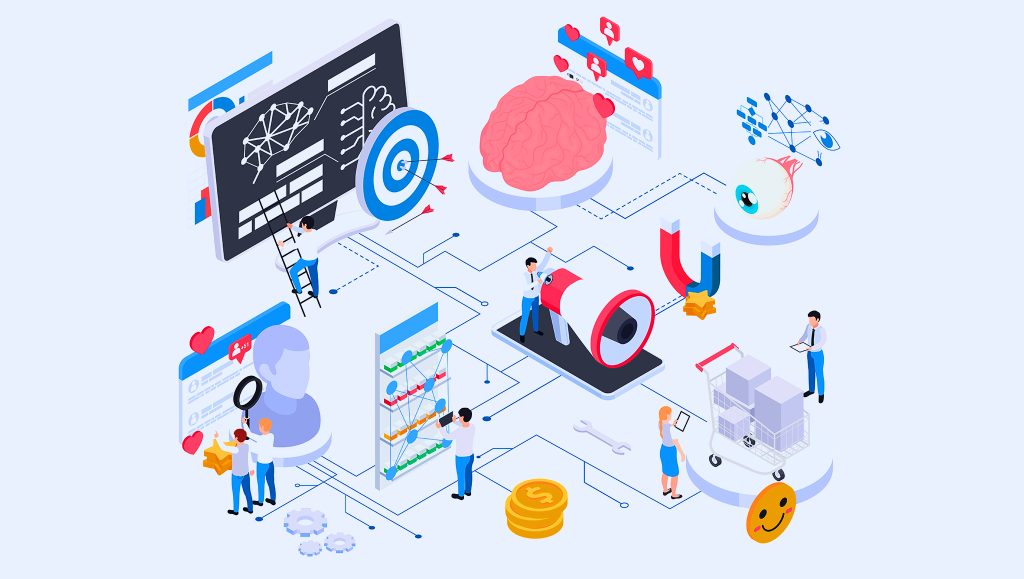

A new category of consulting, Integrated Revenue Systems, is emerging to fill the gap left by fractional CMOs, fractional CROs, and RevOps.
When mid-market B2B companies miss revenue targets, the default response is often predictable: hire a fractional CMO, bring in a fractional CRO, replatform the CRM, run more campaigns, or build a new pipeline dashboard. According to Revenue Architect Alexandria Ohlinger, these efforts often fail to address the root issue.
Gartner predicts that by 2026, 60% of B2B organizations will fail to build a functioning end-to-end revenue process and will revert back to functional silos. The reason cited is not necessarily talent or budget, but the continued attempt to solve the problem through organizational design alone by adding leadership roles within existing structures.
According to Ohlinger, many companies lack clear ownership of the system that connects sales and marketing. She argues that departments, agencies, and software platforms are typically designed to optimize individual functions rather than the integration between them.
Read More: SalesTechStar Interview with Sahil Rekhi, Chief Revenue Officer at Graia
To address this challenge, Ohlinger has developed an approach she calls Integrated Revenue Systems™. The framework is designed to sit between strategy and execution, focusing on the integration layer between sales and marketing while treating both functions as part of a unified revenue system rather than separate departments. Ohlinger serves non-SaaS B2B companies ranging from $5 million to $200 million in annual revenue.
Ohlinger believes adjacent categories do not fully address the needs of many mid-market firms. RevOps emerged largely from SaaS environments and often focuses on pipeline velocity and CRM administration. Go-to-market consulting frequently centers on product-led growth models and technology stacks common among SaaS startups. According to Ohlinger, many industrial services firms, manufacturers, and professional services companies operate under different conditions, including longer sales cycles, fragmented technology ecosystems, and founder-led sales processes.
“Fractional CMOs run marketing. Fractional CROs run sales. RevOps optimizes pipeline. CRM consultants install software,” Ohlinger says. “None of them own the connective tissue between functions. That’s why mid-market founders keep hiring all of them and still can’t build a predictable revenue engine.”
The Heroics Trap
Ohlinger refers to the underlying challenge as the “heroics trap.” In her view, many founders built successful companies through personal effort, relationships, and instinct, but those same approaches can become limiting as organizations scale.
“The founders I work with are the reason their companies got to $20M, $50M, $80M,” she says. “They’re also the reason it’s stuck there. The operating model that built the business is the one that’s now blocking it.”
Read More: SalesTech for Sales Email Engagement – What Works and What Doesn’t
According to Ohlinger, the pattern often appears in similar ways: sales and marketing operate with different definitions of qualified leads, reporting relies on inconsistent processes, CEOs remain heavily involved in selling, AI tools are purchased but not fully implemented, and quarterly growth initiatives fail to produce expected revenue outcomes.
Why This Approach Is Emerging Now
Ohlinger points to three forces converging on mid-market B2B companies.
Generative AI has made it easier and more affordable to produce content, automate workflows, and execute outbound initiatives. However, she argues that automation operates on top of existing systems and may amplify inefficiencies when underlying processes are not aligned.
Buyer behavior has also evolved. Prospective customers increasingly complete research and evaluation before engaging with sales teams. Marketing teams may create content that is not fully integrated into the sales process, reducing organizational alignment.
In addition, the talent market has tightened. According to Ohlinger, many companies in this segment cannot justify hiring separate executives for sales, marketing, and revenue operations, creating demand for integrated approaches.
“Companies are buying parts,” Ohlinger says. “What they need is architecture.”
What’s Next
Ohlinger is developing a licensed delivery model intended to allow other practitioners to implement Integrated Revenue Systems™ using her methodology. She plans to expand the approach beyond her consulting practice through partnerships, speaking engagements, and practitioner training.
Her speaker platform at AlexandriaOhlinger.com is scheduled to launch this quarter alongside additional thought leadership content at leadway.ai focused on Integrated Revenue Systems™ and B2B revenue operations.
“Fractional CMOs and CROs were the answer for the last decade,” Ohlinger says. “They’re not the answer for this one.”