Artificial intelligence is no longer just assisting human decision-making but is actually taking part in commercial transactions, and enterprise commerce is now entering a new era. All industries are quickly deploying intelligent systems that can analyze data, evaluate suppliers, optimize prices, and automate procurement workflows. What this is doing is creating machine-to-machine commerce where buyer and seller agents, powered by AI, talk directly to each other to buy and sell with minimal human involvement. As companies continue to digitize their operations, AI Salestech is emerging as a transformative force changing how enterprise buying and selling functions.
Historically, enterprise commerce has relied heavily on human-driven negotiations, procurement teams, sales representatives, and manual approval processes. Business buying cycles often required weeks or months of communications, vendor comparisons, and contract discussions before transactions could be completed. The traditional models are, however, changing through advances in automation, machine learning, and intelligent analytics. Modern companies are increasingly leveraging AI systems to parse massive amounts of commercial data, find opportunities, and offer advice faster than human teams can handle by hand.
What’s accelerating the transformation is the growing use of AI agents in procurement, logistics, sales, and customer operations. Organizations today are using AI-enabled systems to track supplier performance, analyze market conditions, forecast customer demand, and automate repetitive administrative tasks. These smart systems can continuously analyze data from different sources, enabling companies to make smarter and more efficient commercial decisions. That’s why AI Salestech is being embedded deep into the workflows and operating strategies of enterprises.
Another significant development is the rise of autonomous systems capable of analyzing vendors, pricing structures, contracts, inventory availability, and purchasing conditions in real time. AI-powered procurement platforms can instantly compare suppliers, negotiate pricing recommendations, and optimize purchasing decisions based on business objectives without the need for manual review. On the seller side, AI systems are getting smarter with dynamic offer adjustments, managing product availability, and automatic responses to buyer intent. Such evolution is driving enterprise commerce to extremely intelligent and adaptive ecosystems driven by AI Salestech technologies.
We have already witnessed industries moving from human-led buying to AI-assisted buying and AI-automated buying. Big enterprises are using AI tools to enhance sourcing, increase efficiency, and cut procurement lead times. AI agents can generate requests for proposals, evaluate compliance requirements, track supply chain risks, and optimize vendor relationships. These capabilities help to simplify operations and enable companies to respond more quickly to changing market conditions.
At the same time, intelligent agents are taking on an increasing role in handling repetitive commercial interactions. Today, AI-driven systems can automatically manage routine negotiations, pricing changes, contract renewals, customer support inquiries, and inventory coordination. This allows human teams to spend more time on strategic decisions, relationship management, and complex business negotiations. The growing importance of AI Salestech is part of a bigger trend towards operational automation and intelligent enterprise ecosystems.
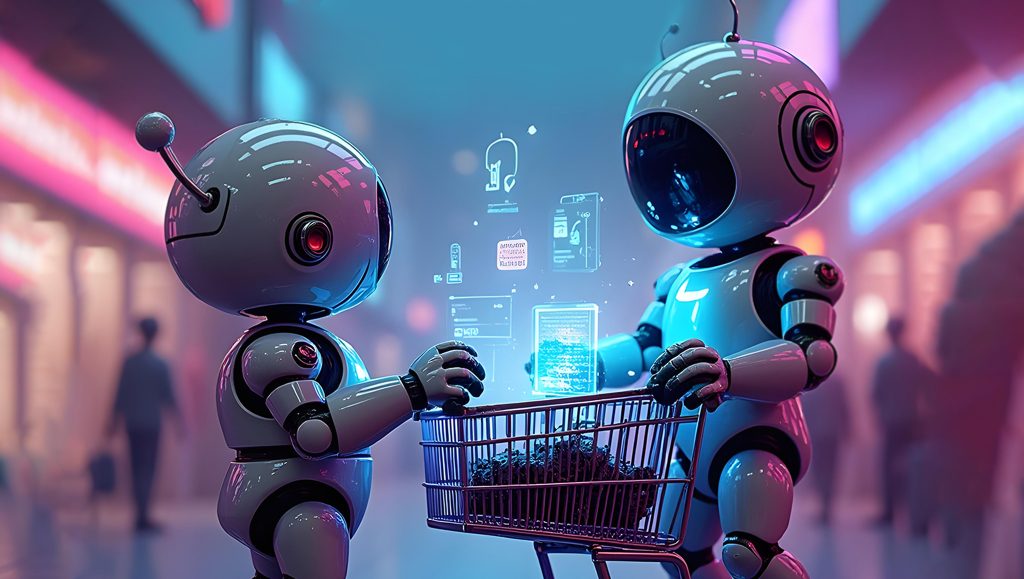
AI-to-AI salestech is the next step in enterprise digital transformation as it goes beyond automation to autonomous commercial engagement. Buyer bots and seller bots can talk directly to one another using APIs, intelligent negotiation systems, and predictive analytics platforms to consummate transactions at machine speed. Such systems can learn from past interactions on a continuous basis and hence improve the accuracy of their decision-making and optimize the business outcome over time.
Ultimately, AI-driven buyer and seller agents could change how businesses buy, sell, and negotiate commercial relationships. AI Salestech will redefine enterprise commerce as organizations increasingly embrace intelligent procurement and sales ecosystems, enabling faster transactions, smarter decision-making, and highly autonomous business operations.
Understanding AI-to-AI Salestech
The enterprise commerce space is transitioning from traditional digital transformation to intelligent machine-driven business ecosystems. More and more organizations are deploying autonomous systems that can do procurement, pricing, negotiations, and customer interaction with minimal human involvement. This trend is driving the growth of AI salestech, where buyer-side and seller-side AI systems speak directly to each other to streamline enterprise transactions and boost operational efficiency.
The adoption of AI across industries is increasing, and businesses are starting to rethink how B2B retailing works. Enterprises are building intelligent systems that can make real-time decisions based on market conditions, procurement needs and customer behavior rather than relying on manual communication and human-led negotiations.
What is AI-to-AI Salestech?
AI-to-AI salestech refers to the use of autonomous AI systems that communicate directly with each other to carry out commercial activities such as sourcing, pricing, negotiations, procurement and sales operations. They are not just passive support tools, like traditional automation used to support human teams, but active participants in commercial decision-making processes.
Today’s salestech ecosystem is filled with AI agents on the buying side that assess procurement needs, compare vendors, evaluate pricing models, and judge vendor reliability. Seller AI systems are active and responsive to the market, by automating offers, inventory management, generation of personalized pricing model and term negotiation. This computer-to-computer communication is more efficient and faster for commercial transactions.
AI agents can now execute complex workflows that procurement officers and sales representatives used to carry out. Intelligent systems can help partially or fully automate supplier evaluation, request for quote generation, contract analysis, inventory coordination and pricing negotiations.
Traditional sales automation and autonomous AI commerce systems are very different. Classic automation tools are primarily designed to facilitate human-driven processes such as CRM administration, lead scoring, and email automation. AI salestech systems, on the other hand, are more autonomous, making commercial decisions, optimising negotiations and executing transactions with limited human involvement.
This marks a paradigm change in enterprise commerce where AI systems are evolving from passive tools to active business players who can impact purchasing outcomes and sales strategies.
Evolution from Human-Led Sales to Autonomous Commerce
In the past, B2B sales processes relied heavily on human interaction, relationship building, and manual negotiation. Procurement teams evaluated vendors, compared pricing options and negotiated contracts through lengthy communication cycles. For a long time, salespeople were the outreach team, overcoming objections and nurturing relationships with customers.
These processes allowed for strategic decision-making and relationship management, but they were often time-consuming and operationally expensive. As companies around the world grew larger and their supply chains became more complex, they began investing in automation technologies to improve efficiency and scalability.
The first stage of digital sales transformation saw the emergence of CRM automation, predictive analytics and conversational AI. Companies used AI-powered systems to automate repetitive administrative tasks, improve customer segmentation and generate data-driven insights. Chatbots and smart assistants also became popular tools to communicate with customers and handle leads.
But the next evolution of AI salestech isn’t just automation. Today, enterprises are developing intelligent procurement ecosystems where AI agents independently evaluate market conditions, compare vendors, optimize purchasing decisions, and negotiate in real-time.
This drive to autonomous commerce is changing the way companies think about procurement and sales operations. AI systems are becoming better at learning from past interactions, adapting to changing business environments and providing strategic recommendations with higher precision.
Thus, AI is emerging as an active participant in enterprise commerce instead of a support technology. Buyer bots and seller bots can communicate directly with each other through APIs and the cloud-based systems, which enables transactions to take place faster and more efficiently than traditional human-led transactions. Emerging autonomous commercial ecosystems are demonstrating how AI salestech is making enterprise decision making smarter, predictive and data-driven.
Read More: SalesTechStar Interview with Ilyas Kurklu, Co-founder and CEO of Replenit
Core Components of AI-to-AI Sales Ecosystems
AI-to-AI commerce ecosystems are built on several technologies and intelligent systems. Buyer AI agents can help to evaluate purchasing needs, compare suppliers, monitor budgets and identify the best buying opportunities. These systems can process vast amounts of market data at the speed of light, allowing organizations to make more informed procurement decisions.
On the other side of the transaction are AI agents representing sellers. These systems handle product availability, price optimization, personalization of recommendations and generation of automated responses to buyer inquiries. On the seller side, AI platforms are constantly adjusting strategies based on customer behavior, inventory status and market demand.
Real-time pricing engines are also a critical component of the modern AI salestech ecosystem. These systems are to automatically adjust prices based on supply, demand, competition, buying behavior and market trends. Dynamic pricing increases agility, while optimizing profitability and operational agility.
Autonomous commerce is also an important role for smart contract systems. The platforms can automatically draft, review and execute contracts based on pre-defined business rules and procurement conditions. The combination with blockchain technologies further enhances the transparency and security of digital transactions.
API-driven commerce infrastructure allows frictionless communication between enterprise systems, AI platforms, procurement tools, and cloud-based services. APIs enable buyer bots and seller bots to share information in real time while orchestrating workflows across multiple business applications.
Lastly, AI governance and compliance layers make certain that autonomous systems act responsibly and within regulatory boundaries. As the AI salestech environment becomes more sophisticated, organizations should implement oversight frameworks around transparency, cybersecurity, ethical use of AI and accountability.
Collectively, these technologies are creating highly intelligent enterprise ecosystems where machines can negotiate, transact and optimize commercial relationships at an unprecedented speed and scale.
How Buyer Bots and Seller Bots Interact?
Autonomous enterprise systems are changing the way commercial transactions are managed across industries. Organizations are not communicating in the way they used to and making use of smart AI agents to automate procurement, pricing, negotiations and purchasing workflows. A new era of machine to machine commerce is being initiated by implementing AI lestech into it.
Today, buyer bots and seller bots operate in interconnected digital environments in which AI systems communicate information, assess opportunities, negotiate terms, and carry out transactions with little human intervention. These interactions are transforming enterprise operations by increasing speed, improving efficiency and reducing manual complexity.
a) AI-Powered Procurement Agents
Buyer-side AI agents are emerging as one of the most important elements of modern AI salestech ecosystems. These intelligent procurement systems take into account supplier options, budgets, pricing structures, inventory availability and purchase requirements in real time.
Procurement bots can compare prices, delivery timelines, compliance records and supplier performance in an instant rather than having to go through multiple vendors manually. This means organizations can make more informed purchasing decisions and reduce delays in operations.
AI based systems can also help in automating the generation of RFQs (Request for Quote) and comparing vendors. Procurement agents shall select the most appropriate suppliers according to established business rules and procurement objectives. This automation greatly reduces the time for sourcing and evaluation.
AI also enables another key capability: supplier risk scoring. Intelligent procurement systems can evaluate financial stability, market reputation, delivery reliability and historical performance to identify potential supply chain risks. This means AI salestech increases procurement accuracy and lowers operational uncertainty for businesses.
b) Smart Seller Bots
AI systems at the seller’s end are equally critical in AI-to-AI commerce environments. These bots automatically handle product catalogs, inventory levels, pricing strategies and customer engagement. Smart seller agents constantly monitor the market and buyers’ behavior to make the best commercial decisions in real time.
Seller bots can dynamically alter pricing depending on changes in demand, competitor activity, or inventory availability. Seller bots can respond with personalized pricing and product recommendations in real-time when AI systems on the buyer-side request bulk orders or expedited deliveries.
Another major benefit of AI salestech is the ability to generate responses on the fly. Using
buyer intent, purchase history and procurement patterns, seller bots help create very relevant recommendations and automated upselling opportunities. AI systems can also tailor product bundles to the needs of the enterprise. Seller bots don’t just provide generic solutions, but they create customized packages to optimize the business value and conversion rates.
c) Automated Negotiation Workflows
Auto-negotiation is one of the biggest game-changers in AI salestech. AI systems are always available for use in negotiations over pricing, delivery schedules, service agreements and contract terms without human involvement. Buyer and seller bots continuously exchange information, optimizing commercial outcomes according to pre-defined objectives. The systems analyze market conditions, availability of suppliers, historical transactions and demand forecasts to enhance negotiation strategies in real time.
The ability to learn continuously enables AI systems to improve their performance in negotiations over time. The AI agents learn from previous interactions and transaction results to improve their prediction of which pricing models and contract types will work best.
Automated negotiations also increase consistency, and reduce delays in the traditional procurement cycle. Smart AI salestech systems help companies respond more quickly to shifting market conditions – without compromising on operational efficiency.
d) Machine-Speed Decision Making
Traditional enterprise procurement and sales cycles can take days or weeks due to manual approvals, negotiations and administrative processes. AI-to-AI commerce radically accelerates these processes by enabling machine-speed decision making. Transactions that used to take multiple meetings, emails and approvals can now happen in seconds. Buyer bots quickly evaluate supplier alternatives, while seller bots react dynamically with price changes and inventory updates.
Real-time commercial optimization is another big upside to AI salestech. AI systems are continuously tracking supply chain activity, demand fluctuations and market conditions to automatically adapt procurement strategies.
For example, in case of inventory shortages or supply chain disruptions caused by transport delays, AI agents can quickly find alternative suppliers or organize new delivery timings. This responsiveness minimizes operational disruptions and enhances business continuity. AI-powered procurement acceleration lowers administrative costs and raises transaction efficiency across enterprise ecosystems.
e) Smart Contract Execution
Smart contract technologies are increasingly being integrated into AI-based commerce systems. These contracts automatically perform transactions and approvals when pre-defined business conditions are met.
AI can also reduce approval times through automating payment processing, vendor approval and compliance checks. Smart contracts can verify transactions in a matter of moments rather than through a trail of paperwork and sign-offs.
Blockchain integration adds another advantage to AI salestech ecosystems by providing an improved security and transparency and verification of transactions. Smart contracts on decentralized systems reduce the risk of fraud and provide a more dependable digital contract.
Self-executing procurement contracts are particularly useful for recurring enterprise transactions. The AI systems can automatically renew contracts, change the purchasing volumes and make payments depending on the operation needs. As autonomous commerce evolves, AI salestech will increasingly enable organisations to operate at machine speed, as well as increasing procurement accuracy, operational efficiency and commercial scalability.
Business Impact of AI-to-AI Salestech
Autonomous enterprise systems are developing fast and transforming how companies buy, sell, negotiate and manage commercial relationships. AI-enabled buyer bots and seller bots are allowing businesses to automate procurement, streamline negotiation, and optimize enterprise transactions at an unprecedented speed. As companies continue to invest in intelligent automation, AI salestech is quickly becoming a major force in driving operational efficiency, cost reduction and data-driven decision-making across industries.
Modern AI salestech systems, as opposed to traditional automation tools which are limited to human workflows, act proactively in procurement and sales activities. These systems analyze data, negotiate terms, evaluate suppliers, and carry out transactions with minimal human intervention. As a result, companies are starting to operate with greater agility and scalability in increasingly competitive markets.
a) Faster Enterprise Transactions
One of the most immediate uses of AI salestech is to speed up enterprise transaction cycles. Traditional B2B procurement and sales processes are often long chains of communication, manual approvals, vendor comparisons, contract negotiations, etc. that can take weeks or even months to complete.
AI-powered systems make this much easier by automating repetitive commercial workflows and empowering decision-making at machine speed. Buyer bots can quickly evaluate procurement needs and compare vendors, while seller bots dynamically respond with price changes, delivery timelines, and product recommendations.
Key transaction benefits include:
- Faster RFQs & Vendor Assessments
- Automatic Procurement Approvals
- Real-time price negotiation
- Reduced delays in administration
- Ongoing supply chain harmonization
AI salestech reduces manual intervention, improving operational efficiency and allowing enterprises to respond more rapidly to market opportunities.
b) Reduced Operational Costs
Another major business impact of AI salestech is that it can reduce costs Enterprise negotiations and manual procurement processes require significant labor resources, administrative oversight and operational coordination. A lot of these repetitive activities are automated by AI-driven systems, so you don’t need big manual teams.
Organizations can reduce costs related to:
- Procurement management
- Vendor management
- Contract review procedures
- Customer Questions and Answers
- Pricing approvals and coordination
AI-powered automation also enables better allocation of resources across procurement and sales teams. Human employees can concentrate on strategic planning, relationship management and high value commercial decisions rather than repetitive transactional tasks.
With businesses going global, AI salestech helps keep things efficient without adding much to the operation cost. This scalability is becoming increasingly important for enterprises operating across complex supply chains and international markets.
c) Hyper-Personalized Enterprise Sales
Today’s AI salestech solutions are also transforming enterprise selling with advanced personalization capabilities. The AI-powered seller bots continuously analyze procurement behavior, customer history, market trends and buying patterns to provide highly targeted recommendations and commercial offers.
Instead of generic sales outreach, organizations can build context-aware engagement strategies that dynamically adapt to customer needs. Seller-side AI systems might recommend tailored product bundles, price optimizations, or alternative procurement options based on previous interactions.
Personalized enterprise selling may include:
- AI-powered product recommendations
- Dynamic configurations of services
- Contextual Pricing Tactics
- Opportunities for automated upselling
- Predictive demand forecasting
This form of intelligent personalization enhances customer satisfaction and improves conversion rates and long-term customer retention. And as enterprise buyers increasingly demand personalized experiences, AI salestech is emerging as a critical competitive advantage for B2B organizations.
d) Better procurement accuracy
AI-enabled procurement systems are also helping to make enterprise operations more accurate in decision-making. Traditional procurement workflows often depend heavily on manual analysis, human judgment, and fragmented supplier information, which can increase the risk of errors or inefficient purchasing decisions.
AI salestech helps organizations assess suppliers using real-time data and predictive analytics. Buyer bots are continuously scanning vendor performance, pricing trends, compliance records and delivery reliability to identify the best procurement options.
This data-driven approach reduces human error, and improves consistency of procurement and reliability of operations. AI-pulse procurement accuracy benefits include:
- Better supplier evaluation
- Reduced procurement risks
- Improved inventory management
- Smarter purchasing decisions
- Stronger compliance monitoring
AI salestech enables businesses to optimize their procurement strategies, while reducing operational disruptions through improved accuracy and transparency.
e) Dynamic Pricing and Market Responsiveness
Dynamic pricing is another area where AI salestech is having a major business impact. AI systems can monitor market conditions, customer demand, competitor activity, inventory levels and supply chain disruptions in real time and automatically adjust pricing strategies.
Often traditional pricing models struggle to adapt to changing market conditions. AI-powered pricing engines, on the other hand, are constantly optimizing prices based on actual business conditions.
This real-time adaptability allows businesses to:
- Optimize profitability
- Improve competitive positioning.
- Respond faster to supply chain disruptions
- Adjust pricing during demand fluctuations
- Optimize commercial negotiations automatically
Automated pricing intelligence also gives you more operational flexibility in uncertain market conditions. Businesses using AI salestech can react more quickly to economic shifts, procurement shortages and changing customer behavior.
f) Expansion of Autonomous Commerce Models
One of the most transformative effects of AI salestech adoption is the emergence of autonomous commerce ecosystems. Enterprises are increasingly moving to AI-driven B2B marketplaces where procurement, negotiations, supplier management and contract execution is happening automatically through connected intelligent systems.
These self-sufficient ecosystems allow for ongoing, real-time commerce with little human intervention. Buyer bots and seller bots are talking to each other through APIs, cloud-based systems and AI-powered marketplaces to synchronize transactions efficiently.
New capabilities in autonomous commerce include:
- AI-managed procurement platforms
- Intelligent supply chain coordination
- Autonomous inventory optimization
- Self-adjusting procurement systems
- Machine-driven commercial negotiations
As autonomous enterprise ecosystems continue to emerge, AI salestech will be at the forefront of shaping the future of B2B commerce.
Risks and Ethical Concerns
But while there are benefits, the rise of AI salestech is accompanied by significant ethical, legal and operational challenges. As autonomous systems take on more responsibility in procurement and sales operations, companies will have to tackle questions of transparency, bias, cybersecurity, accountability, and human oversight.
a) Transparency and Accountability Challenges
One of the big problems with AI salestech is that it can be hard to understand how AI systems make business decisions. Machine-learning models are often “black boxes,” which makes it difficult for organizations to explain why they chose certain vendors, pricing structures or procurement decisions.
Trust between businesses and customers can be compromised by opaque algorithmic negotiation processes. In negotiations and procurement decisions, organizations may find it difficult to know whether the AI systems are making fair and ethical decisions.
Companies should implement transparent AI governance frameworks to ensure visibility of decision-making processes involving automation and accountability.
b) Bias in AI Procurement Systems
Bias is another major challenge for autonomous commerce systems. AI models are trained on historical data, and if that data reflects existing biases, procurement systems could inadvertently favor some vendors, pricing models or geographic locations unfairly.
Potential risks include:
- Discriminatory supplier evaluation
- Unfair pricing recommendations
- Vendor exclusion based on biased data
- Unequal procurement opportunities
Companies deploying AI sales technology need to routinely audit their algorithms and ensure their procurement processes are equitable, inclusive, and ethical.
c) Cybersecurity & Fraud Risks
The rise of autonomous transaction ecosystems also increases cybersecurity vulnerabilities. APIs, cloud platforms, IoT devices, and interconnected enterprise networks that AI-powered procurement systems rely on are vulnerable to cyberattacks.
Hackers may attempt to influence procurement decisions, steal sensitive commercial information, or attack vulnerabilities in AI-based negotiation systems.
To leverage AI salestech, businesses must invest in:
- Robust API architecture
- Systems for Data Encryption
- Continuous threat monitoring
- AI fraud detection solutions
- Multi-level cybersecurity frameworks
Autonomous commerce ecosystems may be exposed to operational disruption and financial fraud through weak security controls.
d) Data Privacy and Commercial Confidentiality
Enterprise systems driven by AI process sensitive procurement and commercial data at a huge scale. This includes pricing structures, agreements with suppliers, purchase history, customer behavior and financial records.
Sharing AI data across platforms introduces risks of confidentiality and unauthorized access. But businesses also need to ensure that AI salestech systems are compliant with data privacy regulations and protect commercially sensitive information.
Good governance policies and sound data management practices are the basis for trust in the enterprise.
e) Legal and regulatory challenges
As autonomous commercial systems become more sophisticated, legal and regulatory issues are becoming increasingly complex. Many AI procurement environments leave questions of liability, accountability and governance unanswered.
For instance:
- Who is responsible if AI negotiates an unfair contract?
- How should disputes involving autonomous procurement systems be resolved?
- What regulations should govern AI-driven commercial decisions?
As organizations adopt AI salestech, they will need to develop clear compliance frameworks and be ready to address evolving regulatory requirements around AI governance.
f) Loss of Human Supervision
One of the last concerns regarding AI salestech is the risk of over-dependence on automation. “Autonomous systems are more efficient, but if we rely too heavily on automation for commercial decisions, businesses could be missing out on valuable human judgement and strategic oversight.”
Human expertise still counts for:
- Ethical decision-making
- Complex negotiations
- Relationship management
- Strategic procurement planning
- Governance and accountability
The future of enterprise commerce will likely be a blend of intelligent automation and meaningful human oversight. The businesses that can best blend the efficiency of AI with the judgment of humans will be the ones best placed to build trusted and sustainable ecosystems of autonomous commerce.
Human Sales Teams in an AI-to-AI World
The rapid evolution of autonomous enterprise commerce is reshaping the role of human sales professionals. As buyer bots and seller bots become more heavily involved in sourcing, negotiating, pricing and procurement workflows, companies are entering a new phase of business where many operational transactions are handled by machines independently. But that doesn’t mean human sales teams are going away. Rather, the increase of AI salestech is shifting sales roles from transactional execution to strategic advisory, governance, and relationship-based roles.
While AI-to-AI commerce ecosystems may be built on frequent buying interactions at machine speed, human expertise will still be required to oversee trust, complex negotiations, ethics, and business strategy over the long term. Powered by AI salestech, enterprise sales will become a hybrid commercial environment where intelligent systems and human professionals work closely together in the future.
Evolution of Sales Roles
Traditional B2B sales roles were often heavily focused on repetitive tasks such as lead qualification, product presentations, pricing discussions and procurement coordination. Sales representatives spent large amounts of time managing administrative processes and transactional communication.
With the advent of AI salestech, many of these repetitive tasks are becoming automated. AI-driven systems can now make suggestions, analyze procurement habits, customize outreach, recommend pricing models and even negotiate simple contract terms without human intervention.
This, in turn, is making salespeople into more strategic business advisors.
The key changes in sales jobs are:
- Reduced focus on repetitive transactional selling
- Greater emphasis on consultative selling and problem-solving
- Increased involvement in long-term relationship management
- Strategic oversight of AI-driven commercial interactions
- Higher focus on enterprise trust-building and collaboration
Rather than competing with automation, sales professionals are increasingly turning to AI salestech tools to work more efficiently and focus on higher-value work that involves emotional intelligence and strategic thinking.
a) Strategic Advice or Transactional Sales
That’s one of the biggest shifts happening in enterprise commerce: moving from transactional sales to strategic advising. AI systems are very good at handling structured and repetitive workflows, but struggle with ambiguity, complex relationship dynamics and long-term business vision.
That’s why human sales professionals are becoming more and more important in areas such as:
- Multi-stakeholder negotiations
- Enterprise transformation consulting
- Long-term partnership development
- Risk assessment and governance discussions
- Strategic procurement planning
Enterprise deals can be complex and involve organizational politics, regulatory issues, cross-border operations, and bespoke commercial structures that require nuanced judgment. AI salestech can provide analytical support, but human expertise is still crucial for navigating uncertainty and ensuring business relationships align with broader strategic objectives.
As more organizations move to autonomous procurement systems, sales professionals will need to differentiate themselves by offering strategic insights, not just the routine execution of operations.
b) Increased Emphasis on Relationship Management and Trust Building
Trust is one of the most valuable assets in enterprise commerce. AI salestech automates procurement and negotiation, but businesses still lean heavily on trusted relationships to make high-value commercial decisions.
And it falls to human sales professionals to nurture those relationships with empathy, collaboration and long-term engagement. Human interaction is still hard to beat in terms of trust, reputation, and communication, which are key factors in many enterprise partnerships.
Relationship management responsibilities can include:
- Managing strategic enterprise partnerships
- Resolving disputes and misunderstandings
- Building executive-level trust
- Supporting long-term customer retention
- Facilitating collaborative innovation initiatives
AI systems can optimize for efficiency, but they cannot replicate human emotional intelligence or interpersonal trust. This is why many organizations will continue to depend on human-led collaboration as AI salestech keeps expanding across procurement ecosystems.
c) Human Oversight and Governance
As commercial systems powered by AI become more autonomous, businesses will need to develop more robust governance and oversight frameworks. AI will power negotiations but human professionals will be needed to monitor them, to ensure ethical procurement and regulatory compliance.
One of the biggest challenges with autonomous systems is transparency. AI-driven procurement agents typically depend on complex machine-learning models that can be difficult to interpret. Human oversight is key to holding these systems accountable and in line with organizational values.
Human governance responsibilities can include:
- Monitoring AI negotiation decisions
- Ensuring ethical pricing and procurement practices
- Reviewing vendor selection outcomes
- Managing compliance and legal accountability
- Preventing algorithmic bias and discrimination
The growth of AI salestech will require professionals who can blend commercial expertise with knowledge of AI governance. Companies will need teams who understand the enterprise sales strategy and the operational risks involved in autonomous decision-making.
d) Strategic Sales Consulting
Another expanding role in AI-enabled commerce environments is strategic sales consulting. As AI takes care of the mundane administrative tasks, human professionals can dedicate more time to designing customized solutions and handling high-value negotiations.
Complex enterprise transactions require deep industry knowledge, creativity and collaborative problem solving. Strategic consultants help organisations to develop the right technology investments, procurement strategies and operational objectives in line with long-term business goals.
In AI-to-AI ecosystems, AI salestech systems could automate:
- Proposal generation
- Initial pricing recommendations
- Procurement comparisons
- Contract drafting
- Workflow coordination
In the meantime, human professionals handle:
- Customized enterprise solutions
- Cross-functional stakeholder alignment
- Strategic contract negotiations
- Executive relationship management
- Business transformation consulting
The hybrid model allows organizations to combine machine efficiency with human strategy.”
e) Relationship Building & Emotional Intelligence
And while automation is moving fast, one of the most important benefits that human professionals bring to enterprise commerce is emotional intelligence. AI systems struggle to genuinely emulate empathy, creativity, persuasion and trust-building.
Business relationships are full of uncertainty, the need to resolve conflict, and communication that requires subtlety. People are better at interpreting emotional signals, reading cultural context and managing sensitive negotiations.
Key human-centered skills that remain critical include:
- Active listening and empathy
- Creative problem-solving
- Conflict management
- Negotiation flexibility
- Relationship nurturing
As AI salestech continues to evolve, emotional intelligence may be an even more valuable asset, as it is a uniquely human capability in an increasingly automated business environment.
f) AI-Augmented Sales Teams
The future of enterprise sales will likely be AI-augmented teams, not fully automated commercial systems. Sales reps will work alongside intelligent assistants that have the ability to analyze data, offer recommendations and automate repetitive workflows.
AI-driven systems can deliver real-time insights on customer behavior, procurement trends, market conditions, and negotiation opportunities. This intelligence can then be used by human professionals for better strategic decisions.
The benefits of AI-augmented sales teams include:
- Faster access to business insights
- Better forecasting and predictive analytics
- More engagement with the customer
- Less paperwork
- Better coordination of cross-enterprise operations.
By working together, companies can get the best out of both human expertise and AI salestech capabilities.
Future Outlook: Autonomous Enterprise Marketplaces
The future of enterprise commerce is increasingly shifting to autonomous digital ecosystems where AI agents manage procurement, negotiations, pricing and fulfillment with minimal human intervention. For example, a world of connected AI systems could mean businesses operating in fully autonomous marketplaces that can process transactions 24/7, 365 days a year, anywhere in the world, at machine speed.
The rise of AI salestech will radically transform how organizations buy, sell, negotiate and manage supply chains across industries.
a) AI-Native Procurement Ecosystems
Future procurement ecosystems will probably be built for AI interactions rather than for human-led workflows. Enterprise systems will rely increasingly on machine-readable catalogs, automated pricing engines, and AI-optimized compliance frameworks.
Buyer bots will be continuously analysing procurement needs and seller bots will be adjusting inventory, pricing and recommendations in real-time.
Key features of AI-native procurement ecosystems may include:
- AI-readable supplier databases
- Automated vendor qualification systems
- Real-time procurement optimization
- Predictive inventory coordination
- Autonomous compliance monitoring
With the rise of AI salestech adoption, procurement operations will become smarter, scalable and in tune with market conditions.
b) Machine-Readable Commercial Infrastructure
Machine-readable infrastructure will be a foundational element of autonomous commerce. Catalogs, pricing models, procurement policies, and compliance documentation will be increasingly formatted by enterprise systems in ways optimized for AI interpretation.
This will enable AI agents to:
- Instantly compare suppliers
- Automate pricing conditions analysis
- Regulatory compliance check
- Control Workflows for Fulfillment
- Make procurement decisions independently
Machine-readable ecosystems will reduce operational friction and enable AI salestech-powered enterprise transactions that are faster and more accurate.
c) Self-Negotiating Commercial Contracts
One other potentially revolutionary development in future enterprise commerce may be self-negotiating contracts. AI agents will increasingly negotiate prices, delivery schedules, payment structures and service agreements by themselves.
These smart systems will analyze:
- Historical transaction information
- Market conditions for price-setting.
- Supplier performance measures
- Availability in stock
- Risk and compliance obligations
Dynamic contracts can constantly adapt to changing business conditions. For example, pricing structures could be automatically adjusted during supply chain disruptions or demand fluctuations.
The emergence of self-negotiating contracts suggests that AI sales technology is transitioning from automating workflows to making full autonomous commercial decisions.
d) Autonomous Enterprise Marketplaces
Autonomous Enterprise Marketplaces are the next evolution of B2B commerce. These ecosystems will consist of AI-enabled buyer agents, seller agents, logistics systems and procurement platforms continuously interacting without the need for human coordination.
Future autonomous markets might feature:
- AI-managed supplier discovery
- Automated procurement workflows
- Intelligent logistics coordination
- Autonomous payment processing
- Machine-speed inventory optimization
Businesses in these ecosystems will gain access to faster transactions, lower operational costs and improved scalability.
The future of AI salestech could see autonomous marketplaces become the norm across industries like manufacturing, healthcare, retail, logistics and enterprise software procurement.
e) Continuous Real-Time Commerce
Traditional enterprise transactions can be delayed by manual approvals, communication gaps, and administrative processes. AI salestech-driven autonomous commerce systems aim to remove these delays by enabling continuous real-time commercial activity.
Buyer bots and seller bots will run 24/7, constantly assessing market conditions and automatically changing procurement strategies. Enterprise buy and sell continues without waiting for business hours or human intervention.
Continuous commerce offers the following benefits:
- Faster procurement cycles
- Real-time pricing optimization
- Immediate supplier adjustments
- Reduced operational bottlenecks
- Improved supply chain resilience
This leap to machine-speed commerce will dramatically increase enterprise agility and responsiveness.
f) Human-Centered Governance Frameworks
Future autonomous commerce ecosystems will still require human governance even with increased automation. Businesses, regulators and policy makers will need to develop ethical frameworks to help manage innovation alongside accountability.
As AI salestech systems gain more decision-making power, organizations will be under growing pressure to ensure transparency, fairness, and cybersecurity.
Possible future governance priorities may include:
- Ethics in AI oversight
- Transparent Procurement Algorithm
- Control of regulatory compliance
- Cybersecurity protection
- Human review of high risk decisions
Governments may also introduce new regulations around autonomous procurement systems, AI negotiations and machine-led commercial deals.
Conclusion:
AI-to-AI enterprise commerce is one of the most important changes in the history of B2B sales and procurement. Autonomous buyer bots and seller bots are dramatically transforming the way organizations handle sourcing, negotiations, pricing, contracts and supply chain coordination. As intelligent automation adoption continues to accelerate by businesses, AI salestech is maturing from a support technology to a key element of enterprise commerce infrastructure.
One of the most prominent results of this transformation is speeding up business processes. Where traditional procurement cycles required long communication, manual negotiations and administrative approvals, these processes can now happen in real time through autonomous AI systems. Smart procurement agents can analyze suppliers, compare pricing, assess risks and execute transactions much faster than human teams alone. This machine-speed commerce environment is fundamentally re-defining efficiency and scalability in enterprise ecosystems.
At the same time, the growth of AI salestech does not eliminate the need for human professionals. Rather it changes the nature of human beings in enterprise sales. Automating routine and repetitive tasks is freeing up human sales teams to focus on higher value activities such as strategic consulting, relationship management, governance and innovation. In areas like emotional intelligence, trust building, ethical decision making and creative problem solving, human expertise still counts.
Enterprise relationships are more than operational efficiency. Big commercial partnerships often come down to trust, collaboration and long-term strategic alignment. Organizational complexity, dispute resolution, sensitive negotiations, and building confidence at the executive level are areas where human professionals are indispensable. Even in AI-salestech-driven, highly automated ecosystems, businesses will continue to rely on human-centric relationships to sustain competitive advantage and long-term growth.
But the rapid growth of autonomous commerce systems also presents serious challenges. As AI systems assume increasing decision-making responsibilities, ethical issues of transparency, accountability, bias, cybersecurity and regulatory compliance will become more pressing. Companies must ensure that AI-enabled procurement and negotiation systems are fair, secure and transparent. Trust will have to be maintained, and the risks inherent in autonomous commercial interactions will have to be mitigated through sound governance frameworks.
In the future, enterprise ecosystems will likely run on AI-native procurement platforms and autonomous marketplaces where buyer bots and seller bots will be constantly negotiating. They will transact and optimize commercial activity without manual delays. These environments will depend on machine-readable infrastructure, real-time analytics, dynamic contracts and predictive decision making systems enabled by advanced salestech capabilities. Commerce may increasingly function as a continuous, always-on process across global digital ecosystems.
But this automation will not eliminate the need for human oversight to guarantee ethical accountability and strategic alignment. The future of enterprise commerce is likely to be a mix of human judgment and machine efficiency. Those organizations that are able to effectively blend intelligent automation and responsible governance with relationship-oriented leadership will be best positioned to thrive in the next era of AI-driven commerce.
At the end of the day, AI salestech could transform the way businesses negotiate, buy and manage commercial relationships. As buyer bots and seller bots take over more routine enterprise transactions, human professionals will move toward strategic advisory and governance roles. The future of B2B commerce might be machines doing business at machine speed, but human ingenuity, trust and long-term vision will continue to shape the evolution of enterprise relationships and innovation.
Read More: You Have Cloned Your Voice. Now Your AI Is Making Cold Calls