Home Blog Page 5211

SRAX Announces Growth of SRAX IR Platform and Enhanced Features

SRAX, Inc., a digital marketing and consumer data management technology company, unveiled significant new features to its  SRAX IR platform, which enables issuers of public stock to analyze and engage shareholders.

SRAX IR is quickly becoming an essential part of the public company ecosystem. With over 20 companies/partners on the platform the company has a goal of reaching 100 by the end of 2019. SRAX IR is a SaaS platform that while providing invaluable insights to public company issuers, delivers a long-term recurring revenue stream for SRAX and builds one of the most valuable data sets in the industry.

Read More: Americans Desire THESE Technologies When Eating Out

“Our goal is to build tools that create long term recurring revenue streams for the company, we have accomplished that with SRAX IR,” stated Christopher Miglino, CEO and founder of SRAX. “With SRAX IR’s new features, public companies will increase insight to influence their narrative, augment outreach, and optimize engagement across communication channels. These enhancements are the first of many planned opportunities to develop additional tools. SRAX IR is quickly becoming a one-stop shop for publicly-traded companies to not only monitor shareholder activity, but also effectively market against the rich data generated in the platform.”

Read More: Bruce Xu: Taking Retailing to Next Level by WorthCloud

SRAX IR New Features

  • Contact Info Lookup delivers comprehensive audience data including phone numbers, emails, and social media links for LinkedIn, Facebook, and Twitter to enable issuers to connect directly with shareholders.
  • Warrant Management enables issuers to monitor and manage warrants as well as to calculate proceeds at different price scenarios in an interactive environment.
  • Situation Room provides real-time data to help issuers understand the price at which certain investors are buying and selling equities.

Read More: Instagram #Ad Use Grew by 90% in the First Half of 2019

iKala Provides Google Cloud Marketing Analytics Solutions for EC Industry

Drawing from its rich experience in data-driven marketing and digital transformation solutions, iKala GCP.expert has invented a Cloud for Marketing (C4M) strategic structure. Utilizing its Big Data Lake solution, and with Google Cloud’s powerful data analytics and AI technology at its core, iKala can help customers quickly implement four smart marketing strategies to efficiently complete their digital transformation, while increasing the revenue and value of the company brand.

Trust the Data: Four E-Commerce Marketing Tips from iKala

Strategy #1: Performance Ads

First, measure the quantitative result of every advertisement placed by establishing a media evaluation mechanism. Then, perform a multifaceted comprehensive evaluation that offers insight on the audience overlap of different media ads. By identifying which media platforms complement or detract from one another, it will raise the efficacy of the ad placements.

Strategy #2: Omni-Channel Customer Journey Optimization

Track the customer’s journey, improve their perceived value, and create a suitable user scenario. By tracking the consumer across multiple devices (whether it’s smart phone, tablet, or computer) in real-time, users can gain insight on the customer’s behavior, and optimize the buyer’s journey. By recommending products in a customized scenario, it can dramatically decrease websites’ bounce rate, maximize conversion rate, and ultimately achieve the goal of increasing sales.

Read More: inMarket to Acquire Thinknear, Expand Location-Based Marketing Solutions

Strategy #3: Scenario-Oriented Recommendation

Gain insight on your client by improving customer intimacy. Utilize the process of feature engineering to build a precise profile of your customer. Construct a data mining model and predictive analytics model to better understand user habits, life cycles, retention and repurchase projections, etc. The ultimate goal is to build a long-term customer relationship by accurately grasping the principle of the 5 Ws: Who is your user group? When are they exposed to your message? What is the content of your message? Which part of your message takes top priority? Where will you place this message for users to see?

Strategy #4: AI Powered Persona for Contextual Marketing

Using machine learning to construct analytics and predictive models offers a more multifaceted view of the big picture. In the past, the RFM model was widely used. This model measures the recency, frequency, and monetary value of customer spending; however, a marketing strategy boxed in by these three dimensions fails to take other users’ behaviors into account, and so it may be inadequate to respond to market needs. Intelligent empowerment uses AI to enhance the model, allowing branded e-commerce companies to see a complete customer profile in real time, thus achieving the objective of precision marketing.

As Traffic Growth Tapers Off, Marketing Becomes More Fragmented

As the cost of digital advertising continues to rise, and more and more providers enter the market, internet users’ growth has not only slowed down, but the user population is also showing signs of shrinkage. The era when traffic growth could be boosted by the increasing number of people going online has officially come to an end. And there is more for digital marketing teams in branded e-commerce companies to fret about. As consumers gain access to an increasing number of different devices, they are inundated by information. Digital marketing campaigns are not just competing with one another; they must wrest the users’ attention from other distractions, such as social media. Fragmentary marketing data is spread across multiple channels. If these valuable puzzle pieces cannot be collected and cobbled together a complete story, the companies will never get a comprehensive picture of who they are selling to.

iKala GCP.expert Retail & EC Solution Page
iKala GCP.expert Customer Success Stories
A look back: iKala Propels Big Data-Driven Precision Marketing with Google Cloud

Read More: Groupon Acquires Presence AI to Enhance Booking Experience

Combine Technology with Creativity to Enhance Brand Experience

As digital marketing and the e-commerce industry continue to transform, marketing specialists must remain flexible and make full use of the latest technology. They must use analytics tools to better understand the customer, and they must deliver the right message to the right audience through diverse channels, so their creative marketing content could have the intended effect. Based on this concept, iKala has been successful in creating many products that combine technology with creativity. For instance, KOL Radar, the biggest internet influencer matchmaking platform in Taiwan, uses AI technology to optimize its influencer recommendation database. Conceived in Taiwan but operating in Southeast Asia, Shoplus is an online community e-commerce tool that uses intelligent chatbots to meet social sellers’ needs. StraaS is a commercial streaming service that combines cloud streaming with AI technology for audio and video application purposes. PicaaS uses AI deep-learning to automatically touch up photos. GCP.expert provides data analytics services for marketing. These are all examples of how an intimate brand experience for customers can be achieved with the support of cutting-edge technology.

Read More: Apollo.io Launches Its Self-Service Platform, Empowering Businesses and Opening Up Data-Backed Intelligence

Current Attribution Solutions ‘Verging on Useless’, Say Digital Marketers – Survey

Lack of Credible Attribution Renders Marketers Susceptible to Pressure to Invest in ‘Favourite’ Channels, with ‘Maximising ROI’ Just a Pipedream Paid Lip-Service

Digital marketing managers have slammed current attribution solutions as verging on useless, in a new survey commissioned by QueryClick. Unreliable or false attribution leaves almost 90% of marketers afraid to invest in activities with any kind of long-term payback because of their inability to prove the value. Fewer than one-in-seven marketers find that adjusting their marketing investments based on attribution insights delivers the predicted results. Overall, the survey reveals that marketers find current attribution insights tools are of negligible, arguably negative, value.

In the absence of credible attribution insights, more than two-thirds of respondents (67.5%) report that internal stakeholder pressure restricts their option to invest in marketing activity that has a longer payback period than last-click measures. Six in ten respondents feel under pressure to over-invest in Paid Search because of its instant results and easy measurability, only 15% of respondents feeling no pressure to do so.

Read More: Instagram #Ad Use Grew by 90% in the First Half of 2019

As a consequence, only 14.5% of respondents disputed the idea that their SEO and PPC strategies are misaligned for maximum overall return on their digital marketing investments.

Digital marketing agencies which often claim to help their clients maximise ROI are also held responsible for sub-optimal ROI by respondents: a substantial 60.5% agree that agencies tend to over-focus on PPC because it enables them to demonstrate immediate results, even though doing so may not maximise ROI for the client.

“In reality it’s irrelevant whether the pressure to invest in short-term measures like PPC came first and the lack of credible attribution to resist that pressure came second, or whether the unacknowledged deficiencies of attribution are causing marketing managers, their managers and agencies to default to short-term measures like PPC. The fact is that, after twenty years of everything digital being supposedly measurable, attribution is digital marketing’s dirty secret; a huge broken promise that will cost UK companies a significant proportion of the £15bn it will spend directly on digital marketing this year alone and far, far more when you factor in the missing return on that investment,” said QueryClick founder and CEO Chris Liversidge.

Read More: Bruce Xu: Taking Retailing to Next Level by WorthCloud

Key survey responses:
  • 58% of respondents feel constrained by their current attribution model(s) from implementing marketing activities with a long-term payback, with only 11% in disagreement
  • faced with the statement “Investment changes we make based on attribution insights generally fail to deliver the predicted results”, 61.5% of respondents agreed and fewer than one in seven disagreed
  • over 90% of all respondents apply more than one attribution model, with Data-Driven (21.5%), Position-Based (20.5%) and First Interaction (12.5%) accounting for over half of respondents’ primary attribution models
  • marketers using the third-most-popular First Interaction attribution model are disproportionately unlikely to find their attribution insights helpful in changing their investment strategies, followed by marketers using Position-Based and Last Click models. Marketers using Data-Driven attribution are most likely to find their insights of value
  • asked directly, almost 6 in 10 respondents (58.5%) suspect that their SEO and PPC strategies are not aligned for maximum overall return on investment (ROI) for their marketing budgets; only 14.5% disagreed
  • asked indirectly, amid a question about the primary reason why their SEO and PPC strategies are misaligned, the proportion of respondents confident of alignment dropped even further, to just 5.5%

The latter statistic suggests 94% of respondents know full-well that their investments are sub-optimal. Primary reasons for this varied, headed by budget – always an easy target – on 26%. However management pressure to focus on a particular channel (22%), decisions made by agency (16%), decisions made by respondent and their team (16%) and inaccurate/no attribution (14%) followed closely.

Read More: Americans Desire THESE Technologies When Eating Out

Given the experience and seniority of respondents, potential explanations for this are limited but include:

  • management has access to better information than the digital marketing team, but isn’t sharing (unlikely)
  • management is taking a short-term view and wants immediate results at the expense of long-term optimisation of ROI
  • the digital marketing team does not have sufficient credible information to be able to resist management pressure

Liversidge added: “The survey tells us time and again that attribution is something done as a matter of course, but without much conviction, and rightly so: if the insights gleaned from historical analysis cannot help marketers to perform better ‘next time’, then the accuracy of that historical analysis must be in doubt. When we factor in that marketers feel under pressure from management and agencies to invest in specific channels, we might also speculate that pretty much everyone is aware that current digital marketing attribution is little more than an unacknowledged charade.”

QueryClick brought a Unified Analytics solution, Corvidae, to market in 2018. Using a completely new approach to attribution, it blends online and offline data, of any type or quality, using a patented machine-learning approach. It cleanses marketing data and reveals up to 334% more data for attribution than any other available solution. During its first pilot, Corvidae delivered a 37% media spend reduction and a £976k revenue uplift across £11.8m of multichannel media spend, giving an overall ROI of 40:1 for the client.

Read More: 2019 Customer Sales and Service World Awards Recognizes Makers Nutrition

Utopia Global, Inc. Brings on Chief Customer Officer to Accelerate Its Growth

Utopia Global, Inc., a global leader in enterprise data software and services, announced that Doug Gattuso has joined the company as Chief Customer Officer. Doug will have global responsibility for sales, business development and marketing.

Doug has held various sales and operational leadership positions throughout his career across the US and internationally in Latin America and Europe, including President of a leading nearshore IT services provider, NEORIS, and as Partner & Managing Director at Computer Sciences Corporation (CSC) Consulting (now DXC). Under Doug’s leadership, NEORIS achieved 500% growth in the USA and during his time with CSC, Doug was instrumental in the development and deployment of the company’s application outsourcing strategy and their Global WorldSourcing organization in addition to holding regional leadership responsibilities for sales, marketing, and delivery.

Read More: 68% of Aussie C-Suite Still Struggle to Prove ROI When Using Location Data in New Study

“Over the last 17 years, we have relied on two major drivers for success: a laser-like focus on customer needs and cutting-edge innovation. Doug has always put customers first in his career and his addition to our executive team as Chief Customer Officer re-emphasizes the voice of the customer within our organization,” said Utopia CEO, Arvind J. Singh. “We are delighted to welcome Doug back to Utopia where he successfully served as our SVP of Sales and Marketing in 2014-2015,” added Singh.

Read More: Comscore, ListenFirst Media Announce Partnership to Deliver Cross-Platform Branded Content Measurement

“I’m very excited to be returning to Utopia at such a special time in the company’s history. With 17 years of successful innovation, Utopia has weathered through challenges and emerged as a thriving contributor within the SAP ecosystem. With an established leadership position as an SAP software Solution Extension and Services partner for end-to-end data solutions, Utopia has reached the tipping point and is poised to move into a new level of growth. This will be an exciting time for our customers, partners and colleagues,” noted Doug.

Doug holds a Computer Science degree from the United States Naval Academy in Annapolis, Maryland and subsequently achieved the rank of Captain in the United States Marine Corps prior to beginning his work in commercial sectors.

Read More: Twinings Chooses e.Fundamentals to Help Boost E-Commerce

Getting Started with LinkedIn Live

LinkedIn Live is LinkedIn’s version of Facebook or Instagram Live. This new platform allows users to broadcast live video to their network, and allows company pages to broadcast to their followers. The platform is being rolled out slowly and is currently being piloted by a small group of users, so it isn’t yet available to the general public, but you can apply to be a part of the pilot program.

I was able to get early access to LinkedIn Live as part of the alpha group (more on how to get in below). While I applied via LinkedIn’s contact form, I also emailed everyone that I could find who’s posted something under the hashtag #LinkedInLive. This included broadcasters in the alpha program, LinkedIn Product Managers running this new initiative, and people running the third-party platforms you need in order to broadcast. I’m still not sure who exactly got me approved. But, a week later I got a message from LinkedIn saying I was in.

A month ago, when I was first able to start livestreaming, it was estimated there were around 200 people in this alpha program. However, it has continued to grow and now I’d estimate there are over 500 people that have the ability to livestream on LinkedIn.

It’s unclear if LinkedIn will allow all users to eventually use this functionality. If that happens, it will most likely be more than 9 months from now as the program is still in its infancy. Right now, it’s still just for the early adopters. And, in my opinion, it will be the early adopters who get the most value from it.

Benefits of LinkedIn Live

Like many of the new features on a given social network, LinkedIn Live provides benefits that can’t be replicated as easily elsewhere online.

A wide audience: The biggest benefit of LinkedIn Live is definitely the ability to live stream to a large network. Any time you go live, everyone who follows you will receive a notification on LinkedIn and a push notification on their mobile device. This will no doubt go away and is a key benefit that early adopters get for being on the platform. In the meantime, the current users of the platform get added reach. This is especially true for companies trying to build an audience with HR, Sales or any of the other core power user demographics on LinkedIn.

Getting Started with LinkedIn LiveProduct Influence: By being an early adopter of the technology, you have the opportunity to define what the future of the platform will look like. By getting on LinkedIn Live before the general public, you can give LinkedIn feedback on what’s working, and what’s not. This is a great way to ingratiate yourself with the Product Managers of one of the most important social networks at a time when they are hungry for feedback.

Define the Medium: The early adopters are now trying to figure out what content works the best. Is it educational, AMAs, roundtables – the people and organizations who figure this medium out first will have a large headstart in capturing a valuable audience of business minded decision makers.

Broadcasting with Third-Party Tools

LinkedIn doesn’t currently allow you to broadcast video directly from their website or app, so they rely on third-party broadcasting platforms that you can connect to your LinkedIn account.  These providers also work with other live sources like Youtube, Facebook, Twitter, etc with your account.

The partners LinkedIn currently works with are Switcher Studio, Socialive, Wirecast, Restream.io, and Wowza (with more coming soon). Here’s a brief overview of the pricing and features of each of them. Each of the partners offers some sort of a free trial so you can find the one that works best for you!

Socialive:

A Socialive subscription costs $179 per month with a 14 day free trial. The platform offers standard graphics and overlays, a mobile app, and the ability to invite guest broadcasters.
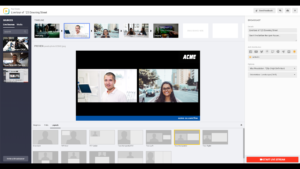
Getting Started with LinkedIn LiveWe used Socialive a few times. It’s a newer product and so we ran into a few bugs. However, their customer support team is stellar and they responded very quickly and were always willing to jump on the phone with us to trouble shoot whatever was happening at that time.

Switcher Studio:

Switcher Studio offers standard overlays to your videos and a solid mobile app. However, the video chat functionality, which allows you to have multiple video feeds comes at an additional cost. We have also tried out this product and found that it was very reliable when broadcasting from a single camera, but was more spotty when using the video chat functionality to bring in multiple broadcasters. Once you get a hang of the app, the functions are pretty simple to use. Pricing for personal use starts at $29 per month and $49 per month for businesses.
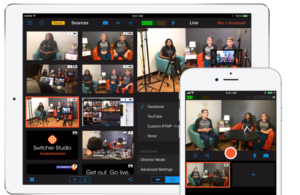
Getting Started with LinkedIn LiveIt’s also worth noting that this tool is offered on mobile only. So, make sure you have an iPad to use as a control center.

Wirecast:

Wirecast is more expensive than the competition (starting at $249 per month or $449 for multiple input sources) but comes packed with additional customization and features. This product is geared toward people with more advanced broadcast needs, but even boasts compatibility with a USB controller for the interface.
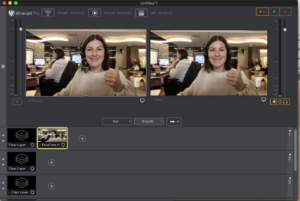
Getting Started with LinkedIn LiveLinkedIn’s two newest partners, Restream and Wowza offer similar live broadcasting services and start at $16 and $49 respectively. They are brand new to the platform and so we haven’t had time to play around with them.

Best Practices

The platform is very new and has some wrinkles being worked out, so here are some of our best practices for using the platform:

  • Make sure you are using a device with robust graphics performance to manage your broadcasts. We have had the fewest bugs when broadcasting from mobile devices like recent iPhones and iPads. These devices were built for video and seem to work a lot better than a traditional web browser. Even our brand new MacBook Air had issues processing video at a rate required for these streams.
  • Test all of your cameras, feeds, and overlays before beginning the broadcast. Though this doesn’t eliminate the possibility of a technology glitch, it certainly reduces the likelihood that something will go wrong while you’re live.
  • Have a friend who’s controlling the overlays and monitoring the broadcast and comments to ensure everything is running smoothly. They should also do their best to stimulate the discussion with pre-planned questions and comments.
  • Make sure your content is something that’s worth doing live. If it’s something you could pre-record and post on Youtube, you aren’t really going to benefit from doing it live. Think of content with which you can engage the audience through comments and questions, or by broadcasting events happening live.
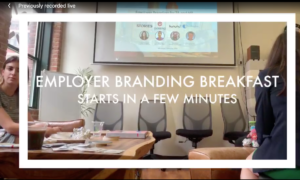
  • Start your broadcast 5 minutes before you plan to start the meat of the content. This gives your audience a chance to see the notification to join, and enter the stream. Have someone on your team post a few comments alerting people that the broadcast will begin shortly, and ask a question or two to engage the first people who join.
Getting Started with LinkedIn LiveWhat we’ve tried

We’ve tried a variety of different types of LinkedIn Live content from informational videos to live events, interviews, AMA’s, roundtables, and even game shows. As you would expect, we’ve had the most success with the most interactive events where we’re constantly asking the audience for their questions and comments.
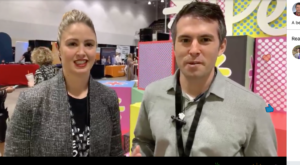
Getting Started with LinkedIn LiveFor example, our videos with the greatest viewership and engagement were the live game shows on HR Tech. We found a few contestants and asked them questions about the industry and asked the audience to participate. These were entertaining, informative, and very well received! Overall, Linkedin Live is a new, buggy, but very promising platform that allows B2B marketers a new way to engage with a large and valuable audience.

Have you tried anything on LinkedIn Live that’s worked well? Let us know in the comments!

Read more: How Can Your Organization Manage Candidate Queries Faster With Live Chat

inMarket to Acquire Thinknear, Expand Location-Based Marketing Solutions

Deal Will Cement inmarket as a Leading Location Marketing Technology Platform, Further Enriching Real-Time Predictive Advertising and Insights Capabilities

inMarket, the leader in digital advertising for the physical world, announced plans to acquire Thinknear, a premier provider of location-based services, from Telenav, Inc.. The acquisition will have Thinknear’s team and intellectual property join inMarket in exchange for Telenav receiving a minority equity interest in the fast-growing company. Following inMarket’s 10 years of bootstrapped expansion and 89% year-over-year growth in Q2 2019, the combined business will roughly double headcount and revenue. The transaction is subject to customary closing conditions and is expected to be completed during the quarter ending September 30, 2019.

In today’s current climate where a number of location companies have downsized or exited the media space, both inMarket and Thinknear have flourished with diversified, unique and effective product suites that clients embrace across a variety of verticals. Combining the Thinknear and inMarket businesses will create a marketing technology platform with clients across the automotive, quick service restaurant, retail, finance, healthcare and consumer-packaged goods industries. Longtime clients will gain new options to serve their needs via best-in-class managed as well as self-service platforms that lead performance benchmarks for ROI, viewability, and other measurement KPIs.

Read More: 2019 Customer Sales And Service World Awards Recognizes Makers Nutrition

“Since Thinknear’s founding days, we’ve been incredibly impressed with their reputation for industry-leading performance and accuracy. inMarket and Thinknear combined have almost two decades of successful location technology innovation, yet have tackled the opportunity of timing and targeting in very complementary ways. Combining these thriving solution sets allows us to further delight our clients and help them grow by consistently delivering high ROI consumer engagements,” commented Todd Dipaola, Chief Executive Officer and Founder, inMarket.

The acquisition will allow Thinknear’s clients to engage at the moment of truth through inMarket’s 50 million Comscore-verified smartphone integrations. These direct connections enable brands to identify and engage consumers during multiple touchpoints of the purchase journey, including as they walk into any location in the US.

Read More: Twinings Chooses E.Fundamentals To Help Boost E-Commerce

inMarket’s Moments technology delivers real-time, premium engagements with customers at precise locations during consideration and decision. inMarket clients will gain access to Thinknear’s place-based targeting and Geotype technology, which create valuable high-performing profiles around ideal customers based on location behavior. Thinknear’s Geolink is an advanced self-serve dashboard that will give inMarket clients one of their most requested features– the hands-on ability to launch campaigns themselves from trading desks.

All clients will also be able to tap into inMarket’s industry-leading insights, long cited as an authority on U.S. consumer trends by WSJ, Bloomberg, Business Insider and more to quantify consumer retail trends down to the SKU level. The resulting technology powerhouse will give clients a 360 degree view of their customers’ behavior, as well as their competitors’. As the dominant player in closed-loop activation and measurement today, inMarket continues to help the world’s most successful brands continue to accelerate growth in the future.

Read More: 68% Of Aussie C-Suite Still Struggle To Prove ROI When Using Location Data In New Study

Groupon Acquires Presence AI to Enhance Booking Experience

AI-powered messaging tool enables merchants to drive bookings, engage with customers, cut calls and save time

Groupon announced it has acquired Presence AI an AI-powered text and voice communications tool that enables and facilitates messaging between customers and merchants. Terms of the transaction were not disclosed.

Consumers––especially millennials––vastly prefer messaging and chat-based communications over phone calls.* Presence AI enables merchants to answer to that trend by offering a 24/7 business assistant that integrates with a merchant’s existing scheduling software––or replace pen and paper––to accept and manage bookings, provide instant answers to customer questions, remind people when it’s time to re-book and much more.

Read More: Comscore, ListenFirst Media Announce Partnership To Deliver Cross-Platform Branded Content Measurement

“We’re pleased to welcome the Presence AI team and their booking technology to Groupon. Booking is a key part of our voucherless initiative aimed at improving the redemption experience, providing always-on availability, giving consumers more reasons to buy through Groupon and opening up our marketplace to a broader range of merchants,” said Groupon Chief Product Officer Sarah Butterfass. “Presence AI’s technology is very complementary to what we’ve been building into our existing booking experience and will accelerate our roadmap with its text- and chat-based interface.”

Groupon increased bookable inventory 12 percent year over year** and booked tens of millions of diners, concert goers, spa visitors and more in 2018. As the company transitions towards universal bookability for certain services, Presence AI’s technology will provide merchants with the capabilities to support this booking vision.

“We’re very excited to join Groupon and continue transforming client conversations through the use of artificial intelligence,” said Presence AI co-founder and CEO Michel Meyer. “With more than 3 million text messages generated last year, Presence AI is saving merchants time and generating additional revenues. We can’t wait to bring our technology to more businesses.”

Read More: TIBCO Named An Enterprise BI Leader In Two Industry Reports For Its Client-Managed And Vendor-Managed Platform

Presence AI was founded in 2015 in San Francisco and operates in the health, beauty and wellness space, which is one of Groupon’s largest categories. The company already has a number of key integrations with popular booking software providers.

Presence AI was backed by the Amazon Alexa Fund and participated in the 2018 Alexa Accelerator, powered by Techstars, which supports early-stage startups using voice to deliver transformative customer and business experiences.

Read More: Media Chain Appoint Head Of Sales, Formerly Of UNILAD And LADBible

Meet the Entrepreneur Who Believes “Packaging Is the Most Important Part” of Gift-Giving

0

deltaglobal logoWhen it comes to giving a gift, is it still a case of what is on the inside that matters most – or is there something much more exciting about the packaging it comes in? We all know the thrill of receiving or buying ourselves a luxurious gift – and these days the experience is enhanced by the array of creative packaging it comes in.

Companies are increasingly aware that they need to woo their customers not only with a fabulous product, but the way it is wrapped must also live up to expectations. Whether it’s an item bought in a shop or online, how those goods are presented can be crucial in ensuring the consumer’s experience lives on, as well as the beginning of customer loyalty.

And, as shown by the huge rise in people sharing their exciting gift-opening – or “unboxing” – moments on social media, how a product is packaged can be a powerful Marketing tool. Delta Global, a business that specializes in delivering luxury packaging solutions, has worked with some of the world’s biggest brands, including Tom Ford, Coach, and Radley.

Its CEO and founder, Robert Lockyer, gives his reasons why he believes that packaging plays the biggest part in the gift-giving process:

1. Beautiful packaging creates an element of ‘theatre’

Pretty Woman is an example I always refer to when people ask me why I believe packaging trumps the gift itself. Everyone remembers the iconic scene in the film when Julia Roberts’ character Vivian steps out in her red dress and Richard Gere presents her with a navy suede necklace box. It’s in that moment when she sees the luxury finish of what is in front of her, that she knows something special is about to happen.

And it is this ‘something special’ that good packaging creates. An element of ‘theatre’ needs to be created because it builds anticipation that is often more exhilarating to experience than the product inside. If you’re not yet convinced, ask yourself this: Would you be genuinely excited to open something that is wrapped in a plain black bag as opposed to something presented to you luxuriously?

2. It creates an emotional connection with the consumer

Similarly, to that feeling of theatre, the packaging is one of the few ways in which brands can build emotions with their consumers. No brand has the resources to hand-wrap and personally deliver its products to customers, which means this personal experience needs to be replaced in other ways.

For luxury clothing company Ted Baker, it’s as simple as a small rectangular branded card included in all purchases signed ‘With love, Ted x’. It’s a small touch which makes an otherwise giant business feel like a local one. It’s effect? Consumers remember the little things and will be much more likely to re-purchase from them again.

For Tiffany & Co, just one of the many luxury brands that excel at creating emotions, it’s their iconic duck egg color box which customers love, becoming as coveted as the gift inside.

3. Re-usability

Sustainability is something we at Delta Global consider in every single one of our packaging designs, which means we always think beyond the presentation of the gift. Brands need to constantly look at the re-usability of their packaging so that it remains within the person’s home and isn’t just thrown into the bin after being opened.

If brands do it right, then it’s not uncommon for those receiving the product to hold on to the packaging and display it as proudly as they would the gift inside – plus they are helping the environment if they find it another use.

4. Marketing

Don’t just assume that because someone has bought from you once that they will again – you need to use your packaging as a way of building your brand.

It’s about ensuring zero brand dilution and guarding your brand values through everything you do, right through to how it’s packaged. Think Post-Sale how can you produce even less waste? By ensuring your product looks gift-worthy from the off – that way customers will not want to wrap it further.

Try to create something memorable that, if put into a line-up of other brands, is picked out every time without fail. And there is another means of Marketing which makes it even more essential to get your packaging right – the rise in ‘unboxing’ videos on social media.

The world is infatuated with watching their favorite online celebrities unbox their gifts on YouTube or Instagram. People have literally built careers around unboxing products from brands and filming the process.

It’s a simple concept that quite literally starts with the package being held up to the camera. What does it mean for the brands featured? Everything – if the packaging excites viewers. If not, it means that watchers will tune out, or even skip ahead to other, more ‘exciting’ brands.

Read more: Agency or DIY? the Behind the Scenes Trade-Offs of Marketing Allocation

Apollo.io Launches Its Self-Service Platform, Empowering Businesses and Opening Up Data-Backed Intelligence

Apollo’s intuitive platform is built on outstanding data with the ability to integrate seamlessly with Salesforce, HubSpot and others

Apollo announces its self-service platform, empowering businesses with intelligent sales and marketing. Apollo combines its database and workflows with tools for finding verified emails and direct dials as well as integrations that make existing tools like Salesforce and others even more potent. The company’s approach is to combine all contact, account, activity, and engagement information to change the way teams interact with data and realize their market potential.

Read More: Signifyd Launches Seamless SCA To Provide Customer-First PSD2 Solution

Apollo’s new platform allows businesses to experiment with its self-service version with a single click. Businesses can use 50 data credits per month offered in a free plan to get to know the suite of products offered by Apollo’s platform, including its database, intelligent filters, email automation tools, integrations and more.

“We’re very proud of the robust functionality of our data, its API, workflows, integrations, automations, and more,” said CEO Jim Benton. “Apollo’s platform makes it possible for businesses of all sizes to build outbound from scratch and ultimately, to be more predictable in how they grow. We believe Apollo’s platform is the best option out there for quality data with products that make that data more actionable, no matter how you work.”

Apollo’s platform gives businesses the power to set up end-to-end workflows powered by intelligent solutions from every stage of prospecting, marketing, sales, and even relationship management. Apollo integrates with CRMs like Salesforce and Hubspot as well as LinkedIn and email apps like Outlook and Gmail. Apollo also offers a marketing engine that enables an even more nuanced intelligent sales relationship journey.

Read More: ManagedMethods Increases Revenue By 141 Percent In The First Half Of 2019

Said JP Bertram, VP of Marketing at RolePoint, “With the direct dials provided by Apollo, we doubled our connect rates and booked 4 times as many opportunities, compared to other direct dial providers.”

Apollo stands enterprise ready at its self-service launch. Having gone through the most stringent global audits, the team is proud to be ISO27001 and SOC 2 compliant. Teams new to Apollo, or even to go-to-market strategy, can now use its dynamic Help Center offering on-demand training and sales best practices, empowering businesses to spare no time leveraging Apollo to make sales processes more intelligent and to maximize revenue potential.

Read More: Luminoso Launches New Capabilities To Accelerate Customer Feedback Analysis For Businesses Worldwide

Instagram #Ad Use Grew by 90% in the First Half of 2019

The Influencer Marketing company Buzzoole has released the results of its new research on the use of #ad on Instagram during the first half of 2019. Despite having been under scrutiny for issues such as Influencer fraud and a continued lack of transparency, the number of posts created shows a double digit growth of 90% YoY.

The analysis was conducted tracking the most common ‘transparency hashtags’ – #ad, #sponsored and #sp – across the globe, using a combination of social listening tools and previous research conducted during 2018. The number of sponsored influencer posts surpassed 1.7 million at the start of this year, growing by 800K compared to H1 2018 (1,733,424 vs 910,185). The engagement grew accordingly with 1.7 billion engagements. In 2017, the overall engagement across the 1.5M #ad posts shared was one billion interactions.

Read More: Vymo Raises $18 Million Series B To Help On-The-Go Sales Teams #DoMore

The second quarter of 2019 was the semester that showed the highest increase in the number of posts: 318,000 in April 2019 alone, compared with 114,000 in April 2018. Recent reports have shown that brands invest most of their online marketing budget in H2, and if this trend continues, Influencer Marketing is predicted to witness a record year for #ad in 2019 and surpass three million posts for the first time.

Buzzoole’s analysis also provides insights into the verticals and brands that have invested the most in this space. It found that Fashion (33%) and Beauty (15%) accounted for almost half  (48%) of #ad posts and 52% of the engagement created by the global sponsored content on Instagram. Globally, more than three quarters (76%) of the Creators in H1 2019 were women.

“It’s great to see Influencer Marketing skyrocketing, despite some continued industry concerns over fraud and transparency.” said Fabrizio Perrone, CEO and co-founder at Buzzoole. “The growth of #ad posts may also highlight an increased attention to make sure an ad looks like an ad. As the industry grows, it needs to mature in terms of best practices and the trend looks positive. The rise of influencer-generated and sponsored content shows that most marketers now consider Influencer Marketing a main conversion channel to reach the right audience.”

Read More: Bpm’online’s CEO Katherine Kostereva Among Top 50 SaaS CEOs Of 2019

The study is still ongoing and aims at understanding the market size as well as the opportunities presented by the Influencer Marketing sector. Further analysis on the global use of #ad on Instagram will be published by Buzzoole at the end of the year.

Fabrizio Perrone , continued: “It is an incredibly exciting time, but now more than ever, the industry must act responsibly and work with the highest quality Creators – especially when it comes to #ad content – to justify the increased budget shift towards influencer-created content.”

Read More: Dataiku Partners With Teradata University Network (TUN) To Bring AI Skills To The Classroom