Home Blog Page 5205

Groupon Acquires Presence AI to Enhance Booking Experience

AI-powered messaging tool enables merchants to drive bookings, engage with customers, cut calls and save time

Groupon announced it has acquired Presence AI an AI-powered text and voice communications tool that enables and facilitates messaging between customers and merchants. Terms of the transaction were not disclosed.

Consumers––especially millennials––vastly prefer messaging and chat-based communications over phone calls.* Presence AI enables merchants to answer to that trend by offering a 24/7 business assistant that integrates with a merchant’s existing scheduling software––or replace pen and paper––to accept and manage bookings, provide instant answers to customer questions, remind people when it’s time to re-book and much more.

Read More: Comscore, ListenFirst Media Announce Partnership To Deliver Cross-Platform Branded Content Measurement

“We’re pleased to welcome the Presence AI team and their booking technology to Groupon. Booking is a key part of our voucherless initiative aimed at improving the redemption experience, providing always-on availability, giving consumers more reasons to buy through Groupon and opening up our marketplace to a broader range of merchants,” said Groupon Chief Product Officer Sarah Butterfass. “Presence AI’s technology is very complementary to what we’ve been building into our existing booking experience and will accelerate our roadmap with its text- and chat-based interface.”

Groupon increased bookable inventory 12 percent year over year** and booked tens of millions of diners, concert goers, spa visitors and more in 2018. As the company transitions towards universal bookability for certain services, Presence AI’s technology will provide merchants with the capabilities to support this booking vision.

“We’re very excited to join Groupon and continue transforming client conversations through the use of artificial intelligence,” said Presence AI co-founder and CEO Michel Meyer. “With more than 3 million text messages generated last year, Presence AI is saving merchants time and generating additional revenues. We can’t wait to bring our technology to more businesses.”

Read More: TIBCO Named An Enterprise BI Leader In Two Industry Reports For Its Client-Managed And Vendor-Managed Platform

Presence AI was founded in 2015 in San Francisco and operates in the health, beauty and wellness space, which is one of Groupon’s largest categories. The company already has a number of key integrations with popular booking software providers.

Presence AI was backed by the Amazon Alexa Fund and participated in the 2018 Alexa Accelerator, powered by Techstars, which supports early-stage startups using voice to deliver transformative customer and business experiences.

Read More: Media Chain Appoint Head Of Sales, Formerly Of UNILAD And LADBible

Meet the Entrepreneur Who Believes “Packaging Is the Most Important Part” of Gift-Giving

0

deltaglobal logoWhen it comes to giving a gift, is it still a case of what is on the inside that matters most – or is there something much more exciting about the packaging it comes in? We all know the thrill of receiving or buying ourselves a luxurious gift – and these days the experience is enhanced by the array of creative packaging it comes in.

Companies are increasingly aware that they need to woo their customers not only with a fabulous product, but the way it is wrapped must also live up to expectations. Whether it’s an item bought in a shop or online, how those goods are presented can be crucial in ensuring the consumer’s experience lives on, as well as the beginning of customer loyalty.

And, as shown by the huge rise in people sharing their exciting gift-opening – or “unboxing” – moments on social media, how a product is packaged can be a powerful Marketing tool. Delta Global, a business that specializes in delivering luxury packaging solutions, has worked with some of the world’s biggest brands, including Tom Ford, Coach, and Radley.

Its CEO and founder, Robert Lockyer, gives his reasons why he believes that packaging plays the biggest part in the gift-giving process:

1. Beautiful packaging creates an element of ‘theatre’

Pretty Woman is an example I always refer to when people ask me why I believe packaging trumps the gift itself. Everyone remembers the iconic scene in the film when Julia Roberts’ character Vivian steps out in her red dress and Richard Gere presents her with a navy suede necklace box. It’s in that moment when she sees the luxury finish of what is in front of her, that she knows something special is about to happen.

And it is this ‘something special’ that good packaging creates. An element of ‘theatre’ needs to be created because it builds anticipation that is often more exhilarating to experience than the product inside. If you’re not yet convinced, ask yourself this: Would you be genuinely excited to open something that is wrapped in a plain black bag as opposed to something presented to you luxuriously?

2. It creates an emotional connection with the consumer

Similarly, to that feeling of theatre, the packaging is one of the few ways in which brands can build emotions with their consumers. No brand has the resources to hand-wrap and personally deliver its products to customers, which means this personal experience needs to be replaced in other ways.

For luxury clothing company Ted Baker, it’s as simple as a small rectangular branded card included in all purchases signed ‘With love, Ted x’. It’s a small touch which makes an otherwise giant business feel like a local one. It’s effect? Consumers remember the little things and will be much more likely to re-purchase from them again.

For Tiffany & Co, just one of the many luxury brands that excel at creating emotions, it’s their iconic duck egg color box which customers love, becoming as coveted as the gift inside.

3. Re-usability

Sustainability is something we at Delta Global consider in every single one of our packaging designs, which means we always think beyond the presentation of the gift. Brands need to constantly look at the re-usability of their packaging so that it remains within the person’s home and isn’t just thrown into the bin after being opened.

If brands do it right, then it’s not uncommon for those receiving the product to hold on to the packaging and display it as proudly as they would the gift inside – plus they are helping the environment if they find it another use.

4. Marketing

Don’t just assume that because someone has bought from you once that they will again – you need to use your packaging as a way of building your brand.

It’s about ensuring zero brand dilution and guarding your brand values through everything you do, right through to how it’s packaged. Think Post-Sale how can you produce even less waste? By ensuring your product looks gift-worthy from the off – that way customers will not want to wrap it further.

Try to create something memorable that, if put into a line-up of other brands, is picked out every time without fail. And there is another means of Marketing which makes it even more essential to get your packaging right – the rise in ‘unboxing’ videos on social media.

The world is infatuated with watching their favorite online celebrities unbox their gifts on YouTube or Instagram. People have literally built careers around unboxing products from brands and filming the process.

It’s a simple concept that quite literally starts with the package being held up to the camera. What does it mean for the brands featured? Everything – if the packaging excites viewers. If not, it means that watchers will tune out, or even skip ahead to other, more ‘exciting’ brands.

Read more: Agency or DIY? the Behind the Scenes Trade-Offs of Marketing Allocation

Apollo.io Launches Its Self-Service Platform, Empowering Businesses and Opening Up Data-Backed Intelligence

Apollo’s intuitive platform is built on outstanding data with the ability to integrate seamlessly with Salesforce, HubSpot and others

Apollo announces its self-service platform, empowering businesses with intelligent sales and marketing. Apollo combines its database and workflows with tools for finding verified emails and direct dials as well as integrations that make existing tools like Salesforce and others even more potent. The company’s approach is to combine all contact, account, activity, and engagement information to change the way teams interact with data and realize their market potential.

Read More: Signifyd Launches Seamless SCA To Provide Customer-First PSD2 Solution

Apollo’s new platform allows businesses to experiment with its self-service version with a single click. Businesses can use 50 data credits per month offered in a free plan to get to know the suite of products offered by Apollo’s platform, including its database, intelligent filters, email automation tools, integrations and more.

“We’re very proud of the robust functionality of our data, its API, workflows, integrations, automations, and more,” said CEO Jim Benton. “Apollo’s platform makes it possible for businesses of all sizes to build outbound from scratch and ultimately, to be more predictable in how they grow. We believe Apollo’s platform is the best option out there for quality data with products that make that data more actionable, no matter how you work.”

Apollo’s platform gives businesses the power to set up end-to-end workflows powered by intelligent solutions from every stage of prospecting, marketing, sales, and even relationship management. Apollo integrates with CRMs like Salesforce and Hubspot as well as LinkedIn and email apps like Outlook and Gmail. Apollo also offers a marketing engine that enables an even more nuanced intelligent sales relationship journey.

Read More: ManagedMethods Increases Revenue By 141 Percent In The First Half Of 2019

Said JP Bertram, VP of Marketing at RolePoint, “With the direct dials provided by Apollo, we doubled our connect rates and booked 4 times as many opportunities, compared to other direct dial providers.”

Apollo stands enterprise ready at its self-service launch. Having gone through the most stringent global audits, the team is proud to be ISO27001 and SOC 2 compliant. Teams new to Apollo, or even to go-to-market strategy, can now use its dynamic Help Center offering on-demand training and sales best practices, empowering businesses to spare no time leveraging Apollo to make sales processes more intelligent and to maximize revenue potential.

Read More: Luminoso Launches New Capabilities To Accelerate Customer Feedback Analysis For Businesses Worldwide

Instagram #Ad Use Grew by 90% in the First Half of 2019

The Influencer Marketing company Buzzoole has released the results of its new research on the use of #ad on Instagram during the first half of 2019. Despite having been under scrutiny for issues such as Influencer fraud and a continued lack of transparency, the number of posts created shows a double digit growth of 90% YoY.

The analysis was conducted tracking the most common ‘transparency hashtags’ – #ad, #sponsored and #sp – across the globe, using a combination of social listening tools and previous research conducted during 2018. The number of sponsored influencer posts surpassed 1.7 million at the start of this year, growing by 800K compared to H1 2018 (1,733,424 vs 910,185). The engagement grew accordingly with 1.7 billion engagements. In 2017, the overall engagement across the 1.5M #ad posts shared was one billion interactions.

Read More: Vymo Raises $18 Million Series B To Help On-The-Go Sales Teams #DoMore

The second quarter of 2019 was the semester that showed the highest increase in the number of posts: 318,000 in April 2019 alone, compared with 114,000 in April 2018. Recent reports have shown that brands invest most of their online marketing budget in H2, and if this trend continues, Influencer Marketing is predicted to witness a record year for #ad in 2019 and surpass three million posts for the first time.

Buzzoole’s analysis also provides insights into the verticals and brands that have invested the most in this space. It found that Fashion (33%) and Beauty (15%) accounted for almost half  (48%) of #ad posts and 52% of the engagement created by the global sponsored content on Instagram. Globally, more than three quarters (76%) of the Creators in H1 2019 were women.

“It’s great to see Influencer Marketing skyrocketing, despite some continued industry concerns over fraud and transparency.” said Fabrizio Perrone, CEO and co-founder at Buzzoole. “The growth of #ad posts may also highlight an increased attention to make sure an ad looks like an ad. As the industry grows, it needs to mature in terms of best practices and the trend looks positive. The rise of influencer-generated and sponsored content shows that most marketers now consider Influencer Marketing a main conversion channel to reach the right audience.”

Read More: Bpm’online’s CEO Katherine Kostereva Among Top 50 SaaS CEOs Of 2019

The study is still ongoing and aims at understanding the market size as well as the opportunities presented by the Influencer Marketing sector. Further analysis on the global use of #ad on Instagram will be published by Buzzoole at the end of the year.

Fabrizio Perrone , continued: “It is an incredibly exciting time, but now more than ever, the industry must act responsibly and work with the highest quality Creators – especially when it comes to #ad content – to justify the increased budget shift towards influencer-created content.”

Read More: Dataiku Partners With Teradata University Network (TUN) To Bring AI Skills To The Classroom

Bruce Xu: Taking Retailing to Next Level by WorthCloud

Bruce Xu, CEO of Wanjiaan Group, the parent group of WorthCloud, Wanjiaan Intelligent Technology Co,. Ltd, was invited to speak about How AI Empowers Smart Retail Industry at the Tencent Cloud AI touring salon.

He indicated that with the development of cloud computing, big data, Internet of Things and artificial intelligence, many business models and products have been innovated and industry changes have taken place, as well as retail industry. Through the internet of things, data is accumulated by way of communication between connected devices and computers. As a result, consumers may enjoy a more personalized, faster, and smarter experience.

Whether it is face recognition, big data application or SaaS (Software-as-a-service), through the integration of online and offline, it improves the recognition ability of enterprises to consumers. WorthCloud platform focuses on providing smart retail solutions for traditional retail stores, helping them reduce costs and improve efficiency, and achieving “retailing evolution.” During the presentation, WorthCloud presented its AI capabilities from three aspects: application center, CMS and transparent platform.

Read More: Twinings Chooses E.Fundamentals To Help Boost E-Commerce

New versus Traditional Retail

The issues with traditional retail are often stuck in the selection, location, marketing, experience, operation and management. Before the store opened, WorthCloud recorded passenger flow and user portraits through AI camera equipment to assist the store in location selection. In marketing,WorthCloud acquired user’s buying habits through customers in the store to achieve promotions. In operation management, it combined with TencentCloud. Integrated AI cameras with WorthCloud algorithms analyzed the customer buying behavior data, creating customer profiles to increase buying opportunities. Integrated with a virtual assistance system can easily approach customer profiles and provide personalized recommendations.

WorthCloud – CMS

WorthCloud business intelligence empowers the applications to achieve functions such as scanning to pay. It empowers infrastructure to achieve customer flows statistics. Service provider, suppliers and retailers all together support the channels and split responsibilities through purchases and services.

Read More: Media Chain Appoint Head Of Sales, Formerly Of UNILAD And LADBible

Transparent Supply Chain

In the process of launching new retailing, all partners in the ecosystem, including Tencent Cloud and WorthCloud all have to reorganized. The relationship between brand and retailer, supplier and channel, products and service provider needs to be reconstructed and collaborated. Supply chains are the core of retail industry to control whether the stores are profitable. From traditional supply chain hierarchy to online and offline separation.

The implementation of smart retail-related processes has completely altered the landscape of the sales industry. Decentralization, optimization and transparency, all play necessary roles within the process. Continuous research and growth will provide benefits to the whole industry.

Read More: Partnerize Launches New Capabilities To Automate More Types Of Partnership

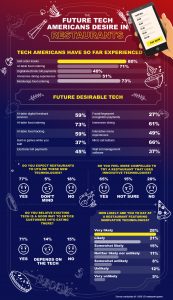
Americans Desire THESE Technologies When Eating Out

  • 73% of Americans wish to order food at their table – the most desirable restaurant technology.
  • New restaurant features attract more custom, as 65% claim they would be more compelled to visit.
  • 71% believe new tech is an effective way to tempt customers.
  • Over three quarters (77%) expect restaurants to be utilising new technologies.

We’re all partial to exciting new technologies. Whether it’s the newest smart phone or speaker, we all yearn to get our hands on it.

Technology encompasses us, but not only in the obvious way of personal gadgets. We can often overlook how it enriches many aspects of our lives. In particular, when we go out to eat.

To rejig our memories, OnBuy.com surveyed 1,689 Americans on their attitudes towards restaurant technologies. Here’s what they thought.

Americans Desire THESE Technologies When Eating Out

Read More: Trend Micro First To Deliver XDR Across Email, Network, Endpoint, Server And Cloud Workloads

It’s no surprise that self-order kiosks are the most familiar tech to Americans at 80%– most McDonalds and service stations now feature these. This is followed by:

  • Ordering food via a mobile app (73%)
  • At-table food ordering (71%)
  • Immersive dining experiences (51%) *
  • Digital-electronic bill payments (40%)

A clear priority emerges with the type of tech we want to see. American people desire an easy/convenient experience that also engages them – hence the most desirable tech is at-table food ordering (73%), followed by micro call buttons (66%) and immersive dining (61%).

Closely following are:

  • At-table digital feedback services (59%)
  • At-table food tracking (59%)
  • Interactive menu experiences (49%) **
  • Electronic bill payments (45%)

Read More: 2019 Customer Sales And Service World Awards Recognizes Makers Nutrition

And the least favoured restaurant technologies are:

Wait list management software (37%) ***, built-in games while you wait (37%) and facial/fingerprint recognition payments (27%).

A resounding number of respondents expect restauranteurs to implement new technologies – 77% expect it, 18% don’t, and 5% don’t mind.

Not only this, but new tech will evidently attract more custom. 65% of Americans are more intrigued by a restaurant utilising innovative tech. This is compared to 20% who aren’t, and 15% who say they’re not sure.

Overall, Americans are in favour of new restaurant tech. 71% believe tech will successfully entice customers into visiting. 15% don’t, while 14% are sceptical, explaining it depends on the tech.

Finally, when asked how likely they are to eat at a restaurant featuring these technologies, most believe they will. 28% answered very likely, followed by likely (21%), somewhat likely (15%), unlikely (12%), neither likely nor unlikely (11%), somewhat unlikely (8%) and very unlikely (5%).

Read More: 68% Of Aussie C-Suite Still Struggle To Prove ROI When Using Location Data In New Study

2019 Customer Sales and Service World Awards Recognizes Makers Nutrition

Makers Nutrition and other Customer Sales and Service World Awards Winners will be Honored at the 2019 SVUS Red Carpet Awards Ceremony Dinner in San Francisco on Monday, October 28, 2019

Makers Nutrition has been named the winner of three honors in the Annual 2019 Customer Sales and Service World Awards for its dedication to customers satisfaction and success. The coveted annual Customer Sales and Service Awards program with active participation from a broad spectrum of industry voices, encompasses the world’s best in Sales and Service or Contact Center individuals, teams, departments, and achievements.

Judges from a broad spectrum of industry voices from around the world participated and their average scores determined the 2019 award winners. Winners will be honored in San Francisco on Monday, October 28, 2019 during the annual SVUS Red Carpet Awards Ceremony Dinner in San Francisco attended by the finalists, winners, judges and industry peers.

Read More: Assante Wealth Management Chooses Box for Cloud Content Management

Makers Nutrition won the following awards:

1. GOLD Customer Service Outstanding Performance of the Year – Manufacturing
2. SILVER Customer Service Team of the Year – Client Relations – Consumer Products and Services
3. BRONZE Most Effective Customer Service Improvement Strategy

Customer service is clearly an area Makers Nutrition has made its priority. COO Christopher Zecha shares “these awards are a testament to our principles of customer service. We have improved and implemented how we conduct quality customer care, and results show that it’s working. As clichéd as it might sound, without our happy customers, we wouldn’t be who we are today. And I am extremely proud of who we are today because of them.”

Read More: Giant Media & Freckle Partner to Provide Actionable Offline Measurement to Video Ad Campaigns

Customer Sales and Service World Awards is the world’s premier recognition program created to honor industry-wide and peer achievements of individuals, teams, departments, most valuable professionals, milestones, and champions in Sales & Customer Success, Customer Service & Contact Centers, Sales and Service Enablement which includes Training, Consulting, and Outsourcing.

Read More: Modus Enhances Sales Enablement Tool; Adds Microlearning Video Training Modules

68% of Aussie C-Suite Still Struggle to Prove ROI When Using Location Data in New Study

25% of Senior Marketing Leaders Still Don’t Know How to Apply Location-Based Data

Blis, the global leader in real-world intelligence, has revealed that 68% of Australia’s marketing C-suite said that difficulty evidencing ROI is their main challenge when using location data, as part of a new global study into digital marketing preferences. The study also highlighted knowledge gaps within the Australian marketing community, with 25% of respondents stating that they do not know how to apply location data to their brand.

Titled “Real-world intelligence: Mapping human behaviour to effective mobile marketing”, Blis commissioned WBR Insights to conduct in-depth interviews with 150 CMOs, Heads of Marketing and Agency Directors across the Asia Pacific region, including 40 respondents in Australia.

Nick Ballard, Managing Director, Blis Australia and New Zealand, said that while location-based marketing continues to grow in Australia, there remains a sizeable knowledge gap among Australia’s most senior marketing leaders that must be addressed.

Read More: Edelman and Cision Form Communications Cloud Partnership

“Despite location data technology advancing in leaps and bounds over the last few years, what is alarming is the significant knowledge gaps that remain within the industry, particularly when it comes to measuring location data, which, if not addressed , will start having a major toll on digital marketing revenues moving forward.”

“We must in some ways go back to the drawing board and educate Australia’s marketing leaders about the established metrics involved in location-based marketing, and the importance of setting new KPIs and using powerful digital tools like Blis to effectively quantify ROI,” continued Ballard.

Addressing the knowledge gap

The study revealed that there is a lack of understanding of the applications and measurements of location data in Australia’s marketing industry, with respondents highlighting the following key challenges:

    Lack of scale (55%)
    Lack of transparency into location data sources and methodologies (48%)
    Lack of established standards, metrics and guidelines (45%)
    Concerns around the quality of the data (35%)

Many respondents (30%) also admitted that it is not so important for third parties to be fully GDPR compliant, an alarming figure given the recent Australian Competition and Consumer Commission ‘Digital Platforms Inquiry’ report and growing concerns around data privacy and security.

Read More: New Research Reveals Digital Streaming Services on Track to Overtake Traditional TV in Singapore

Location data essential to marketing strategies

The study provides insight into how brands can utilise the power of real-world, location-based marketing to improve their marketing strategies, with:

    60% influencing shoppers with geofencing
    53% directly targeting competitor stores
    53% charting the links between store traffic and sales
    40% tracking the return on advertising spend (ROAS)

“Location-based data is the missing part of the puzzle for many marketers who want to focus on successfully understanding their consumers’ real-word habits,” says Premanjali Gupta, Head of Marketing, Blis Asia Pacific.

Read More: Stratifyd Receives $10 Million in Growth Capital Funding from CIBC

Twinings Chooses e.Fundamentals to Help Boost E-Commerce

Global tea brand invests in ecommerce analytics platform to increase its sales performance online

World-famous tea brand Twinings has chosen ecommerce analytics provider e.fundamentals to help drive sales of its everyday and speciality teas through retailers’ websites.

Twinings becomes the second brand from Associated British Foods plc this year to sign with e.fundamentals’ retail service.  The service continuously reports how brands measure up against eight fundamentals shown to be the key elements influencing online sales.  It flags where improvements are required, allowing clients to quickly action the insights delivering the biggest returns.

Read More: bpm’online’s CEO Katherine Kostereva Among Top 50 SaaS CEOs of 2019

Twinings’ decision to introduce e.fundamentals into its business is part of a wider company focus on ecommerce.  Head of customer marketing James Brett explains: “The ecommerce channel continues to grow in importance for us and we’re really pleased to partner with e.fundamentals.

“We particularly like the simplicity of their platform and the ease of getting to insights, enabling us to quickly identify growth opportunities.  We now have a powerful tool in the hands of our sales, marketing and category teams to help optimise our online sales.”

Read More: Trend Micro First to Deliver XDR Across Email, Network, Endpoint, Server and Cloud Workloads

e.fundamentals chief executive John Maltman adds: “We’re delighted Twinings has signed with us.  The business now joins its sister company AB World Foods who we began working with earlier this year.”

Twinings joins many of the world’s leading brand manufacturers using e.fundamentals to manage and improve their ecommerce sales performance, including McCain, Edgewell and Weetabix.

Read More: Liferay Names Fred Tsai Vice President of Customer Success

Comscore, ListenFirst Media Announce Partnership to Deliver Cross-Platform Branded Content Measurement

Partnership matches ListenFirst’s social analytics with Comscore’s Branded Content measurement offering

Comscore, a trusted partner for planning, transacting and evaluating media across platforms, announced that ListenFirst, the most comprehensive social media analytics solution for big brands, will provide measurement for Comscore’s Branded Content service. The partnership further enhances Comscore’s science-based approach to measuring brands in content and creates an unmatched ability to understand content performance across platforms.

Read More: OneLogin Appoints Rick Barr as Chief Operating Officer

Harnessing its proprietary technology and more than a decade of experience measuring branded content wherever it reaches consumers, Comscore offers clients sophisticated insights that enable better strategic branded content decisions. This includes delivering brand impact across all forms of integrations, including passive product placement, active brand in-content integration (unscripted), organic integrated branding (scripted), sponsorships and custom branded content across TV, Digital, Social, Movies and PR.

As ListenFirst delivers a holistic view of branded content performance on social media, the partnership is a natural complement to Comscore’s strength in translating the value of branded content.

Read More: Selling Simplified Group, Inc. Brings on IDG Veteran as Managing Director to Open New Korea Location

“ListenFirst is proud to be Comscore’s official social media measurement partner for branded content,” said Jason Klein, Co-Founder & Co-CEO, ListenFirst. “When you combine Comscore, the leader in cross-platform measurement, with ListenFirst’s best-in-class social media analytics solution, you not only have the most comprehensive means of measuring the impact of brands in content, you now also have the only complete go-to content measurement source in the market.”

“In today’s advertising landscape, brand integrations and sponsorships are taking a larger and larger part of the media budget.  We’re seeing strong demand for ever-more-sophisticated performance measurement, regardless of content type or platform. Social has become an integral part of these content campaigns and clients are demanding consistent, holistic measurement across all aspects of the integration or sponsorship,” said Gary Warech, senior vice president, Comscore Branded Content. “By partnering with ListenFirst, Comscore provides advertisers with a complete view of a brand’s involvement within content across TV, Digital and Social.”

Read More: Sisense Recognized as a Leader Among Enterprise BI Platforms