
Home Blog Page 516

Nuqleous Launches DataCanvas For Spotlight: Simplifying Data Management with Advanced Excel Integration

NUQ22_Nuqleous-Web_Logo-Dark

Nuqleous, a leader in big data and retail analytics, proudly announces the release of DataCanvas, a powerful new capability enhancing its flagship product, Spotlight. DataCanvas introduces automated, template-driven data management that significantly improves efficiency and precision to report generation and sharing.

Building on Spotlight’s comprehensive retail analytics capabilities, DataCanvas seamlessly integrates with Excel to empower category, sales, and supply chain teams with an innovative solution for automated report creation and immediate sharing of insights with their buyers and across their organizations– allowing users to leverage the power of the Spotlight platform while working within the excel environment they are familiar with.

Read More: CData Software Acquires Data Virtuality to Modernize Data Virtualization for the Enterprise

Key Features of DataCanvas

  • Direct Excel Connectivity: Directly update pre-built Excel reports with the most up to date data.
  • Multi-Source Data Integration: Seamlessly combines multiple data sources into a single coherent framework within Spotlight, enabling users to draw more comprehensive insights from their data.
  • Automatic Data Updates: Reduces hours of data preparation by directly populating templates with updated data.
  • Automated Report Scheduling: Schedule custom Excel reports for daily, weekly, or monthly delivery, ensuring everyone gets the insights they need, when they need them.
  • Exceptional Report Precision: Spotlight’s data harmonization and management services ensure accurate and consistent data feeds, removing the need for manual data maintenance.
  • Effortless Data Sharing: Enhances collaboration by providing robust tools for instant and scheduled data and report sharing across teams, without the complexities often found in traditional data systems.

“DataCanvas not only extends the capabilities of Spotlight but also underscores our promise to continually push the boundaries of what our analytics can achieve,” said Bill Kloza, Co-President at Nuqleous. “We understand the challenges retail teams face with managing multiple datasets. DataCanvas addresses those challenges head-on, providing a streamlined solution that maximizes time efficiency and drives strategic decision-making.”

Read More: SalesTechStar Interview with Puneet Arora, Global President, Yellow.ai

Benefits of DataCanvas

  • Accelerated Report Building: Facilitates faster insights by reducing the time from data collection to report generation, enabling rapid response to market changes.
  • Adaptable Reporting Tools: Accommodates diverse user preferences by providing robust reporting capabilities within Excel, ensuring that Spotlight users can access and analyze data in their preferred formats.
  • Empowered Self-Service: Allows users to independently generate and customize reports, reducing reliance on IT support, saving time on fixing data errors, and automatically refreshing data sources to increase operational agility.
  • Seamless Transition:  DataCanvas allows you to easily power your existing Excel reports while gaining advanced capabilities from the Spotlight platform.

DataCanvas exemplifies Nuqleous’s commitment to innovation by providing a new standard of report precision and accessibility for all Spotlight users. This enhancement allows users to harness actionable insights more quickly and effectively, driving their business forward in today’s hyper-competitive retail landscape.

Write in to psen@itechseries.com to learn more about our exclusive editorial packages and programs.

Capchase Secures €105 Million from Deutsche Bank to Support Flexible Financing for SaaS Companies in Europe

Capchase, the revenue acceleration platform for Software-as-a-Service (SaaS) companies, announced it has secured a €105 million credit facility warehouse led by Deutsche Bank. This new financing contributes to the more than $1 billion in combined debt and equity financing Capchase has received since its founding in 2020.

The financing from Deutsche Bank comes at a crucial time, as new data from Capchase reveals that non-dilutive funding activity to European startups surged by nearly 50% in 2023 compared to 2022, despite venture capital funding in the region declining by more than 45% during the same period. The new financial backing empowers Capchase to expand its support for UK and European SaaS businesses through Capchase Grow, which offers eligible companies access to non-dilutive financing, fostering business growth without sacrificing equity.

Read More: Aircall Broadens AI Capabilities, Empowering More SMBs to Nurture Relationships, Drive Performance, and Fuel Growth

“We’re committed to helping SaaS companies grow their revenue in ways that work best for them with access to capital,” said Miguel Fernandez, co-founder and CEO of Capchase. “Over the past year, there has been a growing interest among European startups in non-dilutive funding as founders seek alternative ways to enhance their cash flow amidst increasingly challenging conditions for securing venture capital. With the latest €105 million of debt financing, we can continue to serve as a key financial partner to UK and European SaaS businesses, supporting their growth in the current economic climate.”

“We are committed to being the trusted finance and revenue partner for Software companies, and this partnership ensures a long-lasting presence in key geographies around the globe,” said Ayaas Bhamla, vice president of capital markets at Capchase. “Having a global banking partner like Deutsche Bank supports our mission and brings a fortified balance sheet to support the founders on our platform. Partnering with such a well-respected bank helps Capchase provide our customers with the capital and tools they need to thrive.”

Read More: SalesTechStar Interview with Eran Hollander, Chief Product Officer at HungerRush

Capchase’s suite of products is a go-to source for business-to-business SaaS companies for managing revenue, accessing non-dilutive capital, and accelerating growth. In addition to its Grow and Pay products, Capchase launched Capchase Collect in December 2023 and Capchase Infra in April 2024. Collect is a self-service product created to speed up invoice collections and decrease the amount of overdue invoices, and Infra is a technology suite designed to support banks and non-bank lenders by accelerating their digital lending roadmap.

Write in to psen@itechseries.com to learn more about our exclusive editorial packages and programs.

OneStock Announces $72 Million Investment to Help Brands Unlock Their Full Omnichannel Potential

OneStock - Retail Technology Show

Summit Partners leads investment to accelerate company’s international expansion and support continued product leadership in the OMS category

OneStock SAS, a leading provider of Order Management Systems (OMS), announced a $72 million investment from global growth equity investor Summit Partners.

OneStock was founded in 2015 by CEO, Romulus Grigoras, and CTO, Benoit Baccot, to help retailers and brands navigate the increasing complexity of the omnichannel landscape and enhance overall customer experience. The company’s cloud-native solution provides a centralised platform designed to manage end-to-end order fulfillment and visibility and empower retailers to offer a seamless ‘buy anywhere, deliver anywhere, return anywhere’ experience to customers.

“Since the beginning, OneStock has been dedicated to creating smarter and more sustainable shopping experiences, and our partnership with Summit marks a thrilling new chapter in our journey, reaffirming our long-term commitment to innovation and growth in the retail technology space,” commented Mr. Grigoras. “With Summit’s support and the benefit of their deep experience in the retail technology sector, we’re poised to accelerate our growth even further. Our clear ambition is to emerge as the number one global leader in the OMS category.”

Read More: o9 Transforms Integrated Planning and Decisioning With GenAI-Powered Innovations to Its Digital Brain Platform

Offering a highly compelling customer ROI and a feature-rich, user-centric solution, OneStock has experienced robust, profitable growth in recent years, achieving a 2.5-fold increase in recurring revenue since 2021. The company has seen widespread adoption amongst major enterprise customers across diverse verticals, ranging from luxury goods to car parts, pet food to furniture, and from traditional B2C retailers to franchiser networks and B2B commerce. Today, more than 100 international retailers and brands across 25 countries leverage OneStock, with the platform facilitating over €2.5 billion in orders annually. OneStock customers include Yves Rocher, WHSmith, Intersport, ManoMano, and S.Oliver.

“With the proliferation of online and offline sales channels and consumers’ ever-increasing expectations for instant product availability and fulfillment, we believe a modern OMS has become a critical part of the retail supply chain. In our view, OneStock has developed the most intuitive, scalable and differentiated cloud-native OMS solutions, purpose-built to help brands and retailers to plan better, grow faster, sell more and waste less,” comments Steffan Peyer, a Managing Director at Summit Partners who will join the OneStock Board of Directors.

This new funding will be used to fuel OneStock’s continued international expansion, particularly into the U.S. market, and to help accelerate the company’s vision for a retail landscape where order management is seamless and easy. OneStock is a proud Adobe Gold Partner, one of the select few MACH-certified OMS providers in the MACH Alliance, and the first OMS with an official integration with Shopify. The company aims to become the easiest-to-integrate OMS in the market by expanding its partner relationships, by extending the comprehensive range of integrations offered in the OneStock Extensions Portal and by soon opening its platform to external agencies and customers seeking to develop additional extensions for particular use cases and verticals. In addition, the company plans to accelerate product development in a number of areas, including B2B, AI and circular economy initiatives.

Read More: SalesTechStar Interview with Puneet Arora, Global President, Yellow.ai

“OneStock is known in the retail market for having an impressive track record of innovation, including what we believe are pioneering features such as gamification as part of its Ship from Store product, its advanced Business Intelligence Suite, and one of the most sophisticated Delivery Promise solutions in the industry,” said Nik Ohri, a Vice President at Summit Partners who will also join the OneStock Board of Directors.

“We are thrilled to partner with this highly experienced team, and we look forward to working with Romulus and Benoit to help accelerate their vision and expand the reach of OneStock’s impact globally.”

Mr. Grigoras added: “I want to extend my heartfelt thanks to the entire OneStock team and all of our partners and customers, whose hard work and collaboration have been instrumental in helping OneStock achieve this fantastic milestone. We remain committed to supporting the success of our customers as we continue to shape the future of retail!”

Write in to psen@itechseries.com to learn more about our exclusive editorial packages and programs.

Worldly Launches New Sustainability Data Solution to Bolster Supply Chain Transparency and Regulatory Compliance

Logo

Facility Data Manager enables brands and manufacturers to share timely primary environmental data and insights to track and accelerate impact.

Worldly, the leading supply chain sustainability data and insights platform for the consumer goods and apparel industries, announced the launch of Facility Data Manager (FDM) to help businesses more effectively track ongoing progress towards their decarbonization targets and make decisions that drive environmental improvements faster. As sustainability regulations such as the Corporate Sustainability Reporting Directive (CSRD) emerge globally, FDM helps brands prepare for environmental reporting requirements by providing timely primary data that aligns with regulatory frameworks.

Worldly’s new Facility Data Manager enables manufacturing facilities to regularly share key impact data with their brand and retail partners. Brands can access quantitative data on energy, water, waste, and more to prepare for regulatory requirements.

Aligned with Cascale’s industry standard Higg Facility Environmental Module (FEM) — the most comprehensive assessment for environmental performance in the consumer goods industry — Worldly’s new Facility Data Manager enables manufacturing facilities to regularly share key impact data with their brand and retail partners. Brands can access quantitative data on energy, water, waste and other impacts submitted by dozens to thousands of manufacturing facilities, as frequently as monthly. With FDM, brands can see the waste, water and emissions they are uniquely responsible for within a single factory. This addresses a critical industry need for more timely, standardized, high-quality primary data and insights for assessing ongoing risks and opportunities for supply chain improvements and reporting sustainability progress.

Read More: Aircall Broadens AI Capabilities, Empowering More SMBs to Nurture Relationships, Drive Performance, and Fuel Growth

“We are pleased to introduce Facility Data Manager as a transformative addition to Worldly’s sustainability solutions,” says Scott Raskin, CEO of Worldly. “At Worldly, our goal is to help companies make clear, credible progress against their environmental and labor targets while helping them prepare and comply with important evolving regulatory requirements. This requires more actionable data and deeper collaboration between manufacturers and brands. I’m excited about the improved insights and transparency into performance, targets and progress that Facility Data Manager provides, and the new level of partnership that it enables as companies look to accelerate impact across the supply chain.”

Manufacturing facilities that complete the annual Higg FEM assessment can automatically import monthly data from FDM into Higg FEM, reducing reporting time and avoiding redundancy of work. Additionally, within FDM, facilities can track their own sustainability targets and share progress with their brand and retailer partners, enabling a new level of collaboration and transparency across the complex global supply chain.

“Strong communication with our brand partners is essential to our business,” Cecilia Chan, Chief Commercial Officer of Legend Swimwear Factory Limited, said. “Sustainability innovations like this from Worldly deepen our collaboration with brands and make it much easier for us to not only help them meet their environmental targets, but ours as well.”

Read More: SalesTechStar Interview with Eran Hollander, Chief Product Officer at HungerRush

Facility Data Manager has been developed in alignment with the Higg FEM tool established by Cascale (formerly Sustainable Apparel Coalition) in 2011. As the most widely used standardized measurement framework within the apparel and footwear industry, the Higg Index suite of tools is available exclusively on the Worldly platform and used by 350+ brands and 40,000 facilities around the world for measuring environmental and social impact. Cascale will soon begin to engage its members through a governance process to support FDM’s adoption into the Higg Index.

“We welcome the additional data insights and synergistic opportunities provided by Worldly’s Facility Data Manager,” said Colin Browne, CEO of Cascale, the global nonprofit alliance empowering collaboration to drive equitable and restorative business practices in the consumer goods industry. “FDM integrates seamlessly with Cascale’s Higg Facility Environmental Module to provide a clear and transparent picture of environmental impacts and help our members improve sustainability and align with relevant industry standards. It’s exactly what our industry needs to catalyze impact at scale.”

Write in to psen@itechseries.com to learn more about our exclusive editorial packages and programs.

Unlocking the Power of Intent Data

Intent data not only revolutionizes sales and marketing strategies by providing critical, timely insights into specific customer interests and behaviors, but its spikes can also depict major company decision-making in real time:

_______

The digital revolution has thrown business into an information age gold rush, characterized by a relentless pursuit of informed, data-driven strategies that maximize ROI. Intent data is at the forefront.

The gist of intent data lies in propelling your sales and marketing efforts with customer interest and buying signals, rather than relying blindly on traditional demographic data alone. Instead of targeting a specific industry or job title, intent data identifies accounts actively expressing interest in your product or service, making every outreach instance more effective.

Understanding Intent Data

Intent data is a type of market intelligence that surfaces the accounts most likely to be showing indicators of interest in your solution. Using online behavior clues — like website visits, browsing behaviors, and content downloads — intent data providers gauge a prospect’s level of interest in your offering, so you prioritize leads accordingly.

Use cases for intent data include:

  1. Identify interest. Purchase-intent signals detect companies researching your solution before they engage with your sales or marketing teams or fill out a form on your website.
  2. Reaching out at the right time. Spot when prospects are most likely to be receptive to outreach and avoid wasted efforts on uninterested leads.
  3. Identifying new prospects. Uncover prospects who didn’t show initial interest in your business, but who now display behaviors that indicate they could be a good fit for your product or service. You can use this information to expand your company’s reach and target a wider range of potential customers.
  4. Tracking and analyzing trends in buyer behavior. Understand which topics and keywords are trending among prospects and modify your marketing strategy to better attract and engage with potential customers where they are.

According to Forrester, over 85% of companies using intent data have seen the business benefits like increased response rates and more successful sales prospecting.

Types of Intent Data

There are three main types of intent data:

  • First Party: Data collected directly from interactions with your brand’s digital assets, like website visits or content downloads.
  • Second Party: Essentially first-party data from another source, often through partnerships with outside news sources.
  • Third Party: Aggregated insights from various sources beyond your company or your partners, like purchasing details or social media activities. This is what we call “inferred intent,” and the most common intent data type among providers.

And at ZoomInfo, we think of intent data across a continuum of signal strength:

  • Derived intent signals: this is a mix of first-party and third-party signals. These offer insights into behaviors that indicate interest in a company, such as ad engagement, web activity, topic engagement, and technology use.
  • Known intent: we like to think of as zero-party intent — ZoomInfo partners with Qualtrics each year to survey millions of business professionals, who are incentivized to share the key priorities, projects, and pain points at their companies.
  • Champion moves: this is the most actionable level of intent data that identifies buyers and power users who have moved and can influence future sales.

Using different types of intent data together enhances your go-to-market strategy, allowing you to connect with more buyers when it matters most.

But analyzing intent data can be the trickiest part. It requires both sophisticated software and human intuition. By unpacking the digital inferences, sales professionals can dial into the exact moment when a lead is ready for outreach.

Read More: SalesTechStar Interview with Shaun Shirazian, Chief Product Officer at Pipedrive

The Power of Intent Data

Here’s what I mean.

On January 23, 2024, the Milwaukee Bucks fired head coach Adrian Griffin, despite having one of the league’s top records and coaching only 43 games. This was big.

But if you were looking at their intent data, this move would have been less of a surprise. The team’s intent data was showing spikes for topics like “succession planning,” “crisis communication,” and “public relations.”

On March 1, 2024, it was announced that Boeing planned to acquire Spirit Aerosystems — their key supplier of MAX fuselages. Sources said the acquisition would provide Boeing with greater oversight into manufacturing, and hopefully avoid incidents like the recent blowout on a Boeing 737 MAX 9.

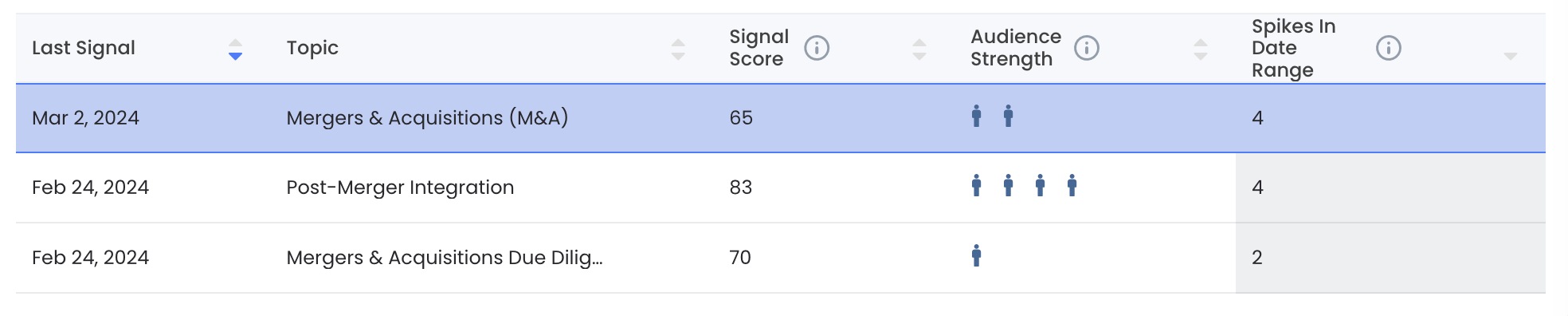
Spikes had occurred on February 24 for “post-merger integration” and “mergers & acquisitions due diligence.”

On March 8, 2024, Roku announced a data breach that compromised more than 15,000 accounts.

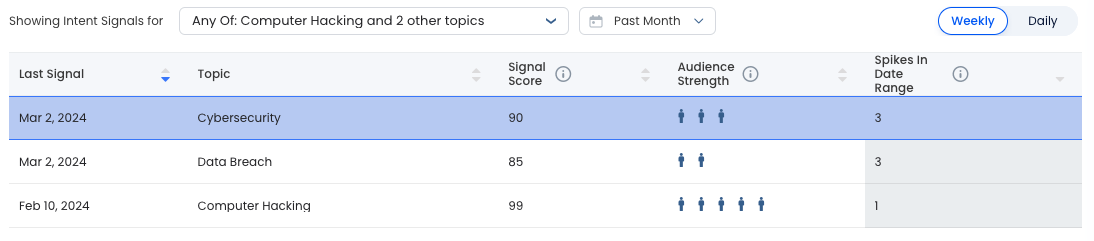
As early as February 10, the company was spiking for “computer hacking,” and just days before the announcement, “cybersecurity” and “data breach” were spiking intent terms.


These are just a few examples of how intent data could be used before an event occurs, but it does take some intuition.

In more common situations, salespeople can look at intent spikes for keywords, topics, and clusters of topics that represent a prospect’s interest in your offerings.

If you’re a PR agency, for example, you can find companies searching for public relations and crisis management in real time. If you’re in IT consulting sales, you can find out when a company is looking for just that. Regardless of industry, your go-to-market team can use intent data to find your next best customer.

Intent Data Readiness

Intent data offers a tremendous amount of value and ROI. But it does take work to get to a spot where intent data can be a guiding force.

For one, your company should have aligned and specific objectives. Your ideal customer profile (ICP) should be understood across sales and marketing teams so that individuals know which types of companies to review to understand where intent data can lend a hand.

You also need to choose an intent data provider. This can be a challenge, as there are many providers that overcommit and oversell their capabilities. Intent data providers should be able to offer you customization, real-time signals, integration into your tech stack, and a high standard of data compliance, at minimum.

G2 and TrustRadius offer a good comparison of buyer intent data providers ranked by actual users. We suggest reviewing their list for guidance on the right fit for your company.

Intent data gives teams the opportunity to fine-tune strategies and improve results. These actionable insights will propel your company into the next stage of GTM. What are you waiting for?

Read More: Navigating B2B Customer Experience: Trends and Biggest Pitfalls

Also catch – Episode 175: Go-to Market and Marketing Best Practices with Bryan Law, CMO at Zoominfo

Identifying your B2B Buying Committee: Common Mistakes to Avoid

In the intricate world of B2B transactions, the buying committee stands as a pivotal element. This group consists of various professionals within an organization, each playing a distinct role in the technology purchasing decision process. From gatekeepers and influencers to decision-makers, their diverse perspectives and requirements shape the purchase journey. Understanding the dynamics and composition of this committee is crucial for tailoring effective sales and marketing strategies. Recognizing each member’s unique concerns and influence ensures a more targeted and successful approach to navigating complex B2B sales landscapes.

Evolving Influence of B2B Buying Committees in Decision-Making Processes

In today’s complex business environment, the role of B2B buying committees has grown increasingly important. With the rising intricacy of products and services, decisions are no longer the purview of a single executive. Instead, they involve a collective of professionals, each bringing specialized knowledge and perspective. This shift reflects a broader trend towards collaborative decision-making, ensuring a more holistic assessment of potential investments.

As such, understanding and engaging with these committees has become essential for any B2B sales strategy. Recognizing their diverse needs and decision dynamics is key to fostering trust and alignment, ultimately leading to more successful business outcomes. In this evolving landscape, those who adeptly navigate the complexities of B2B buying committees will gain a significant competitive advantage.

Steps for Identifying Your Buying Committee

Identifying the members of a B2B buying committee is crucial for any successful sales strategy. It involves understanding who makes the decisions and their respective roles. Here are key steps to effectively identify your B2B buying committee:

  • Conduct Thorough Research: Start by gathering as much information as possible about the target company. Use LinkedIn, company websites, and industry publications to understand its organizational structure and key players.
  • Leverage Existing Contacts: Utilize your current contacts within the organization to gain insights about the decision-making process and identify committee members.
  • Understand the Decision Hierarchy: Determine the hierarchy within the organization. Identify who holds the authority to make decisions and who influences them.
  • Analyze Past Interactions: Review previous sales and interactions with the company to identify patterns and key stakeholders involved in past decisions.
  • Engage in Active Listening: During meetings and conversations, pay close attention to mentions of other departments or individuals who might be part of the decision-making process.
  • Ask Direct Questions: Don’t hesitate to ask your primary contact about the decision-making process and who else is involved in making purchasing decisions.

Read More: SalesTechStar Interview with Shaun Shirazian, Chief Product Officer at Pipedrive

Identifying your B2B Buying Committee: Mistakes to Avoid

Identifying the right members of a B2B buying committee is a nuanced process crucial for successful sales outcomes. However, common missteps can derail this process, leading to ineffective strategies and missed opportunities. Here are eight key mistakes to avoid when identifying your B2B buying committee:

  1. Overlooking the Influence of Non-Executive Members: Concentrating solely on top-tier executives is a common error. Mid-level managers, technical experts, and other non-executive personnel often hold significant sway in the decision-making process. Their insights and approvals can be pivotal, and their influence should never be underestimated.
  2. Neglecting to Research Each Member’s Role and Influence: It’s crucial to understand not just who is on the committee but also their individual roles and levels of influence. This insight ensures your pitches and strategies are aligned with each member’s concerns and authority, leading to more effective engagements.
  3. Underestimating the Complexity of the Buying Process: B2B purchasing decisions are rarely straightforward. They involve multiple stages and considerations. Overlooking the intricate nature of these processes can result in engagement strategies that fail to address key stages of the decision-making journey.
  4. Ignoring the Evolving Dynamics of the Committee: B2B buying committees are not static; they evolve over time. Staying informed about changes in their composition and preferences is essential. Failing to do so can lead to strategies that are misaligned with the current dynamics of the committee.
  5. Assuming One-Size-Fits-All Communication Works: Different committee members have different priorities and concerns. Assuming a uniform approach to communication will work for all is a mistake. Tailoring your message to each member’s specific interests and needs is crucial for effective engagement.
  6. Failing to Build Relationships with All Committee Members: Prioritizing one committee member over others can lead to a narrow understanding of the group’s overall perspective. Building strong relationships with each member is essential for a comprehensive and effective engagement strategy.
  7. Neglecting Post-Purchase Engagement: The sales process doesn’t end with the completion of a transaction. Continuing to engage with the committee post-purchase is essential for understanding evolving needs, securing repeat business, and building long-term relationships.

Conclusion

As we look forward, understanding and engaging with B2B buying committees remains integral for successful sales strategies. The landscape is constantly evolving, with new decision-makers and changing dynamics. Staying informed, adaptable, and customer-centric is key. Sales teams must continuously refine their approaches, embracing data and building strong, diverse relationships within these committees. By avoiding common pitfalls and remaining attuned to the nuances of B2B buying processes, businesses can secure a competitive edge, fostering long-term partnerships and driving sustained growth in the ever-changing world of B2B sales.

Read More: Common Mistakes B2B Teams Make When Defining Who Are Their Sales Qualified Leads

Also Catch: Episode 202 of The SalesStar Podcast: The Importance of Soft Skills in B2B sales with Thomas Hansen, President at Amplitude

Creatio Collaborates with Inselligence to Help Customers Reinforce Sales Workflows with Powerful Sales Optimization Tool

Creatio

Inselligence, a revenue intelligence solution, provides sales performance optimization, pipeline management, and accurate revenue forecasting

Creatio, a global vendor of a no-code platform to automate workflows and CRM with a maximum degree of freedom, announced its partnership with Inselligence, a leading sales process technology developer. Inselligence is a revenue intelligence platform that provides sales performance optimization, pipeline management, and accurate revenue forecasting by integrating with a company’s existing CRM. Through this new partnership, Creatio’s customers can better leverage their Creatio data and generate actionable insights into their sales pipeline’s behavior, ensuring maximum efficiency and consistency of revenue production.

“For any business, process is everything, and Inselligence can help optimize the sales process and maximize opportunities,” said Joshua Rodriguez, Chief Revenue Officer of Inselligence. “Creatio is a world-class CRM provider and shares our company’s mission to bring efficiencies to the sales process. We are proud to offer our solution to their customers and support their growth.”

Read More: Aircall Broadens AI Capabilities, Empowering More SMBs to Nurture Relationships, Drive Performance, and Fuel Growth

Creatio’s intelligent SFA offering empowers sales organizations to easily customize and extend their out-of-the-box SFA functionality, while also allowing them to use no-code capabilities to create new, custom applications and automate revenue-generating workflows. All Creatio products are powered with composable Quantum architecture. With the Quantum architecture, all functionality is available as a set of composable elements. This means that business technologists can use them in any combination to support their unique use cases. By embracing a composable architecture, Creatio empowers no-code creators to seamlessly assemble various components, blocks, and apps to create enterprise-ready solutions that match their unique requirements without coding. All Creatio ready-to-use apps (CRM, vertical apps, etc.) are built using the composable no-code approach.

“Partnering with Inselligence underscores Creatio’s commitment to enhancing business agility and actionable intelligence. Inselligence’s advanced tools are the perfect complement to our CRM offerings. They set a new standard in efficiency and revenue optimization, empowering our customers to harness the full potential of their sales data,” said Alex Donchuk, Senior Vice President, Global Channels at Creatio.

Read More: SalesTechStar Interview with Eran Hollander, Chief Product Officer at HungerRush

Write in to psen@itechseries.com to learn more about our exclusive editorial packages and programs.

GUIDEcx Partners with Domo to Enhance Data Access and AI Capabilities for Customers

GUIDEcx

GUIDEcx, the leader in customer onboarding software, has partnered with Domo to help customers get timely access to analytics and AI capabilities. Together the team developed embedded analytics solutions that not only improved efficiency but reduced costs for customers.

Close partnerships like those we have with GUIDEcx are creating new ways for the Domo platform to delight and inspire decision makers and frontline workers. – RJ Tracy, SVP of partners, strategic development and channel at Domo

As a leading software for customer onboarding and implementation, GUIDEcx’s customers expect quick and accurate data-driven insights about the onboarding experience. Reports from its former embedded analytics vendor were not as fast and interactive as GUIDEcx customers needed, so the company turned to Domo’s new Report Builder offering. Customers are now much more engaged with quick and intuitive data experiences. Additionally, GUIDEcx customers can easily access Domo’s library of more than 1,000 data connectors to pull in data from their CRMs, ERPs and more, allowing them to blend data in ways that had never been possible.

Read More: o9 Transforms Integrated Planning and Decisioning With GenAI-Powered Innovations to Its Digital Brain Platform

GUIDEcx was delighted to see increased user engagement on its platform, but as its customers gained access to real-time data, it spurred new questions and ideas, with many customers asking for self-serve analytics to scale and enhance their experience. GUIDEcx worked with Domo to create a unique pricing model for the partnership that would be more cost-effective than other analytics solutions in the market and still provide customers with editable and interactive dashboards with full self-service capabilities.

“The power and flexibility that GUIDEcx and Domo give customers allows users to access data 10x faster than they could previously,” said Chris Haleua, VP of Product at GUIDEcx. “Prospects see the value of combining the two platforms to now access customer onboarding data alongside data from other formerly siloed software in the organization. With Domo connectors, our platform now has a reach and a relevance that is attracting new users across our customer base.”

Read More: SalesTechStar Interview with Puneet Arora, Global President, Yellow.ai

GUIDEcx leverages Domo.AI capabilities to supercharge access to insights through Domo’s AI chat, AI dashboard creation and more. No coding or technical skills are required and customers can use natural language to ask the platform questions of its data. GUIDEcx is now seeing more leaders logging into the system, not just for customer onboarding tasks but to view analytics, create reports and analyze business decisions.

“Close partnerships like those we have with GUIDEcx are creating new ways for the Domo platform to delight and inspire decision makers and frontline workers,” said RJ Tracy, senior vice president of partners, strategic development and channel at Domo. “The GUIDEcx team have been outstanding collaborators and we keep coming up with new ways to use our platforms to better serve customers. It’s inspiring other partners of ours to extend the value of the platform in their industries as well.”

Write in to psen@itechseries.com to learn more about our exclusive editorial packages and programs.

People.ai Brings its Sales Industry-Leading AI platform to Microsoft Dynamics 365 Sales

Joint customers will experience renewed value from their CRM with unified data and account-level insights at their fingertips.

People.ai, a leading enterprise AI platform for sales announces a new integration with Microsoft Dynamics 365 Sales. Sales organizations now have data-backed, AI-powered insights right inside their Dynamics 365 Sales CRM to unlock the complete story of every account and opportunity.

Go-to-market organizations have traditionally struggled to find a way to access and understand unstructured data that is siloed across different tools. People.ai solves that problem by automatically capturing sales-related activity data and using proprietary matching technology to record it into the correct accounts and opportunities in a customers’ CRM. This creates an accurate record of everything happening across the sales organization. The People.ai platform then analyzes that complete set of data to provide deeply valuable and easy-to-understand context about contacts, accounts, and opportunities.

Read More: Mindmatrix Unveils Cutting-edge Enhancements to its Next-Generation PRM Platform, Bridge

With this new integration, Dynamics 365 Sales users will have a practical way to leverage People.ai to unlock additional insights from their CRM and other GTM tools. This includes:

  • Unify data from across the sales ecosystem: Dynamics 365 Customers will now be able to leverage People.ai to connect scattered data from customer engagement tools across the entire sales ecosystem and bring it into the flow of work within Dynamics 365 Sales.
  • Enhance existing CRM with access to billions of data insights: Dynamics 365 Sales customers will get to utilize People.ai’s proprietary AI insights that are built on nearly a decade of collecting and organizing billions of B2B sales activity data. The result is a purpose-built AI platform for sales teams that is able to deeply understand sellers and buyers and work seamlessly with Microsoft Dynamics 365.
  • Visibility across multi-CRM environments: People.ai starts unifying data sources and generating insights right away so Dynamics 365 Sales users get immediate value during CRM migrations, without losing any visibility across multiple-CRM environments.
  • Improve CRM data quality: People.ai uses patented technology to automatically and correctly associate all sales touch points with the correct account opportunity in a customer’s Microsoft Dynamics 365 Sales CRM. This creates an accurate record of everything happening across the sales organization and provides more valuable AI-generated insights.
  • AI-powered next steps: Powered by People.ai’s proprietary AI insights, Dynamics 365 Sales users are able to unlock insights on actions they can take to drive deal execution such as increasing engagement with specific contacts, connecting with additional high value stakeholders, or mitigating potential risk.

Read More: SalesTechStar Interview with Eran Hollander, Chief Product Officer at HungerRush

“People.ai adds immediate value and next-level capabilities for Microsoft 365 Dynamics Sales users,” said Oleg Rogynskyy, Founder and CEO at People.ai. “Generative AI gives every member of a sales team the information they need to pull the right levers on every account. We’re instantly giving them the complete story of everything going on across their go-to-market organization. It’s a competitive advantage that puts those who have it miles ahead of their competitors who don’t.”

“We are thrilled to expand our relationship with People.ai into Microsoft Dynamics 365 Sales,” said Lori Lamkin, CVP of D365 Sales & Marketing “Together we are providing customers with an easy way to unify sales activity data, surface meaningful insights, and ultimately improve seller efficiency inside Microsoft Dynamics 365 Sales and Copilot for Sales, bringing the insights right where teams are already working. This new integration will help decrease time to value with AI tools that are easy to use and backed by comprehensive data.”

Write in to psen@itechseries.com to learn more about our exclusive editorial packages and programs.

Majority of Service Organizations Plan to Adopt New Field Service Management System, or Improve Current System, According to Zuper and WBR Insights Report

Study Highlights Key Challenges and Future Adoption of Digital Tools in Organizations with Field Service Teams

Zuper, a leading solutions provider to scale and modernize fast-growing service businesses with field operations, announced a joint research report with WBR Insights that focuses on key concerns and strategies for field service providers. The report highlights priorities and technology investment trends for organizations with field service teams.

The digital transformation of field service companies has required an industry-wide improvement in the delivery of services and products to customers. Field service teams are strategically pivoting to AI solutions and field management service software to improve operational efficiencies, predictive maintenance, resource optimization, and customer experiences.

Read More: CData Software Acquires Data Virtuality to Modernize Data Virtualization for the Enterprise

To assist companies with field service teams in making decisions to get ahead of the digitization curve, Zuper and WBR Insights have partnered to produce an industry report that offers key insights regarding how companies are leveraging field service management solutions across industries.

“Creating seamless and innovative customer experiences is one of our core values, but this report highlights the fact that many organizations are not getting optimum benefit from their digital transformation efforts,” said Anand Subbaraj, CEO of Zuper. “As we continue to see organizations with field service teams leveraging technology, this report is designed to offer business leaders actionable insights to help them drive sustainable growth.”

The joint report leverages survey data from 100 respondents who are senior leaders in field service management and related business operations within their organization. Typical respondents work in operations, logistics, depot repair, IT, safety roles, and more. This report highlights common challenges, growth opportunities and industry needs across field service companies ranging from mid-size businesses to large enterprises.

Read More: SalesTechStar Interview with Puneet Arora, Global President, Yellow.ai

“Collaborating with Zuper, we’ve discovered valuable insights into the changing field service management landscape. These findings can empower companies seeking to leverage technology solutions as part of their digital transformation efforts,” said Chris Rand, Head of Research of WBR Insights. “This study underscores the critical role of technology in driving operational efficiency and customer satisfaction, helping organizations stay competitive in today’s dynamic marketplace.”

Key findings from the survey include:

Anticipated Changes in FSM Adoption

  • 82% of companies currently use an FSM solution. Most respondents are only somewhat satisfied, not very satisfied, or not satisfied at all with their current FSM.
  • A majority of respondents (73%) plan to adopt a new FSM, make changes to their current FSM, or make changes to similar software within the next twelve months.
  • While adoption of FSM technology is common, satisfaction is low due to several factors: user-friendliness, lack of specific functionality, or integration challenges with existing systems.
  • Respondents cited technical glitches, insufficient customer support, and overly complex software as key reasons for stalled adoption.

Key Priorities for FSM

  • Respondents prioritize FSM capabilities that optimize operations such as work order management, compliance and safety, spare parts/inventory management, technician productivity, and integration with financial systems and business processes.

Comfort with Transition Timeframes

  • Respondents are comfortable with relatively short timeframes (one-to-three months or three-to-six months) for transitioning to a new FSM platform underlining the need for modern, easy to configure systems.

Write in to psen@itechseries.com to learn more about our exclusive editorial packages and programs.