
Home Blog Page 514

PandaDoc Launches Rooms, an Integrated Digital Space for Organizing and Sharing Sales Content With Buyers and Stakeholders

File:PandaDoc Logo PNG.png - Wikipedia

Company’s complete document workflow automation platform introduces Rooms feature to boost sales process

PandaDoc, a leading innovator in proposals, quote management, contracts and eSignature, announced the launch of its latest feature, Rooms, a user-friendly hub designed to help sales teams close more deals and significantly shorten deal cycles, with improved document sharing, stakeholder management and enhanced communication with prospects and buyers.

“Rooms has helped us create a repeatable playbook for our sales reps to follow. In turn, our customers receive world-class ‘buyer enablement’ to make purchasing our software easy. Now, we can engage multiple stakeholders in a secure online space, giving prospects access to relevant sales materials and next steps”

Rooms is an end-to-end solution for organizing sales collateral like videos and content, provides the ability to collaborate with internal teams on making stronger pitches and also houses all documents and interactions to simplify decision-making for buyers. With Rooms, sellers can showcase all the necessary information to buyers, letting them involve key decision-makers and leaders from their end in a frictionless manner, including the ability to drive negotiations, all while ensuring a personalized buyer experience from start to finish.

Read More: o9 Transforms Integrated Planning and Decisioning With GenAI-Powered Innovations to Its Digital Brain Platform

“Rooms has helped us create a repeatable playbook for our sales reps to follow. In turn, our customers receive world-class ‘buyer enablement’ to make purchasing our software easy. Now, we can engage multiple stakeholders in a secure online space, giving prospects access to relevant sales materials and next steps,” Taylor Jeffery, Sales Manager for Consensus, said. “We transitioned to PandaDoc’s Rooms when our previous vendor shifted directions. When we realized all this functionality was available within PandaDoc, we stopped looking at any other competitors! We have built out our full sales process inside of the PandaDoc Rooms feature.”

“In the realm of deal-making, every stage holds significance, particularly the pre-signing phase. Rooms enables quicker customer decision-making by putting all the necessary information at their disposal in a customizable virtual environment,” Kirk Miles, Chief Product Officer for PandaDoc, said. “This is especially beneficial for sales teams to simplify the buying process for their prospects by providing readily available resources, precise guidance and task lists in a single digital space.”

Read More: SalesTechStar Interview with Puneet Arora, Global President, Yellow.ai

The PandaDoc platform already helps businesses improve sales agreement management inefficiencies. With the addition of Rooms, users can rely on a complete solution that helps optimize the sales cycle, keeps all information in one centralized location and allows tasks to be completed rapidly. With Rooms, sales teams anywhere can deliver a collaborative, five-star client experience while still maintaining control over every stage of the deal lifecycle, including post-sale onboarding.

The Rooms feature is now available for existing users who have Business or Enterprise accounts. New customers can experience Rooms by purchasing PandaDoc at PandaDoc.com or through authorized retailers.

Write in to psen@itechseries.com to learn more about our exclusive editorial packages and programs.

Zilliant Announces Infusion of Artificial Intelligence Across the Pricing Lifecycle

  • Generative AI to be incorporated into CPQ and Analytics to improve productivity, enhance user experience and increase speed to insights

  • Sales reps can leverage AI-driven pricing guidance in Zilliant CPQ to close deals faster without eroding profit

  • All new innovations will be highlighted at Zilliant’s MindShare 2024 conference

Zilliant, the leader in pricing lifecycle management, announced major AI innovations to its solutions. This announcement includes a new product, GenAI Pricing Analytics, enabling rapid insights into the full impact of the pricing details for their products and customers. Additionally, Zilliant has released AI-driven Pricing Guidance in Zilliant CPQ, a deep integration between price optimization and CPQ solutions, and will have an AI assistant embedded in Zilliant CPQ, which helps simplify the self-service shopping experience. Zilliant will highlight the new offerings at its MindShare 2024 conference, which brings together the leading minds in pricing.

“Our customers need to react to cost and pricing changes faster, ensure that pricing changes are actually delivered and leveraged in the field, and get a single view of how the pricing strategy is being executed”

Pricing is a C-suite priority as companies grapple with a new global economic environment. As a core strategic process that affects brand, buying experience and financials, pricing involves multiple departments such as sales and finance. Despite being cross-functional, pricing is often managed in disconnected spreadsheets and siloed. Companies choose Zilliant to help manage the entire pricing lifecycle and connect multiple lines of business under a unified end-to-end process. Companies can infuse AI throughout the lifecycle to augment and automate critical pricing processes.

Read More: Aircall Broadens AI Capabilities, Empowering More SMBs to Nurture Relationships, Drive Performance, and Fuel Growth

“Our customers need to react to cost and pricing changes faster, ensure that pricing changes are actually delivered and leveraged in the field, and get a single view of how the pricing strategy is being executed,” said Kylie Fuentes, Zilliant’s Chief Product & Marketing Officer. “Zilliant can already help them manage this full pricing lifecycle but will soon be able to do it even better with strategically embedded AI to improve productivity, enhance user experiences and increase speed to insights.”

GenAI Pricing Analytics

Analytics is a critical step in pricing lifecycle management, ensuring that pricing and sales leaders can effectively glean actionable insights to drive strategy across the business. With GenAI Pricing Analytics, available later this year, customers will receive AI-generated insights to quickly take action, create meaningful reports for users and set up alerts to drive proactive price management. This eliminates the traditional, time-consuming methods of having analysts pore through spreadsheets to create ad hoc reports — missing opportunities to react to market changes faster.

Organizations will soon be able to react faster to cost and pricing changes and gain a single view of pricing strategies’ impacts.

Read More: SalesTechStar Interview with Eran Hollander, Chief Product Officer at HungerRush

AI-Driven Pricing Guidance in Zilliant CPQ

At the same time, pricing is only as good as a company’s ability to deliver the right price in the right deal to the customer. That delivery is powered by Zilliant CPQ, the company’s state-of-the-art, configure-quote-price solution that builds in pricing guidance. Sellers can leverage pricing guidance during the quoting process to ensure quotes are in line with revenue targets and reduce price discrepancies. This accelerates the approval process, reduces the time to quote and prevents deal erosion.

Within the quoting process in Zilliant CPQ, a sales representative can immediately see a red, yellow or green light next to the price for every line item in the quote. The stoplight visual provides sellers with an instant indication of whether each discount meets margin or other business requirements. Prices that fall within the price range will automatically be approved, while those that do not serve as a reminder to the sales rep that this quote will need to go through approval workflows.

Zilliant CPQ Self-Service AI Assistant

The right price is highly dependent on what the customer wants to buy. Zilliant CPQ allows users to configure the right deal through multiple channels like sales, partners and self-service. In the self-service experience, users will be able to have conversations with an AI assistant to help them find what they’re looking for. They can provide prompts like “Show me the forklift with the largest engine,” which propels the assistant to scan through vast product catalogs and technical documentation to return intelligent product recommendations. This empowers users to get their questions answered quickly and complete their purchase without needing to be an expert on the company’s offering. This feature will be released at a later date.

Write in to psen@itechseries.com to learn more about our exclusive editorial packages and programs.

Ingage Welcomes Brian Gottlieb to its Board of Directors

Ingage Announces Public Content Marketplace

Ingage, the leading sales enablement and digital presentation tool, is thrilled to announce the appointment of Brian Gottlieb to its Board of Directors. With a proven track record of entrepreneurial success and a passion for empowering businesses, Gottlieb brings invaluable expertise and vision to the Ingage team.

Brian Gottlieb is the Founder and CEO behind a home improvement venture that began as a humble startup in 2009 and grew into a multi-state group of companies with a valuation of nearly $200 million. Under his leadership, these companies earned accolades such as being listed on the INC 5000 for four consecutive years and being named the best place to work in Wisconsin. Gottlieb’s business philosophy, centered around clear strategy, inspired leadership and relentless execution, has guided numerous organizations to success.

Read More: Mindmatrix Unveils Cutting-edge Enhancements to its Next-Generation PRM Platform, Bridge

“I’m thrilled to join the board of Ingage,” said Brian Gottlieb. “Ingage’s commitment to empowering sales teams with dynamic and engaging presentation tools aligns perfectly with my own passion for driving business growth and excellence. I look forward to contributing to Ingage’s mission of revolutionizing the way businesses create, share and measure sales content.”

Ingage, founded in 2008, is dedicated to providing easy-to-use tools that enable top-performing sales teams to close more deals and wow customers. By offering dynamic and interactive presentation solutions, Ingage empowers businesses to create impactful content that resonates with audiences and drives results.

Read More: SalesTechStar Interview with Eran Hollander, Chief Product Officer at HungerRush

“We are delighted to welcome Brian Gottlieb to the Ingage team,” said Dean Curtis, CEO of Ingage. “His wealth of experience in building successful businesses and his commitment to empowering others make him an invaluable addition to our board. We look forward to leveraging Brian’s insights and expertise as we continue to innovate and grow.”

In addition to his role at Ingage, Brian Gottlieb is also an angel investor, keynote speaker and upcoming author. His forthcoming book on culture and leadership, scheduled to be published by Forbes in the summer of 2024, promises to further inspire and guide business leaders around the world.

Write in to psen@itechseries.com to learn more about our exclusive editorial packages and programs.

SugarCRM Acquires sales-i to Enhance Customer Sales Profitability, Drive Intelligent Account Management

SugarCRM AU

Longstanding Partnership Paves the Way to Reach More Customers as the Combination Unlocks the Value of a Company’s ERP and CRM Data

SugarCRM, provider of the award-winning intelligence-driven sales automation platform, announced it has acquired sales-i, a leading provider of a revenue intelligence solution that helps businesses maximize their revenue and profitability. Terms of the deal were not disclosed.

“This combination delivers actionable, intelligent sales strategies that will improve revenue, maximize profitability, increase customer satisfaction and produce more efficient sales people.”

The acquisition comes nearly a year after Sugar announced a partnership with sales-i to improve business-to-business (B2B) sales performance by delivering AI-powered revenue intelligence that leverages the data of a business’s enterprise resource planning (ERP) system and CRM. This combination provides businesses with actionable insights that improve sales, marketing, service and support, resulting in greater revenue and higher levels of retention.

Read More: CData Software Acquires Data Virtuality to Modernize Data Virtualization for the Enterprise

“We are bringing together two great companies with complementary products, a shared vision for customer success, and experience and expertise at using machine learning, AI, and generative AI to unlock the value of front-office and back-office data,” said Craig Charlton, CEO of Sugar. “This combination delivers actionable, intelligent sales strategies that will improve revenue, maximize profitability, increase customer satisfaction and produce more efficient sales people.”

Paul Black, Founder and CEO of sales-i, added, “The partnership of sales-i and SugarCRM has enabled companies to gain unrivaled insights into their customer buying behavior. Together, we’ll expand our capabilities and accelerate development processes that will benefit customers and create a significant market impact.”

“The current business focus on margin and the increasing adoption of subscription and usage-based pricing models are changing the economics of business,” said Stephen Hurrell, Research Director in the Office of Revenue at ISG’s Ventana Research. “Relying only on CRM data sells account management short. Upselling and cross selling to the same customers is more profitable than finding and selling to new customers, but it requires a fuller understanding of your customer gained from building and sustaining a long-term relationship. This new announcement from SugarCRM seeks to address this need across many types of industries and enterprises.”

While many businesses have plenty of sales data, the challenge is sifting through large volumes of data to find cross-sell or upsell opportunities, or simply make sure existing customers meet their buying commitments.

To address the challenge, the two companies have been working together, with sales-i serving as a sales revenue intelligence tool that captures product, price, quantity, and frequency insights from the customers’ enterprise resource planning (ERP) software system. The tool is able to share data with the SugarCRM solution, and the pair provides customers with specific insights on the trends between the organization and the customer at their fingertips.

Read More: SalesTechStar Interview with Puneet Arora, Global President, Yellow.ai

The combination will allow the combined company of more than 550 employees worldwide to help customers unlock the value of their ERP data. Some core benefits include:

  • Allowing customers to see, interpret, and act on their own customer data using the power of artificial intelligence (AI)
  • Serving as an intelligent account management system that will support companies that have large-scale management requirements
  • Letting customers outmaneuver new competitive threats by unlocking the value of their existing data, while reducing churn
  • Delivering actionable insights that increase sales and marketing efficiencies and effectiveness at a lower cost

There are additional benefits as well. Sales-i customers will benefit from being part of a global company that will enable them to do business anywhere in the world. They will also be able to seamlessly leverage more advanced sales, marketing, and service automation, helping them grow sales even more efficiently. SugarCRM customers will have the opportunity to unlock the rich sales data stored in their ERP systems utilizing the revenue intelligence capabilities of the sales-i solution.

As a result, both customer bases will benefit from the combined investment SugarCRM and sales-i have made in AI, machine learning and generative AI technologies. This will enable Sugar to deliver innovative intelligent solutions more quickly.

Customers have lauded the Sugar and sales-i partnership. Beth Freeman, Executive Vice President of FSIoffice, an independent office supply dealer in Charlotte, N.C., said one of the biggest benefits of the Sugar-sales-i integration is increased sales efficiency.

“Integrating sales-i with SugarCRM has been a game-changer for our team, putting valuable sales insights right at our fingertips,” said Freeman. “I love that we can combine soft data (such as customer interactions) with hard data (such as purchase history) to better serve our customers’ needs. We are also more efficient, targeted, and effective in our outreach since sales-i unlocks insight into buying behavior and, in turn, prompts our sales team in Sugar with specific product placement suggestions. It saves us so much time, especially as we onboard new salespeople.”

In February, sales-i was named a winner of a 2024 SugarCRM Partner Award based on partner performance, customer outcomes, and commitment to Sugar’s product and service standards.

Write in to psen@itechseries.com to learn more about our exclusive editorial packages and programs.

ZoomInfo Releases AI-Powered ZoomInfo Copilot to Make Every Seller Your Best Seller

ZoomInfo Copilot predicted nearly half of beta users’ existing pipeline, doubled sales opportunities

  • New AI-powered platform applies AI to ZoomInfo’s world-leading B2B data

  • ZoomInfo Copilot pushes insights and actions to your team’s fingertips, teeing up the right outreach for the most qualified leads at precisely the right moment

  • ZoomInfo Copilot successfully predicted nearly half of beta users’ existing pipeline

ZoomInfo, the go-to-market platform to find, acquire, and grow customers, released ZoomInfo Copilot, an AI-powered solution that turns every seller into your best seller.

“Right out of the gate, ZoomInfo Copilot showed me several prospects most likely to engage that correctly fit our ICP, saving me time.”

ZoomInfo Copilot is a new version of our platform that applies AI to ZoomInfo’s world-leading B2B data. ZoomInfo Copilot brings together all your data with high-quality ZoomInfo data and applies generative AI to predict your pipeline. You get powerful AI-guided recommendations about who to contact, when to engage, and even what to say.

Read More: CData Software Acquires Data Virtuality to Modernize Data Virtualization for the Enterprise

The First AI-Powered GTM Solution Based on High-Quality Data and Signals

ZoomInfo Copilot allows salespeople to seize time-sensitive opportunities in real time with Breaking Alerts delivered through Slack. These alerts can be shared across multiple channels, allowing teams to quickly triage emerging opportunities and act decisively on high-quality intent signals.

Marketers receive ranked and prioritized target accounts and in-market buyers, derived from millions of signals processed daily by our AI.

“What sets ZoomInfo’s Copilot apart from any other solution in the market is that it is sitting on top of our AI-ready trusted data foundation that drives decisions, personalization, and confidence,” ZoomInfo Founder and CEO Henry Schuck said. “AI is only as good as the data it’s built on, and most solutions are layered on top of static CRM data.”

Key ZoomInfo Copilot features include:

  • Buying Groups: Pulling insights from websites, case studies, earnings call summaries, and many more real-time signals, ZoomInfo Copilot automatically creates buying groups of individuals who are most likely to engage and align with their ideal customer profiles.
  • Account Summaries: ZoomInfo Copilot aggregates first- and third-party data to provide users with detailed overviews of specific accounts, including pain points and use cases, upcoming deals, important contacts, a summary of previous engagements, and more.
  • Copilot Chat: Chat can answer specific questions about a given account, giving users the answers they need quickly using conversational AI. Users can request answers on a range of account-level topics to get up to speed as quickly as possible.
  • AI Email Generator: ZoomInfo Copilot’s AI Email Generator allows users to quickly craft targeted, personalized emails at scale. Emails created using the AI Email Generator can be adjusted for tone and length, giving users the ability to quickly personalize emails for a range of audiences in a fraction of the time.

Read More: SalesTechStar Interview with Puneet Arora, Global President, Yellow.ai

Our 20,000 Early Users Are Selling Smarter and Winning Faster

  • ZoomInfo Copilot successfully predicted nearly half of beta users’ existing pipeline. 45% of the open opportunities in their CRM had ZoomInfo Copilot signals telling them to engage.
  • On average, beta users created nearly twice as many sales opportunities compared to non-users in the same roles and companies.
  • Beta users reduced their time spent on account research and manual tasks by 10 hours per week, giving them back almost a quarter of their time to spend on more value-added activities.

What Our Customers Are Saying

  • “ZoomInfo Copilot allows me to jump right into accounts with knowledge of their buying intent and contacts.” – Danny Underhill, account manager at Lumen, a medical tech company.
  • “Right out of the gate, ZoomInfo Copilot showed me several prospects most likely to engage that correctly fit our ICP, saving me time.” – Conner Watterud, BDR at FreightWaves, a supply chain market intelligence provider.
  • “I recently started using ZoomInfo and Copilot and have already landed 4 meetings with active clients. The ability to identify Intent companies and narrow down our targeted buyer is amazing.” – Jeff Beadles, VP of Partnerships at Cornerstone RPO, a talent acquisition company.
  • “With Copilot, I was able to swiftly pinpoint potential buyers within high-intent companies and identify those not yet included in a campaign.” – Joy Rohde, sales director at Earnix Inc, a global provider of SaaS solutions for financial services.
  • “Copilot is crafting really great emails, and it doesn’t feel like an AI wrote it. It feels like it was personally written. We’ve gotten more responses and more opportunities, because we’re reaching more people.” – Derion McGriff, business development manager at Apricorn, a manufacturer of hardware-encrypted external data storage.

“Many organizations still struggle to provide frontline sellers with actionable go-to-market insights distilled from the myriad of available signals,” said Roger Beharry Lall, an analyst at International Data Corporation (IDC). “While AI can sift through mountains of data, solutions must be built on a foundation of fresh, accurate, and clean data in order to deliver meaningful intelligence. Suppliers like ZoomInfo that can combine robust data sets with novel AI capabilities will help customers lead their markets by enabling engagement to the right people with the right message at precisely the right moment.”

Write in to psen@itechseries.com to learn more about our exclusive editorial packages and programs.

B2B Technology Spending Rebounds, With 79% of Businesses Focusing on Tech Investments to Enhance Customer Experiences, According to Recent Research Published by Master B2B in Partnership with commercetools


Dein commercetools Partner of the Year: kernpunkt

  • 83% of B2B companies are planning to make a digital investment in 2024, prioritizing ecommerce platforms, backend integrations with ERPs and order management systems as the top areas for investment.

  • 79% of B2B businesses are looking to invest in technologies that improve purchasing experiences for customers.

  • The report provides B2B companies with a roadmap to accelerate their digital maturity using a four-dimensional framework that focuses on digital tools, team culture, customer experience, and data insights.

commercetools, a global commerce company and the market leader in composable commerce, announced the release of research published by Master B2B and supported by commercetools, “Accelerating Your Digital Vision: Taking Your Strategy to the Next Level,” which examines digital maturity in the B2B commerce market, and is the second edition of a three-part series. The report found that the tides have turned in the over $7 trillion global B2B commerce market, as 83% of companies surveyed are planning to spend more on digital investments in 2024 compared to last year.

With 94% of respondents reporting support from their CEOs, B2B businesses now have the executive buy-in needed to make technology investments. This represents a notable departure from the cautious spending approaches that practitioners were lamenting in 2022 and 2023. The majority (79%) of businesses are prioritizing investments in technologies that enhance customer experiences, with the top areas of investment for these companies being ecommerce platforms, backend integrations with ERPs, and order management systems. However, timelines for showing return on investment (ROI) have shortened for the majority of respondents (64%) compared to the last three years.

Read More: Aircall Broadens AI Capabilities, Empowering More SMBs to Nurture Relationships, Drive Performance, and Fuel Growth

“In 2024, we’ve seen a surge in technology investments from B2B customers as the market increasingly recognizes the value of the flexibility and scalability that composable commerce provides,” said Dirk Hoerig, Co-Founder and CEO of commercetools. “This shift reflects how B2B business leaders are adopting a top-down approach to digital transformation, understanding that their overall success is closely linked to digital capabilities. By adopting a composable approach, B2B companies have reduced operational costs, increased revenue-generating opportunities, boosted innovation, and achieved a faster time to value in a matter of months, not years.”

With composable architectures, B2B companies unlock unparalleled flexibility and the ability to adapt to the changing needs of their organizations and can show the ROI on these investments quickly.

“We moved to a composable platform because we were having difficulty making updates to the website that the business teams were requesting — small changes were taking 3-4 weeks,” said Matt Swan, Technical Product Manager at ACE Southern. “To be competitive, we couldn’t just do what everyone else was doing. We needed to move to a composable platform that would allow us to create a customer experience that would differentiate us from our competitors.”

Read More: SalesTechStar Interview with Eran Hollander, Chief Product Officer at HungerRush

With budgets available, companies are continually assessing where to allocate their funds. To make informed decisions, B2B companies need to first evaluate their current level of digital maturity. This enables them to more quickly progress as a company while also showing the value of their investment to the broader organization and leadership team.

“In just a short period of time, we’ve seen that companies can no longer wait and see how emerging technologies, like AI, shake out — companies that aren’t adopting new technologies are missing out on critical growth opportunities and are falling behind competition,” said Andy Hoar, Co-Founder, Master B2B. “If you’re not a leader, or at least a very fast follower, you’ll be left far, far behind. B2B businesses — no matter their size, segment, or level of maturity — need to be adopting the technology that enables them to remain competitive and meet evolving market demands.”

commercetools provides the leading composable commerce platform for B2B companies enabling them to future-proof themselves from unexpected market forces, increase revenue-generating opportunities, reduce operational costs and scale globally. Customers including ACE Southern, Dawn Foods and Zoro USA have chosen commercetools to transform their digital commerce experiences and unlock the value of true composability.

Write in to psen@itechseries.com to learn more about our exclusive editorial packages and programs.

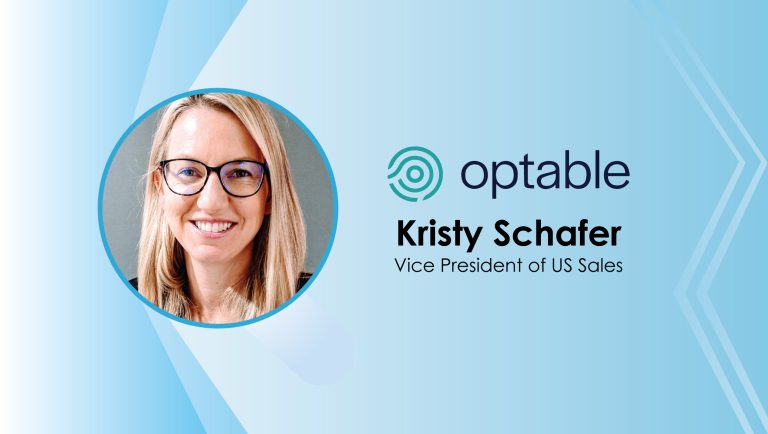
SalesTechStar Interview with Kristy Schafer, Vice President of US Sales at Optable

Kristy Schafer, Vice President of US Sales at Optable shares pointers on what B2B sales teams can do to drive impactful sales journeys in this SalesTechStar Interview:

__________

Hi Kristy, tell us about yourself and more about your journey in Sales.

I’ve spent the past 20 years in SaaS sales, specializing in data analytics and adtech. Starting with high-volume, low ACV sales at Meltwater, I progressed to complex enterprise deals at Google, Lattice Engines (acquired by Dun & Bradstreet), and Permutive. This journey demanded hard work, a consultative approach, and a deep understanding of buyer motivations. Plus, facing diverse sales cycles sharpened my negotiation skills and empathy along the way. For the last decade, I’ve managed teams running large enterprise sales cycles.

When it comes to ad sales and adtech sales: what works better than most based on your observations?

In adtech sales, I’ve learned that diving deep into the technical side pays off. Knowing how our solutions affect publishers, advertisers, or agencies is crucial. Building connections matters, but what really counts is showing our buyers how we can make their lives better.

Taking it a notch higher: when it comes to the overall B2B sales perspective; what should sellers do more of to build better sales journeys and drive more impact and conversions?

When it comes to sales, sometimes the simple things are the most important. For instance, taking the time to really understand your territory and focus on the accounts most likely to convert can make a big difference, even though it’s often overlooked. And here’s a reminder: the folks you’re selling to? They’re just regular people. Building relationships with them on a personal level can be super helpful for both the sales process and your own fulfillment.

Another thing I stress with my team is understanding what motivates everyone involved in the buying process. MEDDIC is a great framework for tracking critical criteria in the buying process. However, it’s just as important to understand motivations on the individual level in a buying team. That way, you can engage with them effectively and increase your chances of success. We break it down into different categories and roles, like understanding why the VP of Revenue might be on board versus what the CTO or CFO needs to see.

Read More: SalesTechStar Interview with Shaun Shirazian, Chief Product Officer at Pipedrive

Take us through some of the salestech you’ve relied on over the years to boost output…

In addition to the typical tech stack like CRM, I’ve found significant value in equipping the team with automation, sales intelligence, and revenue analytics tools. Sales Automation tools, such as Outreach and Salesloft, have been game changers in increasing our outreach while getting feedback on how engaged recipients are. However, it’s important to monitor their usage closely to prevent spamming and ensure their effectiveness.

Tools like Gong and Jimminy are like having a window into customer conversations. They help us all learn from each other, especially now that we’re working more remotely. Plus, they’re great for training because anyone can listen in and pick up tips.

Sales Intelligence tools like 6sense pinpoint in-market opportunities, guiding sales teams toward warmer prospects. However, we make sure to check the accuracy of predictive models by validating the Total Addressable Market (TAM) and available data signals.

Lastly, Revenue Analytics tools like Clari provide indispensable support for sales leaders, offering insights into deal progression, revenue forecasting, and alerts for critical pipeline issues. They serve as proactive guides for managing sales performance and achieving revenue targets.

What would you say are the three biggest challenges in modern sales today?

In B2B tech, there’s a lot of noise with numerous vendors vying for attention across different categories. This leads to a flood of marketing materials, from emails to content to events, bombarding potential buyers. As the buyer’s journey evolves, there’s a growing preference for thorough research before engaging in conversations. To adapt, marketing teams need to ensure that informative content is easily accessible on the company’s website. Failing to do so risks your solution being overlooked in the crowded market. Additionally, there’s added complexity due to market uncertainty and tightened budgets. Industries, especially adtech, are facing frozen decision-making processes and significant cuts in both personnel and operating costs. This makes it tougher to secure budgets and resources, slowing down project initiation.

Five of your favorite AI-powered salestech tools (and why they’ve made it to your top list). 

Clari helps us look ahead by forecasting our pipeline 3-4 quarters out, which is extremely helpful for hitting our goals and making accurate predictions.

ChatGPT is like having a knowledgeable teammate who makes researching accounts a breeze, saving us time and effort in understanding our prospects’ challenges, revenue shifts, and key initiatives.

With Gong and Jimminy, we get insightful summaries of our calls, helping us spot important opportunities and challenges quickly.

And then there’s 6Sense, which not only predicts future outcomes with its AI models but also offers a range of other tools to make our sales strategies even more effective.

Read More: Identifying your B2B Buying Committee: Common Mistakes to Avoid

Optable to Deliver Next Generation of Ad Products to La Presse - Optable

Optable is a data management & collaboration solution designed for the advertising ecosystem in the age of privacy.

Kristy has built and developed sales organizations in the data and analytics space for the last 15 years. Beginning with her time at Google where she sold their analytics platform to help media companies and retailers understand the connectivity between user engagement, site performance and ad attribution. Most recently, she was at Permutive where she opened the US market and helped publishers to build a 1st party data strategy in their direct sales motion. Most recently, she has joined Optable to spearhead US sales in the publisher segment.

Also catch – Episode 201 of The SalesStar Podcast: Optimizing B2B Sales with Alex Varel, Chief Revenue Officer at Multiverse


How Leading Retailers Are Using Kiosks and Self-serve Tools Onsite to Create Better in-Store Experiences:

In today’s rapidly evolving retail landscape, retailers are continually searching for innovative ways to enhance customer experiences and streamline operations. One approach that has gained significant traction is the implementation of kiosks and self-serve tools onsite. These technological solutions empower customers with more control and convenience while simultaneously benefiting retailers.

By integrating kiosks and self-serve tools into their physical stores, retailers enable customers to browse and purchase products independently, reducing wait times and enhancing efficiency. These interactive platforms provide access to a wide range of information, including product details, availability, and pricing, empowering shoppers to make informed decisions.

Self-serve tools offer personalized recommendations based on customer preferences and previous purchases, creating a tailored shopping experience. These technologies also facilitate quick and secure transactions, allowing customers to complete purchases swiftly.

Benefits of Using Kiosks and Self-serve Tools

By incorporating these technologies into their stores, retailers can create better in-store experiences. Thereby leading to improved customer satisfaction, increased sales, and operational efficiency. Here are some of the benefits offered by kiosks and self-serve tools.

  • Enhanced Convenience: Kiosks and self-serve tools provide customers with the convenience of browsing and purchasing products at their own pace. Thereby, eliminating the need to wait in long queues or rely solely on store staff for assistance.
  • Reduced Wait Times: By enabling self-checkout and self-ordering options, retailers can significantly reduce wait times. Thereby, leading to improved customer satisfaction and a more efficient shopping experience.
  • Increased Product Accessibility: Kiosks offer an extended product range, allowing customers to explore a wider selection of items that may not be physically displayed on store shelves. This expands options and provides a more comprehensive shopping experience.
  • Personalized Recommendations: Self-serve tools can leverage customer data to offer personalized recommendations. Thereby, ensuring that shoppers receive tailored suggestions based on their preferences and purchase history.
  • Empowered Decision Making: With access to product information, reviews, and comparisons at their fingertips, customers can make more informed purchasing decisions. Thereby, resulting in higher customer confidence and satisfaction.

Read More: SalesTechStar Interview with Shaun Shirazian, Chief Product Officer at Pipedrive

How Retailers are Using Kiosks and Self-serve Tools for Better In-store Experiences?

For retailers, the implementation of kiosks and self-serve tools leads to improved customer satisfaction, increased sales, and enhanced operational efficiency. By automating routine tasks, employees can focus on providing personalized assistance and addressing complex customer needs.

Here are some examples of retailers using kiosks and self-serve tools to deliver enhanced in-store experiences for the customers –

  • McDonald’s: The fast-food giant has integrated self-ordering kiosks into its restaurants worldwide. Customers can easily customize their orders, select add-ons, and make payments directly at the kiosks, reducing order errors and speeding up the ordering process. These kiosks also offer nutritional information and recommendations, catering to customers’ dietary preferences.
  • Sephora: The beauty retailer has introduced interactive beauty kiosks in its stores. Customers can try on virtual makeup, experiment with different shades, and receive personalized product recommendations. The kiosks allow shoppers to explore a wide range of products, experiment with new looks, and make informed purchasing decisions, all in a fun and interactive way.
  • Home Depot: To assist customers with their home improvement projects, Home Depot has deployed kiosks that provide detailed product information, DIY project guides, and instructional videos. Shoppers can access these kiosks to research products, learn installation techniques, and gather inspiration for their projects. The self-serve tools empower customers to become more confident and knowledgeable about their purchases.
  • Nordstrom: The high-end fashion retailer has embraced self-service technology with its Style Boards. These digital screens enable customers to browse fashion collections, view outfit suggestions, and request assistance from store associates. Style Boards offer a seamless omnichannel experience, allowing customers to save their preferences and revisit them later via Nordstrom’s mobile app or website.
  • Walmart: The retail giant has introduced self-checkout kiosks in many of its stores, providing customers with a quicker and more convenient way to complete their purchases. Shoppers can scan and bag their items themselves, reducing waiting times and offering a more streamlined checkout process. Walmart’s self-checkout kiosks also accept various payment methods, including mobile wallets, enhancing flexibility for customers.
  • Delta Air Lines: In an effort to enhance the travel experience, Delta Air Lines has implemented self-service kiosks at airports worldwide. Passengers can use these kiosks to check in, print boarding passes, select seats, and even check baggage. By providing these self-serve tools, Delta reduces waiting times at traditional check-in counters, allowing passengers to have a smoother journey and minimizing congestion in busy terminals.

The benefits of utilizing kiosks and self-serve tools onsite are manifold. These include enhanced convenience, reduced wait times, increased product accessibility, personalized recommendations, and empowered decision-making. By incorporating these technologies into their stores, retailers can create better in-store experiences. This will ultimately lead to improved customer satisfaction, increased sales, and operational efficiency.

Read More: Identifying your B2B Buying Committee: Common Mistakes to Avoid

Millenniuxt Inc. Acquires AI-Powered Omnichannel Customer Engagement Platform SupportIQ.AI

Millenniuxt continues to accelerate its presence as a disruptive technology company by acquiring the AI-powered omnichannel support platform. The combination of the two firms will provide businesses with expanded access to world-class omnichannel unified messaging and customer engagement.

Millenniuxt Inc., one of the fastest-growing technology companies that is focused on developing an AI-driven platform that helps businesses operate more efficiently, announced its acquisition of SupportIQ.AI, the AI-powered omnichannel customer engagement platform. With SupportIQ.AI’s all-in-one AI-powered omnichannel marketing system, communication and support for businesses is more flexible, intelligent, and personal. The deal enables Millenniuxt to expand its offerings as it becomes a disruptive force in the market.

Read More: Mindmatrix Unveils Cutting-edge Enhancements to its Next-Generation PRM Platform, Bridge

“The acquisition of SupportIQ.AI allows us to be well positioned to achieve long-term market dominance, as we continue to develop disruptive AI-driven applications,” said Francis Assifuah, CEO & Founder of Millenniuxt Inc. “SupportIQ.AI’s valuable omnichannel solution will be integrated with Millenniuxt’s suite of products and services, helping businesses better automate their processes with Generative AI across social media platforms, while increasing customer engagement, retention, and satisfaction. This unified messaging solution offers valuable insights, analytics, and customer sentiment analysis, empowering our customers to achieve their strategic goals with precision and excellence. We are thrilled to welcome the incredible team at SupportIQ.AI to the Millenniuxt family.”

Read More: SalesTechStar Interview with Eran Hollander, Chief Product Officer at HungerRush

Millenniuxt empowers businesses across multiple industry sectors by providing them with a robust AI-driven accelerative platform that improves operations while infusing them with intelligence and adaptability. SupportIQ.AI’s advanced Omnichannel Unified Messaging and customer engagement platform powered by AI is now a key component of Millenniuxt’s solutions. By harnessing the powerful capabilities of AI and Machine Learning to offer businesses in various industries unparalleled business operations acceleration, Millenniuxt’s solutions move beyond just automating tasks to creating systems that learn, adapt, and evolve to meet the constantly evolving business challenges. This enables Millenniuxt’s partners to gain and maintain a competitive edge.

Write in to psen@itechseries.com to learn more about our exclusive editorial packages and programs.