Home Blog Page 187

Onix Brings the Power of AI Agents and Agentspace to Customer Service with Acquisition of UJET Services Unit

Strengthening Onix’s position as a leading partner for Google Cloud’s Customer Engagement AI Suite (CES), Agentspace, and Agentic AI with preferred UJET CCaaS implementation partner status.

Onix, a leading provider of data, cloud, and AI solutions and a 16-time Google Cloud Partner of the Year, has acquired the professional services business unit of UJET, a cloud-native Contact Center as a Service (CCaaS) software provider. This strategic acquisition enhances Onix’s position as a premier Google Cloud partner, accelerating the delivery of next-generation, AI-driven customer engagement solutions and advancing the modernization of enterprise contact centers.

UJET’s platform, built entirely on Google Cloud and deeply integrated with Google’s Customer Engagement AI Suite (CES), plays a pivotal role in helping enterprises transform customer experiences using generative AI. With the addition of UJET’s professional services team, Onix gains unmatched expertise in deploying CES solutions globally, positioning the company to scale rapidly and drive transformative outcomes for some of the world’s most complex and high-volume contact centers.

This integration will bring together UJET’s CCaaS capabilities with Onix’s unique IP, Agentic AI solutions, and Agentspace across more than 10 industries. The combined offering enables customers to deploy intelligent applications that drive higher ROI and lower total cost of ownership (TCO) in customer service operations, improve customer experience, and accelerate broader AI enablement initiatives.

Read More: SalesTechStar Interview with Nima Hakimi, CEO of Convoso

“Customer engagement is central to our vision, and this acquisition represents a strategic move toward greater scale, deeper specialization, and tighter alignment with Google Cloud,” said Sanjay Singh, CEO of Onix. “We’ve been at the forefront of agentic AI driven customer service transformation. With the addition of UJET’s exceptional services team, we’re reinforcing our commitment to customer engagement suite & contact center excellence, which helps enterprises to enhance customer experience at a fraction of the current transaction costs.”

“To meet the growing demand for our platform and stay focused on our software innovation roadmap, we’re partnering with Onix to scale our professional services operations,” said Vasili Triant, CEO of UJET. “Onix shares our deep commitment to customer success, and their proven expertise with CES makes them a preferred partner to deliver the high-quality implementations our customers rely on.”

Onix is the 2025 Google Cloud Partner of the Year in Data & Analytics and industry solutions – Telecommunications. With a proven track record in deploying virtual agents, agent assist, and conversational AI, Onix has been a consistent leader in transforming customer engagement. This acquisition strengthens that leadership, establishing Onix as the preferred implementation partner for UJET’s CCaaS platform and expanding its portfolio of AI-driven customer experience solutions. By harnessing Google Cloud’s advanced Gemini models alongside Agentspace and its own Agentic AI platforms, Onix is uniquely positioned to help enterprises modernize customer service at scale.

Read More: The “Digital Marketplace Concierge”: How SalesTech Empowers B2B Industrial Sales With Self-Service and Automated Leads

“UJET has played a key role in advancing our vision for AI-powered customer engagement,” said Dean Kontul, Division CIO Intelligent Automation at Key Bank. “We’re excited to partner with Onix on the execution of that vision for a truly modernized customer experience. Its deep alignment with Google Cloud and now UJET will translate into tangible CX transformation and support our CX orchestration priorities as we further enhance our intelligent engagement model.”

“Onix’s M&A strategy is centered on acquiring highly strategic and complementary capabilities to our IP-led data and Agentic AI solutions, further embedding Onix deeper within its customers,” said Will Fleder, Partner at Tailwind Capital. “We are thrilled to welcome the UJET professional services team to Onix. This acquisition further expands Onix’s capabilities with Google CES, enhancing our credentials in CCaaS and CCAI deployments. I could not think of a better acquisition for the business in this exciting phase of modernization within the largest contact centers in the world.”

Write in to psen@itechseries.com to learn more about our exclusive editorial packages and programs.

The ‘Predictive Pipeline Orchestrator’: Using AI to Anticipate Bottlenecks and Optimize Lead Flow for Maximum Conversion

Sales pipeline bottlenecks are those obstacles that sneak up on even the most seasoned sales professionals. They cause deals to stall and revenue to slip through the holes. However, identifying these bottlenecks and leveraging AI to anticipate such bottlenecks, optimizing lead flow for maximum conversion.

Let us run you through the most common pipeline bottlenecks, how AI identifies these bottlenecks, and how we must accept AI as a predictive pipeline orchestrator.

Common sales pipeline bottlenecks

  • Poor pipeline visibility

A significant sales bottleneck is – poor pipeline visibility. It occurs when teams lack visibility into their sales pipeline, due to which they face numerous challenges in nurturing even highly qualified leads. The main culprits for poor pipeline visibility are poor quality of sales data, lack of standardized processes, inadequate reporting tools, etc.

  • Pipeline imbalance

Sales pipeline has different stages, and we know it. Pipeline imbalance happens when leads are unevenly distributed across stages of sales. Check whether your sales teams have overloaded leads into certain stages while others remain empty, apparently hampering efficiency and revenue generation.

  • Pipeline leakage

When there is a pipeline, loop holes and cracks are bound to occur, and your sales pipeline is no different. Your sales pipeline leaks when your leads drop out before converting. Such loss of leads can be attributed to factors, like lack of follow-up, inadequate product understanding, and failure to address concerns, etc.

So, these are some of the most concerning bottlenecks we talked about. But how do you know which one out of these you are dealing with? Or is there any other menace responsible for your pipeline stagnation?

In the fast-paced digital world, where manual processes are a thing of the past, you need advanced technologies to identify and deal with sales pipeline bottlenecks. One thing that we cannot do without is – Artificial Intelligence.

Read More: SalesTechStar Interview with Nima Hakimi, CEO of Convoso

AI – the predictive pipeline orchestrator

Artificial intelligence has the power to revolutionize sales pipeline management by offering advanced analytics, automating mundane tasks, and providing actionable insights into pipeline inefficiencies.

Here’s how AI identifies and resolves sales pipeline bottlenecks:

  • AI-powered lead scoring

We have been using artificial intelligence for quite some time now, and we have exploited its capabilities to a great extent. With a sales pipeline, AI helps in analyzing historical data, customer interactions, and behavioral patterns to pinpoint leads that are most likely to convert. So with AI in the loop, your sales teams can focus on leads with higher predictive scores rather than wasting time on unqualified ones. AI tirelessly refines your lead scoring model by identifying past failures, and successes, and improving your pipeline accuracy over time.

  • Predictive analytics for sales forecasting

Leveraging predictive analytics, AI can analyze vast amounts of customer data, market trends, and consumer behavior to predict future sales performance. By identifying general patterns, AI helps to indicate potential pipeline slowdown due to which sales leaders can proactively address risks before they impact revenues. Such strong pipeline automation enables you to adjust your sales strategies, allocation of resources, and sales approaches to meet revenue targets.

  • AI-driven CRM insights

AI-powered CRM tools can also work beyond simply automating repetitive tasks. They can analyze sales data, identify trends, and flag potential risks in the sales pipeline. Such advanced CRM systems also help in recognizing when a deal is on the verge of stalling by observing response times, engagement levels, and deal history. By offering real-time insights on prospects, AI-powered CRM helps your sales reps make proactive decisions and keep the deal moving.

  • Sentiment analysis for sales communication

Natural language processing allows AI to assess consumer sentiment and emotions. It happens by observing chat responses, conversations, and customer calls. Through prospect communication records, AI can detect hesitation, frustration, or enthusiasm in a prospect’s tone. By providing such deep insights, AI can prompt your sales rep to take action before the prospect gives up on the decision to purchase.

Wrapping Up

Artificial intelligence is making strides in all aspects of marketing and sales, and it plays an instrumental role in optimizing the sales pipeline as well. Irrespective of where your prospects are in the sales pipeline, AI will help you identify the bottlenecks and alert you about every possible risk. Today, when sales as a function becomes too competitive, artificial intelligence is not just the game changer, it is a necessity to keep your business in function.

However, no business can rely solely on automation leaving behind human insights. It is essential to balance both and make the most of the advanced automation we are blessed with. The deep insights from AI along with the human creativity is what will make your sales pipeline as streamlined as possible.

Read More: The “Digital Marketplace Concierge”: How SalesTech Empowers B2B Industrial Sales With Self-Service and Automated Leads

BigCommerce Launches B2B Quick Start Accelerator to Help Merchants Go Live Faster and Grow Sooner

The B2B Quick Start Accelerator Program provides a fixed-cost, fast-track to digital launch with proven delivery partners, accelerating time-to-transaction and ROI

BigCommerce,  a leading open SaaS ecommerce platform for B2B and B2C businesses, announced the launch of the B2B Quick Start Accelerator, a partner-led implementation program built to help mid-market B2B sellers launch faster, reduce risk and realize ROI sooner.

The program features a new way to approach ecommerce onboarding: pre-scoped, fixed-cost packages delivered by vetted, B2B-specialized agency partners. The result is a clearer, faster, and more predictable path to digital success for businesses moving online.

Read More: SalesTechStar Interview with Hayden Stafford, President & Chief Revenue Officer at Seismic

“In B2B, launching quickly is everything, because it means getting in front of customers faster, learning faster and growing faster,” said Lance Owide, general manager of B2B at BigCommerce. “The BigCommerce Quick Start Accelerator removes the uncertainty that slows down so many projects. Merchants know what they’re getting, when it’s going to be live and how much it will cost. That transparency and speed builds trust and drives outcomes.”

With packages priced at $15,000, $30,000, and $50,000, the Quick Start Accelerator meets merchants where they are, providing tiered implementation options that range from basic storefronts to fully integrated, B2B-ready experiences. Each package includes services such as theme setup, product and customer data import, B2B Edition configuration (including Company Accounts, Invoice Portal, and Buyer Portal) and ERP integrations, all designed to launch a working storefront in 90 days or less.

Read More: AI Might Know the Customer, But It Doesn’t Know People

The program also includes:

  • Pre-scoped implementation tiers aligned to common B2B workflows
  • Support for ERP and data migration
  • Structured training and post-launch support
  • Delivery exclusively by partners with a proven track record in B2B ecommerce

“We’re focused on helping our partners win faster and deliver better outcomes,” said John Huntington, senior vice president of global channel partnerships at BigCommerce. “This program creates structure and simplicity, for both the merchant and the agency. It removes the guesswork that often drags out timelines or overcomplicates launches, and that ultimately leads to higher customer satisfaction and stronger long-term growth.”

To ensure quality and consistency, BigCommerce is limiting participation to agencies that have achieved our BigCommerce B2B Specialized certification, all of whom have demonstrated success delivering ecommerce excellence for BigCommerce customers.

Write in to psen@itechseries.com to learn more about our exclusive editorial packages and programs.

ELB Learning Launches Sales Transformation & Enablement Practice to Help Businesses Accelerate Revenue Performance

ELB-Learning_Logo_ColorRGB (1).png

New offering aligns people, process, and performance to address go-to-market challenges and shorten training-to-revenue time

ELB Learning, a provider of immersive learning solutions trusted by over 80% of Fortune 100 companies, announced the launch of its newest service, Sales Transformation & Enablement (ST&E). The service leverages behavioral science, advanced technology, and talent optimization to equip enterprise sales leaders with data-informed strategies and buyer-aligned execution that unlock the potential of their teams.

Research shows it can take 12 to 15 months on average for a new enterprise sales rep to become a top performer, with 67% of sellers feeling their training does not adequately prepare them for buyer conversations. Meanwhile, organizations face missed quotas and lost revenue opportunities. ST&E’s approach bridges the gap between training and real-world sales execution and shortens the training-to-revenue time span.

“Traditional sales enablement is no longer enough. It fails to prepare teams for the complexity of sales environment,” said Andrew Scivally, CEO of ELB Learning. “ST&E is designed to diagnose, design, and activate systemic change by aligning strategy, talent, and execution in a way that actually drives performance. When we’ve applied this approach, over 60% of teams have closed deals before their quota periods even began. That is the kind of outcome we are delivering to our customers.”

Read More: SalesTechStar Interview with Nima Hakimi, CEO of Convoso

ELB Learning’s ST&E solution helps companies move beyond one-off training and build sustainable enablement systems through a holistic, performance-driven process. The service includes:

  • Talent Benchmarking: Cognitive and behavioral profiling to benchmark culture fit, identify competencies that equate to excellence, reduce ramp time, and align talent with what drives quota and retention
  • Bespoke Content Development: Customized learning experiences, playbook development, and value messaging creation to upskill and drive behavior change
  • Buyer-Aligned Sales Strategy: Sales stages, value narratives, and tools designed around real buyer behavior to increase relevance and deal velocity
  • Coaching Strategy: Framework-based coaching and complex deal strategy systems that turn insights into sustained performance and wins
  • Targeting Strategy: Ideal customer profile design that aligns buyer psychometrics with account segments
  • Training Technology: AI-powered practice platforms, gamified learning tools, and actionable playbooks that drive consistency
  • Experience Mapping: Buyer journey mapping to identify key experience gates, prevent premature solutioning, and maximize post-sale value
  • Growth Acceleration: Outbound strategy design that drives pipeline acceleration through tailored activities, clear goals, and effective rep engagement

Read More: The “Digital Marketplace Concierge”: How SalesTech Empowers B2B Industrial Sales With Self-Service and Automated Leads

“We’ve assembled a powerhouse team of experts to help revenue and customer experience leaders unlock performance across the customer journey,” said Alicia Shevetone, SVP of Strategy and Execution at ELB Learning. “This marks a critical inflection point for ELB as we evolve our go-to-market strategy to reimagine workforce transformation and align growth, talent, and learning amid an increasingly complex business climate.”

ST&E expands on ELB Learning’s suite of enterprise learning solutions, including Rehearsal®, a video-based training platform, The Training Arcade®, a learning experience platform, and CenarioVR®, a 360° immersive learning simulation.

Write in to psen@itechseries.com to learn more about our exclusive editorial packages and programs.

Oracle Helps Customers Boost Supply Chain Efficiency with New Advanced Inventory Management Solution

New capabilities within Oracle Cloud SCM help organizations streamline warehouse operations, simplify inventory transactions, and accelerate order fulfillment

Oracle has added a new solution within Oracle Fusion Cloud Supply Chain and Manufacturing (SCM), part of Oracle Fusion Cloud Applications Suite, to help organizations streamline warehouse operations and enhance supply chain efficiency. Oracle Fusion Cloud Advanced Inventory Management leverages embedded AI to simplify processes, improve decision-making, and optimize fulfillment.

“Organizations that rely on outdated and manual inventory processes struggle to keep pace with evolving supply chain demands, contributing to errors, higher inventory costs, and delayed fulfilment,” said Srini Rajagopal, vice president, logistics product strategy, Oracle. “Oracle Advanced Inventory Management is designed for healthcare, manufacturing, and distribution organizations that need more than simple inventory transaction execution, but do not require the complexity of a full-scale warehouse management system. It enables these organizations to automate and streamline operations and drive greater efficiency.”

Read More: SalesTechStar Interview with Sahil Rekhi, Chief Revenue Officer at Graia

Part of Oracle Fusion Cloud Inventory Management, Oracle Advanced Inventory Management enables organizations to easily manage and execute tasks, streamline transactions, accelerate fulfillment, improve logistics coordination, and drive greater efficiency in their warehouse operations. Capabilities include:

  • Streamlined task assignment and execution: Reduces duplication and helps ensure faster, more accurate task completion by assigning pick slips, PAR counts, cycle counts, physical counts, and deliveries to designated team members.
  • Simplified inventory transactions: Increase accuracy and efficiency by using license plate numbers to streamline receiving, shipping, transfers, and counting with real-time inventory updates – all directly within Oracle Inventory Management.
  • Real-time cross-docking alerts: Optimize fulfillment and reduce handling time by notifying team members of opportunities to fulfill open demand and bypass storage.
  • Load-based shipment grouping: Improves logistics and reduces transportation costs by assigning load numbers to consolidate shipments for transport in a single container or truck.
  • Suggested put-away locations: Accelerate storage decisions and improve space utilization by recommending optimal locations for incoming goods.
  • AI-driven inventory automation: Improves operational efficiency by using embedded AI capabilities within Oracle Inventory Management to optimize stock levels, trigger replenishment actions, and automate routine inventory tasks.

Read More: SalesTech for Sales Email Engagement – What Works and What Doesn’t

With Oracle Inventory Management, Oracle Advanced Inventory Management, and Oracle Warehouse Management, Oracle Cloud SCM delivers a complete and comprehensive set of capabilities to meet all levels of an organization’s inventory management needs – from stock room fulfillment and manufacturing plants to offsite warehouses and large-scale distribution centers with complex operational needs.

Oracle Cloud SCM enables customers to seamlessly connect supply chain processes and quickly respond to changing demand, supply, and market conditions. In addition, embedded AI acts as an advisor that analyzes supply chain data, generates content, and augments or automates processes to help improve business operations and create a resilient supply network.

Write in to psen@itechseries.com to learn more about our exclusive editorial packages and programs.

Dispatch Science Launches DataBridge, Eliminating Last-Mile’s Biggest Integration Bottlenecks

New iPaaS solution transforms complex, costly integrations into streamlined operations for carriers and shippers

Dispatch Science, a leading provider of logistics and delivery management solutions, announced the launch of DataBridge, the company’s cloud-native integration platform as a service (iPaaS) that removes the technical and financial roadblocks that often prevent carriers from working with new shippers. DataBridge turns time-consuming, expensive integration projects into fast, manageable processes that carriers can own and scale – without relying on big IT departments or third-party platforms.

“We built DataBridge because we believe carriers should compete on service quality, not on who can afford the most expensive IT projects.”

With e-commerce growth and supply chain digitization accelerating, shippers now expect seamless data exchange across multiple platforms and formats. But traditional integration approaches lock carriers into expensive development cycles, specialized consulting engagements, and lengthy implementation timelines that can stretch for months – forcing many to lose significant business opportunities as a result.

Read More: SalesTechStar Interview with Haley Gault, Senior Account Executive, Salesforce

“We’re seeing an increase in situations where carriers are forced to walk away from profitable business because the cost and complexity of integration makes it impossible to work with new shippers,” said Alex Proteau, Chief Technology Officer and Co-Founder at Dispatch Science. “We built DataBridge because we believe carriers should compete on service quality, not on who can afford the most expensive IT projects.”

DataBridge gives carriers access to the same secure infrastructure and automation capabilities that larger players rely on – without the overhead. Hosted in Microsoft Azure’s cloud environment, it levels the playing field by delivering the security, transparency, and reliability that enterprise shippers demand. Even without a dedicated IT team, carriers can now offer a high-standard experience – instantly and seamlessly connecting to shipper systems and automating the exchange of orders, updates, and delivery documents.

The platform also supports a wide range of integration needs, from structured EDI transactions to simple spreadsheet uploads. It includes prebuilt templates, automated workflows, and a drag-and-drop workflow builder that lets teams customize processes without technical expertise.

One of DataBridge’s most impactful features is its ability to connect carriers and shippers in real time. Through its access to Dispatch Science’s core data and system activity, carriers can automatically trigger Internal System Actions (ISAs) – “if-this-then-that” automations that respond to events like barcode scans, driver updates, or delivery exceptions. For instance, if a package is scanned by the wrong driver, DataBridge can instantly reassign the order and trigger a notification. If a driver is running late, the shipper can be notified minutes before delivery – not hours afterward.

Read More: Break Your Bias: The Cost Of Cutting Corners When Choosing A CRM

Whether a shipper sends thousands of electronic orders daily or uploads weekly Excel files, DataBridge automatically processes the information and integrates it directly into the Dispatch Science system.

In doing so, DataBridge delivers:

  • The ability to win more business, faster – Carriers can connect with any shipper, regardless of technical setup, without custom development
  • Dramatically reduced onboarding time – Prebuilt templates and automation accelerate even complex integrations
  • Fewer IT headaches – No need for outside developers or expensive middleware
  • Scalability without limits – Add new customers and trading partners as the business grows

“The logistics industry is moving toward a future where agility determines market leadership – and this level of real-time transparency will quickly become the new industry standard,” continued Proteau. “Once shippers experience it, they won’t go back. And DataBridge gives our customers the flexibility to act quickly, take on more business, and deliver the level of service today’s shippers expect.”

Write in to psen@itechseries.com to learn more about our exclusive editorial packages and programs.

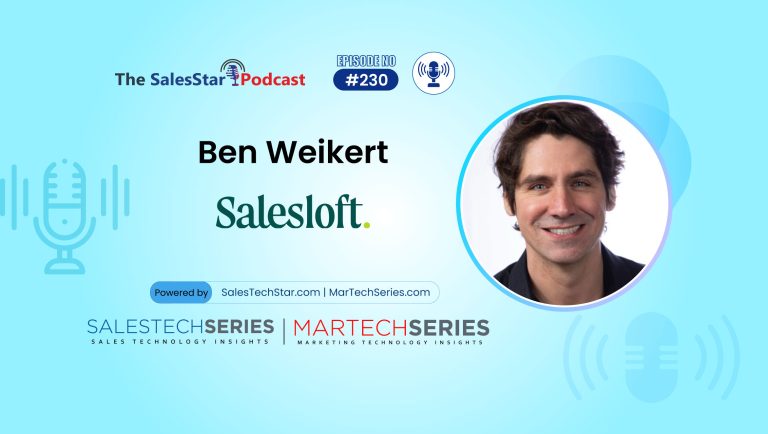
Episode 230: Al Agents And Their Impact on Sales, Marketing Experiences: with Ben Weikert, Senior Director, Product Marketing and GTM Innovation at Salesloft

Ben Weikert, Senior Director, Product Marketing and GTM Innovation at Salesloft joined us in this conversation of the SalesStar Podcast to chat about the impact of AI agents across sales and marketing while taking us through some of Salesloft’s newest agentic AI innovations:

Key topics covered:

  • Deployment and optimization tips for sellers and marketers in an agentic AI driven ecosystem
  • Creating the right human-machine balance in an agentic AI sales-marketing era
  • The future impact of AI on salestech and martech


Square Launches Data Driven Cash Advances In The UK

Block, Inc. Logo

Square Cash Advances are merchant cash advances that provide an advance upfront in exchange for a percentage of future card sales

The “Digital Marketplace Concierge”: How SalesTech Empowers B2B Industrial Sales With Self-Service and Automated Leads

The industrial automation sector witnesses a remarkable transformation in how purchasing decisions unfold. Today’s B2B buyers complete nearly 75% of their decision-making process before engaging with sales representatives. This shift demands a corresponding evolution in how industrial companies approach their sales methodologies and technology implementations.

Your customers now expect the same level of digital convenience in their professional purchasing as they do as consumers. They research solutions independently, compare specifications across vendors, and seek personalized experiences that address their specific challenges. SalesTech solutions emerge as the bridge between these evolving expectations and the complex sales processes typical in industrial environments.

Why Old-School Lead Generation Falls Short?

Traditional industrial lead-generation approaches are struggling to keep pace with the digital world. But, with these old-school methods, you cause more friction than you create opportunities for your sales team.

  • Long Qualification Cycles:

It can take days to get through to manual review of inbound leads, and by the time someone does, the hottest prospects may have lost interest or found other vendors.

  • Long Response Times:

In a fast-paced world, to let a prospect wait for a quote or a technical data sheet is a serious competitive drawback.

  • Manually Entering Data:

This is not only time-consuming but also has a high possibility of human error in your CRM, resulting in inaccurate data.

  • Limited Scalability:

Manual work is inherently limited in its ability to scale, limiting your business’s ability to stretch into new markets.

  • Ineffective Follow-Up:

Without system-driven support, the level of standard contact and follow-up with leads can range widely by agent.

The Pipeline Problem: Manual Bottlenecks

The industrial automation sales pipeline suffers from efficiency constraints that directly impact revenue generation. When prospects express interest in complex industrial solutions, your teams face the challenge of balancing thoroughness with speed. The qualification process often requires multiple touchpoints across several days, creating dangerous lag time where competitors can intervene.

SalesTech addresses these bottlenecks by automating routine qualification tasks while preserving the human expertise necessary for complex industrial sales. Your teams can focus their specialized knowledge where it adds maximum value rather than on repetitive administrative processes.

Read More: SalesTechStar Interview with Nima Hakimi, CEO of Convoso

The Digital Marketplace Concierge: Core Capabilities

The digital marketplace concierge approach is part of an integrated SalesTech solution that revolutionizes B2B industrial sales. This solution integrates a range of sophisticated functions, which include:

  • Automated Lead Qualification:

Instantly analyzes incoming leads against pre-set standards to score and route high-potential prospects to the appropriate sales expert, eliminating the need for manual intervention.

  • Self-service portals:

This channel allows customers to create their own configuration, get real-time quotes, and track their orders 24/7.

  • Intelligent Product Recommendations:

It helps recommend complementary products, relevant accessories, or service packs based on customer configuration selections and browsing history, which boosts AOV.

  • End-to-End E-commerce Integration:

Enables customers to seamlessly transition from quote to sale within the same digital ecosystem, streamlining the entire procurement process and eliminating transactional friction.

These features, in combination, work to offer a more responsive environment that helps buyers and qualifies opportunities more efficiently.

Accelerating Pipeline: The Tangible Benefits

SalesTech implementation delivers measurable improvements to industrial sales operations. The digital marketplace concierge concept transforms your commercial interactions through:

  • Reduced lead response times from hours to minutes
  • Higher conversion rates through consistent qualification processes
  • Improved customer experience through self-service options
  • Greater visibility into pipeline dynamics and forecast accuracy

Breaking Commercial Friction: The Strategic Advantage

Beyond tactical benefits, SalesTech creates strategic advantages in competitive industrial markets. Your implementation of advanced sales technology signals to customers that you value their time and understand their needs.

  • Convenience Differentiator:

You become easier to do business with than competitors still using manual processes.

  • Trust Building:

Transparent self-service options create confidence in your operations and pricing.

  • Data Advantage:

Every interaction generates insights that inform product development and sales strategies.

  • Scalability Factor:

Your sales operation can grow without proportional increases in administrative overhead.

Implementation Roadmap: Overcoming Resistance

In order to successfully implement SalesTech, it is necessary to tackle the general barriers that stem from your organization. Frequently, CIOs and sales leaders cite concerns about integration headaches, data security, or cultural barriers.

Start by identifying the locations of your sales to determine the best spots for automation. Design the perfect customer path across marketing, sales, and service touchpoints. From there, you should evaluate SalesTech platforms based on their integration feasibility with your existing technology stack.

  • Start with pilot implementations focused on specific segments or product lines
  • Measure results against established baselines to demonstrate ROI
  • Involve sales representatives in platform selection to ensure practical usability
  • Develop comprehensive training programs that emphasize benefits to individual performers

The most successful implementations pair technology changes with process redesign, ensuring your SalesTech investment delivers maximum value to both your organization and your customers.

Read More: SalesTech for Sales Email Engagement – What Works and What Doesn’t