Home Blog Page 1130

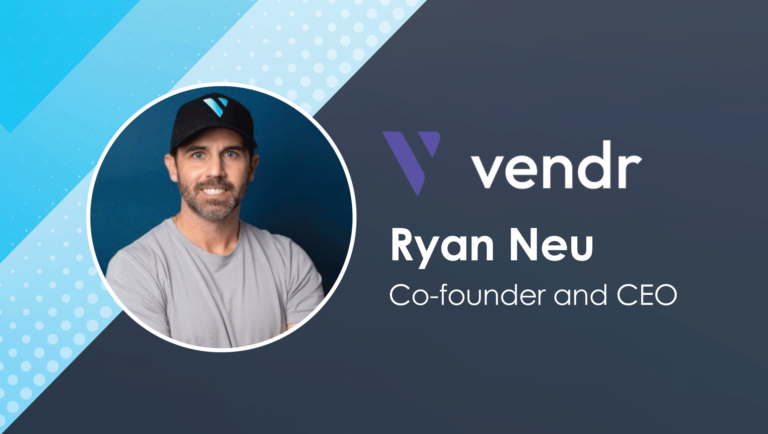
SalesTechStar Interview with Ryan Neu, co-founder and CEO at Vendr

Ryan Neu, co-founder and CEO at Vendr discusses how modern day sellers can build frictionless buying experiences that boost customer outcomes:

________


Welcome to this SalesTechStar chat Ryan, tell us more about Vendr and what inspired the platform?

I’m a salesperson by trade and by heart. Over the course of the decade, I kept coming back to a nagging question: Why is it so hard to sell a great product? Nearly five years ago, I founded Vendr, a platform that removes friction from the process of buying and selling software.

Today, Vendr is one of the world’s largest software purchasers, and we have the deepest SaaS dataset in the world. We use that data to drive fair results. By providing visibility into unbiased SaaS data, we’re creating a fair sales environment, where buyers are guaranteed a fair price and in return sellers are closing more deals with high-intent buyers.

Read More: SalesTech Interview with Irina Soriano, VP of Enablement at Seismic

How has the platform evolved over the years?

Vendr has gone through immense growth and evolution since its founding in 2018. In early 2022, Vendr acquired Blissfully – a startup that builds SaaS management tooling – to complete the SaaS buying cycle.  In June 2022, Vendr announced $150 million in Series B funding, which has accelerated platform development, helping organizations cut costs, manage their second-highest expense (software) and reduce risk in light of the economic downturn. Following funding, the company launched Vendr 2.0, equipping customers with unprecedented visibility into which software their teams are buying and using — all in one central location.

More recently, Vendr launched Explore, a dynamic catalog of the entire software ecosystem built to help companies make faster, more informed SaaS purchasing decisions – backed by rich data from having processed billions of dollars in spend across tens of thousands of transactions and thousands of suppliers. The tool gives teams access to real-time market insights that help them analyze what other companies are buying, break down compliance details, and uncover pricing trends so negotiations are fair for buyers and sellers alike.

Can you take us through some of the top challenges today’s modern day SaaS sellers face when trying to pitch their product and a few top of mind solutions you have in mind to address this?

Many of today’s sales teams are seeing sales cycles that are 60 days or longer and have an average close rate of only 20%. In some instances, the process of buying software can be longer and more complicated than buying a home, which simply doesn’t make sense.

Additionally, it’s estimated that only 3% of buyers truly trust the salespeople they’re working with (for reference, this number is just a hair above lobbyists and politicians). In today’s economic climate, buyers are more wary than ever when it comes to making big purchases. When buyers approach a sales conversation, it all too often starts with distrust – surrounding a lack of understanding whether a product is the right fit, if they’re getting a fair price, etc. This is why providing comprehensive data is important.

Providing buyers with the data necessary to understand the software marketplace – and to do so as it relates to their industry – is enabling more fair and streamlined sales processes. In the end, a winning sales pitch comes down to trust and transparency.

What are the often-missed factors that drive purchase decisions in the B2B tech market (besides the usual factors) that sellers know about, that you feel is important for B2B sales teams to pay attention to?

In today’s macroeconomic climate there are plenty of factors that could contribute to purchase decisions in the B2B tech market. Lack of communication and misalignment between decision makers throughout the software procurement process can often lead to a halt in purchase; it can be challenging to determine which tools are mission critical vs. ‘nice-to-haves’ and to get key stakeholders on board accordingly. Timing can also be everything: overruns on procurement processes have significant direct and collateral costs. They can also put teams between a rock and a hard place, forcing uninformed decisions to be made simply because someone is up against a deadline.

As budgets are increasingly being put under a microscope, removing friction from the sales process becomes even more critical. Historically, buyers lack the data they need to understand if they’re getting the right tool at a fair price, and sellers waste cycles with uninformed buyers –– spending countless hours going back-and-forth on negotiation, contract red-lining, and the like.

These pain points can be major deterrents when it comes to making a final purchase decision.

Vendr is on mission to create a transparent and frictionless buying and selling experience, alleviating the friction that is all too often part of the sales process. The result is winning outcomes for both sides—fair pricing, faster purchase cycles, and fewer wasted resources.

How can B2B sales teams today create better buying influences for their products without sounding too salesy?   

At the end of the day, the winning sales formula is simple: trust, fairness, and speed. The future of sales is fast, fair, and powered by trust and data. Through access to unbiased data, Vendr is working to create a clear path for buyers and sellers.

Can you highlight more about the future of B2B SaaS Sales and salestech and how you feel this market is set to look like over the next few years?

The future of SaaS sales and sales tech should look like this: frictionless procurement processes and a level playing field for sales teams and buyers alike. Vendr is working to make that happen. With our recent launch of Explore, the future of SaaS sales is becoming more transparent, giving a new alternative to traditionally opaque SaaS pricing and process, and providing buyers with dynamic data upfront, vs. the dreaded “contact sales” button. By streamlining the sales process, buyers will be able to purchase with confidence –– know that they’re investing in the right SaaS solution for their team and ensure they’ve gotten a fair price, benchmarked against similar purchases. This is the future of SaaS sales.

Read More: Why Customer Success Is a Revenue Driver—and How to Drive More of It


Vendr | Vendr Logo


Vendr is changing how companies find, buy and manage SaaS. The first of its kind, Vendr’s SaaS buying platform offers both a product and people-powered service to enable the world’s fastest-growing companies to purchase software quickly and with guaranteed savings. Today, Vendr has facilitated billions in SaaS purchases across thousands of suppliers for Finance and Procurement teams at HubSpot, Brex, Canva, Toast, and more. Headquartered in Boston with a second location in Charleston, Vendr was founded in 2019 by Ryan Neu and co-founders Ariel Diaz and Aaron White, who joined the team through the acquisition of Blissfully in 2022.

Ryan Neu leads a 350+ person team building the buy button for SaaS. Before founding Vendr, Ryan was a B2B SaaS sales leader at both InVision and HubSpot. With long sales cycles and low close rates — Ryan never understood why it was so hard to sell a great product. Ryan has always been a software salesperson, stuck in the shoes of an accountant. After three years at KPMG, he decided to pursue his true passion: software sales. He received his M.S. in Accounting from Boston College and his B.S. in Accounting from College of Charleston.

Missed The Latest Episode of The SalesStar Podcast? Have a quick listen here!

Episode 157: Inventory Optimization and Its Impact on Supply Chains with Richard Lebovitz, President and CEO, LeanDNA


Episode 156: Purpose-led Advertising Fundamentals with Julia Hitchman, Chief Commercial Officer at Good-Loop

Episode 155: How Employee Recognition Programs Can Keep Salespeople on Their Toes: with Kevin Yip, Co-founder and President of Blueboard




5 Ways Data-Driven BDR Leaders Motivate Their Teams

Business development reps (BDRs) face more challenges today than ever before, with high meetings-booked goals and many prospects not in the position to make purchases. When getting a “yes” can seem like an impossible goal, working within unambiguous, proven methods of success is critical. While you no doubt use data already, these methods are different in their intention. Rather than representing what’s happening on a given day, they’re designed to combine the intelligence from your historical data with the actions your team does every day, making your team more efficient and successful. These methods are what set data-driven BDR leaders apart from the pack.

5 ways to coach BDR teams with data

1. Take cues from your top performer

On your team, at least one person excels at hitting goals efficiently. Everyone else on the team should learn from what they do. Data-driven BDR leaders share weekly reports of that person’s activities by number, type, and cadence. Beyond what they actually do, the team should look at the actual messages they send and listen to recorded cold calls. Perhaps even more than tips about what that top performer thinks is working, this practice helps others learn from their actual methods. This practice helps the team internalize best practices and it fosters healthy competition. Who’s on top will change week to week, giving the team opportunities to continually learn from one another.

2. Use historical data to set activity targets

Data-driven leaders always connect the things their team is expected to do with things that have actually worked in the past. Do you keep efficiency metrics? For example, have you looked at the number of phone calls it typically takes to book one meeting with an enterprise account in the software industry? Once you have those metrics based on the past six months, turn them into activity targets for the current month. The big benefit here is the stress reduction that comes with working toward targets rooted in success that, when followed, result in reaching goals more predictably.

3. Create ICP and multithreading scores

Particularly when meetings aren’t generating sales qualified opportunities, data-based guidance on the accounts to prospect and the contacts to engage with help BDRs use their time wisely. To provide that guidance, data-driven leaders use ideal customer profile (ICP) and multithreading scores.

An ICP score validates that a rep is engaging the right companies. Set it up by assigning points against your ICP criteria – if your desired industry is software, weigh it high and assign it 10 points. Weigh undesirable industries low and assign them 1 or 2 points. Total the numbers and assign scores based on ranges (0-5 = 1 star, 5-10 = 2 stars).

A multithreading score looks at the optimal number of contacts a BDR should engage per account type, ideally against a list of desired titles. Just like you used historical success to set activity targets, use it to find the target number of contacts. Then score accounts against the target.

These scores offer both a way to stay on track and a way to dig in when goals aren’t being met. If you can easily see that ICP and multithreading were on point, you know to look elsewhere for the cause.

Read More: SalesTech Interview with Irina Soriano, VP of Enablement at Seismic

4. Use data to drive weekly 1:1s

Good BDR managers excel at the kind of coaching only humans can do, like helping BDRs craft creative outreach or role playing various cold call scenarios. When you add data-driven coaching, you’ll see more gains in rep performance that mean you’ll spend less of your 1:1 time managing inputs. Start your sessions with each team member by looking at how they’re tracking toward goals, specifically calling out their activity targets and efficiency. This is a great time to check in on ICP and multithreading scores as well. Pairing qualitative feedback with quantitative shows your team that you’re deeply invested in helping them succeed and the ritual helps new team members ramp faster.

5. Build cross-team visibility

It’s time for sales, marketing, and customer success teams to stop operating in silos. Customer-centric revenue organizations need to understand and track the entire journey from top-of funnel through renewal. Data-driven coaches advocate for connected data across teams and systems. With all touchpoints in one system, they set up functionality that automatically shares information. For example, a BDR gets an alert when one of their contacts signs up for  a webinar. Achieving cross-team visibility is worth your effort because it has a direct effect on your team working more efficiently and leads to a better customer experience, bolstering revenue protection efforts.

Data-driven coaching in action

Incorporating these data-driven methods will ultimately help your team be more productive, efficient, and effective. When you’re confident about what the team should do every day to reach goals based on their recent success, you free up more of your time to coach how they do it rather than managing their tasks. The team will be more confident, too, knowing that their targets are unambiguously derived from what works.

Read More: Why Customer Success Is a Revenue Driver—and How to Drive More of It


Bankful Announces In-Cart Integration on Shopify and Reduces Abandonment for Merchants

Bankful Intelligent Payment Routing

With many economists predicting a 2023 recession, Bankful has set its focus on helping merchants reduce cart abandonment to optimize conversation.

With Bankful’s simplified Shopify Native integration, customers can enjoy a seamless checkout experience with simple and fast one-click checkout. The smooth checkout process is expected to help merchants increase conversions and boost revenue, helping transform more browsers into buyers.

Bankful’s one-click integration always displays accurate stock levels, streamlining the inventory management process and enhancing the overall checkout experience for customers. This feature will eliminate inventory lag and ensure that customers have a smooth experience throughout the entire shopping process.

Read More: 4 Strategies to Increase Video Messaging During the Sales Process

Bankful CMO, Marcela DeVivo, says “after all a penny saved is a penny earned and we’re talking a lot of pennies.” Not only does this technology create a faster and more secure checkout process, but it also provides valuable insights into consumer behaviors

Bankful CMO, Marcela DeVivo, says “after all a penny saved is a penny earned and we’re talking a lot of pennies.” Not only does this technology create a faster and more secure checkout process, but it also provides valuable insights into consumer behaviors.”

Bankful’s Shopify Native integration is now available for all Bankful merchants. To get started, merchants can create an account or get in touch with Bankful to learn more about how the platform can help them achieve their eCommerce goals.

If you’re a Shopify merchant looking for a simpler and more efficient checkout process, now’s the time to explore Bankful’s new integration.

Read More: SalesTech Interview with Irina Soriano, VP of Enablement at Seismic

Write in to psen@itechseries.com to learn more about our exclusive editorial packages and programs.

Peak Technologies Introduces Supply Chain AI and Image Recognition Analytics Platform for High-Volume Logistics

Peak-Ryzex Announces Company Name Change To Peak Technologies

Peak Analytics, a no-code, plug-and-play system that enables complete supply chain visibility across the entire distribution lifecycle, will be demonstrated at ProMat 2023

Peak Technologies, a provider of digital supply chain and mobile workforce solutions, introduces Peak Analytics, a powerful supply chain AI and image recognition solution for high-volume logistics. Peak will conduct live demos of the solution at ProMat 2023 (booth S459).

“The modular design of Peak Analytics leverages the scanning data captured in package tunnels into powerful tools that retail, shipping and logistics operations can use to improve the performance of multiple areas of their business,” said Tony Rivers, president and CEO, Peak Technologies.

Peak Analytics will give users the actionable intelligence they need to solve key business challenges, such as:

  • Real-time monitoring of every package, sorting non-stop
  • Automated identification of problematic packages, reducing returns and chargebacks
  • Equipment health and performance monitoring to ensure maximum efficiency

Currently deployed in over 1,800 tunnels and 200 buildings nationally, Peak Analytics – formerly known as Siena Analytics – gives logistics operations the ability to capture key information about package quality by harnessing the power of image recognition and AI. By utilizing sensors placed at the edge within warehouses, Peak Analytics delivers real-time data about the condition of every package, allowing companies to identify problem inventory at the source.

Peak Analytics is a vendor-agnostic, no-code AI solution for retail, shipping and logistics that captures real-time data as packages move through scanning tunnels, immediately identifying common vendor compliance problems such as missing barcodes or misprinted labels. It lets users browse a searchable database of package images and dimensions, build sophisticated actionable dashboards for use on the distribution center floor, and run in-depth, usable analytics at the package, tunnel, facility and/or enterprise level.

Read More: SalesTechStar Interview with Jonathan Lister, COO at Vidyard

“The modular design of Peak Analytics leverages the scanning data captured in package tunnels into powerful tools that retail, shipping and logistics operations can use to improve the performance of multiple areas of their business,” said Tony Rivers, president and CEO, Peak Technologies.

The Peak Analytics solution is a modular platform consisting of three insight components:

Tunnel Insights: The core Peak Analytics product, Tunnel Insights captures images, dimensions and barcode data for every package scanned, generating live feeds in both TunnelView and equipment-specific dashboards. This allows companies to diagnose maintenance and package issues quicker to maximize equipment uptime.

As packages move through the tunnel, Package Intelligence populates the system data table with six-sided images, barcode IDs and dimensions. On-site users can see which camera successfully decoded the barcode. Dashboards display read rates for each camera in the tunnel to ensure equipment is working properly.

Tunnel Insights automatically shares all its data with the Facility Insights and Learning Insights modules. It also provides a powerful resource to rapidly identify and diagnose maintenance and package issues, identify and resolve no-reads, monitor sensor performance and help maximize equipment uptime.

Facility Insights: From a single tunnel to an entire facility – or across the enterprise – logistics operations use the data captured by Tunnel Insights to generate customizable AI reports with Facility Insights for real-time analytics into the performance of their scanning system. The solution allows companies to identify systemic issues for supply chain planning to maintain operations.

Read More: Gong Recognizes Ten Companies Driving Efficient Growth With Revenue Intelligence

Customizable AI functionality takes the millions of tunnel images captured every day and uses them to create reports, dashboards and alerts that provide the Package Intelligence needed to better manage and optimize sorting and shipping operations.

Up to 50 million scan events per day can become more than 50 million AI inferences about the performance and recommended improvements needed in shipping operations. This gives operations the ability to identify systemic issues for supply chain planning, apply rich analytics to detect sorting operations bottlenecks and improve capacity utilization by comparing dimension measurements against vendor manifests.

Learning Insights: This component leverages the full power of AI to create, deploy and run models that enable logistics operations to automatically detect and classify problem packages before they become costly issues. It identifies the reasons for no-reads: torn or split bars, labels obscured by straps, poorly-printed labels or cameras improperly focused.

Learning Insights is the only end-to-end, no-code solution for training and deploying AI models unique to each company’s supply chain. It applies sophisticated algorithms to business logic based on specific, custom business needs.

It provides solutions to persistent challenges, such as automatically detecting and classifying problem packages for action steps. Learning Insights also makes it easier to automate quality control and exception handling, more rapidly detect delivery and vendor issues, and analyze and compare patterns from dimension measurements against vendor manifests.

Write in to psen@itechseries.com to learn more about our exclusive editorial packages and programs.

EnsembleIQ Path to Purchase Institute’s Future Forward Conference Brings Together Consumer Product Marketers and Retail Leaders to Demystify New Consumer and Commerce Trends

Event Will Unveil New Research on Shopper Behavior and Factors Influencing In-Store Experience

EnsembleIQ announces the Path to Purchase Institute’s Future Forward conference will take place May 16-18 in New Orleans. The conference will bring together consumer product marketers and retail leaders from every point along the path to purchase to demystify the new consumer, share shopper behavior and trend forecasting insights, and explore the future of commerce via in-store experience, social, the metaverse and beyond.

“Shopper behavior is evolving at a dizzying pace. Future Forward will focus on understanding why consumers shop, and the implications of their changing behaviors on brands and businesses,” said Eric Savitch, Vice President and Brand Director, the Path to Purchase Institute. “We’re excited to bring together a think tank of leading industry executives to help attendees succeed in the next generation of commerce.”

During the conference, Patrycja Malinowska, the Path to Purchase Institute’s Director of Member Content, will unveil proprietary research focused on in-store experience and the current shopping habits of consumers with Dan Sabanosh, Director of Shopper Marketing, Great Northern Instore. The “Examining the In-Store Shopping Experience” session will offer insights into shopping patterns, new areas of opportunity, and the trends and topics on consumers’ minds that could influence future behaviors.

Read More: SalesTechStar Interview with Alexandre de Vigan, CEO, Nfinite

Additional thought leaders participating in the conference will include:

  • Sean Monahan, Founder, 8Ball
  • Ari Peralta, Neuroscientist & Sensory Designer, Arigami
  • Joseph Vizcarra, Group Vice President, Customer Marketing, The Coca-Cola Company
  • Melissa Gonzalez, Principal/Founder, MG2/The Lionesque Group
  • April Carlisle, EVP, Commerce, Spark Foundry
  • Brad Christian, Senior Vice President, Strategic Growth, US Channel Performance
    IPSOS
  • Brendan Light, Senior Vice President, Retail & Shopper Insights Practice, IPSOS USA
  • Amanda Wolff, Chief Marketing Officer, Flywheel Digital
  • Michelle Baumann, Chief Strategy Officer, VMLY&R Commerce
  • McDonald Predelus, VP Creative Director of Web3, VMLY&R Commerce
  • Graham HoggCo-Founder & CEO, see6

During the event, the Path to Purchase Institute also will celebrate the industry’s next generation of leaders in a “40 Under 40” awards ceremony.

In addition, Mimi Dixon of Crayola, Brent Rosso of Ulta Beauty, and Bob Waibel of Conagra Brands will be inducted into the Path to Purchase Institute’s Hall of Fame, which has been honoring the icons of the path to purchase industry since 1994.

Read More: 4 Strategies to Increase Video Messaging During the Sales Process

Write in to psen@itechseries.com to learn more about our exclusive editorial packages and programs.

Nexite to Exhibit at Shoptalk 2023

Nexite, the pioneering data platform for real-time in-store intelligence, is exhibiting at Shoptalk 2023 from March 26-29 at Mandalay Bay in Las Vegas. Shoptalk brings together thousands of retail changemakers every year to create the future of retail. At this year’s event, Nexite will be showcasing the first in-store customer behavior analytics solution that enables retailers to localize merchandise assortments and inventory allocation using real-time actionable insights into customer engagement, abandonment, and conversion.

Nexite will be exhibiting as part of the Israeli Pavilion at Shoptalk 2023. Organized by Israel Export Institute, in collaboration with the Ministry of Economy and Industry & Mandalay Bay Convention Center, the Israeli Pavilion will give Nexite a platform to learn, network, collaborate, and evolve within the Shoptalk experience.

Read More: DataCore Wins Silver Stevie Award For Outstanding Sales And Customer Service

“We are incredibly grateful for the opportunity to share Nexite’s innovative technology with the Shoptalk audience,” said Ronit Eliav, Chief Marketing Officer of Nexite. “We see great value in our platform and believe it will help retailers be more successful, which is always our goal. Allowing this community to experience our offerings firsthand and having the ability to visualize how it will support them is such an important step. We are really looking forward to this conference and hearing the feedback that will come out of it.”

Nexite’s data, based on item-level inventory location and availability, is used to create live heats maps to optimize space utilization and visual merchandising compliance. The platform also allows for secure frictionless commerce to reduce loss while enhancing the customer experience.

Read More: SalesTechStar Interview with Monica Eaton, Founder of Chargebacks911 & Fi911

Nexite’s participation in Shoptalk 2023 comes on the heels of an incredibly successful collaboration with Factory 54, the international fashion chain. Nexite’s technology was deployed across their stores including their Ralph Lauren and Tommy Hilfiger concession stores, experiencing a 13% sales increase, a 15% sell through increase, a 63% sell through time reduction, and a merchandise conversion increase of 45% within the first month.

The Shoptalk agenda covers the latest technologies, trends and business models, as well as the rapid transformation of what consumers discover, shop for and buy—everything ranging from apparel and electronics to beauty and grocery. Shoptalk’s agenda leads the retail industry narrative and promises insights and perspectives not found anywhere else.

In addition to exhibiting at Shoptalk 2023, Nexite is serving as a Level 1 sponsor for the show.

Write in to psen@itechseries.com to learn more about our exclusive editorial packages and programs.

Cognaize Announces Expansion of Executive Team and Board of Directors to Accelerate Growth and Innovation of AI-Powered IDP Solutions

Cognaize Company Profile: Valuation & Investors | PitchBook

Mark Almeida and André Andonian Bring Deep Experience and Expertise in Business Strategy and Leadership to Cognaize Board; Financial Services Sales Leader David Sensenich Appointed Global Head of Sales

Cognaize, the intelligent document processing (IDP) company powered by hybrid intelligence, announced that it has added three industry veterans to its board of directors and executive team to help advise and lead the company forward as it experiences significant growth and extends the power of its technology platform for leaders in financial services. The additions of André Andonian and Mark Almeida to the Cognaize Board, and David Sensenich as Global Head of Sales are significant milestones for Cognaize, as it continues to grow to meet the growing demand for its IDP solutions from banks, asset managers, insurance companies, and financial information providers in the United States and around the world.

“The additions of André and Mark to our board of directors is an important milestone for Cognaize as they will both play important roles in developing and refining our strategic mission to deliver ever-more innovation and value to our growing number of customers. David Sensenich is a critical addition to our management team as he has two decades of experience leading sales organizations for leaders and innovators in markets including analytics, ratings, and lending,” said Al Eisaian, CEO of Cognaize. “Our ability to attract industry leaders with proven experience and expertise is a testament to the impact that Cognaize is having on the financial services market and to our customers who require customized and sophisticated AI solutions tailored to their exact requirements.”

Read More: VMware Selects Renewtrak For Global Customer Retention And Growth

André Andonian was appointed as the Chairman of the Cognaize board of directors. He is the CEO of Andonian Advisory and serves on the board of Analog Devices and AEM Holdings. In his 34-year career at McKinsey & Company, André was a member of the firm’s leadership teams in Europe, the United States, and Asia, most recently serving as managing partner of McKinsey Korea and Japan. He advised clients across the firm’s advanced industries and technology practice groups and served multiple terms on the Shareholders Council, the firm’s global Board of Directors.

“Cognaize is a rare company that has developed breakthrough innovation that is meeting the exact requirements of the market,” said Andonian. “They have cracked the code on how to enable collaboration between human experts and AI to empower financial services organizations to achieve continuous improvement in efficiency, maintain control over their data, and gain powerful competitive advantage. I am excited to work with the Cognaize team to further expand the value we are delivering to our customers and help drive the market forward.”

Mark Almeida has deep and proven experience in financial services. He spent over 30 years at Moody’s, including serving as President of Moody Analytics for over a decade, where he oversaw the company’s products and services used extensively by financial institutions worldwide. Almeida is currently a Board Member at Tractiv and is a limited partner and advisor at Nyca Partners, a leading venture capital firm specializing in financial technology.”

Read More: SalesTechStar Interview with David von Rothenburg, VP Sales and Alliances at Pitcher

“Throughout my career in the financial services industry, the holy grail has been to find a better way to extract insights from the growing volumes of unstructured data,” said Almeida. “Cognaize’s technology platform was clearly developed for financial experts, by financial experts, and their application of AI for the financial services market represents a giant leap forward for the industry.”

David Sensenich has extensive global sales leadership experience in the financial data analytics and software technology sectors. Over the past eight years, David has led the go-to-market efforts as Head of Sales at ARGUS (Altus Group), Trepp (DMGt Company), and Blooma, focusing on software and data solutions in the Structured Finance and Commercial Real Estate markets. Prior to those roles, David spent 14 years at Moody’s Analytics, where his roles included Managing Director of the Global Accounts team and the Asia-Pacific region.

“I am excited by the opportunity to drive the adoption of Cognaize’s IDP solutions in financial services organizations all over the world,” said Sensenich. “Despite the enormous hype and potential of AI technologies like ChatGPT, Cognaize is the first company to develop AI models tailored to the nuances of financial documents and the specific requirements of each organization, which is why they are achieving such rapid growth.”

Write in to psen@itechseries.com to learn more about our exclusive editorial packages and programs.

Up to 45% of U.S. Businesses Stopped Using a Software Platform Because of Security Concerns

50% of businesses say security is the most influential factor when they buy software, according to Capterra’s new survey

Half of U.S. businesses say that security is the most influential factor when buying software, according to Capterra’s Security Features Survey. In fact, 45% have stopped using a specific type of software due to security concerns. Businesses are willing to pay a premium for intuitive and well-designed secure software.

Digging further, businesses share the types of security features they consider to be “must-haves.” Over three-quarters (76%) cite data backups as a dealbreaker when choosing software. This can be expected as growing ransomware attacks make it critical for businesses to have data backups. The second most important security feature is the ability to receive security notifications (72%), followed by encryption in transit (68%) and at rest (67%).

Read More: SalesTech Interview with Irina Soriano, VP of Enablement at Seismic

Prompted by federal government mandates, the availability of a software bill of materials (SBOM) is emerging as a required security feature among businesses buying software. An SBOM is a list of the components used to build a software package and is meant to inform organizations of related security and compliance risks. It’s cited by 55% of businesses as a must-have feature.

“Businesses should continue to place a premium on security as a key differentiator when buying software,” recommends Zach Capers, senior security analyst at Capterra. “While organizations should focus on key features such as data backups, security notifications, and encryption, don’t overlook lesser-known, but equally important, features such as the availability of an SBOM.”

Read More: 4 Strategies to Increase Video Messaging During the Sales Process

Organizations are also boosting security by focusing on robust authentication measures. While 59% of businesses still look for relatively insecure password authentication, nearly as many (52%) want software tokens (e.g., DUO, Google Authenticator), 40% pursue hardware tokens (e.g., USB key), and 39% look for biometrics, all of which are much stronger than passwords. More intriguingly, a third (33%) are interested in passwordless authentication.

Businesses look for security certifications and attestations provided by software vendors to see how the tools they’re buying adhere to specific protections. According to 59% of businesses, a Cloud Security Alliance certification makes the software more appealing, followed by 47% that are interested in the Cybersecurity Maturity Model Certification (CMMC).

Security is a critical factor for most companies when buying software, but it’s important to know which features to focus on that make a product the right fit for business needs.

Write in to psen@itechseries.com to learn more about our exclusive editorial packages and programs.

Atos positioned as a Leader in the Gartner Magic Quadrant for Outsourced Digital Workplace Services report

Atos positioned as a Leader in the Gartner® Magic Quadrant for Outsourced Digital Workplace Services report

Atos today announces that it has been positioned as a Leader by Gartner in its 2023 Magic Quadrant for Outsourced Digital Workplace Services (ODWS), based on its Completeness of Vision and Ability to Execute. This is the seventh consecutive year that Atos has been named a Leader in a Gartner Magic Quadrant report related to outsourced digital workplace services1. Atos is the only European company to be listed in the Leaders’ quadrant.

Atos’ Outsourced Digital Workplace solutions are part of its Engaged Employee Experience. This approach takes a holistic view of each individual and their unique needs in the workplace. In addition to ensuring that each employee has the right physical working environment and hardware/software solutions to enable them to do their job effectively, Atos also looks at accessibility, collaboration, security, continuous learning and development, as well as employee wellbeing with AI powered tools and data driven solutions such as sentiment analysis. With employee experience being at the heart of Atos’ Digital Workplace solutions, organizations can increase employee engagement which leads to enhanced performance, customer satisfaction and higher profitability.

Read More: SalesTechStar Interview with Jonathan Lister, COO at Vidyard

“We are proud to be recognized as a Leader in the 2023 Gartner Magic Quadrant for Outsourced Digital Workplace Services for the seventh year running” said Nourdine Bihmane Group CEO and Co-CEO, Tech Foundations, Atos. “Our goal is to create a revolutionary intersection between platforms (technology), people and places, to ensure that every employee wherever they may be based, benefits from a personalized way of working underpinned by innovative and holistic engaged employee experience technologies. We believe that this recognition by Gartner reflects our continued investment in our growing Digital Workplace business and the relevance of our holistic approach.”

Read More: Why Accurate Forecasts Can Help Weather The Economic Storm

Write in to psen@itechseries.com to learn more about our exclusive editorial packages and programs.

Locus Robotics Introduces Locusone, the Warehouse Orchestration Platform Powering Centrally Managed Multi-Bot AMR Automation

Data science-driven platform seamlessly orchestrates large fleets of multiple robot form factors in very large warehouses to deliver predictable, efficient, and scalable productivity results.

Locus Robotics, the leader in autonomous mobile robots (AMRs) for fulfillment warehouses, announces LocusONE, the industry’s first data science-driven warehouse automation platform to enable seamless operation and management of large quantities of multiple AMR form factors as a single, coordinated fleet in all sizes of warehouses. LocusONE uses proprietary data science to support the full breadth of material movement needs found in today’s fulfillment and distribution warehouses.

“LocusONE makes it easy to deploy and manage large numbers of AMRs — and multiple form factors — within very large warehouses to work together as a single, orchestrated fleet,” said Rick Faulk, CEO of Locus Robotics. “Based on Locus’s proprietary data science engine, LocusONE enables operators to gain the flexibility and critical business intelligence needed to efficiently handle material payloads from 3 ounces to 3,000 pounds.”

The LocusONE platform supports a thousand or more robots, operating in sites as large as one million square feet or more, executing multiple use cases simultaneously in a single, intelligent, and orchestrated solution. With LocusONE, LocusBots engage in a diverse array of tasks — including each picking and putaway, case picking and putaway, replenishment, pallet building, routine routes, point-to-point transport, counting, and more — within a single warehouse. The data science behind the scenes optimizes the mix of tasks throughout the day to achieve optimal warehouse productivity.

Read More: SalesTech Interview with Irina Soriano, VP of Enablement at Seismic

LocusONE integrates with any WMS system to provide flexible and dynamic fleet management and enables easy deployment of a mix of Locus Origin, Vector, and Max AMRs tailored to meet each warehouse’s specific needs. Regular enhancements are released as over-the-air updates to Locus’s installed base of more than 250 customer sites.

“Locus lets DHL Supply Chain deploy the right bot for our customers’ varied needs, all centrally coordinated and managed on one platform. With Locus’s powerful data science strategy, delivered through the LocusView dashboards, LocusONE plays an important role in providing the key business intelligence insight we need to optimize operational efficiency and improve service quality for our customers,” said Sally Miller, CIO North America & DSC Digital Transformation Officer of DHL Supply Chain North America. “Partnering with Locus has helped us deliver on our commitment to continuous innovation and digital transformation across the entire supply chain”.

Locus’s powerful data science foundation makes it possible to smoothly navigate hundreds – or even a thousand or more – bots in a single footprint as well as deliver predictive and actionable management guidance – in real time – to dramatically improve throughput across a multitude of use cases. LocusONE includes Locus’s award-winning LocusView package, which delivers data-driven, actionable insights across more than two dozen insightful reports and real-time dashboards, including labor guidance, predictive insights for work completion, operational comparisons against targets or time periods, order pool tracking and guidance, mission analysis and optimization, key performance visualization, and more.

LocusONE further extends Locus’s position as the industry’s AMR leader for automation and digitalization of warehouses, distribution, and fulfillment centers to efficiently meet increasing order volumes, labor shortages, and rising consumer expectations.

“As warehouses become increasingly complex, the ability to rely on a dependable data analytics strategy is essential to their smooth operation. Having the ability to deploy a flexible, seamless and proven AMR management platform to meet a broad range of use cases has become a must-have in the warehouse fulfillment industry,” said Ash Sharma, Senior Research Director at Interact Analysis. “This innovative platform demonstrates how critical multi-form factor interoperability is in today’s fulfillment warehouse and reflects Locus Robotics’ commitment to innovation, ease of use, and broad industry vision over the past few years.”

“LocusONE’s ability to integrate rapidly and efficiently with other automation technology – such as sortation or packaging systems – ensures that a nimble, scalable robotics solution can be easily deployed into both brownfield and greenfield environments,” noted Faulk.

Read More: Why Customer Success Is a Revenue Driver—and How to Drive More of It

“The LocusONE platform enables Kenco to create a seamless fulfillment experience that delivers enhanced productivity, while improving employee morale and visibility. We rely on the LocusView dashboards to monitor progress and inform our labor management throughout the day,” said Kristi Montgomery, Vice President, Innovation, Research & Development Kenco Logistics. “LocusONE’s real-time insights allow us to delight our customers, and that’s what matters most to Kenco.”

LocusONE is available through the company’s all-inclusive, Robots-as-a-Service (RaaS) business model. Locus Origin, Vector, and Max can be easily added to existing and new workflows, enabling operations to dynamically scale and adapt to changing market demands. In a study done by Peerless Research Group, nearly half of respondents said they would prefer to buy their robotics solution as an entire integrated system that includes hardware, software, support, and maintenance.

Locus’s Recycle, Refurbish, and Repurpose initiative is the first in the AMR industry to actively drive sustainability across all aspects of the business — from manufacturing and deployment to support and maintenance — at sites around the world. Locus is continually working to identify and implement best-practice strategies and tactics designed to reduce overall waste across all areas of our organization.

Locus will be showcasing LocusONE at Promat, Booth #S2303, the material handling industry’s premier event, running March 20-23 in Chicago, IL, where the Locus theme will be Vision, Intelligence, Results – emphasizing Locus’s commitment to delivering actionable intelligence in an innovative solution to drive results for customers. Locus will also host guests at the Locus Theater, featuring a lineup of informative industry speakers and presentations, discussions with Locus’s customers and partners, as well as showcasing live picking and putaway demos.

In addition, unwind with Locus for The Happiest Hour, every day from 4:00 pm – 5:00 pm and be sure to join Locus’s ProMat 2023 scavenger hunt – Passport to Bots. Learn how LocusBots work with other industry-leading warehouse solutions and be entered to win one of five prizes, including an iPad and Beats wireless headphones.

Write in to psen@itechseries.com to learn more about our exclusive editorial packages and programs.