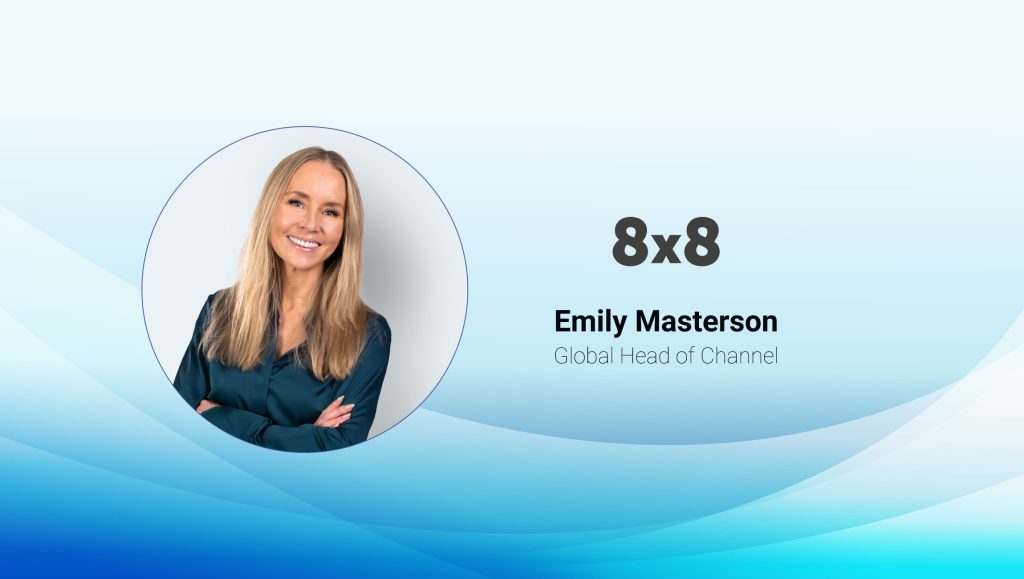
Emily Masterson, Global Head of Channel at 8×8 shares a few proven pointers on what can optimize the future of SaaS partnership models in this SalesTechStar interview:
__________
In your role, how do you prevent channel conflict between the channel partner ecosystem and your direct sales team?
It starts with clarity. We have clear rules of engagement and a defined process for how opportunities flow, so partners always know where they stand and can trust how we’ll support them. There’s no ambiguity about who owns what, and that predictability is what removes most conflict before it ever happens.
The bigger point is that we’re a channel-first business, so we lead with our partners. We understand the value they bring to an opportunity and we build around that, rather than treating the channel as a separate route to bolt on. And critically, we don’t run a separate sales team to support channel versus direct. It’s one team. Our sellers fully support and work alongside our partners as one unit, which means the incentive to compete simply isn’t there. When everyone is rowing in the same direction, conflict stops being a structural problem and becomes the rare exception you manage case by case.
What improvements can modern channel sales heads work on to effectively measure and demonstrate the ROI of indirect versus direct sales?
The fundamentals are still the right place to start. Engagement, pipeline, closed won rates, and the true scale we can reach by working through our partners rather than going it alone. Those tell the core story.
Where I think most of us can get sharper is in attribution and in telling the full lifetime story, not just the moment of sale. It’s easy to count partner-sourced deals. It’s harder, and more valuable, to show partner-influenced pipeline, the relative cost of sale across both routes, and what happens to those customers after the deal closes. If indirect is delivering better retention, faster expansion or lower cost to acquire and serve, that’s a far more compelling ROI argument than win rate alone.
When a partner brings in a deal that requires the support of the direct sales team, how do you balance resource allocation and deal ownership?
We align our sales team to the opportunities our partners bring us, so we can work side by side from the start. Ownership follows capability. If a partner is trained and capable, they run the deal and pull us in where they need us, whether that’s technical depth, a specific product conversation or executive air cover. We’re there to add support, not to take over.
It works because the resourcing decision isn’t a negotiation over who gets the credit. It’s a simple question of what the customer needs and who is best placed to deliver it. When the partner leads, we support. When they need us in the room, we show up. That flexibility is only possible because, as I said earlier, we’re not protecting a separate direct number that competes with the partner’s.
Read More: SalesTechStar Interview with Ilyas Kurklu, Co-founder and CEO of Replenit
How do you ensure partners remain engaged with the customer post-sale to drive high Net Revenue Retention (NRR)?
The key is connecting the partner to the right people inside 8×8 from day one, so we align them with the 8×8 account manager for that customer. That relationship is what keeps the partner close to the account rather than drifting once the initial deal is done.
From there it’s about arming them with insight. We share the data that points to cross-sell and upsell opportunities, so the partner can have genuinely useful conversations with their customer rather than guessing where the next opportunity sits. When a partner can walk in with a clear view of where a customer could get more value, they stay engaged, the customer stays healthy, and NRR takes care of itself. Retention is a team sport, and the partner is on the team.
How do you keep partners trained on your product updates and value proposition?
Their channel account manager is the constant. They’re in regular contact and act as the first line for anything new a partner needs to know. On top of that we run a structured enablement path so partners can keep learning in whatever way suits them, whether that’s self-paced online, live webinars or face to face sessions.
We also hold monthly webinars and run regular events to showcase what’s new and, just as importantly, to get feedback from our partners on the products and the roadmap. That last part matters to me. Training isn’t a one-way broadcast. The best sessions are the ones where partners tell us what they’re hearing from customers and what they need next, and that shapes where we take the product. Keeping them trained and bringing them into the conversation are really the same thing.
Do you have any additional learnings or thoughts you’d like to share before we wrap up?
The biggest thing I’ve learned is that the channel runs on trust and true partnership. It’s in being easy to do business with, in doing what you said you’d do, and in showing up when a partner needs you rather than only when there’s a deal on the table. Programs and incentives matter, but they sit on top of relationships, not the other way around.
The other thing I’d say is that the channel is changing fast, and the vendors who win will be the ones who treat partners as a true extension of the business rather than a route to market to be managed. That means investing alongside them, innovating with them, and being honest about where we can do better. Mutual growth only works if it’s genuinely mutual. That’s the standard I hold our team to, and it’s the standard our partners should hold us to in return.
Read More: You Have Cloned Your Voice. Now Your AI Is Making Cold Calls
About 8X8

The 8×8® Platform for CX integrates AI at every level to enable personalized customer journeys, drive operational excellence and insights, and facilitate team collaboration.
About Emily
Emily Masterton is Global Head of Channel at 8×8, leading the company’s transformation into a channel-led organisation. With nearly 19 years of channel experience spanning Oak Telecom, Unify, Atos, and 8×8, she has built a reputation for growing partner ecosystems, driving revenue, and creating high-performing channel strategies.