Retail media has spent the last few years becoming one of advertising’s most important growth engines. Retailers built advertising businesses around something they already owned: valuable first-party shopping data. They knew what consumers searched for, what they bought, what they considered, and increasingly, what they were likely to purchase next.
Now another transformation is beginning.
What happens when the customer stops doing the shopping themselves?
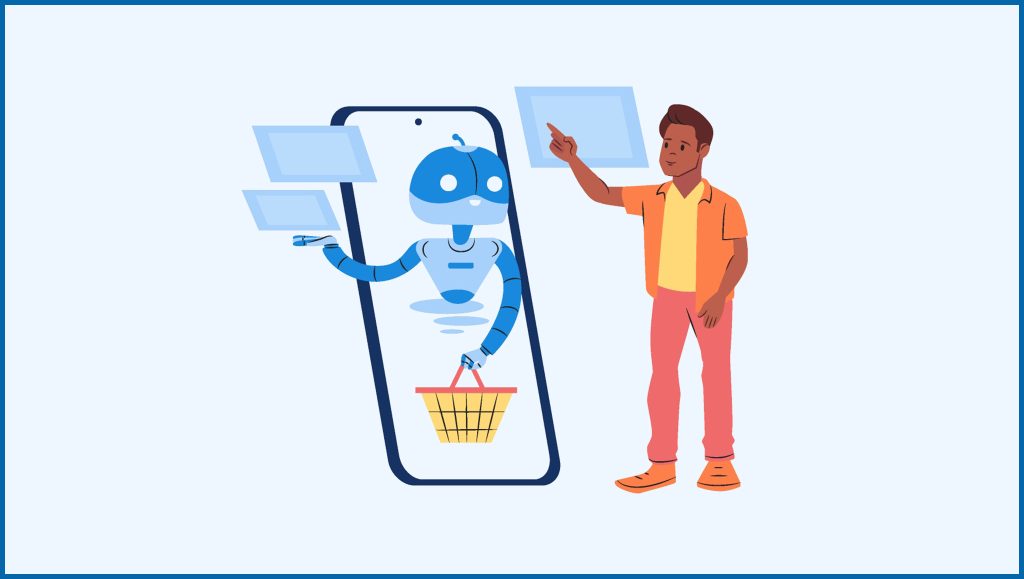
Instead of browsing a retailer’s website, comparing products and deciding what to buy, a consumer could simply tell an AI agent what they need.
“Find me running shoes under $150.”
“Replenish my household essentials, but choose sustainable options.”
“Book a family-friendly hotel in Singapore for four nights.”
The agent searches, compares, filters and potentially completes the purchase. The customer remains at the center of the transaction. But the retailer may no longer be at the center of the discovery process.
That is where agentic commerce could fundamentally reshape retail media.
Retail media’s biggest advantage could become less exclusive
Retail media grew partly because retailers could offer something traditional media could not easily match: purchase-intent data. A retailer knows what a customer is actively shopping for. It can connect advertising exposure to commerce outcomes. That makes its inventory valuable to brands.
But agentic commerce could weaken the retailer’s position as the primary gateway to that intent. If a customer asks an AI assistant to compare products across ten retailers, the AI becomes the discovery layer. The retailer still owns its transaction data. But it may not own the first interaction.
Reuters reported in August 2026 that retailers were already seeing growing shopping traffic from AI platforms while simultaneously trying to protect the direct customer relationships and data they have historically relied upon. AI-referred traffic was becoming commercially meaningful, but retailers still had an incentive to bring customers back to their own properties.
This gives birth to a strategic tension.
AI can send retailers more shoppers while taking away some control over how those shoppers arrive.
Read More: SalesTechStar Interview with Matt Alexander, VP of Channel and Alliances at Synthflow AI
Retail media may have to become machine-readable
In the traditional retail environment, product pages were designed primarily for humans. Images, descriptions, reviews, promotional messages and merchandising were optimized to persuade a shopper.
An AI agent needs something different. It needs reliable information that it can interpret and compare.
• Price.
• Availability.
• Size.
• Product attributes.
• Delivery dates.
• Return policies.
• Ratings.
• Promotions.
• Compatibility.
• Stock levels.
And increasingly, the terms under which an agent can actually complete a transaction.
Google recognized this shift in January 2026 when it introduced the Universal Commerce Protocol, an open standard designed to support agentic commerce across discovery, purchasing and post-purchase experiences.
The significance goes beyond another commerce protocol. It reflects a larger change in retail infrastructure: Products need to become understandable to machines, not just attractive to humans.
Advertising may need to become more useful
A human shopper may respond to a compelling image or promotional headline. An AI shopping agent may care more about whether the product actually satisfies the customer’s requirements. And that could make relevance more important than interruption.
Imagine two products competing for the same customer.
One has aggressive advertising but incomplete product information. The other has less advertising but accurate pricing, clear specifications, strong reviews, reliable availability and flexible returns.
For a human browsing a category page, the first brand might win the initial attention. For an AI agent comparing options, the second could have a stronger case. This does not mean advertising disappears. It means advertising becomes increasingly connected to the quality of the underlying commerce data.
The retailer still has something the agent cannot replace
Despite all this change, retailers are not becoming irrelevant. They still own products, fulfillment relationships, customer service, loyalty programs, and transaction history.
And, in many cases, they own the trust that comes from an established customer relationship. The strategic challenge is deciding which parts of that relationship should remain direct and which can be mediated by AI.
Retailers may want AI agents to bring them high-intent customers. But they may not want the agents to own the entire customer relationship. That tension will shape the next phase of retail media.
Wrapping up
Retail media started as an advertising business built around retail data. Agentic commerce could turn it into something broader: a system for influencing and facilitating decisions inside an automated shopping journey.
The value will not come only from showing an ad. It may come from making a brand discoverable, understandable, comparable, trustworthy and purchasable by an AI system. That requires collaboration between advertising, commerce, product, technology, data and customer experience teams. The retailer that treats agentic commerce as merely another advertising channel may miss the bigger transformation.
The retailer that treats it as a new customer interface will see the opportunity differently. Because the next shopper may not browse a digital shelf. They may simply ask an AI to choose what belongs in their cart. And when that happens, the fight for the customer may begin long before the customer ever sees the product.