Home Blog Page 802

The Rise of AI Powered Visual Merchandising

Leading SaaS and tech providers like Algolia, Dynamic Yield, Vue.ai and several others have had focused efforts in enhancing their AI powered merchandising product suite off late. This directly relates to how leading brands and retailers including fashion biggies have sported an increased demand and interest in adopting these type of technologies to not only support evolving buying needs at the point of physical sale, but to also get their brand to stand out from the crowd in a market that is rife with competition always.

Customer-facing brands from around the world have been adopting the experiential retail trend through use of these technologies to drive customer value and to enhance the end-to-end shopping and buying experience.

Experiential retail doesn’t just end at providing a better buying experience at a physical store or point of sale, it includes boosting the concepts of personalization and conversational experiences too.

Read More: SalesTechStar Interview with Ed Frederici, CTO of Appfire

Some of the world’s top customer facing brands have adopted newer methods including self-serve kiosks to ensure their retail experience stays above par, while others like Nike have in the recent past grabbed a lot of consumer and media attention for their eye catching and attention grabbing 3D billboards, built just to boost footfalls at a time when customers were still opening up to physical or as experts would put it – phygital  buying experiences.

Most recently, renowned multinational footwear retailer Bata launched India’s first visual merchandising app powered by AI (artificial intelligence), a company official wrote on social media last week. The app is equipped with key visual merchandising and retail deployment management facilities. Bata was also instrumental in launching a 3D billboard at Bengaluru’s Garuda Mall, becoming the first footwear brand in India to bring this format of 3D OOH advertising into the country.

If implemented well, AI powered retail merchandising tools can drive conversions at physical stores and even boost the number of return shoppers for a brand.

Simply put, these type of tools allow store owners and store managers to access campaign information, to acknowledge receipt and share feedback on campaign materials at retail outlets while also potentially allowing brands to provide a gamified approach.

Read More: Generative AI: Revolutionizing Marketing and Sales

An earlier trend saw several brands moving to chatbots to enhance the digital experience but this only allows digital users to navigate, chat or share feedback on products with a brand’s customer service team. Turning to AI powered tools to enhance the retail experience can boost the delivery personalized shopping and buying tips with better recommendations.

AI powered merchandising suites help reduce a lot of the ground complexities for merchandisers, thereby allowing them to efficiently orchestrate product display, brand promotions, pricing changes, and inventory management from either single or no code, merchandising consoles.

According to recent studies, the global use of artificial intelligence in retail markets was valued at $5.50 billion in 2022 and it is projected to grow from $7.14 billion in 2023; it will be interesting to view how AI powered merchandising tools play a key role here.

Steven Chung to Join BigCommerce as Company President

Bc logo dark

Veteran technology leader, former ecommerce exec tapped to propel BigCommerce’s push to enterprise ecommerce leadership

BigCommerce, a leading Open SaaS ecommerce platform for fast-growing and established B2C and B2B brands, today announced the company has hired technology industry veteran and experienced ecommerce sales leader Steven Chung as its president.

Chung will oversee BigCommerce’s sales, marketing and services organizations, consolidating the company’s go-to-market teams to fuel BigCommerce’s leadership in global enterprise ecommerce.

“Winning market share with a new ecommerce platform against established behemoths while I was at Demandware was some of the most fun I’ve had in my career,” Chung said. “We had to be more agile by proving to our customers and partners the benefits of an open, SaaS platform that could keep pace with the speed of digital innovation. I see parallels in the market today where aging, legacy platforms are ripe for replatforming and look forward to helping BigCommerce achieve its mission of becoming the market leader in enterprise ecommerce.”

Chung joins BigCommerce from Delphix, where, as president, he led the company’s strategic and commercial operations globally, including sales, business development, marketing, customer success, technical services, product support, solutions engineering, partnerships and office of the CTO. Prior to Delphix, Chung served as senior vice president of worldwide sales, customer success and services for PagerDuty (NYSE: PD), a global SaaS company, where he grew the revenue team from a $60 million startup to a $2.8 billion IPO in April 2019. Chung previously served as senior vice president of worldwide sales and business development for Demandware (NYSE: DWRE), an enterprise SaaS company, in which he led consecutive years of rapid growth resulting in a $2.8 billion acquisition by Salesforce in July 2016.

Read More: LexCheck Selected For The Microsoft For Startups Pegasus Program

“There is no better person to fill this role and accelerate our enterprise growth,” said Brent Bellm, CEO of BigCommerce. “As the global sales leader at Demandware when they moved upmarket, Steven wrote the playbook for a modern SaaS company to take on the enterprise ecommerce incumbents. More importantly, he executed the plays and closed huge deals for nearly four years before the company was bought by Salesforce.”

“This is an important strategic and timely hire for BigCommerce,” said Larry Bohn, a member of BigCommerce’s board of directors. “Not only does Steven bring impeccable credentials, but the creation of this role puts new focus and leadership into the key areas that will drive BigCommerce’s enterprise growth well into the future.”

Read More: SalesTechStar Interview with Micael Oliveira, Founder & CRO at Amplemarket

Prior to his technology career, Chung served as an officer in the US Army. He holds an MBA from the University of Southern California, and a bachelor’s from the University of Michigan, Ann Arbor.

Write in to psen@itechseries.com to learn more about our exclusive editorial packages and programs.

nShift: Retailers Convert 30% Of Returns to Exchanges by Going Digital

Businesses urged to defeat the “silent killer of profit” in online retail

Refunds run the risk of becoming the “silent killer of profits” in online retail, warns nShift, the global leader in delivery management software.  But running a digital returns process can help convert 30% of returns to exchanges.

Research reveals that returns can cost an ecommerce business some 66% of the original item’s price, even when it is sent back in good condition. However, when businesses operate an easy-to-use, digital returns process they can build trust with shoppers and grow revenue.

Read More: SalesTechStar Interview with Ed Frederici, CTO of Appfire

nShift has released a list of four strategies that retailers can use to grow their business with returns:

  1. Converting returns to exchanges – a consumer-friendly returns interface makes it easier for the customer to exchange the item they are sending back for something else from the brand or retailer.  With the right returns software, ecom companies can automate the process of offering an exchange.  nShift Returns customers typically convert 30% of returns to exchanges, helping retailers retain revenue
  2. Gaining crucial returns data – manual returns processes make it difficult to gather information about items being sent back.  But when the process operates digitally, it creates a wealth of data for businesses to analyze.  This makes it easier to spot trends and patterns.  Teams can identify and rectify common problems that are causing items to be sent back.  This can reduce returns volumes over the long term
  3. Creating remarketing opportunities – emails about returns have significantly higher open rates than other retail communications.  By weaving marketing messages into these emails, ecom companies can create additional sales opportunities
  4. Driving customers in-store – a digital returns process makes it easier to give customers the opportunity to take their items back into store.  Here they will speak with a member of staff who can encourage them to exchange the item.  The customer will also encounter additional products and marketing messages in-store

Philipp Goldberg, Returns Product Director at nShift said: “In today’s ecommerce environment, providing a clear returns policy is essential.  If they can’t see how they can      send back a product, many shoppers simply won’t complete the purchase.  But returns also serve as an opportunity to build the business.  When retailers get this right, they will convert more returns to exchanges, create new marketing opportunities and reduce returns volumes over the long term.

“To make the most of returns, online retailers and webshops should deploy a returns software solution that creates a cutting-edge consumer experience and captures useful data on sent-back items.”

Read More: Generative AI: Revolutionizing Marketing and Sales

nShift has recently launched an Essential tier of its Returns solution.  It enables growing retailers to track each return centrally.  This helps ensure resalable items return to shelves without delay, while also helping to pinpoint root causes, such as incomplete product descriptions.  Meanwhile, customers benefit from a simple experience online and a choice of return shipping options – all offered within the retailer’s website or app.

The new solution provides a straightforward upgrade path for retailers looking to further enhance their returns experience.  The full nShift Returns solution offers a highly automated platform which enables easy exchanges at the point of return, and automatic refunds.  nShift Returns helps protect retailer revenues by converting up to 30% of returns into exchanges.

Write in to psen@itechseries.com to learn more about our exclusive editorial packages and programs.

Brytlyt Releases Version 5.0, Introducing a More Intuitive, Intelligent and Flexible Analytics Platform

brytlyt - Crunchbase Company Profile & Funding

Brytlyt is a UK start-up with a GPU-accelerated analytics platform built on their world-beating database. Their high-performance visualisation tool has undergone a complete makeover and, after 18 months of continuous development, the new and improved version is now available on their website brytlyt.io.

Significant improvements have been made to the UX of the graphic user interface, adding brand new capabilities in Business Intelligence workflows. This takes the user experience to a new level and allows users flexibility that is not possible with other popular visualisation tools.

Read More: Accenture Expands Technology Strategy Capabilities With Acquisition Of Strongbow Consulting

The latest updates to Brytlyt 5.0

Exceptional user experience: Brytlyt collected feedback from users and worked extensively with UX experts to completely transform the interactivity and ease of use of the platform.

Mapping editor: The mapping editor has experienced the biggest changes. It is now easier to build, edit and navigate interactive charts. In particular, making improvements to visualising different layers of aggregation, so that looking at high level maps or drilling into granular data is seamless and understandable.

Chart creation: Users can draw from the library of charts within the platform. Anything a user wants to create is now possible.

Advanced scripting: Easier to use than before – frontend scripting is one of the most important Brytlyt features. Almost every field may be set not only by creators, drop-downs, and switches but also by a script. Brytlyt 5.0 provides script auto-generators, syntax suggestions, and multiple examples to create highly customised and responsive worksheets easier than ever before.

Data filtering: Important updates have been made to improve how users interact with the data filtering functionality, enabling faster time to insight.

In-app documentation – External documentation is useful, but outdated. In Brytlyt 5.0 users can alt-click any element and see the corresponding documentation fragment inside the application.

Serverless: Brytlyt’s visualisation tool is deployed on a serverless platform. Running in the cloud and easily accessible through a browser log in, users can now benefit from cost-effective, on-demand, and flexible GPU-powered data visualisation.

Augmented data science: Brytlyt have added, components for deep learning on structured data and the deployment of neural networks, supporting tight MLOps integration. The full version with integrated AI will be publicly available in the next release in 2023.

Speed of Thought Analytics

“Our aim is to empower Speed of Thought Analytics. This means empowering the user experience to be highly intuitive and productive when using our platform. For new and existing users, our developments are always focused on making their journey to meaningful insight as quick and easy as possible.” – Richard Heyns, Founder and CEO of Brytlyt

Brytlyt’s visualisation tool is built for a generation of analysts who want to do more, faster.

By increasing usability and availability of advanced tools, Brytlyt continues to push boundaries and claims to be the world’s fastest and most advanced analytics platform for large and complex data, particularly geospatial workloads. Creating an account at Brytlyt.io gives you all the tools you need to unlock a pathway to data-driven insight.

Read More: Generative AI: Revolutionizing Marketing and Sales

Write in to psen@itechseries.com to learn more about our exclusive editorial packages and programs.

Skipify & Amex Team up to Elevate Shopper Experience at Checkout

Skipify Logo

Skipify, a fintech company redefining the checkout experience, has teamed up with American Express to connect Amex U.S. Consumer Members’ Cards seamlessly into checkout. Skipify’s technology, launching exclusively with American Express, identifies select Amex customers via their email address, enabling them to automatically link their eligible Amex Cards to check out with participating merchants. This solution removes the need for consumers to manually enter their payment and billing details, improving merchant approval and conversion rates.

How it works

Skipify partners with financial institutions to directly pull and store consumers’ eligible payment and billing address information on file, after securely authenticating the consumer at checkout. For merchants, this results in fewer abandoned carts and higher authorization rates, regardless of channel, platform, or processor.

The launch of Card Linking is one of Skipify’s latest product innovations as they continue to define the Connected Checkout category. Skipify will be rolling out additional partnerships with other financial institutions later this year.

Read More: Vidyard Launches AI-Powered Video Messaging To Transform Sales Engagement

Relationship between Amex & Skipify

In early 2021, Amex Ventures, the venture capital arm of American Express, invested in Skipify. Amex Ventures connected Skipify with American Express corporate business units and key sponsors to unlock benefits of Skipify to American Express Card Members. “From Day one, American Express has been an amazing partner,” said Ryth Martin, Founder and CEO of Skipify. “As we scale past millions of monthly checkouts on our platform, we are excited to layer in our Card Linking solution with American Express to the thousands of merchants that offer Skipify today.”

“Card Linking is a great example of the innovation and customer value that can result from a startup like Skipify teaming up with Amex Ventures,” said Matt Sueoka, SVP and Global Head of Amex Ventures. “We’re excited to continue working with Skipify to strengthen the relationship with our shared customers by making the digital shopping experience more convenient and secure.”

Read More: SalesTechStar Interview with Antanas Bakšys, Head of Search at Nosto

Write in to psen@itechseries.com to learn more about our exclusive editorial packages and programs.

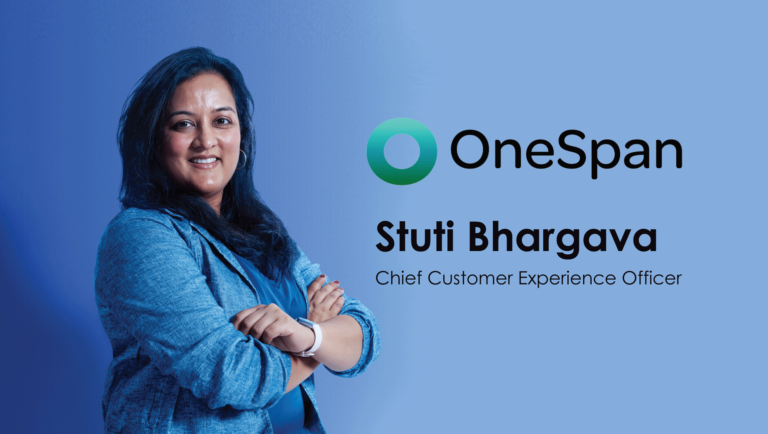
SalesTechStar Interview with Stuti Bhargava, Chief Customer Experience Officer at OneSpan

Looking for innovative ways to boost your brand’s customer success journey? Stuti Bhargava, Chief Customer Experience Officer at OneSpan has a few tips for you:

__________

Tell us about yourself and your journey in the tech market over the years…we’d love to hear more about your role at OneSpan as well and what a typical day at work looks like?

I started my career as a software engineer. I earned my bachelor’s and master’s degrees in computer science, and started working for bigger companies like Motorola and EMC. Soon I realized I wanted to understand the ‘why?’ aspect of what I was doing as an engineer, and looked towards building myself into a role in product management. My technical background was in my favor because I was able to bridge the gap between the technology I was building and the customer pain points we were trying to solve.

My first forte in a customer facing role was originally in startups, where I built out post-sales functions and models. What I loved most was that my role was never constant and changed at different stages of the company. The idea of ‘customer success’ too has evolved a lot in my career, even just a decade ago it didn’t really exist. At that time, there was this need or void of customers churning – companies used to call it “customer bleed”. The idea really was that customers were frustrated, there were more options, switching costs were lower, and organizations were not used to managing customer loyalty. The role evolved from managing customer escalations and frustrations, into a more forward-thinking role, where once you stopped the “bleeding,” you could actually start looking at things more proactively. Customer success is all about proactivity – you’re preventing a customer from reaching a state where they are unhappy or looking somewhere else. As long as you maximize value from day one, that’s true customer success.

What attracted me to OneSpan was this whole notion of the “Customer Experience Officer.” This role is relatively new and exploded during the pandemic with companies investing more to retain their customers. OneSpan’s CEO, Matt Moynahan, also has a very unique vision for OneSpan – he is looking for transformation, and the transformation starts when customers are happy, loyal, and advocates. This role is really special to me because it brings the entire post-sales journey into one role and simplifies the entire experience, not just for our customers, but internally as well.

What are some of OneSpan’s newest service updates, and how do they enable better customer success for end users?

Simplicity is a big factor for me. At OneSpan we wanted to make customer success interwoven into all of the “traditional” value-added services including professional services, customer success management, and customer support into one cohesive customer unit to deliver a simple and rewarding experience.

With all this in mind, we created Customer Success Packages that were meant to be a simplifying factor for both buyers and customers, as well as our sales team. We are the experts on what customers want, we know what makes them successful, and we know the combination of what resources are required to make them successful in the different stages of their journey. A lot of our competitors in this space provide these services, but their customers are only  getting support resources, and we wanted to do more. OneSpan wants to be a partner and trusted advisor for customers, which requires much more than customer support.

These customer packages include, based on customers’ level of spend and how long they are with us, a built-in customer success manager, premium and elite customer support (including 24/7 concierge support), and consultative, professional services. All of this should be part of the customer experience instead of having customers choose – that is not the optimal journey.

How can B2B teams today drive a more impactful customer success model that ties into ROI goals?

The top three metrics that I look at are gross revenue retention/renewal rate (GRR), net retention (NRR), and customer satisfaction (CSAT).

GRR is our bread and butter – the bottom line for us is the retention of our customers, especially so in today’s climate. NRR is the gravy on top of GRR. Not only are you retaining customers, but you are expanding your customer growth. This is a shared responsibility between sales and customer experience. This is where the collaboration builds, and there should not be a conflict of interest. Many organizations do this wrong, they build this conflict of interest where people spend more time arguing about who is getting the compensation rather than doing right by the customer.

OneSpan does a really good job of incentivizing teams to collaborate and work together. CSAT could be any sort of customer satisfaction metric, this could be NPS or transactional surveys. Organizations need to have a good view of what customers think about them and understand if they are loyal to the brand.

Regarding ROI, customer success can be likened to a winery. You have to have patience and wait to yield good results – I can crush grapes and drink the wine today, but if you don’t let it ferment, you will not enjoy it. It is the same with customer success. We are building the foundations, connections, relationships, and customer trust. The trust was there, but we are giving them that added attention, support, and partnership they didn’t always have.

What is really going to impact the ROI down the line is when we start hitting those net retentions and seeing the expansions. At the end of the day, a customer experience organization really wants to build loyal advocates who are their spokespeople in the world, and this is the true ROI – when customers are advocating and selling for you.

Read More: SalesTechStar Interview with Ed Frederici, CTO of Appfire

Can you talk about some leading tech or B2C brands and key takeaways from their customer success models?

When I think of customer experience, and I think all of us have done NPS surveys, I am actually very picky and rarely give out a 9 or 10 score. The few organizations that I have rated that high are very different, with Amazon as my number example, specifically their retail experience.

Not many people will think of customer experience when they think of Amazon, but they are one of the premier leaders in proactive customer experience. Most of the time, when you are shopping for something or looking for answers, you never have to call someone because they anticipate what you are looking for. Think about the last time you had to return something – it is seamless. You don’t even have to remember to pack up your returns and put them in a box. I view this through the 80/20 rule – 80% of what people do on their platform is super easy. For the other 20%, customers may have to dig for the answer, which is not the optimal experience, but for the majority of people, it is perfect.

Another innovative thing they are doing is using a lot of data to help make these decisions. The data analytics aspect of it is so important. For me, this is where I think I am differentiated in the customer success space. Coming from a product and technical background – I am very data-oriented. A lot of what we do at OneSpan, and what I encourage our team to do, is experiment with clear guidelines and goals using data to make decisions. I don’t mind if we fail, but let’s fail quickly but learn from our mistakes. The most successful companies going with this model have to be more data-oriented and invest in data analytics. Let the data guide you rather than let the data validate your assumptions.

If there are five things about the typical B2B customer success model that should change within 2023: what should they be in your view?

(1) Number one is that organizations must invest in the data-driven aspect of B2B customer success models. Organizations tend to think of data as financial, but looking at the behaviors of customers and their usage patterns is extremely valuable. With this data, organizations can customize their customers’ journeys and improve overall experience.

(2) Organizations should improve on digital touch and digital customer success. This basically means enhancing the current customer journey by using automation – ChatGPT will most likely revolutionize this. The idea is organizations want to give the same level of touchpoints to all of the customers, but we can’t do this at scale. Organizations need automation and a digital journey to guide people and give them the same experience without it being high touch. This requires an initial investment that some companies are not ready to do.

(3) When you think of monetizing or the ROI of customer success, you cannot think of today – you have to think down the line and from the perspective of your customer. This is where the innovation of OneSpan’s Customer Success Packages come in – to shake up how things are going and simplify the process.

(4) Speaking for customer experience thought leaders, we need to collaborate more. We talk a lot about generic topics and how things should be, but we don’t actually share the collateral. We need to share more about what we are actually doing, not the generic – what are the metrics? How do we sell this?

(5) Lastly, customer success needs to have a seat at the table, not sitting behind a CRO or COO. It is its own department and the amount of revenue and customer feedback they get does not qualify them as a secondary item – customer success is the heartbeat of your customer base.

Read More: Generative AI: Revolutionizing Marketing and Sales

OneSpan Expands OneSpan Notary Capabilities to Secure Digital

OneSpan is a digital agreements security company that helps organizations accelerate digital transformations by enabling secure, compliant, and refreshingly easy customer agreements and transaction experiences.

Stuti Bhargava is OneSpan’s Chief Customer Experience Officer. Stuti brings more than 20 years of technology experience, including 10 years of leading customer success teams. Stuti joins OneSpan from Immersive Labs, a private SaaS company offering people-centric cyber resilience. As Vice President of Global Customer Experience, she led Immersive Lab’s global customer success organization and was responsible for the end-to-end customer journey. Prior to Immersive Labs, she served as Head of Global Customer Success at BitSight Technologies, a cyber-risk and security ratings company.

Missed The Latest Episode of The SalesStar Podcast? Have a quick listen here!


Episode 176: B2B Marketing Tips with Inbar Yagur, Director of Content and Product Marketing at Lusha

Episode 175: Go-to Market and Marketing Best Practices with Bryan Law, CMO at Zoominfo


Episode 174: B2B Customer Engagement with Mike Molinet, Co-Founder, Thena


BONUS READ: 

GTM Fundamentals for 2023 with MarTechSeries and Demandbase; Chris Moody, Head of GTM Strategy and Thought Leadership at Demandbase shares proven tips and best practices. Download now!

Proto Inc. is Certified SOC 2 Type II Secure

4K LIFE-SIZED HOLOGRAPHIC DISPLAYS | PROTO HOLOGRAM CANADA

The original hologram device and cloud-based holoportation platform is the first in the field to receive the security and privacy certification

Proto Inc. announced today that it has received its SOC 2 Type II Report, achieving compliance with the rigorous security and privacy standards outlined in the American Institute of Certified Public Accountants (AICPA) SOC 2 framework. The SOC 2 Type II certification sets the standard for data security and privacy compliance across the industry, and after an extensive audit process, a third-party auditor found Proto in full compliance with all requirements. Proto is the only hologram company to achieve SOC 2 Type 2 certification.

The independent assessment of Proto’s security safeguards provides detailed information and assurance about the controls relevant to the security, availability, and processing integrity of the systems used to process users’ data, as well as the confidentiality and privacy of the information.

Proto is the original self-contained hologram device and the platform that makes holoportation a reality. The company was founded in 2019 and has expanded rapidly, with offices on five continents, dozens of Fortune 500 companies as clients, and recognition by the New York Times, the Wall Street Journal, and the BBC as the creator of hologram communications. Clients include Amazon, BT, Christie’s, Cramer, Deloitte, IBM, Siemens, Softbank, T-Mobile, Walmart, Virgin Media 02 and Verizon.

Read More: LexCheck Selected For The Microsoft For Startups Pegasus Program

“The importance of SOC 2 Type 2 certification to Proto’s clients in finance, healthcare, education, telecommunications & IT, and other fields can not be overstated,” said David Nussbaum, Founder and CEO of Proto Inc. “Proto beams top executives around the world for interactive meetings of all kinds, as well as visual data for collaborative manufacturing, telehealth, and even priceless artworks – it is vital that we respect their trust in our secure processing and management of that data.”

Read More: SalesTechStar Interview with Micael Oliveira, Founder & CRO at Amplemarket

“Proto is committed to providing our customers with unrivaled security and privacy,” says Edward Ginis, CTO of Proto Inc. “We take this responsibility very seriously, and achieving SOC 2 Type II compliance validates our dedication to maintaining the most robust security measures and privacy practices to protect our customers’ data.”

Backed by Tim Draper (Tesla, SpaceX, Skype), Mike Walsh (Uber), and other visionary investors, Proto constantly innovates and has been honored four times at the CES Innovation Awards.

Write in to psen@itechseries.com to learn more about our exclusive editorial packages and programs.

Rhetorik Closes Debt Funding Round to Propel Global Expansion of AI-driven Neuron360 B2B Data Platform

DMA - Data & Marketing Association

Leader in integrated B2B data solutions announces debt funding to drive commercial expansion of groundbreaking Neuron360 global AI prospect targeting platform

Rhetorik, the leading provider of integrated B2B data solutions, is thrilled to announce the successful completion of a debt funding round aimed at driving the commercial expansion of its groundbreaking Neuron360 global data services and AI prospect targeting platform. The financing was led by BDC Capital, which committed C$4 million, and further supported by C$1.5 million from existing shareholders and new holders of convertible notes.

“For BDC Capital, having a growing business like Rhetorik in our portfolio fits perfectly with our commitment to transforming high-potential companies into global technology champions”

— Pierre-Olivier Marcoux, Director, Growth and Transition Capital, BDC

The support from these investors reinforces Rhetorik’s position as a trailblazer in the B2B data market and underlines the potential of Neuron360’s innovative AI-led approaches to B2B lead generation and talent acquisition.

Read More: SpendEdge Helped ICT Procurement Client With Cost Savings And Strategic Achievements

“We are elated to secure the long-term support of BDC, Canada’s bank for entrepreneurs,” said Meredith Amdur, CEO of Rhetorik. “This funding round validates our vision of creating the most comprehensive integrated B2B global data set, of people, companies and technologies, for both analytics and campaign execution on an international scale. With the backing of our investors, we are primed to push the boundaries of B2B data intelligence and predictive insights with our people-centric AI engine that can surface, score and prioritize leads and accounts.”

BDC Capital recognized Rhetorik’s AI expertise, their strategic positioning to capitalize on emerging market trends and disruptive B2B data solutions.
“With its unique expertise in data science and its ability to develop innovative solutions, Rhetorik is positioned as a key player in B2B data market” said Pierre-Olivier Marcoux, Director, Growth and Transition Capital. “For BDC Capital, having a growing business like Rhetorik in our portfolio fits perfectly with our commitment to transforming high-potential companies into global technology champions.”

Read More: SalesTechStar Interview with Ed Frederici, CTO of Appfire

Neuron360, Rhetorik’s flagship platform, revolutionizes enterprise marketing and talent sourcing with its AI-driven, people-first solutions for sales intelligence, recruiting, and international analytics. The platform delivers unique audiences and contact-level intent, fulfilling the growing demand for rich datasets and actionable intelligence.

One of the platform’s distinguishing features is its skills-based audience identification, a groundbreaking people-centric, 360-degree approach that effectively targets high propensity data subjects by scoring their receptivity to specific product or career offerings.

Underpinning Neuron360’s capabilities is a continuously updated feed of 200 million companies, including technographics, and a staggering 800 million professional people profiles as well as validated business contacts. These profiles boast translated and normalized job titles, skills, and seniority, providing unparalleled accuracy and relevance.

Headquartered in the UK, Rhetorik’s platform engineering and data science hub is located in Quebec City, Canada, with commercial outposts in Los Angeles. This global presence allows Rhetorik to cater to diverse markets and deliver exceptional service to customers worldwide.

Write in to psen@itechseries.com to learn more about our exclusive editorial packages and programs.

Revenue Revolution: PartnerOptimizer Unleashes New Partner Ecosystem Intelligence Platform to Disrupt the Paradigm that 20% of Partners Deliver 80% of Revenue

Platform to Disrupt the Paradigm that 20% of Partners Deliver 80% of Revenue

New platform eradicates partner data blindness into true Ideal Partner Profile (IPP) DNA; identifies partners up to 600% faster with 1,400% better conversion and 539% lower acquisition costs

Platform’s AI engine, NeuralPartner, is optimized for modern cloud infrastructure to be able to instantly identify and match a company’s IPP based on thousands of attributes

Comprehensive platform not only helps partnership leaders discover new partners and accelerate recruiting, but also provides ability to analyze their total partner ecosystem addressable market, zero in on partners for focused initiatives, understand the footprint of competitors with partners, and more

PartnerOptimizer introduces the Partner Ecosystem Intelligence Platform™ (PEIP), revolutionizing data intelligence for global B2B technology channel growth. Powered by its AI-engine, NeuralPartner™, the new platform provides B2B tech companies with instant, unparalleled insight into their Ideal Partner Profile (IPP) using thousands of business attributes to truly uncover the DNA of their best performers and find lookalikes to force multiply revenues. The platform resolves the long-standing challenge of 20% of partners contributing 80% of revenue due to partner data blindness and achieves up to 600% faster IPP identification, 1,400% better conversion rates, and 539 percent lower acquisition costs* – critical metrics given a single good partner can drive 5 to 7 figures of ARR to a technology vendor/supplier.

Beyond recruiting, the PartnerOptimizer platform offers comprehensive insights to optimize a company’s partner ecosystem program. Analyzing the total addressable market, launching targeted initiatives, and understanding competitor partnerships are now seamlessly achievable.

Read More: SalesTechStar Interview with Ed Frederici, CTO of Appfire

“Having the right partners comes first, everything thing else takes a back seat,” says Janet Schijns, renowned channel industry veteran and CEO of the JS Group

Separate an IPP from an IP-VIP

“In 2023, 75% of revenue or more flows through the channel, and yet, the growth of most channel programs has remained capped by the 20/80 paradigm,” said PartnerOptimizer CEO and Partner Data Futurist Dina Moskowitz. “Until today, there was no platform, built from the ground up by channel partner pros, for partnership leaders to identify partners at a deep genetic level that makes it easy to separate out who at a ‘headline’ level looks like an IPP, but is not actually an IP-VIP worth investing in.”

Partner Data Blindness is Costly

The cost of this partner data blindness is stunning, stresses Moskowitz. “Companies spend millions in human capital and resources in the search for and in the onboarding and incentivizing of partners who ultimately don’t have the alignment to drive revenue,” says Moskowitz, noting for perspective that a partner manager making $120K a year spending just 10 hours a week (which is actually 60 days per year) researching prospects costs a company more than $30K.

Currently, according to Moskowitz, some of the most common tools and tactics (and their challenges) to build out partner data include the following:

  • List purchases and info from data purveyors designed for direct sales. Both provide only a handful of firmographic information that doesn’t include an analysis on IPP match. The data will still require manual work to validate fit, which cannot match the depth of information provided by PO’s platform. Non-validated lists result in expensive “spray and pray” efforts, which risk attracting and onboarding non-IPP partners and will not deliver revenue.
  • Account mapping tools. These solutions help companies see which partners and which vendors are engaged in a sale to facilitate accelerate co-selling, but do not provide access to robust IPP information on partners most likely to deliver revenue.
  • Partner Relationship Management Platforms. These solutions help companies manage partners at nearly every step of the partner journey. However, they do not provide access to a partner discovery engine or provide IPP information beyond surface level performance metrics. IPP identification is critical as a first step – or these tools will never be as effective as they can be.

Understanding and finding the right partners is job No. 1

“Having the right partners comes first, everything thing else takes a back seat,” says Janet Schijns, renowned channel industry veteran and CEO of the JS Group, a leading go-to-market channel consultancy, noting that Partner Optimizer’s new platform is technology that turns partner pros into data scientists. “This platform allows you to be able to identify the partners that you are truly going to be successful with instead of guessing and inefficiently bogging down your organization with huge lists which may or may not be relevant. Guessing is costly – having the data is affordable.”

Optimize, use and refine every element of partner data

PartnerOptimizer’s NeuralPartner™ engine is uniquely fine-tuned to mine for business attributes that uniquely allow companies to understand a partner’s DNA and aggregate them into a data-driven IPP search. Those attributes include partner company types, solutions expertise, product expertise, target verticals, target customer types and sizes, tech stack insights, competencies, certifications, partner programs and compliances, and employee and revenue range, and more.

With the platform, partner leaders can turbocharge recruiting, and dig into the nuances and differentiation of different types of partners within their partner ecosystem. Examples of the partner types within the platform include MSPs, MSSPs, System Integrators, DevOps Consultants, SecDevOPS, MarTech Agencies, Ecommerce Companies, ERP Consultants, Telecom/Communications Agents, BI Consultants, and VARs. The platform also covers ISVs, SaaS companies and cloud infrastructure companies, which have emerged as powerhouse go-to-market co-sell partners for each other, and hundreds of thousands of partners who participate in one or more hyper-scaler ecosystems.

Read More: Generative AI: Revolutionizing Marketing and Sales

The platform brings 8 key powerful revenue features together into one offering:

1. Identifying IPP:

  • Partner leaders must prioritize understanding their IPP. Previously, technology didn’t exist to truly profile identify why top partners perform well and replicate their success. PO’s new platform surprises customers with insights such as a view into each partner’s full technology stack, a crucial predictor of a successful sales motion and boosted sales due to bundled deals.

2. Discover and Qualify IPP Partner Matches:

  • With a robust analysis of top partners, users can search the global partner ecosystem data base and/or analyze against their own partner prospect and existing lists using thousands of business attributes like solutions, product types, customer sizes, and certifications to build out their IPP ecosystem. The focus is on delivering quality partners to improve conversion rates and boost revenue.

3. Analyzing TAPEM (Total Addressable Partner Ecosystem Market):

  • Every partner leader is on the line to understand market opportunity as part of business planning to map out investments, staff, budgets, technologies, etc. With the PO platform, for the first time it’s easy to analyze the entire B2B tech ecosystem to see how many partners are in a particular region, specialize in a particular vertical, represent a particular vendor, and more.

4. Zeroing in on Partners for Focused Initiatives:

  • Throughout the year, marketing and sales teams are continually launching new initiatives against existing and new partners – seasonal promotions, regional events, etc. The PO platform simplifies targeting just the right partners with just the right data-driven attributes for marketing or sales campaigns.

5. Prepping for Recruiting and Performance Calls:

  • A key role for every partner pro is prepping for recruiting and performance calls, which is generally manual and time consuming. PEIP automates that process, reducing prep times by 25 to 30 minutes per meeting, and making more time to place more calls per day.** And just as important, it ensures teams are not wasting time calling partners who are not a good IPP match, and frustrating both parties.

6. Keeping Partner Data Fresh:

  • PartnerOptimizer facilitates ongoing health checks for vendors to ensure partners align with their IPP amid dynamic market changes. It helps monitor new partner emergence and churn, shifts in focus or personnel, trends like ZeroTrust adoption, political issues necessitating entry into new markets, and more. Additionally, the platform simplifies finding and adding new partners when introducing new solutions.

7. Auditing Brand Alignment:

  • Millions are spent on Marketing Development Funds (MDF). PEIP makes it for easy vendors to analyze the digital presence of partners, ensure whether they are running promotions as agreed to and aligning with brand guidelines. With that knowledge, vendors can better understand which partners are actually co-selling with them effectively and reward them with additional investment

8. Understanding the Competitive Landscape:

  • In the end, partner leaders need to understand how and where competitors play strongly and with which partners. PEIP can instantly provide a deep and detailed analysis of the competitive digital footprint of their competitors across partners worldwide. This makes it easy for vendors to see market opportunity, shift MDF funds where they don’t seem to be effective, and shore up team resources that need additional help to gain traction, etc.

Write in to psen@itechseries.com to learn more about our exclusive editorial packages and programs.

BluLogix Publishes Guide for SaaS Businesses to Implement Usage-Based Pricing & Accelerate Growth, Customer Satisfaction

BluLogix leverages its deep knowledge of consumption-based pricing to provide an extensive overview for companies looking to leverage complex pricing models.

The SaaS industry has witnessed a significant paradigm shift with recurring revenue models taking the forefront. Among these, subscription and usage-based pricing strategies have emerged as powerful drivers of growth and success in the competitive SaaS landscape. As nearly half of companies adopt usage-based pricing and an additional 15% are exploring it, many businesses are seeking effective ways to not only join the trend but also scale rapidly.

Leading the way in complex and consumption-based billing, BluLogix presents its comprehensive guide to usage-based pricing. Based on insights from its Solutions Engineering, Product, Customer Success, and Implementation teams, BluLogix is offering expert guidance to help SaaS businesses make informed decisions in this evolving landscape.

Read More: SalesTechStar Interview with Ed Frederici, CTO of Appfire

“We believe that understanding usage-based pricing is vital for SaaS companies seeking to drive revenue, profitability, and customer satisfaction.”

— Inga Broerman, VP of Marketing BluLogix

The newly released guide delves into various key aspects, including:
• The intricacies of subscription and usage-based pricing strategies tailored for SaaS businesses.
• An exploration of different pricing models, unveiling their inherent benefits and challenges.
• Practical insights on designing, implementing, and optimizing usage-based pricing strategies to foster accelerated growth.

By the end of this in-depth ebook, readers will gain a deep understanding of how subscription and usage-based pricing can revolutionize their SaaS operations. Moreover, the guide equips them with the tools and knowledge to swiftly adopt and scale this model, positioning their businesses for long-term success.

BluLogix invites SaaS entrepreneurs and business leaders to download this complimentary guide and embark on a transformative journey to unleash the potential of usage-based pricing.

Read More: SpendEdge Helped ICT Procurement Client With Cost Savings And Strategic Achievements

Write in to psen@itechseries.com to learn more about our exclusive editorial packages and programs.