Home Blog Page 5483

The Funnel Isn’t a Funnel: Embracing the Way Businesses Buy and the Changing Role of B2B Sales

0

clickdimensionsFor most B2B companies, the sales process and funnel has not changed much in the past few decades. Sure, there is a bit more sophistication around the top of the funnel with web visitors, marketing capture leads, marketing qualified leads and sales accepted leads — but the funnel still represents a linear path through a set of stages. While the funnel may not have changed, the way B2B companies actually buy has changed and today’s most effective B2B companies have revised their sales approach to match the actual process that today’s buyers follow to make a purchasing decision.

Read More: Why Delivering ABM-Focused Conversations at Scale to Your Customers Matters in the Buying Process

Historically, salespeople introduced their company to potential customers with in-person meetings and phone calls. They would qualify leads, showcase their solution, provide follow-up and attempt to close a deal when the time was right — a seller-driven process. The entire sales funnel had a beginning, a middle and an end. It was linear. Binary.

Imagine a caveman with a big pile of coconuts. He’d crack each one open, and see if there was a sale inside. No sale? Throw it in one pile. Sale? Throw it in the other.

A lot of the operations that organizations put into place around the sales funnel are legacy from that time; they exist because sellers were in control of the information and could drive the buying process to suit their compensation plan. Sales managers drive their teams to hit quotas of new sales, reps get paid when deals close. Salespeople don’t waste their time with deals that won’t close — at least in this compensation period. All of it is built to construct short-term movement towards the closing of a deal. Why should a rep worry about a deal that might close next year? Who knows what the comp plan or territories might look like then? It is important to understand the impact of sales compensation on how companies organize their processes around a linear approach.

There is little thought or effort put into shaping a potential customer before they become a lead, and little effort given after they’ve converted to a customer.

But the digital era has fundamentally changed B2B sales in three fundamental ways:

  1. Sellers no longer have a monopoly on information. Buyers have almost unlimited access to more content to help them discover their pains, define their needs and research alternatives.
  2. Buyers have more competitive alternatives. Using digital technologies, competitors can reach buyers regardless of geographic location and hour of day. Buyers no longer are beholden to the seller’s appointment schedule; they can do their buying work whenever and wherever they want.
  3. Prospects are harder to reach. Cold calls don’t work. People don’t want to be interrupted, they don’t want to be sold and they are hard to engage. We know prospects are online, but it requires skills to find prospects who browse anonymously in a universe of websites and content. Buyers also are wary of all the spin. They put more weight on authentic customer reviews and trusted members of their social networks.

Read More: Interview with Anil Kaul, CEO at Absolutdata

From the sales team’s perspective, hope persists for potential customers to move quickly through the sales funnel. They still want to crack the coconut open and see if there will be a sale inside. But this attitude doesn’t align with how people today behave online. It ignores an important period of time during which potential customers observe and gather information.

Today’s first touchpoint with a prospect shows up in an analytics dashboard. It is a plus one on a page view count, an anonymous cookie or a click-through attached to a consumer email. They are visitors who bounced off the page and headed for another website. Often, they thought for a moment about a solution to their business problem and then did nothing for a month — or six. None of their actions move them into a sales funnel or qualify them as a lead under the current model. But their consideration of the business offering is actively taking root.

As they move closer to the traditional sales funnel, a potential customer researches social channels, seeks out other buyer experiences, reads reviews or gets a handle on pricing. Whatever actions they take, it involves collecting far more information about the business up front, long before they even fill out a form or contact a sales representative.

Read More: Interview with Sandie Overtveld, Vice President Sales, APAC at Zendesk

The way we behave online in advance of a sale is fundamentally different than how we behaved in the offline world: now, the experiences of all of the prior coconuts — the sales and the non-sales alike — can help shape whether the next coconut will have a sale inside of it. The funnel is no longer linear, it’s not short and it’s not binary. The funnel isn’t even a funnel anymore. It’s an ecosystem.

To see this ecosystem thrive, we must rethink how we view sales, to better align it with the world outside of the sales office. We need to create fertile soil. Customers who have already purchased are more important than ever before. Sales representatives are still a necessary part of a B2B purchase, but they now exist to unite digital and human experiences by creating a coherent conversation and customer journey and driving a reputation for excellence that precedes customer contact with the brand. All of which is made easier by technology to orchestrate the full customer lifecycle.

Above all else, it’s important to cut down on the noise. There are a lot of companies out there that have not developed a clear voice about what their product is and whose problem they solve. Before the internet, a good salesman could help you overcome that problem. But now, if your value proposition doesn’t define your place in the market, and if your customer experience isn’t exemplary, potential buyers are one Google search away from a competitor who can deliver.

These changes are fundamental, and they are not temporary. The same forces of commercial gravity that created old-school sales departments and sales funnels are at work again, driving organizations to make better and more seamless digital experiences for potential customers.

Read More:  Sales Call Analytics Is the Difference Between Winning and Losing Customers

AntWorks Joins Hands With LiveChat to Improve Online Conversations and Accelerate Customer Delight

AntWorks, a global artificial intelligence and intelligent automation company, announced a partnership with LiveChat, a company that offers premium customer service software used by businesses to communicate with customers browsing their website. The primary beneficiaries of this partnership will be the joint customers of AntWorks and LiveChat who will be able to improve customer service as well as the quality of online conversations. With this partnership, both LiveChat and AntWorks have proven they are focused on innovation in the rapidly changing and dynamic technology business.

The solution leverages LiveChat’s product which supports or replaces traditional sales methods within a company. LiveChat helps to quickly and intuitively reach customers visiting the company’s website or online store. In addition, LiveChat helps businesses create customer delight through immediate online support that guides customers seamlessly through their purchase journey.

Read More: Why Delivering ABM-Focused Conversations at Scale to Your Customers Matters in the Buying Process

AntWorks is known for redefining automation landscape by addressing data challenges with its unique platform, ANTstein™. The first – and only – intelligent, integrated, end-to-end automation platform that does not use OCR, ANTstein™ is built using the principles of fractal, not neural, networks. Additionally, AntWorks offers integrated Cognitive Machine Reading, Robotic Process Automation and Machine Learning coupled with Natural Language Understanding, which sets it apart from other current RPA players.

“With ANTstein, we have built a powerful platform to tackle one of the biggest challenges for the industry – unstructured data,” says Asheesh Mehra, Co-founder and CEO of AntWorks, adding, “With the LiveChat partnership, we will enable businesses simplify the online experience for their end customers. Our ANTstein platform can be leveraged to provide natural language understanding and machine learning capabilities, as well as the ability to transport the processed data into any system using our robotic process automation tool. In turn, LiveChat’s communication tools, resources, and expertise will enhance Antworks’ automation and artificial intelligence capabilities. We look forward to developing more such integrated solutions for our joint customers.”

Read More: Decoding The Current State of SDR Automation Platform Powered by AI

72 Stats To Understand SEO In 2018 (Infographic)

Back in 1993, the launch of the first search engine, Archie Query Form, revolutionized the way people find files and information. From that moment on, search engines advanced greatly, and today, around 67,000 searches are performed on Google per second. This incredible progress made organic search the most valuable marketing channel.

With the competition in this field constantly growing, only having a website is not enough anymore – you have to be seen. When it comes to getting found in the virtual world, search engines are the ultimate media, and SEO is the secret weapon that draws an edge against competition by making websites more visible for potential customers. In a nutshell, SEO is what makes the difference between gaining quality website traffic and getting lost among the billions of websites found on the Internet.

Now, you may think that SEO is a complicated technique. The truth is, SEO can be quite simple once you understand its core, take advantage of effective tools, and apply powerful hacks that search engines favorize.

Read More: Sales Call Analytics Is the Difference Between Winning and Losing Customers

This infographic provides you with some interesting statistics that will help you understand the importance of SEO better, as well as the ranking factors, most effective tools, and top trends of 2018.

infographic-SEO

Read More: AI in Sales is on the Rise; But Golfing with Your Client Isn’t Going Away

LinkedIn Introduces Latest Measurement with Google Campaign Manager for Better Attribution

LinkedIn Has Announced a Measurement Integration with Google Campaign Manager (Formerly DoublClick Campaign Manager), Now Part of Google Marketing Platform

Bid adieu to the traditional ways of LinkedIn ad measurement. Today, LinkedIn announced a major integration with Google Marketing Platform to provide accurate attribution of every LinkedIn ad inside a single, unified reporting dashboard. For B2B marketing teams, this new integration could solve complex issues pertaining to LinkedIn ad measurement.

Read More: Decoding The Current State of SDR Automation Platform Powered by AI

In an official LinkedIn blog, the company revealed how the latest integration could simplify the process of targeting prospects accurately and run multiple ad campaigns in LinkedIn across a variety of websites over the course of several months. Now marketing teams can easily answer this question with LinkedIn’s ad attribution integration.

How can you really give proper credit to every interaction a buyer has had with your brand across multiple platforms and channels?

At the time of this announcement, Payam Shodjai, Director of Product for Google Marketing Platform, said, “Our customers use Campaign Manager to track and report on their ad performance in a single place, and we are really excited to offer this capability for their LinkedIn campaigns as well. This new integration makes it easy for customers to see metrics and attribution for LinkedIn campaigns alongside the rest of their campaign data.”

With greater emphasis on building and utilizing sophisticated measurement tools to help with attribution, LinkedIn relied on Google Marketing Platform want to support all types of these tools. The objective is to gain a better understanding of the ROI on LinkedIn ad spend.

Read More: Why Delivering ABM-Focused Conversations at Scale to Your Customers Matters in the Buying Process

How Does It Help LinkedIn Ad Campaigns?

According to the blog, the LinkedIn-Google Marketing integration would help marketing teams achieve these objectives —

  • See LinkedIn ad performance alongside the rest of your paid spend
  • Get attribution for all LinkedIn ads across all impressions and interactions, measured in a cross-device and cross-platform manner

Earlier this year, LinkedIn had launched this integration for a few ad formats. The latest version is launched for Sponsored Content.

How Marketing Teams Could Benefit Further?

All your reporting, in one place

You can now see LinkedIn ad performance alongside all other channels in the Campaign Manager. You’ll be able to see both desktop and mobile traffic in cross-device reports.

via LinkedIn_1
via LinkedIn

Next-level attribution for your conversions

Measure the full path a prospect takes across different ads and websites to understand the impact of all the interactions a prospect has with your business on LinkedIn before converting. We recommend using  cross-environment conversions in your report because you can track if a prospect converts across different devices and environments like mobile and desktop.

via LinkedIn

Activation of Integration Delivers Greater Flexibility to Marketing Teams

According to LinkedIn, once you activate the integration, Campaign Manager would report complex LinkedIn ad performance in a simplified format. Users can leverage the conversion attribution capabilities for Sponsored Content campaigns, including VideoCarousel, and Lead-Gen Forms, as well as Text and “Spotlight” Dynamic Ads.

Read More: Interview with Anil Kaul, CEO at Absolutdata

This integration clearly highlights LinkedIn Marketing team’s commitment to making the company’s ad platform easier to use by providing the flexibility marketers need to access all their campaigns in one place.

Executive Comments from LinkedIn Customers

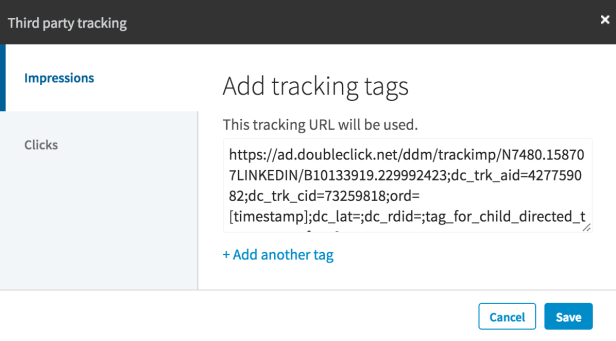
Ian Chang, Supervisor, Zenith US, agency for Verizon, said, “We saw a significant reduction in our Cost Per Visitor (CPV) metric once we started adding impression tags, specifically for Sponsored Content units. CPV decreased by 100% overall compared to pre-implementation. The ability to add impression tags to each of the ad units has helped us achieve significant efficiencies across the platform.”

Jack Flewett, Head of Digital Media, Xero, said, “Like all SaaS businesses, Xero is heavily reliant on digital marketing as a means to attract new customers. Linkedin is a leading platform for Xero and we’re excited to hear of their enablement of third party tracking which will provide insight into Linkedin’s role in our customer onboarding journey. ”

Read More: Interview with Sandie Overtveld, Vice President Sales, APAC at Zendesk

Vinay Ramani joins Pipedrive as Chief Product Officer

Leadership of all product, design, data and research organisations at the company

Pipedrive Inc. (www.pipedrive.com), a leading sales pipeline software and CRM of choice for over 75,000 companies, today announced the appointment of Vinay Ramani as the company’s Chief Product Officer, based in London.

Vinay Ramani now leads the product vision and strategy essential to Pipedrive realizing its true potential. He will lead the product, data, design and research organizations for the company. Vinay joins at an exciting time for the global CRM market. Gartner reports that SaaS CRM is currently the largest application software market which they track, and points to the importance that advanced analytics, machine learning and AI will have as innovation areas in future years.

Having been based in Silicon Valley for two decades, Vinay joins Pipedrive from Google, where he was Product Lead on the Search Ads team – having successfully incubated new products that better understand user task journeys and leading the introduction of Ads on the Google Feed.

Read More: CRM Data Is Still Numero Uno Block in Building “the Path to Sales Mastery”

Before joining Google, Vinay Ramani held product leadership roles within high profile customer-centric organizations including Uber, Yahoo! and Adobe. At Uber, Vinay created the Global Growth organisation which helped Uber gain tremendous traction in China, India and Latam. His teams built new products, payment mechanisms, sign-up flows, and viral programs that fueled this rapid growth. Many of these learnings will help Pipedrive grow even faster.

He holds an M.B.A. from University of California, Berkeley and an undergraduate degree in Computer Science & Engineering from the Indian Institute of Technology, Kharagpur.

Read More:  Sales Call Analytics Is the Difference Between Winning and Losing Customers

Timo Rein, Co-Founder and CEO of Pipedrive, comments, “Pipedrive has always been a product-driven company, and Vinay will help progress innovations that deliver for our business strategy. He is the ideal visionary and leader for our product teams. Vinay is a great fit to our company and we’re excited about our future together.”

Vinay Ramani comments, ”There are literally millions of sales teams that have an incredibly challenging job to do – and Pipedrive has been the leader in meeting their needs with elegant solutions. There is so much more we can do to make every salesperson truly efficient. It is a great privilege to join Timo and the executive team and shape the future of work for hard working sales teams.”

Pipedrive is strongly placed to capitalize on a surging global CRM market worth over $40 billion (Gartner). Having recently won an addition $60 million series C funding round, the company is focused on further expanding its R&D, accelerating customer growth across its global footprint, and exploring strategic acquisitions.

Read More: Interview with Sandie Overtveld, Vice President Sales, APAC at Zendesk

Global Companies Drive Faster Innovation with Oracle Cloud

Ebates, Mitsubishi Electric and Office Depot accelerate go to market and cut manual processes with Oracle Cloud Applications and Platform

Oracle OpenWorld — Oracle today announced that a number of global enterprises have implemented a combination of Oracle Cloud Applications and Oracle Cloud Platform to power their businesses. Using Oracle Cloud Platform and Oracle Cloud Applications, customers including Office Depot, College Board, Ebates, Mitsubishi Electric, Solairus Aviation, Turning Point and The Wonderful Company have experienced faster time to market, increased productivity and greater business agility. Specifically, Mitsubishi Electric reported a 60 percent productivity increase while Turning Point saw patient wait times drop from four weeks to two days.

“The speed of business continues to accelerate and enterprises are challenged to keep up, or even get ahead of the industry curve,” said Amit Zavery, executive vice president, Oracle Cloud Platform. “Oracle Cloud Platform gives organizations leveraging SaaS a digital canvas where they can adopt new technologies, increase efficiency, deliver new business models, and modernize at today’s rapid pace.”

Read More: Interview with Anil Kaul, CEO at Absolutdata

Customers Add Value Across Organizations with Oracle Cloud Platform for Oracle Cloud Applications

Mitsubishi Electric is a global manufacturer of electrical products and needed to respond to customer demands for an increased range of products, with thousands of variations, in smaller quantities while maintaining a high level of quality. While leveraging Oracle ERP Cloud and Oracle SCM Cloud to power manufacturing process, the organization used Oracle Cloud Platform’s Internet of Things (IoT), Java, API and integration capabilities to simplify and accelerate connectivity between devices on the factory floors and across the entire manufacturing value chain, enabling a cloud-based remote monitoring system. In addition, Oracle Analytics Cloud and Oracle Database Cloud facilitated rapid analysis of IoT data to minimize manufacturing errors and maximize production.

“Every minute that manufacturing equipment is down can cost millions of dollars in production costs and delays,” said Timothy Lomax, business development lead, Mitsubishi Electric. “Oracle Cloud provided us intelligent solutions for financial and supply chain management, security, and for integrating and visually analyzing our data, processes and devices. This enabled us to create a leading edge ‘e-F@ctory’ solution, deliver innovations three times faster and increase productivity by 30 percent while decreasing the manual processes by 55 percent.”

Read More: Interview with Sandie Overtveld, Vice President Sales, APAC at Zendesk

As a leader in private aircraft management and charter services, Solairus Aviation focuses on providing exceptional customer service. Using Oracle CX Cloud with Oracle ERP Cloud and Oracle EPM Cloud, the company is able to offer customers detailed invoices and expense reports for each aircraft. Leveraging Oracle Integration Cloud and Oracle Content and Experience Cloud, Solairus automated processes and connectivity between Oracle Cloud ERP and its disparate financial systems and has provided a comprehensive portal for its customers, reporting a 12 percent increase in productivity, both in terms of cost per transaction and cost per aircraft for its accounting group.

“We are in a highly competitive industry, and each feature or professional service makes a difference to clients,” said Dan Drohan, CEO, Solairus Aviation. “Using Oracle Cloud, we are able to provide a convenient portal for our clients to drive effective oversight of their aircrafts. With Oracle Cloud Applications and Platform together, we are able to offer an exceptional customer experience with a significant increase in operational transparency.”

Read More:  Sales Call Analytics Is the Difference Between Winning and Losing Customers

Turning Point is a UK-based charity applying advanced computer technology to support and help treat people suffering from drug and alcohol misuse, mental health issues, learning disabilities, and other debilitating conditions. Using an online system based on Oracle Service Cloud, Turning Point’s staffers are able to set up timely appointments with its healthcare providers. As a result, patient wait times for medical care dropped from about four weeks to as little as two days. To further improve patient services, the company uses Oracle Content and Experience Cloud for its staffers to easily distribute up-to-date and consistent treatment protocols to all Turning Point locations and employee websites. With Oracle’s chatbots, the company was able to automate the evaluation of issue severity on first call and deliver contextual well-being advice to the service users.

“When you’re providing mental health services, it’s critical to engage and treat patients as soon as possible,” said Amarjit Dhillon, chief information officer, Turning Point. “Oracle gave us the ability to engage with patients immediately through chatbots and rapidly build local microsites, reduce wait time for appointments from four weeks to two days, and offer relevant materials and appointment services across our primary and local well-being sites, even mobile clinics. In a year, we have been able to get over 5,000 referrals access to health services a lot quicker than ever before.”

Read More: CRM Data Is Still Numero Uno Block in Building “the Path to Sales Mastery”

Leslie Chu Appointed as Westwin’s Chief Revenue Officer

Leslie joins Westwin after accumulating years of experience in executive roles at several of the region’s leading Internet companies

Westwin, a leading Chinese marketing consulting firm, announced on September 3, 2018 that Leslie Chu has been appointed as the Chief Revenue Officer (CRO).

Since 2004, Leslie has served as general manager of Microsoft’s online services group in Taiwan and Hong Kong and CRO of TripAdvisor. Leslie said he is looking forward to joining Westwin and believes he can work with his revenue team to help the company maintain its leading position in the cross-border marketing sector.

Read More: Interview with Anil Kaul, CEO at Absolutdata

Chu: A Seasoned Executive with 20 Years of Experience

A proven leader, Leslie Chu has over 20 years of leadership positions covering a diverse set of high-tech industries that includes ERP, digital marketing and online travel sectors. Prior to 2004, Leslie served in increasingly senior roles at Yahoo! Hong Kong, CLP Power and Lycos Asia.

From 2004 to 2012, Chu was the General Manager of Microsoft’s online service business group in Hong Kong and Taiwan. During Chu’s tenure, MSN tripled its number of users and its online advertising sales rose 600% in Hong Kongand 300% in Taiwan. In 2012, Leslie accepted the position of Chief Revenue Officer at TripAdvisor. Over the following six years, he built TripAdvisor’s advertising sales system from scratch and increased sales by 500%.

“We believe Leslie is an excellent fit for Westwin,” said Anderson Liu, CEO of Westwin. “I’ve known Leslie for a long time and he has demonstrated his leadership skills, corporate management experience and powerful network in the industry for over 20 years. Leslie, as CRO, will give Westwin a huge edge in maximizing potential in cross-border marketing.”

Read More: Why Delivering ABM-Focused Conversations at Scale to Your Customers Matters in the Buying Process

Microsoft DNA plus Cross-border Business Helped Make the Decision

Asked why he decided to join Westwin, Leslie Chu explained that there are two big reasons: the Microsoft DNA behind Westwin and enormous opportunities in cross-border business.

Formerly known as MSN China, Westwin has been providing over 6,000 domestic enterprises with advanced online advertising solutions. In August 2016, the former management of MSN China announced the acquisition of the key businesses and assets of MSN China and re-christened them Westwin, a company now focused on cross-border business. Westwin is committed to helping Chinese businesses stake a position in the global market, while also enabling leading international companies to gain a foothold in the massive Chinese market.

Leslie’s and Westwin’s shared “Microsoft DNA” comes together to create a strong foundation and a powerful dynamic. Leslie said, “I worked with several members of Westwin’s current staff during my Microsoft days so it’s all very familiar. I believe that Westwin has a forward-looking perspective combined with powerful execution and strength. I am confident that Westwin will achieve its goal of becoming a cross-border marketing leader.”

Moreover, Leslie thinks there is unlimited potential in China’s cross-border business. With the implementation of China’sBelt and Road Initiative, more Chinese firms will shift their focus to overseas markets while foreign brands need greater understanding of the Chinese landscape and Chinese consumers. Seizing the cross-border opportunity, Leslie aims to help Westwin not only maintain its industry leadership but also utilize technology to maximize business efficiency.

Read More: Decoding The Current State of SDR Automation Platform Powered by AI

PlumRiver and Locally Expand Retailer Access to Products and Brands

Ship-to-Store Provided Through Integrated Technology Platform

Leading procurement and B2B ecommerce provider PlumRiver LLC has partnered with Locally to bring product inventory assortments for multiple brands and endless-aisle, ship-to-store functionality to independent and specialty retail outlets. This new enhancement to Locally’s retailer services will be delivered through PlumRiver’s proprietary “ship-to-store” technology, which can be integrated with its B2B sales and ecommerce applications, including its best-in-industry Elastic platform.

“We are delighted to partner with a forward-thinking company like Locally to help expand the independent outdoor retail channel for the benefit of consumers, retailers and manufacturers,” said Whit Johnson, PlumRiver Principal.  “To help independent retailers and brands compete in today’s market we must offer the same level of communication, efficiency and positive omni-channel purchasing environment as large retailers while bringing to consumers a fulfilling online and in-store experience wherever they choose to shop.”

Read More: Decoding The Current State of SDR Automation Platform Powered by AI

Building upon the online-to-offline consumer shopping experience that Locally has pioneered, shoppers will no longer be limited to inventory available at their favorite nearby retailer but can now select and purchase online for in-store pick up from product inventories covering the biggest outdoor and lifestyle brands.  It will not only give consumers local access to more brand-name products but is expected to help outdoor and lifestyle product manufacturers increase sales delivered through smaller independent and specialty retail channels.

Read More: Why Delivering ABM-Focused Conversations at Scale to Your Customers Matters in the Buying Process

“At Locally we have been dedicated to creating solutions for bringing brands, retailers and consumers together through the convenience of ecommerce and a local, full service, in-store shopping experience,” said Mike Massey, Locally Founder and President.  “This new partnership with PlumRiver, utilizing their proprietary wholesale procurement technology, adds an entirely new dimension as we continue leveling the playing field by helping specialty retail not only survive but thrive in an increasingly competitive environment.”

PlumRiver helps both manufacturers and retailers achieve efficiency-driven cost savings and incremental sales growth. Cost savings come through streamlined order entry, digital catalogs, print reduction, resource optimization, inventory management, online payment functionality and product sample reduction.  Increased sales revenues come through customized retailer/dealer applications, strategic sales planning, digital merchandising, complex pricing incentive programs, history-driven selling, strengthening brand equity, segmented sales capability and increased client acquisition/retention.

Read More: Interview with Anil Kaul, CEO at Absolutdata

Gravity Software Announces Major Accounting Software Enhancements

0

Gravity’s Version 5 Includes Bill of Materials for Light Manufacturing Module and Value Added Tax Functionality

Gravity Software™ (Gravity), a robust mid-market cloud accounting solutionwritten on the Dynamics 365 (aka Microsoft CRM) platform, today announced its latest release, Version 5 (v.5) of its popular application. Two of the major enhancements include Bill of Materials for Light Manufacturing and Value-Added Taxes (VAT) for international users.

Cloud-based Accounting Software on Dynamics 365 Platform

Gravity’s v.5 has over 30 major enhancements to the application centered around improving the user’s experience, enhancing the inventory-based functions and positioning the application for international users.

“We are excited to introduce Gravity Software v.5, with many of the enhancements requested by our clients,” said John Silvani, President & CEO of Gravity. “We will continue to position Gravity as the number one cloud-based accounting solution for companies that have outgrown entry level applications like QuickBooks.”

Read More: Decoding The Current State of SDR Automation Platform Powered by AI

Gravity v.5’s new features include:

  • Bill of Materials for Light Manufacturers (Inventory Assembly capabilities)
  • Create and Manage Sales Kits
  • Serial, Lot and Lot with Expiration Date Inventory Tracking
  • Value Added Taxes Calculations in Purchasing, Expenses and Invoicing
  • Customer Collections Dashboard to Manage Overdue Invoices
  • Enhanced Bank Download Capabilities
  • Enhanced Financial Reporting
  • Expanded Data Entry Screens

Gravity v.5 provides middle market companies with features only available in enterprise applications at a much lower price and in an easy to use format.

Read More: Why Delivering ABM-Focused Conversations at Scale to Your Customers Matters in the Buying Process

“Our users have told us that Gravity has been a cornerstone in their organizations growth,” said Silvani, “Version 5 will continue to help out clients achieve new levels of efficiency.”

As businesses grow, they need a strong accounting system like Gravity.  Gravity can consolidate data, making it easy to find and extract even the smallest bit of information. And with real-time insights into all lines of business, you can make better informed decisions.

If your business is outgrowing your current entry level accounting software, consider Gravity Software. It’s easy to use and easy to implement. Most of all, Gravity works for you. Want to learn more about Gravity? Schedule a Demo at http://go-gravity.com/schedule-a-demo/ Gravity Software. Make Accounting Fun Again!

Read More: Interview with Anil Kaul, CEO at Absolutdata

700Credit Announces Inaugural Dealer Summit

Scheduled for March 11-13, 2019 in Henderson Nevada

700Credit, LLC, the automotive industry’s leading provider for credit reports, compliance products, prescreen and consumer pre-qualification services, today announced that it will host its first-ever Dealer Summit in Henderson, NevadaMarch 11-13, 2019. 700Credit has been servicing the automotive retailer since 2000 and has amassed a client base
of over 10,500 dealerships, expanding into the powersports, RV and marine markets in recent years.

Read More:  Sales Call Analytics Is the Difference Between Winning and Losing Customers

700Credit is also the largest integrator of credit reports and soft pull products in automotive industry applications. “The Automotive Marketplace is overwhelmingly under-educated on optimizing the credit & compliance workflow and the use of soft pulls throughout the dealerships sales processes,” said Ken Hill, Managing Director of 700Credit. “By bringing our partners together with our dealership customer base, we can provide an environment to educate our customers and enhance their processes.

Read More: Interview with Sandie Overtveld, Vice President Sales, APAC at Zendesk

“Another rapidly growing segment in our industry is the online shopping experience,” continued Hill. “It changes every day and dealerships need to be made aware of the products available to them because the trend of the online shopper is here.” There will be 4 educational tracks to choose from, presented by industry experts and innovators who continually seek out ways to improve workflow and shorten the sales cycle to help dealers sell more cars. Tracks include: Credit & Compliance, DMS, CRM and Digital Marketplaces.

Read More: Interview with Anil Kaul, CEO at Absolutdata