Home Blog Page 5381

AWeber Adds CJ Affiliate Network to Its Affiliate Program

0

AWeber, one of the world’s leading email marketing and automation providers, today announced the expansion of its in-house affiliate program to include CJ Affiliate (formerly Commission Junction), the world’s largest online affiliate network.

With the addition of CJ Affiliate™ to its existing in-house affiliate program, AWeber now offers affiliates the convenience and flexibility of managing all of their affiliate programs in one place, as well as additional payment options, such as upfront payments and direct deposit.

This expansion also makes AWeber’s affiliate program the most flexible and comprehensive program in the email marketing industry, and gives its affiliates the ability to choose the structure that best fits their needs.

“Many affiliates are already on the CJ Affiliate™ network, so expanding into this network makes being an AWeber affiliate even more convenient,” said Andy Shal, affiliate program manager at AWeber. “We listened to our customers and affiliates. Our affiliates have asked for more flexibility in their payment structure, and we’re now able to meet that demand and continue to help affiliates grow their businesses.”

Read More SalesTech Interview With Ryan MacInnis, Director of Marketing at Notarize

AWeber has managed its own in-house affiliate program since its inception more than 18 years ago, paying affiliates a recurring 30 percent commission on the life of any new account referred.

In May 2018, AWeber introduced PayPal digital payments to its affiliates, to complement its existing check payment option.

The AWeber affiliate program is one of the longest-running affiliate programs within the email marketing industry. It is trusted by some of most admired and recognizable entrepreneurs and online marketers in the industry.

Read More: Reynolds And Reynolds Announces New Version Of Its Successful XtreamService Enhanced Lead Sourcing

With no cost to sign up, AWeber affiliates can either receive a one-time referral payment through CJ Affiliate, or a recurring 30 percent commission through its in-house program.

In addition to one-time or monthly recurring commissions, AWeber affiliates gain access to a full suite of educational content and creative assets that affiliates can use to be more effective in growing their business and attracting new referrals.

Read More: SalesTech Interview With Anthony J. Cresci, VP Business Development And Operations, Theta Lake

Zixi Welcomes John Bishop to Board of Directors

Industry veteran brings over 20 years of market experience and technical expertise

Zixi, the industry leader for enabling dependable, live broadcast-quality video over unmanaged and managed IP, announced the addition of market expert John Bishop to the Board of Directors.

With over 20 years of experience, Bishop is one of the early pioneers of video streaming, as well as a recognized web streaming and IP network distribution technologist. Bishop currently serves as the President of Librestream where he leads the company’s product and business development strategies in the enterprise collaborative video market. Prior to joining Librestream, he was the Chief Technology Officer for the Akamai media business, the global leader in Content Delivery Network services. He has also served as Director Content Provider Video Technologies at Cisco Systems, and as co-founder and Senior Vice President of Products and Business Development at Inlet Technologies which was acquired by Cisco in March 2011. Bishop has spoken at key industry events such as NAB and IBC and has sat on the Technology & Engineering Achievement Committee of The National Academy of Television Arts & Sciences.

Read More: SalesTech Interview With Anthony J. Cresci, VP Business Development And Operations, Theta Lake

“John brings a tremendous amount of product and corporate strategy knowledge in the video market to Zixi, at a time when we are seeing exceptional growth and adoption across all of our product lines,” said Gordon Brooks, Executive Chairman, Zixi. “We are excited to have his vision and leadership within the board, which will greatly help our team and our customers.”

Read More: Deloitte Digital Joins Forces With SAP And Qualtrics To Elevate The Human Experience

“Zixi has developed the most disruptive technologies to impact the media market since the transition to digital, tools that are completely relied on and trusted by the most important organizations in the industry for mission critical applications,” said Bishop. “The technology aligns with both traditional distribution and OTT distribution models providing efficiencies and scale to both.”

Read More: Salesforce Ventures Introduces $50 Million Australia Trailblazer Fund

SOURCE Zixi

Parks Associates: 52% of Broadband Households Report Watching Internet Video on a Connected TV

Consumer study addresses content consumption among today’s connected consumers

Parks Associates research finds OTT video services have transitioned back into the home’s living room, with a majority (52%) of U.S. broadband households now watching online video on a TV that is connected to the internet. 360 View: Digital Media and Connected Consumers also finds that watching TV or movies at home is the most popular leisure activity among U.S. broadband households, with 55% selecting this among their top two favorite leisure activities.

“While the total number of hours consuming videos has declined, consumers are watching more internet video on the largest screen available,” said Billy Nayden, Research Analyst, Parks Associates. “The number of hours consumers report watching video on a TV increased for the first time since 2014, with connected devices enabling internet video services on TV and shifting consumers away from PC and mobile viewing. As OTT competition becomes a battle for the living room, the challenge for device makers and content producers is finding the correct product mix to maximize both profit and utility.”

Read More SalesTech Interview With Ryan MacInnis, Director of Marketing at Notarize

Parks Associates research provides insight into how consumers are using devices and services to provide the content they want in the most convenient way possible. It also provides insights for businesses seeking to maximize their average revenue per customer.

360 View: Digital Media and Connected Consumers finds subscriptions are the dominant business model for OTT services. As more services emerge, many stakeholders fear an impending subscription overload in U.S. households.

“As consumers’ taste for OTT experimentation wanes, they will start to resist the push to add another monthly subscription to their households,” Nayden said. “Many providers are starting to lead with freemium and ad-based models, in anticipation of this pushback.”

Read More: Reynolds And Reynolds Announces New Version Of Its Successful XtreamService Enhanced Lead Sourcing

360 View: Digital Media and Connected Consumers examines adoption of OTT video services, including subscription, ad-based, and transactional services, with a breakout of market shares by brand. It also examines changes in consumer viewing habits and spending on various types of content.

Additional research includes:

  • 19% of consumers subscribe to either Netflix, Hulu, or Amazon Prime Video and another OTT service, compared to 13% in 2017.
  • Consumers watched 25.7 hours of video per week in 2018, down from 29.5 hours per week in 2016.
  • Local broadcast/channels and programs are the most enjoyed type of programming.

Read More: SalesTech Interview With Anthony J. Cresci, VP Business Development And Operations, Theta Lake

SOURCE Parks Associates


V12 Launches End-to-End Dealer Conquest Solution Powered by Leading Purchase Intent Data, V12 Signals

V12, a leading provider of customer acquisition solutions, announced the launch of Dealer Conquest, pre-packaged dealership acquisition packages to identify and market to people who are in market and intending to buy a vehicle. The solution is powered by V12’s leading purchase intent data, V12 Signals.

“One of the biggest challenges for automotive dealerships today is identifying shoppers who are expressing active intent to purchase and converting them into customers,” said Andy Frawley, CEO of V12. “Powered by V12 Signals, our leading purchase intender database solution, we are able to provide dealerships with deep insights into who is actively shopping at their lot or a competitor’s location within the previous 24 to 48 hours. The solution links proprietary mobile location intelligence to actual people, not just their devices. For the first time, dealers can now market to consumers who are most apt to purchase using highly personalized messaging.”

Read More: Survey Shows Disjointed Communications Technologies Fail Customers

V12 Dealer Conquest offers three acquisition and conquest packages available on a subscription basis including:

  • V12 Traffic – in-market leads targeted to a dealer location including email and digital conversion programs
  • V12 Attribution – includes V12 Traffic components plus daily attribution reporting
  • V12 Velocity Dealer CRM – on-demand dealer CRM system including full service multi-channel campaigns

Read More: Tony Robbins And Corporate Visions To Offer New Program For Entrepreneurs And Small Business Owners

Integrated into the solution is V12’s leading VIN database with marketing-compliant data on over 186 million VINs and linkage at the household and garage level. V12’s in-market auto model adds additional insights into consumers who are 4.2 more likely to purchase a vehicle within a 90-day timeframe. The model uses V12 Signals in-market behaviors versus models using historical data.

Read More SalesTech Interview With Ryan MacInnis, Director of Marketing at Notarize

“We are currently monitoring over 30 million Signals visits to auto dealer lots every year and seeing three times higher engagement rates and a 19% conversion rate to sale,” said Anders Ekman, President of V12. “By infusing these powerful data sets with analytics and omnichannel campaign deployment, dealerships have access to easy to use bundled programs to drive results at incredible scale.”

SOURCE V12

Why Context is The New King in Marketing

Sentiance logoWe are living in a world where consumers are switching off ads in droves and more than a quarter are turning on ad blockers. As a result, one of the original forms of targeted marketing technology is experiencing a rebirth. Contextual marketing, which fine-tunes marketing content and campaigns to a customer’s situational context, is on the rise.

With traditional forms of marketing falling by the wayside due to poor performance and bad user experiences, and with increasing regulation on data privacy like GDPR, brands are adopting contextual marketing for its ability to make sense of everything and help them deliver more relevant and engaging customer experiences.

Getting context into the customer journey has never been a more critical focus for brands, yet it remains an elusive goal. Marketers have no shortage of data to make conclusions about customers, and mobile sensor data is increasingly becoming a more necessary component of this data mix. Combined with additional behavioral and demographic data, sensor data will only help brands as they seek to deliver more relevant and engaging customer experiences.

Now the question for marketers is how can they make sense of mobile sensor data in combination with other data sets as a source of real-time context into how consumers move throughout their daily lives and create campaigns and content that genuinely enrich consumer’s lives and enhance the customer journey.

Read More: Using Personalization To Grow Sales

Understanding and Applying the 6 “W’s” of Contextual Marketing

In order to deliver the right message, to the right person at the right time, consumers need to consider the six “W’s” of contextual marketing — Who, What, Where, When, Why and How. While location and profile data already allow for hyper-targeting imagine the targeting possibilities once context is thrown into the mix.

It has the ability to strengthen your message and provide it with relevance, which is crucial in this age of ad blocking and consumer distrust of brands. When combined with “who” and “where,” having context around “why” “when” and “how,” marketers can shape important moments of truth for consumers to not only help drive engaging experiences but to convert to loyal individuals.

Context should be applied across several industries. For example, say you’re a healthcare marketer and sensor data tell you a consumer’s activity level all of a sudden drop significantly — they may have just relocated from an urban to suburban area and now drive more. Alternatively, perhaps they sustained an injury that has limited their movement. Marketers who know this context can tailor their interactions accordingly and will be much more effective in driving healthier and effective outcomes.

Read More: 6 Reasons Why Customers Can’t Find Your Business Online

The Smartphone as a Contextual Intelligence Machine

Smartphones have played a large role in transforming the way marketers both interact with consumers and understand their preferences. They are a digital lifeline of sorts and the primary screen that connects individuals around the world. It’s fair to say many consider their smartphones to be extensions of themselves and help link our physical selves with our digital identities and preferences.

Loaded with apps in which consumers willingly share preferences and likes, our phones are equipped with the contextual intelligence marketers need to better inform campaigns and content. They have the power to act as personal assistants, if utilized in the right way, and thanks to our mobile-first world we expect instant gratification.

Marketers have an opportunity to leverage contextual awareness capabilities such as pattern recognition and predictive modeling to transform mobile phones into the digital assistants they are looking for. Our phones come with built-in sensors that track each individual footprint and — in combination with the right classifiers and behavioral modeling — they can be translated into moments that reflect real-life and real-time context and routines.

This ability to engage individuals — on their choice — in the now and proactively serve them with services and recommendations enhances the customer journey instead of interrupting it. Using this information, marketers can understand when a consumer commutes to work, how they get there, and what time they typically leave the office. All that information is taken into account to determine the right message at the right time across the right platform.

Read More: Data-Driven And AI-Powered Marketing In 2019 And Beyond

Creating an Even Value Exchange

It is important to remember that using sensor and behavioral data is only useful for individuals and marketers if there is a level of trust and intimacy between the two parties. The benefits of contextualizing data seem obvious, but a lack of transparency can leave lasting damage. Marketers ask consumers to reveal a lot about their personal lifestyle and there has to be a promise that the end result will provide value and a more engaging and relevant experience.

Brands that truly understand this value exchange have the opportunity to turn context into value. This exponentially increases the value of the interaction and changes the dynamics of the relationships between brands and individuals.

Contextual marketing, if used in the right way has the power to unlock powerful insights that positively transform the customer experience from just a transaction to a valued experience within a consumers’ everyday life. Sensor data combined with behavioral data give brands the contextual insights they need to better inform campaigns and content.

Context defines needs, intent and consent of the consumer and the sooner brands understand that notion the faster they’re able to create impactful and meaningful personalized interactions.

Read More: Why It’s Important To Take Control Of Your Data In Today’s Marketing

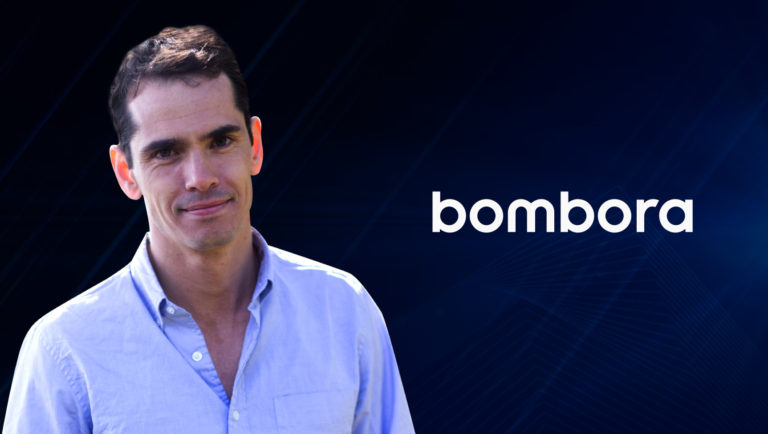
SalesTech Interview with Mike Burton, Co-Founder and SVP, Data Sales at Bombora

1
Tell us about your journey into the Enterprise Data Sales industry. What made you co-start Bombora?

Right place, right time — it was an organic evolution of what I was already doing. We were inside of a media business, Madison Logic, and had a data asset that was very useful for Sales and Marketing. That product just kept evolving and that business became its own independent business, and I just kind of found myself there. I have a background in professional improv, so grabbing onto something and just working at it is familiar to me.

From the time you first started in the Sales industry, how much has the Sales Technology landscape evolved?

A lot and a little. The tools that are available have grown in the last two or three years. We now have the ability to be much more targeted in outreach. So, on the one hand, everything’s changed because there are so many new tools and there’s so much more information at a salesperson’s fingertips. On the other hand, nothing has changed, because it’s still all about being able to offer value to prospective customers and to listen well and solve their problems.

What is Bombora for Sales teams? How do you project data for Sales in this overtly competitive data marketplace?

Bombora helps sales teams by enabling them to prioritize accounts that are much more likely to be in market for their solutions, and so, to engage with them. The fact that the market is competitive, is why sales teams use us.

Tell us more about your vision for ABM and Lead Generation Orchestration. How can B2B sales teams benefit from these strategies?

It’s important to understand which accounts are most likely to be your next customers, and then to have one unified motion across Sales and Marketing that is attacking those accounts at the same time. B2B sales teams benefit when companies undergo an evolution from two separate efforts into one unified effort.

Recommended: SalesTech Interview With Adam Mergist, Chief Sales Officer At Clearlink

How different are Sales Operations products compared to traditional IT SaaS and Cloud?

We sell data that gets used in sales and a bunch of other places. Sales tends to move into testing faster if they’re able to find something that helps them drive pipeline — they’re able to act quickly, whereas I would imagine that selling into these other departments might be a little more bureaucratic.

How do you differentiate Customer Success and Customer Experience? How have these definitions changed in the past 5 years with Sales Analytics and Intelligence?

I don’t know if I draw a big distinction. If our customers are really successful, then they’re having a great experience. Success is the only experience we want them to have. Everything we do is to make them successful. If we do that well, we know they’ll have a great experience.

Tell us how you achieve Sales Performance standards across Marketing-Sales efforts. How does it impact your revenue targets?

We struggle with measuring these standards, in general. How are we executing? We think we’re selling well, but maybe, we could go faster, you know! Or maybe we’re selling as fast as it could possibly be sold. We’re not even sure what to compare it with, because we’re a big part of creating the category. As customers adopt this data, they’re pioneers. We struggle to figure out to what degree of excellence we’re performing. We look at how well we’re engaging more customers quarter over quarter, of course, but it’s always hard to know how much better we might do.

Regardless of measurement, there are basics we organize around:

  1. Sales and Marketing must be organized around and towards the same accounts and agree on what we are measuring.
  2. OKRs across all the different sales, customer success, product, and marketing teams must be visible and aligned (which is quite a process).
What are the core strategies you focus on at Bombora for global business development? How does it impact your Sales Acceleration initiatives?

We’re a data company, so we focus heavily on global data acquisition — making sure that we acquire data in a compliant, consent-driven way, given GDPR, etc. Only once we have that secured can we figure out how to enable people to see value from that data. It’s really important for us to be able to do that at scale, because the largest, most sophisticated B2B marketers are global companies.

Also Read: SalesTech Interview With Brian Howe, Alliances Director at Skynamo

What is the current state of “Channel Sales Partners” in technology? Could you elaborate with some examples deployed/practiced at Bombora?

We’re not experts on the broader state of channel sales partners. But I think one of the innovative things we’ve done here is we’ve combined our channel strategy with our customer success and integration strategy. So, while channel partners sell our data to a longer-tail part of the market, Bombora sells direct licenses to large enterprise, sophisticated B2B marketers — and then they use those same channel partners and platforms, oftentimes, as activation for the data. So these companies become channels, but they also become customer success channels — kind of activation partners.

Sales Culture and Advocacy

What is the sales culture that you represent in the enterprise tech market? Why is it important to build a sales-focused culture for any business?

Our mantra is ‘Help, don’t sell. Show up and tell the truth.’ We listen and try to help them. If we do that, we’ll hopefully get to extract value. Just tell them everything you can about the way it works, to the best of your ability. There’s never any reason not to be forthcoming. Bombora CMO Marc Johnson and I were talking, and we agreed: Content that aims to sell, doesn’t. Content that aims to help, does. So, our sales philosophy spun out of that.

It’s not important to build a sales-focused culture. We’d want to change that. What’s important is building a help-focused culture.

How do you achieve this culture balance at Bombora? What percentage of this is driven by the application of technology, reporting tools and coaching?

We structured our sales process to speed time to value. We say, ‘For 90 days, if you agree to enter into this sales process with us, then we’ll just onboard you as a customer right now. We’ll do a historical buyers journey analysis to understand what topics drive their closed customers.  And we will use that to set up activations and get results. We’re going to take a partner with the prospect to create a mutual win. And around the 45th day, we’ll get to funding. If they agree and come onboard, we’re probably closing 90% of the deals. The good thing that we sometimes hear is, ‘I’m not ready to go into that.’ And that’s good — it’s good to know that.

Everything upstream, before we get into this process — all of using our own data, and the targeting, and the outreach — all of that is tool-driven. But once we get into the conversation, it becomes completely personal — it’s about helping and partnering.

How do you leverage AI and Automation at Bombora?

AI has become such a broad term that we tend to avoid it, honestly, but we do use AI to create our account lists. And AI is, of course, inside the Bombora recipe — predicting topics, understanding content and assigning Company Surge scores — so we use it pretty heavily. We figure out our addressable market and use our own data to figure out who we should be engaging with right now.

Would self-service technologies continue to disrupt customer experience platforms? How do you prepare for this disruption?

We welcome self-service, in the sense that any company can come to our website and learn who’s interested in their products and services, right there on our homepage, for free.

What are the major pain points for sales-driven companies in leveraging customer experience technologies for their own benefits and for business development?

Getting the right data into those systems. Those systems rely on the interactions that you have with your customers, but there’s a lot more to know about your customers — and often that data is not in your system.

Recommended: Sales Call Analytics Is The Difference Between Winning And Losing Customers

What are your predictions and observations on the “Role of Chatbots and AI Conversations” influencing CX*- driven Sales journeys?

Anything that gets people the information they need, faster, is a good thing.

My Sales Magnifier

How do you prepare for an AI-centric world as a revenue growth expert?

By not over-indexing on it. Understand where it can be useful, and make sure you’re not applying it outside that context. It’s always going to be a balance of technology and the personal relationship.

Which events and webinars do you most occasionally attend and why?

All of the B2B sales and marketing industry shows, including the Customer Experience shows — Marketo, Eloqua, Oracle, SiriusDecisions — anything that’s around the nexus of sales and marketing together.

Your advice to revenue-growth executives and salespeople in the SalesTech industry—

Help, don’t sell. Tell the truth.

What does your CRO community look like? Who do you huddle and communicate more often within the industry?

Other leaders at other companies in our space — not competitors, necessarily, but adjacent companies that are in the same ecosystem but are selling different products.

Also Read: SalesTech Interview With Eugene Levin, Chief Strategy And Corporate Development Officer At SEMrush

Tag a person whose answers to these questions would like to read from the industry.

Lars Nillson was a famous inside-sales guru at Cloudera. He’s now the CEO of Sales Source. He’d be a good one.

Thank You, Mike. We hope to see you again, soon.

bombora_Logo

Bombora is the leading provider of intent data for B2B sales and marketing. Bombora’s data aligns marketing and sales teams, enabling them to base their actions on the knowledge of which companies are actively researching what products, and the intensity of that consumption.

Mike has been working with AdTech startups since 2002. Currently, he is responsible for driving adoption of Bombora’s offerings across email marketing, analytics, programmatic display, predictive analytics and lead scoring, and countless other applications.

Mike took on an integral role in building B2B’s first Intent data co-operative, helping Bombora to consolidate over 9.3 billion monthly B2B behavioral interactions. This consolidation of data fuels massive efficiencies across B2B marketing and publishing.

Prior to Bombora, Burton worked with Madison Logic as Head of Platform Sales. He was also Madison Logic’s first VP of Sales, helping the company in its earliest stages to grow revenue and gain a foothold in B2B’s competitive lead generation space. Mike also worked at Collective, and was one of the first employees at IndustryBrains, an innovative direct marketing firm that helped shape B2B’s early online migration.

Adtech Startup Scibids Opens APAC Headquarters in Singapore

Rahul Vasudev, former Mediamath APAC Managing Director heads the APAC office

Adtech startup Scibids has opened its Asia Pacific headquarters in Singapore, its first international office. This follows the Company’s successful SGD 3.3 million (€2.2 million) Series A funding last September. Rahul Vasudev, former Managing Director of MediaMath (Asia Pacific) and the APAC Head of Digital at MediaCom, will head Scibid’s APAC expansion.

Based in Paris, Scibids has developed a unique AI-based intelligence layer, which acts as a virtual trader on top of demand-side platforms (DSPs) such as Google’s DV360, The Trade Desk, MediaMath and AppNexus. It sorts through as many as 22 million variables such as geography, gender, site placements and third party data to automatically build thousands of highly granular buying strategies in the DSP. With these epiphanies at hand, media agencies and marketers who have in-housed programmatic buying can improve their return on ad spend by targeting the right contexts more accurately and optimise towards their own custom business metrics.

Read More: Survey Shows Disjointed Communications Technologies Fail Customers

“Scibids in a way, is helping take digital media buying to new levels of effectiveness through the application of machine learning into the media decisioning process. At the moment, we are delivering a step change in media effectiveness to marketers and their agencies. Across categories, our clients are seeing 40 to 70 percent KPI improvement. This includes performance marketers within the travel and ecommerce sectors, brand marketers from sectors such as FMCG and those in between like automotive, insurance and so on,” said Scibids founder Julien Hirth.

Scibids’ Singapore presence is its first international office and mirrors its global expansion strategy – over 50 percent of Scibids’ revenue is already from overseas, ranging from Tokyo, Singapore and Sydney in APAC to New York and San Francisco in the United States.

Read More: Tony Robbins And Corporate Visions To Offer New Program For Entrepreneurs And Small Business Owners

“Asia Pacific is an important market. It is expected to be a major growth region, contributing 35 percent of global ad spend this year. Digital advertising share is also forecasts to constitute 49 percent of total ad spend in the region. The APAC HQ in Singapore will help brands and media buyers in the region get the most of their advertising platforms and solutions, creating an ecosystem that in turn creates growth.” said Mr Vasudev.

“The role Scibids is increasingly playing, is that of an intelligence layer that enables marketers, agencies and their DSP partners to work in harmony. For example, some of our clients who use third party data sources or intelligent attribution models are able to bring the data and learning back into the media optimisation process” added co-founder Mr Lemonnier.

Read More SalesTech Interview With Ryan MacInnis, Director of Marketing at Notarize

Three Industry Veterans Write The Book On Next Generation Sales; “Sales Engagement” Available Now

“Sales Engagement” Guides B2B Sales Executives on the Best Ways to Engage Potential Buyers and Generate Qualified Leads

“Sales Engagement: How the World’s Fastest Growing Companies are Modernizing Sales Through Humanization at Scale”, a new book from sales veterans and Outreach executives Manny MedinaMax Altschuler and Mark Kosoglow is now available on Amazon and in leading bookstores and newsstands nationwide. Published by Wiley, “Sales Engagement” will be officially unveiled today at Unleash 2019, Outreach’s annual conference focused on every aspect of the sales process.

The term Sales Engagement refers to how sales reps engage and interact with potential buyers to build connections, grab attention, and create buying opportunities. The book “Sales Engagement” is a hands-on guide that contains transformative solutions, best practices and actionable strategies for building the sales funnel, generating qualified leads and ultimately developing real relationships with buyers at scale.

“Sales Engagement is not just the latest buzzword, it is a sales strategy that has proven successful in numerous billion-dollar-plus companies, many of which are featured in our new book,” said Manny Medina, CEO of Outreach and co-author of “Sales Engagement”. “By adopting Sales Engagement strategies, companies can meet the needs of today’s omnichannel buyers by being where the buyer wants them to be, with the right message, at the right time, every time. Sales Engagement platforms give companies the power to build consistent, repeatable, and data-driven processes, while leveraging an understanding of executive level metrics to track and act on.”

Read More: Survey Shows Disjointed Communications Technologies Fail Customers

“Sales Engagement” is authored by three veteran sales and business professionals:

  • Manny Medina, co-founder of Outreach, the industry’s leading Sales Engagement software. Medina is often lauded for his vulnerable and transparent leadership, from his heartfelt weekly email, “From the CEO’s Desk,” to the traditional Friday get-together Boot, where the entire company shares its highs and lows of the week.
  • Max Altschuler is Vice President of Marketing at Outreach and CEO of Sales Hacker. He started Sales Hacker in 2013, and built it to a 100,000+ member community for B2B sales professionals. In 2018, Sales Hacker was acquired by Outreach, and Max became Vice President of Marketing.
  • Mark Kosoglow was the first employee at Outreach, and now serves as Vice President of Sales. Mark joined Outreach in 2014 as a 100 percent commissioned contractor, with a personal mission of helping more sales professionals win.

Read More: Tony Robbins And Corporate Visions To Offer New Program For Entrepreneurs And Small Business Owners

“Sales Engagement” contains perspectives from the savviest revenue-acceleration-focused thought leaders, customers, partners, practitioners, and executives representing a vast array of companies of various sizes and industries. Strategies and topics covered in the 240-page book include:

  • How to find common factors holding your sales back—and reverse them through channel optimization
  • How to humanize sales with personas and relevant information at every turn
  • Understanding why A/B testing is so incredibly critical to success, and how to do it correctly
  • Metrics to measure in a modern sales organization
  • Ways to ramp new sales reps faster

Outreach, which has been recognized by Forbes as one of its “Next Billion Dollar Startups”, supports more than 3,000 sales teams and 46,000 users worldwide.

Read More SalesTech Interview With Ryan MacInnis, Director of Marketing at Notarize