Home Blog Page 5139

Kim Technologies Hires Software Delivery Director to Support Rapid Expansion

Kim Technologies announces the appointment of Ammar Zuriki as Software Delivery Director.

Zuriki joins Kim from Infragistics, which is a leader in providing technology solutions that accelerate design, development, and collaboration. Zuriki brings with him almost 20 years’ experience in software development including a decade in managing teams in development, delivery and testing.

Read More: OneConnect Moves Up In The 2019 IDC Financial Insights FinTech Rankings Top 100 List

Richard Yawn, Chief Technology Officer, Kim Technologies says ‘We are delighted that Ammar is joining us at a time of rapid growth and investment in Kim. We have significantly increased the size of our team over the last year and invested heavily in R&D and the release of Kim 10.0. Together, with Ammar, we look forward to taking Kim to the next level. We anticipate doubling the size of our team in the next 12 months, including new appointments in North AmericaEurope and Asia as we support our global customers and channel partners.’

Read More: Resulticks Expands North American Footprint By Welcoming Three New Partners

Ammar Zuriki says ‘I am delighted to join Kim at this point in its history. I am impressed by the enterprise scale of the Kim platform, the Kim global client base and the vision and enthusiasm of the team. I am really looking forward to playing my part in both helping Kim achieve its vision and its customers realize their goals.’

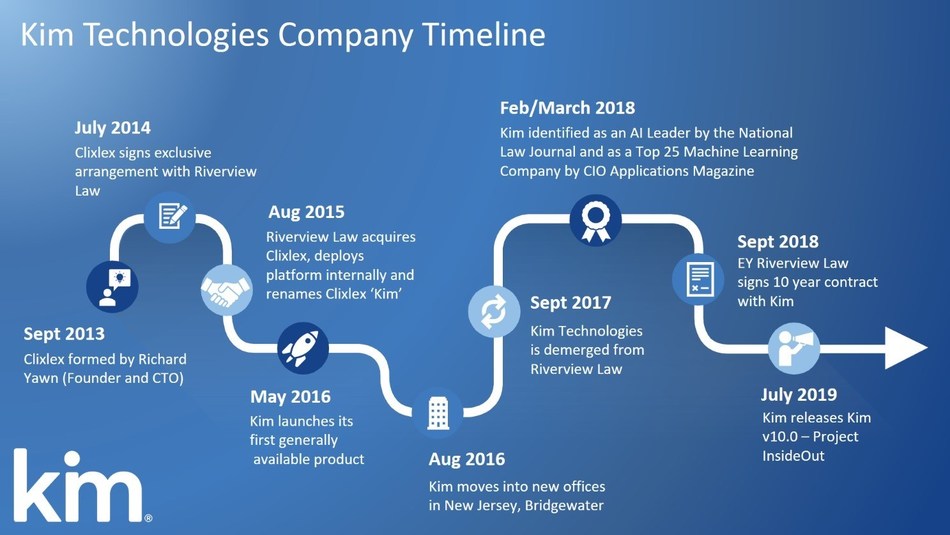
In July 2019 Kim v10.0 was released, which combines the dynamic case management, automation and no-code configurability of Kim, with the Microsoft Word universal interface and the security and scalability of Microsoft Azure. Kim 10.1, which will be released in April 2020, will extend this seamless integration of Kim with Microsoft Word, Office and Office 365.

Read More: Talkwalker Launches AI-Powered Solution To Better Analyze Customer Conversation Data

Calabrio’s Global Conference Features 50 Customers Sharing Successes and Strategies

Annual Customer Conference Showcases New Customer and Agent Engagement Product Demos and Integrations, Self-Scheduling Capabilities and Special Keynote Address by Shep Hyken

Calabrio, the customer intelligence company, announced it will kick off its Calabrio Customer Connect (C3) conference, through Oct. 16 in San Antonio, Texas. It is Calabrio’s first annual user conference following its acquisition of Teleopti in June of 2019. With a theme of “Ignite What’s Next” threaded through the event, Calabrio Customer Connect will feature 50 customer presentations from enterprises such as Avant, Pacific Life and Rackspace, and showcase new product integrations and innovations in agent and customer engagement. It will also introduce a Teleopti customer track and feature keynote addresses by Calabrio President and CEO Tom Goodmanson, and Shep Hyken, Chief Amazement Officer at Shepard Presentations.

“When we announced the acquisition of Teleopti, we promised that the combination of Teleopti’s workforce management (WFM) software and Calabrio’s customer experience solutions would deliver tremendous benefits to the customers of both companies,” said Goodmanson. “Just four months later, we are already delivering. Calabrio Customer Connect is the perfect opportunity for customers to experience the first smart integrations between our technologies, as well as gain insight and provide input as we build a powerful new solution that includes the best of both product sets. We are thrilled to welcome the Teleopti community to the C3 event alongside Calabrio customers and partners; it is always our favorite week of the year.”

Read More: Magnifact Launches AgentVizion2Go Mobile App

Speaker Shep Hyken is one of the leading experts in customer service, helping clients build loyal relationships with their customers and employees.

“I’m very excited to be speaking at this year’s Calabrio Customer Connect,” said Hyken. “This is a ‘can’t miss’ opportunity to learn about the latest trends in customer experience intelligence and better understand how to maximize technology investments across customer service. Customers are smarter and more demanding than ever before, so I have a great appreciation for Calabrio’s ability to help enterprises capture and analyze data, identify value and create an amazing, next-level experience for customers.”

The Calabrio Customer Connect 2019 Experience-

Demonstrations
Key new capabilities on display at Calabrio Customer Connect 2019 include:

  • Calabrio ONE v11 – Launched in March, Calabrio customers will demo the suite’s analytics-fueled, modern user experience which capitalizes on the way people process large, complex amounts of information. The design is based on a vertically oriented media player that aligns with how today’s users consume information from their smart devices and puts critical customer insights at users’ fingertips.
  • Calabrio ONE Smart Integrations – For the first time, Calabrio and Teleopti customers can experience synchronized tools and integrated dashboard features in the Calabrio ONE suite, providing a single point of access to critical capabilities across both platforms. With the integrations, users are empowered to act on data and insights in the call center more quickly and with less effort.
  • Self-Scheduling – Calabrio’s new Self-Scheduling capability enables employees to change their schedule themselves if staffing requirements set by resource planners allow it. Creating a more desirable workplace through employee empowerment, Self-Scheduling evolves scheduling processes related to lunch, breaks and other activity requests. With Self-Scheduling, employees are able to take more control over their working time and move their lunches or breaks, all without impacting customer service levels.

Read More: Revenue Operations Leader Clari Closes $60M Funding Round

The Teleopti Track

Calabrio Customer Connect 2019 includes a wealth of content on the Teleopti and Calabrio platforms, including product- and best-practices focused sessions and time with company and platform experts, designed specifically for Teleopti customers as they become familiar with the Calabrio ONE platform. These will include contact center spotlights with customers, hands-on workshops, breakout sessions on WFM-specific topics and product update sessions.

Increased Interaction

  • An expanded “Ask the Experts” program creates more opportunities for attendees to meet privately with product and services experts to get specific questions answered.
  • Networking opportunities include a “Women in Customer Experience” breakfast and a networking lunch focused on industries and product interest.
  • “Build a Bike” is a wonderful opportunity to give back to the community. This year, Calabrio and conference attendees will build bicycles for the Boys & Girls Club of San Antonio. The goal is to donate 12 “green machines” to promote healthy activities for kids.

Read More: Resulticks Expands North American Footprint By Welcoming Three New Partners

SocialPeta Helps JIOS Build a Data-Driven Marketing Service

As global science and technology develop rapidly, “data” has been increasingly becoming the cornerstone for enterprises and individuals alike in their network marketing activities. By gathering and analyzing such data as market trends, competitive dynamics, and consumer behaviors, management of marketing services can be more efficiently performed.

Therefore, the world’s largest advertising intelligence analysis platform, SocialPeta, has cooperated with JIOS, to promote the marketing service driven by data insight to a more professional and accurate development stage.

Read More: 4 Ways To Improve Your Facebook Video Marketing

SocialPeta has currently accumulated over 500 million advertising data, covering more than 60 mainstream channels in all regions worldwide. With one million daily advertising data, it can provide multi-dimensional ranking lists in terms of the highest-ranking, highly-recommended, and new advertisers. Besides, it also contains functions such as data analysis and interest recommendation in creative materials, popular copywriting, advertisement placement and audience, as well as partner companies, etc., aiming to better understand the market and facilitate marketing decision-making.

As the official network marketing training institution designated by the Johor State government, JIOS, is committed to becoming a leading professional academy of network marketing in Southeast Asia. It will offer a variety of practical network marketing knowledge, skills, and means for the industries of SEO, e-commerce, and social media marketing, etc. JIOS aims to teach everyone how to initiate online transactions and provide professional advisory services to companies that want to transform from traditional transactions to online electronic transactions. The company offers network promotion, brand marketing, and other services to global e-commerce customers, helping to make globalization come true.

Read More: GA Digital Development Guides Clients On Their Innovation Journey

By SocialPeta’s tremendous database and powerful analytical capacity, JIOS believes, on the one hand, it can enhance its judgment and decision-making ability after mastering the global market and competitive trends timely. Meanwhile, it can upgrade the marketing accuracy and efficiency after gaining the creative materials and popular text drafts of popular advertisements. On the other hand, it will improve the core competitiveness of JIOS in global network marketing as well as the data and technical customer-serving capabilities.

More importantly, this cooperation also means that SocialPeta’s international reputation and influence are becoming increasingly visible. Not only has it become an important partner of global digital marketing companies but also highly recognized and trusted by marketing industry giants.

Read More: US Small And Midsize Businesses Have Identified New Avenue For Growth Through Corporate Contracts

How to Get Started with Customer Profile Analysis

Quantzig, a leading analytics advisory firm, has announced the completion of their new article on a three-minute guide to customer profile analysis. Modern consumers are well-informed with the easy availability of smart phones and internet connectivity. This has increased customer expectations, market competition, and has given rise to an abundance of data sets for companies across industries. In such a scenario, meeting the expectations of customers and enhancing their experiences at every touchpoint has become very difficult for businesses. This is where customer profile analysis can help.

Read More: Five Dutch Companies To Further Boost Artificial Intelligence In The Netherlands

Customer profile analysis can help businesses to build a powerful go-to-market strategy and improve the brand image. With the help of an ideal customer profile companies can offer personalized services and identify potential customers. This can help to find and attract more people that are likely to buy their product, and develop a better relationship with customers.

Steps Involved in Customer Profile Analysis

Analyze your business challenge

To analyze customer profiles companies first need to understand their business challenge. To address the issues of the existing customer base, analyzing the challenge your business is facing is crucial. This can be the key to take a closer look at your current users and their interests. Also, an in-depth analysis will offer insights into the behavior and response of customers towards your product or service.

Read More: EY STEM Tribe Mobile Platform To Support The Next Generation Of Girls In STEM Careers

Dig deeper and analyze customer demographics

Analyzing consumers based on their demography i.e., interests, age, gender, job role is very important for proper customer profile analysis. This can help businesses to find potential customers and improve loyalty by targeting the right prospects with the right offering at the right time.

Conduct customer surveys to gain valuable insights

Conducting a customer survey can help businesses to stay up to date on habits, preferences, and interests of their consumers. Also, it can help in gaining an understanding of customer feedback on any product or service. This insight can further help in improving customer service and increase their loyalty towards the brand.

Read More: CFO Role In Digital Transformation The Focus Of ISG Talks At CFO.Org LA Event

Ascent360 Announces New User Interface And Features For Customer Data Platform

Company Continues to Innovate CDP for B2C Marketers in Brand, Resort and Retail Segments

Ascent360, a leading customer database platform (CDP) provider for mid-market businesses, introduces additional functionality and a new user interface (UI) that makes the platform even more intuitive for marketers to build authentic relationships with prospects and customers.

The Ascent360 CDP helps business-to-consumer (B2C) companies grow by providing a Software-as-a-Service (SaaS) solution, which consolidates disparate customer data into a single source of truth. Once data is unified within the Ascent360 CDP, marketers use platform intelligence to develop relevant communications to prospects and customers. Then, the Ascent360 CDP makes data accessible to other software systems to activate campaigns, plus automatically analyzes the results.

Read More: Verint Expands Customer Engagement Market Leadership In Asia Pacific

“As one of the first companies to develop a true CDP, we focus on innovations that bring Fortune 500-level marketing tools to businesses of all sizes,” said Scott Buelter, chief executive officer at Ascent360. “It is important for us to stay on the leading edge of CDP technology for our clients, so this year we developed a new UI and a number of product enhancements.”

The new UI helps marketers quickly get information about the omni-channel campaigns the CDP automates and provides insights to take further revenue generating actions. Buelter adds, we developed a new dashboard for the platform. Now marketers can see how many people are in the CDP, how to contact them, and how the database has grown over time. Most importantly, marketers can see how much revenue the Ascent360 platform has driven and an easy way to compare those metrics from previous periods or years. The new UI also makes it easier to tell when key information is missing and gives suggestions for how to bring data into the CDP.

Read More: Big Lots Names Andrej Mueller As Executive Vice President Of Business Strategy

“Business critical information is condensed, graphs and charts were made easier to understand and insights to quickly take action are highlighted,” said Buelter. “This way marketers can target specific segments of customers armed with the right data.”

Many other front and back-end enhancements have been made including data dictionaries, one-click functionality and additional administrative capabilities.

“Ski resorts, brands and retailers depend on us to make sense of their data so they can capitalize on opportunities only made possible with our CDP,” says Buelter. “Because our clients realize dramatic growth from our solution, we are motivated to continue to innovate.”

Read More: Growing Digital Following Set To Boost Investment In Women’s Sport By Almost 100%

Forter Fraud Attack Index Reveals 89% Increase In Loyalty Program Fraud

0

Fraudsters Shift Focus to Exploit Gaps in Merchants’ Fraud Prevention Strategies, Threatening $18T Global Market

Forter, the leader in e-commerce fraud prevention, announced the release of the seventh edition of its Fraud Attack Index. The report tracks shifting behaviors in online businesses across a variety of industries.

The latest edition of the Fraud Attack Index indicates that fraud is evolving rapidly beyond the point of the transaction to accounts such as loyalty programs and abuse of return policies. Loyalty fraud increased by 89% year over year, while the total dollar amount in online fraud increased by 12% year over year.

Read More: F-Secure’s Global Partner Program Earns Program Of The Year Accolades

“A clear trend in online fraud is emerging,” said Michael Reitblat, CEO and Co-Founder of Forter. “The industry as a whole has done a tremendous job detecting and preventing payment fraud at the point of transaction. This eliminates the amateurs. We’re seeing fraudsters now shift their efforts earlier in the customer journey, gaining access to consumers’ accounts.”

The Fraud Attack Index shows that fraudsters are having significantly more success in account takeover (ATO) attacks. 1.5M individuals whose accounts had already been compromised had additional accounts opened in their name. Fraudsters transfer funds to these accounts from their victims’ legitimate accounts. This represents a factor of two increase from the previous high.

“A second trend,” continued Reitblat, “shows that fraudsters are diversifying into softer currencies that are not primarily financial and moving beyond transactional credit card fraud into areas such as loyalty account fraud and policy abuse.”

Read More: Internet Marketing Firm, Fishbat, Discusses The Benefits Of Drip Campaigns For Retail Chains

Taking advantage of silos that separate brick and mortar and online operations, Buy Online Return In-Store (BORIS) fraud increased by 23%, and Buy Online Pickup In-Store (BOPIS) fraud also increased by 23%. Coupon abuse likewise saw an increase of 10%.

“Today, the customer journey has become more complex as consumers engage with brands and products across numerous touchpoints for a truly omnichannel experience,” noted Jordan McKee, Research Director at 451 Research. “The data in the latest Fraud Attack Index is proof that, as the global payments and e-commerce system shifts, online criminals shift as well. As fraud shifts to weaker points in the system, merchants must likewise expand their focus to protect themselves and their customers at all touchpoints.”

“Merchants need to respond by implementing a continuous and automated approach that assesses events throughout the entirety of the customer journey,” said Reitblat. “It’s no longer sufficient to focus solely on chargebacks and credit card fraud at the point of transaction. Only a fully integrated fraud prevention platform will enable merchants to address fraud in a holistic and accurate manner across the entire customer journey.”

Read More: Questback CEO To Speak At American Society For Training And Development

PreciseTarget Announces Expanded Strategic Retail Data Partnership with Equifax

New Solutions Combine PreciseTarget’s Product Taste Audiences with Equifax Economic and Spending Capacity Data

PreciseTarget announced the expansion of a strategic data relationship with Equifax to help retailers more efficiently target and convert customers based on personal shopping taste.  Beginning in early November, the partnership will offer new products that combine PreciseTarget’s Product Taste Audiences with Equifax economic and spending capacity data, enabling retailers to more effectively identify and market to consumers according to each individual’s retail shopping taste.

“Helping the retail industry succeed by providing insight and matching them with their ideal customers through precise messaging is an exciting opportunity for us,” said Jeff Sporn, Chief Digital Officer of Data-driven Marketing at Equifax. “Artificial Intelligence-enabled assortment planning and ecommerce are changing consumer shopping habits rapidly, and these revolutionary data sets will empower retailers to thrive in this new reality.”

Read More: TIBCO Appoints Jeffrey Hess As Senior Vice President Of Customer Excellence

Economic data from Equifax helps improve marketing efficiency with an estimate of consumers’ likely discretionary spending power. PreciseTarget’s one-of-a-kind approach to profiling consumer taste helps brands and retailers overcome challenges typically associated with sparse customer data.  PreciseTarget analyzes daily retail data and billions of transactions to identify the attributes that actually determine individual consumer shopping taste and purchase habits – attributes like fabric, price, brand, fit, and color.

Read More: The Lead Pilots Solves Lead Generation Problem For B2B Companies

“We are proud to announce this exciting new chapter in our partnership with Equifax,” said Rob McGovern, CEO of PreciseTarget. “By combining the unmatched Equifax understanding of consumer spending capacity with PreciseTarget’s unique ability to reach consumers according to their individual taste, we’re giving retailers the ability to serve relevant advertising that will increase sales, improve efficiency and reduce waste. As businesses gear up for the make-or-break holiday shopping season, the need for retailers to be agile in their planning and marketing has never been more essential.”

Unlike other retail targeting products, PreciseTarget’s taste audiences do not rely on cookies or clickstream data. PreciseTarget’s Product Taste Audiences provide profiles of over 220 million consumers, and, combined with spending capacity data from Equifax, will allow for unprecedented insights in customer acquisition and conversion for retailers.

Read More: ADT Further Expands Mobile Reach With Lyft Partnership

Dismantling the Digital Fortress: E-Commerce Design Must Start with Humans, Not Tech and Templates

6

deptagency logoThe old way of online retail is obsolete. A bold statement, but it’s true. Yet these are the very platforms many Digital Marketing agencies are spending so much time and energy building, that have been putting bread and butter on our clients’ tables, and that everyone thought would reconnect brands with their audiences and help them grow. Turns out, those platforms are not the key when heading into a digitally oriented future. We need to change our mindset, the way we envision and build e-commerce. It sounds harsh, but really, it’s a good thing. The new possibilities this shift unlocks means more creative opportunities and positive experiences for agencies, brands, and customers.

The Return of Connection

Let’s dive deeper into how we got to this moment. Some forty years ago, when people walked into their neighborhood stores, they had an entirely different customer experience than the one they would receive today. With a limited number of retail and transportation options, they would frequent stores that were in close proximity to them. The clerk probably knew them quite well and made their shopping experience personal – starting with the greeting and going all the way to tailor-made products or services.

Over the past few years, however, these personal points of contact have been reduced to next to nothing, as businesses became increasingly focused on making their supply chains and processes more efficient and cutting costs. Without the connection between clerk and customer, and without the proper technology, individualization was simply unthinkable, way too expensive and impossible to implement.

Today, digitalization has evolved to replace the store clerk of forty years ago. Algorithms can collect, combine, and process data and learn about customers and their individual needs. Based on these insights, bots can engage in in-depth conversations that can often help customers feel they are talking to another person. The old connection between retail point of contact and customer can now be reclaimed thanks to the latest technological developments, most notably AI and recommendation engines.

Read More: Building and Maintaining Digital Trust and Brand Loyalty: A Three-Step Process

Down with the Digital Fortress

The traditional visual interfaces you find when you visit many online shops, sites, and apps have been dubbed “digital fortresses,” and it’s time to tear down the walls.

In building these ecommerce citadelles, organizations tend to gather all the information they think is relevant in one place and make it accessible to their audiences–but on the company’s terms. From the users’ point of view, these fortresses are impenetrable.

Access to the desired information is commonly restricted, and visual interfaces are one-way communication channels. Cluttered information architecture, unclear menus and content elements, and the failure to adapt to screen sizes and devices are just a few examples of how web designers struggle (and often fail) to offer a desirable experience on these platforms.

This leaves customers feeling frustrated. They abandon attempts to storm the fortress, and organizations miss out on crucial revenue.

When we consider this frustration, it’s tempting to lean towards standardization of information architecture, as well as a baseline for tech, to help channel customer expectations and encourage certain consumer behaviors. Standards and templates have indeed been the first line of changes many in ecommerce have attempted.

For example, Shanying Leung, Design Director for Alipay and Ant-Financial, has explained in talks about how Alibaba is currently standardizing digital and non-digital design templates and supplying them to small business owners in China. They automated this process to such an extent that all elements of these templates are created via AI.

Based on a few parameters and some uploaded material, the algorithm defines colors, fonts, design elements, even copies and creative claims. This process works so well that the customers are not able to tell that these experiences were created by a machine. This is obviously only the latest step in a development that describes the standardization of user interfaces through, among other things, Twitter Bootstrap, overflowing template libraries, smart CMS interfaces, and so on.

This just puts a new layer of boring on the same old problem. The question remains: if one-way-communication channels with visual interfaces are an inconvenient way for users to find and interact with an organization’s content, and if brands are having an increasingly hard time standing out of an ocean of standardized web-shops, sites and apps, what good do these efforts do?

Why, with all the changing expectations and clear consumer frustration and feedback, do the majority of designers and brands still think in platforms?

Read More: Client-Side Auction vs Server-Side Auction: Which Is More Suited for Video Advertising?

Think Humans, Not Tech

This is when it gets really interesting, if you’re working with or for a Digital Marketing agency.

Many agencies approach ecommerce and platform projects with a focus on features and technological possibilities. People will debate interface elements and teasers and the position of menus and which payment methods to integrate. They focus too much on building and shipping the tools, when they could be imagining and enabling meaningful interactions between brands and their customers. The ideal is conversational interactions, not one-way channels.

It makes a lot more sense to envision the frame hanging on the wall, and afterwards getting the tools needed to get it there, than starting by tweaking the design of the hammer and the nail. It makes a lot more sense to talk about how a customer can feel informed and satisfied by their purchases, instead of ruminating about dropdowns.

This sounds daunting: the dots are scattered and diverse. But there’s no need to be afraid of complexity! Instead, gather as much information as you possibly can about the topic at hand, as well as its adjacent fields–look beyond what narrowly applies to your business–and derive fundamental, big-picture-insights.

In the end, making conversational information architecture and commerce a reality is not really about technology. It is about changing the mindset that digital agencies approach projects with. It is imperative to dig into the dialogue brands currently have going with consumers and how they want to alter that, before getting too deep into how to integrate new platforms and technologies. The human question needs an answer first; the technology will follow.

Read More: 5 Ways Marketing and Sales Can Use Creative E-learning to Boost Lead Generation

The Future of SaaS and Content Marketing in the Subscription Economy

In a latest report highlighting the growth of subscription economy, SaaS and IoT have achieved the highest level of subscription revenue growth since Q2 2017. The report also marks entry of Manufacturing, Telecommunications and Publishing industries.

No two subscribers are same. They have different levels of interest in a product, and are more than willing to pay for their choice.

Read More: Criteo Partners With Pixalate To Provide Additional Protection For Advertisers’ Investments

SaaS Organizations Selling in the Subscription Economy Bring Phenomenal Value to the Digital Age

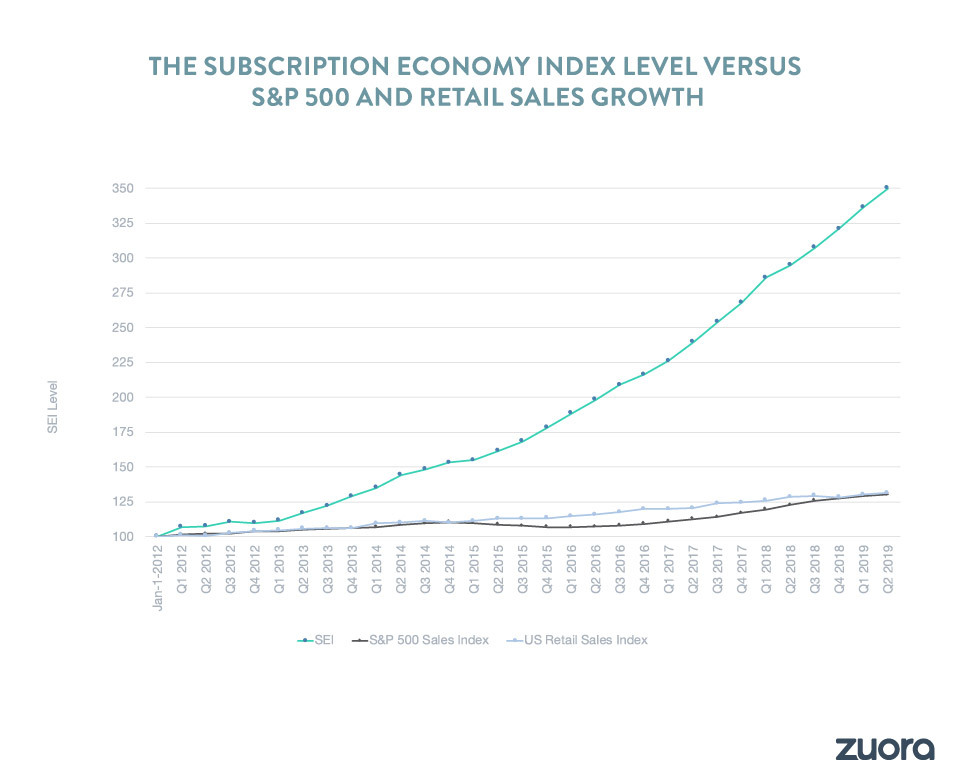
Contemporary subscription businesses are shifting from being product-based to a more complex deal-based arrangements where customers get to choose and remove product features based on their business needs. As more and more Subscription-based businesses (especially dealing in SaaS) learn about their customer choices and deliver on their true needs, we see a remarkable growth in their Sales. According to Zuora’s latest Subscription Economy Index, the subscription-based revenue has grown by over 350%. The major factors driving this economy are linked to consumer’s ever-growing demand for highly-personalized digital services, and frequent interactions with online sales channels.

“The Subscription Economy is not limited to one or two industries. We’re now seeing sectors far and wide placing subscriptions, over pure-play products, at the center of their businesses to achieve rapid and sustained long-term growth,” said Dr. Carl Gold, Chief Data Scientist at Zuora.

Dr. Carl added, “The SEI report showcases the transition to subscriptions beyond the boundaries of traditional SaaS organizations into the Manufacturing and Business Services sectors, exposing the phenomenal value of the subscription business model in today’s digital age.”

Read More: Oracle Opens Retail Innovation And Technology Center In Portugal

The latest SEI report showcases a number of industries contributing to this incredible growth. On average, Zuora found that the sectors outlined in the SEI report are growing 2 to 5 times faster than their industry benchmarks.

Overall, the SEI data reveals that subscription businesses grew revenues about 5 times faster than S&P 500 company revenues (18.2% versus 3.6%) and US retail sales (18.2% versus 3.7%) from January 1, 2012 to June 30, 2019

Digital Services Popping Out New Growth Channels

Over the past seven and one half years, the Subscription Economy® has continued to thrive, growing more than 350 percent, as consumers increasingly demand access to convenient, digital services over the ownership of physical products.

By 2020, 50 percent of the world’s largest enterprises will see the majority of their business depends on their ability to create digitally enhanced products, services, and experiences, says IDC.

Key industry findings from the SEI report which support the Subscription Economy’s long-term magnitude and viability in various industries include:

  • Business services and manufacturing industries experienced the lowest churn rates across all sectors, with 16.2% and 20.4% churn rates, respectively. However, Media (37.1%) and Publishing (28.2%) industries saw the highest amount of churn.
  • IoT and manufacturing subscription companies exceeded their industry S&P 500 benchmarks by more than 5X. IoT subscription businesses also achieved the highest annual growth rate of Average Revenue Per Account (ARPA) at 14.3%, more than 2x the SEI average of 6.5%.
  • The publishing industry generated the least amount of revenue from usage-based pricing compared to other industries at 17%, while the sector with the highest percentage of usage-based revenue was Business Services (57%).

Churn Rates in Subscription Economy Depend on Usage-based Pricing; Publishers Lag Behind SaaS and Services

Overarching Subscription Economy insights derived from these industry findings include:

  • Offering subscriptions that serve business-critical functions experience lower customer churn. According to Dr. Gold, “Lower churn could be attributed to the ‘sticky’ nature of B2B subscriptions, which serve mission-critical functions and tend to be deeply embedded within a business’ operations. It could also indicate that new entrants shifting to subscriptions are learning from first-movers to the business model.”
  • Launching and monetizing new services drive greater individual account growth. According to Dr. Gold, “Add-on and up-sell opportunities inherent in digital services and connected hardware support high ARPA growth rates.”
  • Incorporating usage-based pricing facilitates lower churn and higher overall subscription growth. According to Dr. Gold, “Companies in industries like publishing that do not adopt usage billing generally have higher churn than companies like those in SaaS or Business Services that do. This suggests that the balance and flexibility of usage-based pricing plays a useful role in customer engagement and retention.”

Read More: 111 Unveils New Video On What The Internet Could Do For The Health Management Of Aging

Currently, Zuora provides these to the subscription economy-

  • Zuora Central
  • Zuora Billing
  • Zuora CPQ
  • Zuora RevPro
  • Zuora Collect
  • Zuora Marketplace

Competitors of Zuora

As we inch closer to 2020, we expect CPQ businesses to continue with their embrace of Mobile CPQ, Customer Experience platforms, and guided selling approaches based on ABM Orchestration, Intent Data, and Automated Pricing models for every subscriber, from every industry. B2B decision-makers would continue to rely on Mobile CPQ providers to “build quotes, work proposals and configure products” that are absolutely essential to delivering quotes to leads in a timely and effective manner.

Read More: Demandbase Expands ABM Ecosystem To Include Service Providers

Unlock the Meaning Behind Product Ratings and Reviews with Bazaarvoice Insights and Reports

0

New Solutions Provide Actionable Recommendations, Powerful Reporting to Help Brands and Retailers Understand What Consumers Are Saying About Their Products

 Bazaarvoice, Inc., the leading provider of product reviews and user-generated content (UGC) solutions, announced new Insights and Reports applications. These new solutions are designed to help brands and retailers better interpret and take action upon customer feedback gleaned from customer ratings, reviews, and questions. With pre-built and customizable reporting tools and smarter insight capabilities, Bazaarvoice clients can tap into UGC data to understand product performance, customer sentiment, competitive benchmarking, and more.

Customer ratings and reviews are a critical part of the shopping experience. While many companies primarily use them to drive sales and build trust with shoppers, they are not harnessing their full power. Identifying meaningful customer insights and trends from UGC is often a time-consuming and manual effort. According to Bazaarvoice research, half (49%) of brands and retailers report that they do not have the resources or tools to collect insights from their UGC. With these new applications, brands and retailers will be able to access an unparalleled degree of customer and market intelligence.

Read More: Orange Leaf’s Off-Premises Sales Success

“User-generated content is a gold mine of information; our best-in-class clients often improve their products, website content, and broader marketing tactics based on what their customers say in product reviews,” said Lucas Tieleman, Senior Vice President, Product Management, at Bazaarvoice. “Our goal is to uncover this competitive advantage for clients by providing an automated, scalable way to glean and prioritize customer trends, get immediate access to insights, and make smarter business decisions.”

Bazaarvoice Insights and Reports solutions will offer clients:

Actionable insights: Bazaarvoice’s Insights application uses machine learning to analyze and surface product and UGC program performance data and consumer sentiment. In addition, the latest industry benchmarks sourced from Bazaarvoice’s network of clients are included in the application to help brands and retailers compare performance to peers.

Read More: Silicon Labs Appoints Megan Lueders As Chief Marketing Officer

With this application, brands and retailers will have better insight into:

  • UGC collection: Evaluate the health of native UGC collection tactics with program-level data like average daily submitted reviews and review rejection rate
  • UGC coverage: Prioritize efforts to improve content coverage by understanding what percentage of products have zero reviews, what products have unanswered questions, which popular products have few reviews, and more
  • Product performance: Identify and resolve areas for improvement across the product catalog with data on median product rating, products with low average ratings, and unanswered low-rated reviews
  • Consumer sentiment: Understand how shoppers feel about the entire customer experience with positive and negative sentiment analysis on product quality, price, shipping, customer service, and more

Along with these insights come clear recommended actions to appropriately remedy or improve the outcome of each takeaway, so that brands and retailers can take action on customer feedback immediately.

Reimagined reporting: Bazaarvoice’s Reports application gives clients an efficient and powerful reporting method that is easy to navigate and scales to meet any data need. The new experience provides business-focused templates that can be customized and easily shared with colleagues.

Strategic retail data: Bazaarvoice’s new Vendor Scorecard report template provides an additional layer of strategic intelligence specifically designed for merchandising organizations at retailers. This report allows retailers to gauge UGC performance by brand, category, or individual SKU. Armed with this data, retail merchants and buyers can identify top performers and areas for improvement across their vendors.

Read More: Oracle Cloud Infrastructure Momentum Accelerates With New Hires