Subscription businesses have spent years searching for effective ways to grow revenue and deepen subscriber relationships. Getting closer to subscribers through more personalized products, pricing, and meaningful experiences has always been a smart place to start. AI/ML advances have since made personalization, churn deflection and payment error recovery possible at enterprise scale. But today, the subscription industry needs more as it enters its newest phase: the intelligence economy.
First, it was about building the pipes: distribution. Then, owning premium content (the core product) and delivering personalized experiences. That’s not enough anymore. Advantage increasingly depends on intelligence and action — the ability to predict subscriber behavior in real time and act on it continuously.
Leading subscription businesses across media, sports, telecommunications and gaming are cognizant of this shift. Reimagining the subscriber relationship and unlocking growth was top of mind for the product, engineering and commercial teams we spoke with at global media event IBC2026 in Amsterdam this month. Let’s dive into the dynamics driving these discussions.
Agentic AI’s moment in subscription management
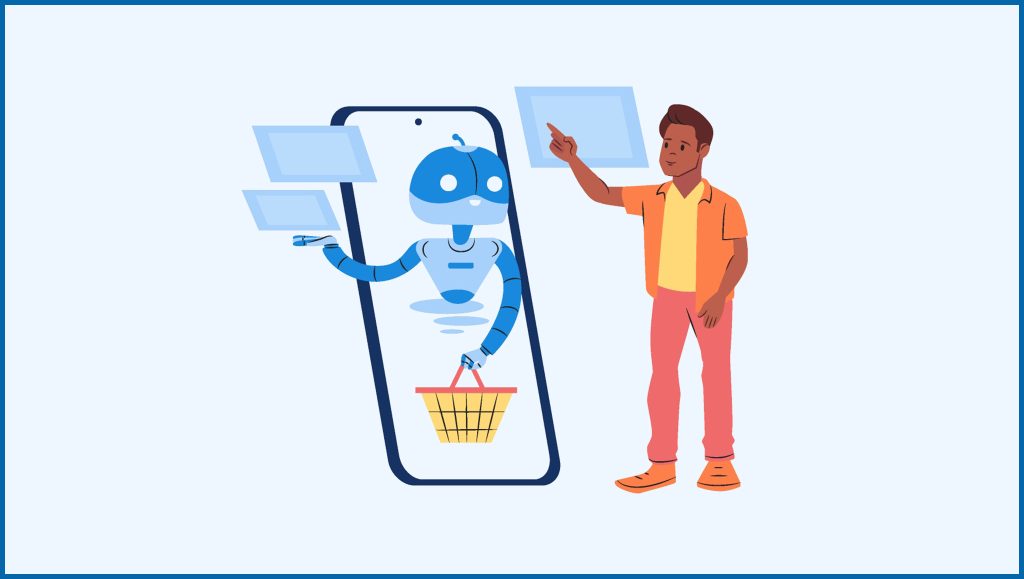
Agentic orchestration is moving from theory to deployment. Agentic AI and revenue orchestration demos alongside Google Cloud at IBC2026 showed how quickly the technology is moving into practice. AI agents can continuously monitor subscriber behaviour and act autonomously, shifting the industry from reactive churn management to proactive, always-on retention.
A retention agent can analyse behavioural, billing and engagement signals to identify cancellation risk and trigger the right response, whether a pause, alternative package or personalised offer. Pricing agents adapt offers to changing behaviour, while support agents use subscriber history to resolve issues without repeated explanations.
The real power lies in connecting these capabilities. Bringing customer support, product configuration, pricing and retention together creates a holistic view across the subscriber lifecycle, enabling faster decisions, continuous feedback and easier A/B testing of offers and strategies.
Across six churn-prediction pilots covering more than 23 million subscribers, our models have demonstrated prediction accuracy above 90%, enabling services to act before subscribers leave. The same principle applies in customer support. Working with Amazon Web Services (AWS), we built an AI-driven, context-aware support platform that consolidated six disconnected systems into one — reducing average handling time by around 40% and time to resolution by up to 50%. We’ve also accelerated product catalog creation for new products and offers by 70%. These are live deployments at scale, not lab results.
This flexibility is particularly valuable in sports and entertainment, where consumers juggle multiple subscriptions. Omdia Consumer Research shows sports fans use more than 11 video services a month and hold 20% more paid subscriptions than the average consumer. Rigid subscriptions make little sense in this environment.
Viewers want to pay for what they actually use, creating opportunities to monetize different levels of fandom through highlights, game-specific packages, event passes and experiences. AI orchestration makes it easier to understand subscriber preferences, deliver relevant offers and scale what works.
Read More: SalesTechStar Interview with Matt Alexander, VP of Channel and Alliances at Synthflow AI
Think local, go global
Agentic orchestration enables capabilities essential to streaming and subscription success. The first is delivering genuinely local experiences at a global scale.
The opportunity in streaming is no longer limited by geography. Two-thirds of the NBA’s fans are outside the US, and sports like MotoGP attract audiences worldwide because the drama resonates everywhere. But a global audience is never a single audience.
Our advice to our clients is simple: think local, go global. Choose markets carefully and understand what works in each, from pricing and promotions to the right route to market, whether direct-to-consumer or through a strong local partner.
There is no one-size-fits-all approach. Broadcasters, telcos and aggregators, once seen as competitors, are increasingly valuable partners in expanding the reach of sports.
Until now, the biggest challenge has been the effort required to build separate commercial strategies for every market. Agentic orchestration helps overcome this. AI agents can adapt pricing, packages and offers in real time to local consumer behaviour, within business guidelines set centrally. This delivers local relevance without requiring market-by-market configuration.
Dancing with the consumer
The second capability agentic orchestration enables is the flexibility to adapt to changing subscriber needs. We call it “dancing with the consumer.”
Consumer behavior is constantly evolving, and subscription businesses need to evolve with it. Subscribers should be able to move to a free, ad-supported tier, pay for fewer ads, or upgrade to an ad-free experience.
The same applies during quieter periods in the sports calendar, from the off-season to the days after a major final. Instead of losing subscribers, businesses can offer subscription pauses, provide free content to keep fans engaged, and make it easy for them to return for the next big sporting moment.
This is not just good for the consumer experience; it also reflects the growing global emphasis on easier subscription management and cancellation.
We capture 70 distinct events across the subscriber lifecycle and have onboarded more than one billion users across 180 countries for our customers. Each interaction offers an opportunity to understand subscriber needs and create value for both businesses and consumers.
By analyzing these signals in real time, AI agents can identify when to offer a pause, recommend a relevant package, or re-engage a subscriber with meaningful content. This moves businesses beyond rigid subscription models towards relationships that adapt to changing consumer needs.
Agentic revenue orchestration represents the next phase of the subscription economy: moving from understanding how consumers behave, to anticipating and acting on those signals in real time. Providers that make that shift will push ahead of competitors – protecting revenue, strengthening loyalty and creating greater value for every customer.
About The Author Of This Article
As Founder & CEO of Evergent, Vijay drives the product vision and customer experience for the company. Vijay is a business and technology leader with over two decades of experience in building business and operations support systems for leading service providers around the world. Vijay founded Evergent in 2007 with a mission to enable next-generation telecommunications and digital media subscription businesses to succeed and thrive in a fast-changing consumer landscape.
About Evergent
Evergent is the world’s leading provider of subscription and partner management solutions designed to help businesses grow by attracting and retaining millions of customers globally.
Read More: Intent Mesh Salestech: Connecting Buyer Signals Across Every Digital Touchpoint