In a world where business happens in real time, accuracy is no more a nice-to-have; it’s the key to growth. Customers move easily between channels, places, and situations, and they want quick answers about availability, delivery, prices, and serviceability. If you make a mistake, offer something ambiguous, or take too long, you’ll be punished right away by losing customers or having them leave.
As sales become more digital, spread out, and on-demand, accuracy is becoming a key advantage. The companies that know exactly where their customers are, what they can give, and when they can deliver value are the ones that get customers to buy more quickly and keep them longer. This is the new battleground for modern sales technology.
In this case, geospatial accuracy is much more than just a point on a map. It is the correct understanding of how location, context, movement, and purpose signals all function together. It involves not only keeping an address on file, but also checking to see if it is usable, if a technician can get there on time, if a product can be delivered the same day, and how demand is changing in the area.
Geospatial precision in modern salestech systems combines mapping data with clues about behavior, network limitations, traffic situations, and possibilities that are close by. It changes geography from a static background to a live decision-making tool.
In the past, accuracy was seen as a technical issue that only operations teams, IT architecture teams, or logistics experts should worry about. It makes money now. Every wrong location means missed deliveries, canceled meetings, wasted trips, broken ETAs, unhappy customers, and a loss of brand trust.
On the other hand, accurate replies lower friction, make it easier to finish the checkout process, improve lead routing, and make sure that promises are kept. For leaders in salestech, precision is now a measurable factor in pipeline speed, deal conversion, and unit economics, not only an efficiency indicator that isn’t visible to the public.
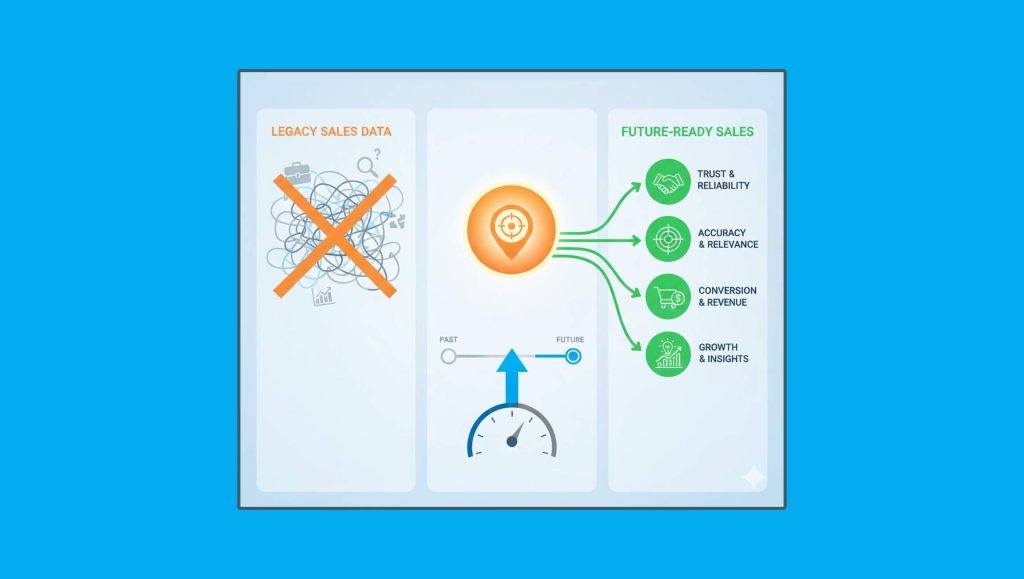
This change changes a simple but strong chain of cause and effect. Accuracy builds trust. Customers trust a brand when they see realistic ETAs, clear service boundaries, and confident messages. Trust drives conversion: people make a commitment when they are sure. When promises are kept over and over, experiences feel reliable, and interactions become easy, conversion turns into lifelong value. The route is not abstract; it goes from precision to trust to conversion to lifetime value. Every time you make something more accurate, it becomes better up this chain.
When salestech gives you accurate geographical information, it makes the buying process less confusing at every step. Customers don’t have to guess if anything can be delivered, set up, or fixed. Sellers don’t have to make promises that aren’t safe. Systems conduct the hard work of making sure that reality matches expectations in real time. In markets where speed and choice are important, this reliability makes a big difference.
In the end, geospatial precision is a symptom of the larger changes happening in business technology. We are going from static information to living context, from rough answers to sure ones, and from back-office data to designing experiences on the front line. In salestech, accuracy is what connects promise and performance. It is also what builds trust, conversion, and long-term customer value.
What does “geospatial precision” mean in Salestech?
A lot of people think that geospatial precision in salestech is just coordinates on a map. In truth, it is a multifaceted skill that combines knowing where you are with movement, context, accessibility, and intent. Modern geospatial intelligence doesn’t just tell systems where something is; it also tells them what can happen there, right now, and how much it will cost. This difference is at the heart of the next step in the development of salestech platforms.
Geospatial precision is made up of numerous layers at its core:
a) Real-world context:
A certain place is just the start. Traffic circumstances, delivery restrictions, the weather, rules and regulations, the neighborhood, or the area where services are available can all be part of the context. For instance, two addresses that are five kilometers apart could have extremely varied delivery times because of how easy it is to get there or how busy the road is. In salestech, accuracy means that this context is read automatically instead of having customers and reps guess.
b) Patterns of movement
People, fleets, and demand signals are always changing. Customers travel, move temporarily, shop, or commute to more than one place. Field teams are always on the go. Geospatially accurate salestech systems chart these patterns of movement to guess where demand will be and how resources should be used. This changes location from a record of the past to a signal for the future.
c) Proximity, serviceability, and accessibility
Being “near” a customer is different from actually getting to them. Geospatial accuracy makes it clear if a technician can get to a site, if same-day shipping is possible, or if service is even offered in that area. That level of accuracy immediately affects pricing, making appointments, and making delivery promises, which are all important parts of salestech workflows.
This is why definitions of “latitude and longitude” don’t work. They are not true operational records; they are static address records. In the past, traditional CRMs and order management systems kept addresses as data for reporting or sending mail. Dynamic geographic intelligence that is always being updated powers the best salestech solutions today. It takes in live data streams, checks addresses, figures out what people want, and models limits.
The difference is clear:
- Static address records tell you where the customer is.
- Dynamic geospatial intelligence helps us figure out if we can serve this consumer, how, how quickly, and under what conditions.
In a time when people want things to be ready right away, precise geospatial capabilities is no longer just a logistics tool; it is now an insight layer. It makes lead routing, territory planning, last-mile delivery promises, local offer customisation, and appointment scheduling possible. The most modern salestech platforms don’t see location as a back-end field; instead, they put it at the core of decisions that affect revenue.
Accuracy is a way to make money, not just a way to run a business
Operations used to care about accuracy in the background. People talk about it in earnings calls these days. That change is why accuracy has moved from the back office to the boardroom, especially in salestech strategy.
Accurate geographic intelligence cuts down on a number of expensive failure points right away:
- Failure to deliver: Returns, refunds, and bad experiences happen when addresses are wrong, service limits are unclear, or timing is off. Every delivery that doesn’t go through costs money and hurts trust.
- Missed appointments: Technicians may arrive late or not at all if the journey time or serviceability estimations are wrong. This doesn’t simply make things hard for customers; it also hurts the brand’s trustworthiness.
- Routing problems: If you don’t have precision, routes take longer, fuel costs go up, and capacity isn’t used to its full potential. In places where there are a lot of people, these inefficiencies have a clear effect on the bottom line.
The link is clear: better data means fewer promises that are broken. And in today’s digital commerce and field-service-enabled sectors, broken commitments cost a lot. They cause people to cancel, leave bad reviews, pay for service, and have to pay more for service. Precision helps get rid of these points of friction at their source.
In salestech, precision is intimately linked to making money and keeping your margins safe. You haven’t really “won” a contract unless you deliver on what you promised. Precision makes ensuring that marketing and sales teams can truly keep their promises. It closes the gap between what is sold and what is delivered, which is where hidden revenue loss generally happens.
Accuracy also speeds up sales. Customers convert faster when systems can quickly check if an address is suitable, if installation slots are available, or if there is merchandise nearby. They don’t have to wait for someone to check their information or talk to more than one agent. Precision takes away doubt, and doubt is one of the main reasons why people hesitate to click “buy” or sign a contract.
This is why executives increasingly think about accuracy in a strategic way. In companies that are growing quickly, geographic accuracy in salestech has an effect on:
- win rates
- average time to handle
- length of the sales cycle
- productivity in the field
- customer lifetime value
The story has changed in a big way. Accuracy used to be something that happened in the back office; today it’s something that happens in the boardroom. More and more, boards and executive teams are asking, “Can we trust our promises?” Can we deliver what we sell on a large scale? Geospatial accuracy is a key aspect of saying yes.
Accuracy, Trust, and the Customer Experience
Trust is what makes digital sales work. Customers don’t just look at the price; they also look at how reliable the product is. ETAs, coverage maps, availability alerts, and appointment windows are all correct thanks to precise geographic capabilities. When those signals match up with reality, trust grows. Trust falls apart every time they fail.
In salestech, this turns into a loop that keeps going:
- precision improves confidence
- confidence improves conversion
- accurate fulfillment improves retention
A corporation doesn’t need the most advanced product to win; it just needs the most predictable one. Geospatial accuracy is what makes predictability a valuable asset that can grow.
From Efficiency Metric to Growth Lever
In the past, precision was seen as a way to measure efficiency: fewer mistakes meant lower costs. That framework is still true, but it’s not full. Today, precision guides how to build a business, enter new markets, and predict income. Leaders use geospatial knowledge to choose which areas to enter, what services to offer, and how to build networks that connect to the last mile.
In today’s salestech ecosystems, precision is not “nice to have.” It is:
- a conversion driver
- a margin protector
- a retention enabler
- a brand-credibility anchor
More and more, businesses understand that the best way to expand is not just to sell more, but also to make customers less unhappy. Precision immediately makes disappointment less.
Precision is the Basis of Today’s Salestech
As salestech gets better, geospatial functionality is becoming more important than just an extra feature. AI-driven sales assistants, last-mile optimization tools, CPQ systems, service dispatch platforms, and commerce engines all need correct location-based context to work right. Without it, automation makes mistakes worse instead of fixing them.
So the industry is going:
- from static CRM records
- to living geospatial intelligence
- from generic promises
- to precise commitments
This change is part of a bigger change in how sales technology defines value. For decades, technologies helped businesses figure out what to sell, such as leads, pipelines, messaging, and forecasts. The next age will improve where and how reliably value is given. Precision fills the gap between what digital promises and what actually happens.
Therefore, geospatial precision in salestech isn’t just a technological improvement; it’s a new way of thinking about how to make money. When location data is precise, contextual, and dynamic, businesses can avoid failures, build trust, shorten sales cycles, and boost lifetime value. Accuracy is no longer a secret operational statistic; it is now a key factor in growth.
Customers reward organizations that know exactly what they can produce and when in an economy where expectations change all the time. So, accuracy isn’t only about maps; it’s also about trust, conversion, and having an edge over your competitors.
From Static Addresses to Real-Time Geospatial Sales Intelligence
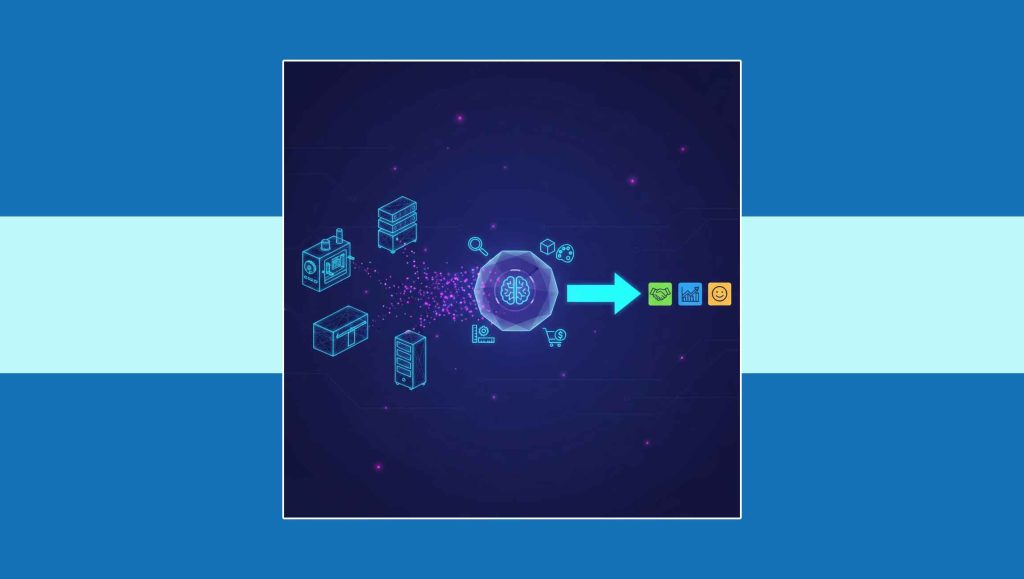
The story of geospatial capability in salestech goes from static records to living intelligence. In the past, geography was seen as administrative data. A customer address was mostly used for sending bills, dividing customers into groups, or making shipping labels. It was kept in CRM fields, not often updated or checked, and almost never used to help make decisions about revenue. During this first time, geography was all about paperwork.
The next step was to add mapping layers. Sales teams started using maps to see accounts, leads, and territories. This was the first time geography became more than just a field; it became a lens. But these maps were still mostly the same. They showed where customers were supposed to be, not where they actually did business, traveled, or bought things. For most businesses, the map was a dashboard, not a tool for making decisions.
Today, the best salestech platforms are moving into a third era where things happen in real time and in context. This is the change from “address” to “geospatial intelligence.” Now, systems can keep track of things like service boundaries, live traffic, device location signals, fulfillment capacity, weather disruptions, and regional regulations in almost real time. As a result, the decision-making structure changes based on what is happening on the ground.
We need to make this change because customers are no longer staying in one place. Customers who are always on the move buy from different places at different times, expect services to be delivered to them wherever they are, and move easily between online and offline settings.
Demand patterns are also changeable; spikes in one area may only last for a short time, be seasonal, be caused by an event, or be affected by social trends. The notion that location is static no longer corresponds with contemporary lifestyles or shopping behaviors.
Dynamic service locations have taken the place of traditional fixed points of presence at the same time. Fulfillment can happen at micro-warehouses, pop-up shops, partner sites, dark stores, or mobile fleets. Field-service companies are always moving resources around to meet real-time needs. The network is moving.
This is why geography is changing from a tool for logistics to a layer of insight. Geography is no longer just the place where something is sent. That is how money is made, prioritized, and kept safe. Real-time geospatial sales intelligence lets salestech systems automatically answer hard questions like these:
- Which customers are realistically serviceable today?
- Where should inventory be positioned to capture shifting demand?
- Which appointments are feasible without breaking SLAs?
- How does weather, traffic, or regulation change margin on an order?
- Where will demand appear tomorrow, not just today?
Geography is no longer just a “back end” factor; it is now a factor in pricing, offer design, sales routing, and even product strategy. Sales organizations no longer have to guess; salestech platforms now constantly calculate feasibility.
Static address records tell us about the past. Geospatial intelligence in real time shapes the future.
Why Geography Is Now an Insight Layer?
Geography is now an insight layer because it’s not just about where things are; it’s also about how people act, the situation, and the risk. The “where” of business is becoming more and more important in figuring out how and why customers act the way they do. Modern salestech systems use geography not only to deliver goods but also to understand how customers see the world.
a) Geography as a behavioral signal
Where a customer is and how they move shows what they want. A person who is often near a store or service zone shows interest before they even fill out a form. The way a fleet vehicle moves shows how it is used and what opportunities it has. Event-driven location clustering gives early signs of demand. When read correctly, geography shows how people act.
This is where geospatial analytics and salestech meet. Sales teams don’t just get static leads anymore; they get leads that change based on movement patterns. You can change your outreach, offers, and priorities to fit where demand is growing instead of where it used to be.
b) Geography as a context indicator
The same thing can be worth a lot more or less depending on where it is. In one city, a promise to deliver in an hour is not a big deal, but in another, it is. The price tolerance varies by region. Customers’ ideas of what is acceptable are shaped by serviceability, infrastructure, regulation, and cultural norms.
When salestech platforms take in contextual location data, they stop being generic systems and start being situational systems. Sales talks, customer experience workflows, and configuration rules change to fit the way things really are.
c) Geography as a risk predictor
Risk is based on space. Fraud patterns tend to happen in the same places. Weather problems are different in different parts of the country. Where business is done can affect accessibility, infrastructure outages, and even political risk. Modern sales technology platforms can predict exposure instead of waiting for loss by using geospatial risk models.
This enables decisions such as:
- adjusting SLAs during high-risk periods
- preventing over-promising in impacted regions
- routing resources away from disruption zones
Traditional CRM cannot see this. Geospatially aware salestech can.
Real-Life Examples of Geography as Insight
Commerce at the last mile. The ability to deliver, the accuracy of the estimated time of arrival (ETA), and the cost to serve all depend on where you are. Precision is what keeps profits safe or hurts them. Instead of making blanket promises everywhere, retailers who use geospatial intelligence can offer same-day service only where it won’t hurt their bottom line.
Services that are available when you need them. Dynamic matching between supply and demand in a certain area is what makes ridesharing, home healthcare, food delivery, and field repair possible. Geography affects how many people work, how long they have to wait, and how happy customers are. Geography isn’t just “where” logistics happen; it’s also the experience of using the product.
Selling based on territory. Lines on static maps used to show where territories were. Now they are based on how people move, how businesses change, how people act in different seasons, and how new markets form. Territories turn into living systems instead of set tasks. This changes how salestech helps with planning quotas and coverage strategy.
Where Shapes What, When, and How
The most important change is in how we think about things: “where” now affects “what,” “when,” and “how.”
- What is offered: Some bundles, services, or delivery options only work in certain places. Geospatial insight decides what goes in the catalog.
- When it is offered: Timing is based on surge periods, event-driven traffic, and seasonal changes in different areas. Geography helps determine cadence and campaign windows.
- How much it costs: Cost to serve changes depending on where you are. Smart pricing engines in sales tech now take into account distance, traffic, and risk as factors.
This means that geography is now a part of decisions about products, prices, and promotions, not just fulfillment. It is the insight layer that makes up the core of revenue strategy.
How Salestech Makes This Change Possible?
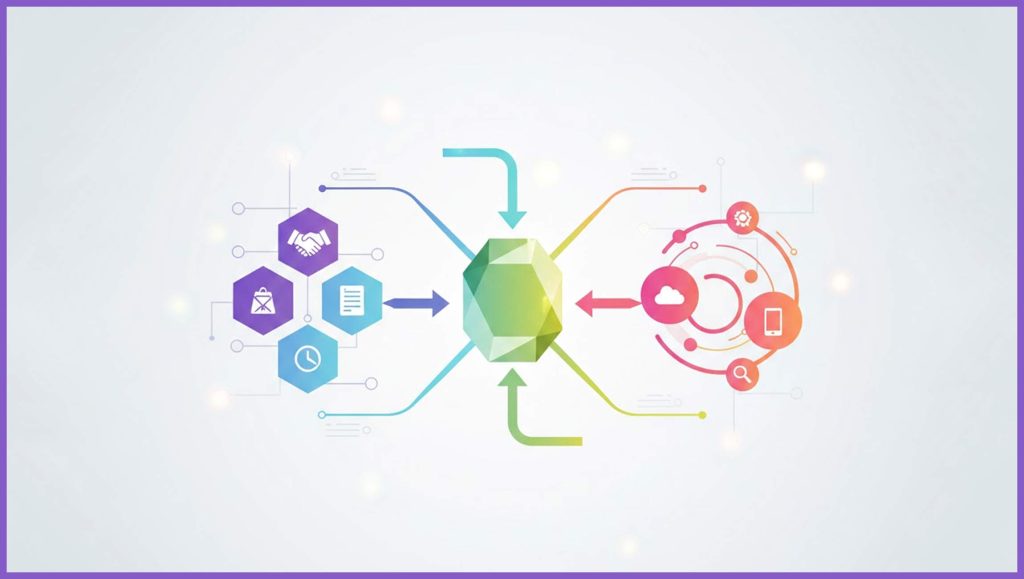
This change is not just an idea. It is being put into action in modern sales technology platforms that bring together CRM, routing, payments, inventory visibility, location analytics, and AI-driven forecasting.
These systems let businesses:
- make sure that sales promises match what the business can actually do
- set up offerings by region in a way that changes
- automate checks for serviceability in real time
- make location a signal for personalization
- consider movement to be a sign of demand
With these features, salestech goes beyond managing the pipeline to making sure that real-world value is delivered. It connects digital promises to real-world actions.
Always-Moving Customers Require Moving Intelligence
Mobility, not being in one place all the time, will define business in the next ten years. Customers will quickly change where they are, what they expect, and where they are. Commerce networks will respond by making their inventory and service models more flexible. Geospatially intelligent salestech connects all of those moving parts.
In an environment where:
- demand is fluid
- service locations are dynamic
- fulfillment networks are hybrid
- risk is spatial
- regulation is region-specific
Geography is no longer background information. It is a predictive insight layer.
Companies that treat it that way will convert faster, disappoint fewer customers, set better prices, and keep more customers over time. People who still think of addresses as administrative data will keep doing business with blind spots, selling to places they can’t serve and making promises they can’t keep.
Therefore, geospatial accuracy has grown from being useful for mapping to being useful for strategic intelligence. Instead of static addresses, salestech platforms now use real-time geospatial data to decide how to route leads, set prices, schedule service, and predict demand. Geography now shows behavior, gives context, and warns of danger. It affects not only where goods go, but also what is sold, when it is available, and how much it costs.
In this new world, companies that only know who their customers are don’t have a competitive edge. It increasingly belongs to those who know where customers are, what their situation is, and how things change from moment to moment—and who can use smart salestech to make sure that revenue operations are in line with these changes.
Geography has changed into insight.
Accuracy as the Foundation of Customer Trust
In a world where real-time commerce sets expectations, accuracy is no longer a “nice to have.” It’s the unspoken agreement between a brand and its customers. Accurate geospatial intelligence is what makes every promise about where something is, when it will arrive, or who will show up. In modern sales technology (S1), that accuracy is what makes things believable. Customers don’t just buy a product or service; they also buy the assurance that what was promised will happen.
Moments of trust failure are very human. A package is sent to the wrong address. A customer misses an appointment with a technician after taking a day off work. An ETA timer counts down with confidence, but then it resets for no reason. Each of these times shows that you can’t trust them. The brand might have the best product in its category, but if its systems can’t find, route, or time things correctly, the experience falls apart. These cracks usually happen because of bad data quality, bad address resolution, or bad location context in salestech systems.
Accuracy is not an idea; it is something that happens in real life. When a service shows up exactly when it was supposed to, or a package is delivered to a hard-to-find address without any problems, trust grows. Trust goes down the first time someone breaks a promise. This is why accuracy and dependability go hand in hand. When accuracy goes up, reliability goes up too. Brand trust grows over time as reliability improves. This equation is becoming more and more important to modern salestech platforms. Precision is no longer just a data point; it’s now a brand asset.
There is also a strong psychological effect at play. Vague promises seem risky, while exact promises seem trustworthy. “Delivery between 2:15 pm and 2:45 pm” shows that you know what you’re doing. “Arriving by the end of the day” feels like a risk. People tie their beliefs to specific things. They see accuracy as a sign of control and operational strength.
When companies use accurate geospatial data to give clear ETAs, specific serviceability answers, or real-time tracking of technicians, they show that they know what they’re doing. Customers start to think, “This business knows what it’s doing.” Not just marketing copy, but also salestech is making that impression more and more.
Being accurate also makes things less emotional. Customers act defensively when they don’t know what’s going on. They call customer service, refresh tracking pages, wait nervously, or make backup plans. Precision takes away that worry. The brand is linked to calmness, predictability, and less mental work. In this way, accuracy is more than just keeping the database clean; it’s also about designing a good customer experience. The more accurate the geospatial information in salestech tools, the easier it is for the customer to do business with the brand.
Finally, accuracy goes from being a topic of operational discussion to being a topic of strategic conversation. It has an effect on loyalty, word-of-mouth, and making money in the long run.
Boards are asking new questions these days, like “How often do we break our promises?” How correct are our locations? How often does our ETA fail? These are not metrics for IT; they are metrics for trust. They also set you apart from your competitors. Two businesses can sell the same item for the same price. The one that delivers on time wins. This is where salestech turns into a trust engine, turning accurate geospatial data into long-lasting brand equity.
How Precision Reduces Friction in Conversions?
Conversion is the money side of trust, and trust is the emotional side. Every step of the buying process is easier when geospatial data is correct. Customers go from wanting to buy to actually buying faster, with fewer stops and starts. Modern salestech systems are getting better at using precision to not only route deliveries, but also to shape demand, price, eligibility, and approval decisions in real time.
Clear ETAs make it more likely that people will finish checking out. Customers often leave their carts because they aren’t sure when their order will arrive. When systems can accurately figure out time windows using precise geospatial signals, buyers feel safe moving forward. “Arrives tomorrow between 10 a.m. and 1 p.m.” changes. “We’ll let you know later” does not. The conversion boost here is real, not just for show.
Geospatial intelligence is what makes that clarity possible. It is organized through salestech workflows that link inventory, routing, carrier capability, and address intelligence.
Answers to serviceability questions are another point of contention. People often ask, “Is service available here?” Can you set it up at my place? Is this area protected? People leave when they get vague answers. Geospatial accuracy allows for binary clarity—yes, no, or yes with conditions.
The more sure the answer is, the more likely the conversion is. Companies now put detailed serviceability logic right into salestech engines so that eligibility is figured out before the user even gets to checkout.
Precision also makes relevance based on proximity work. Offers change when a customer is close to a store, in a certain area, or within a premium delivery radius. “Where” in real time makes “what” and “when” smarter. If a technician is nearby, the installation can happen the same day.
Delivery takes two hours because the warehouse is across town. The platform changes prices, deals, and promises on the fly. This level of contextualization is put into action in salestech (S10), which makes location a real variable in the revenue equation.
Another way to speed up conversions is to cut down on fraud. The system “isn’t sure,” so it turns down a lot of real transactions. Location validation stops real risk while lowering false declines. When the system can check that a device, address, and transaction pattern all match up, more approvals happen.
Customers don’t have to deal with as many annoying rejections. Geospatial intelligence built into salestech decisioning layers helps reduce unnecessary blocks, which leads to more revenue, not more traffic.
Precision also makes the selling organization run more smoothly. Leads are sent to the right area right away. Quotes show the right amount of time it will take to travel, how hard it will be to install, or how far the service will go. Field teams stop making guesses. Everyone is anchored to the same “source of truth” about location, which boosts confidence in sales, operations, and support.
This makes human workflows less confusing, and people convert better when things are less confusing. Companies that put money into geospatial precision in salestech environments find that both productivity and conversion go up.
In short, precision gets rid of friction, and friction stops conversion. Every extra keystroke, every unclear answer, and every uncertain ETA is a hole in the revenue stream. Geospatial accuracy fills in those gaps. It doesn’t just make systems smarter; it also makes customers more likely to buy and more likely to come back. So, conversion isn’t just about price, product, or promotion. It’s also about how well a brand knows where value needs to go.
The same pattern holds true for both trust and conversion: accuracy leads to reliability, which leads to belief, which leads to action. Geospatial accuracy lets brands make promises that people will believe and experiences that people will want to have again. As business becomes more real-time, accuracy stops being a technical quality and starts to be the foundation of growth.
How it affects churn and retention?
-
Churn Often Begins With Broken Location Promises
Price is not usually the first thing that causes churn. It usually starts with being let down. When a delivery fails, the address doesn’t match, the technician “couldn’t find the location,” or the installation is delayed because the serviceability assessment was wrong, these are the times that make people switch. Customers expect exact execution, not rough attempts, in the age of real-time commerce. When geospatial accuracy fails, they decide that the brand is not reliable.
-
If delivery fails, there is an immediate risk of churn
The most obvious example is when delivery fails. If a package that says “out for delivery” doesn’t show up, it’s not just a logistics problem; it’s a broken promise. Customers need to do more, call support, and wait again. This is when churn picks up speed.
In modern salestech systems, missed deliveries are now seen as a sign that a customer will cancel, leave a bad review, or stop subscribing, because data shows that missed deliveries lead to lost revenue.
-
Customers Go to Competitors When Service Isn’t Reliable
Incorrect answers about serviceability are another reason why people leave. When systems say service is available but then change the order, lower the price, or cancel it because of location issues, customers feel betrayed. They quickly look for other options that “actually work at my address.”
Accurate geospatial intelligence inside salestech lowers this risk by making things very clear right at the start of the buying process. Certainty keeps customers coming back. They go somewhere else when they aren’t sure.
Precision Creates Reliable Experiences That Encourage Repeat Usage
High-quality loyalty programs don’t keep customers; consistency does. People build loyalty when they get accurate ETAs that are kept, technician visits that are on time, and deliveries that find even the most complicated addresses. The brain remembers things that are easy. It likes places where the results are easy to guess.
Companies make their services reliable by adding geospatial precision to all of their salestech stacks, such as order management, last-mile dispatch, territory routing, and customer communication. This makes customers naturally want to come back.
From Trust to Loyalty to Lifetime Value
To be loyal, you have to trust. Loyalty is the key to long-term value. This chain is supported by hidden infrastructure that is made up of precise geospatial data. Customers will buy without hesitation when the where and when are right.
They reorder more quickly, use subscription models, and buy more items because they don’t think they’ll be disappointed. Companies that use mature geospatial capabilities in salestech no longer see precision as a technical improvement; they see it as a way to make money for life.
Precision lowers the cost of keeping customers and the burden of support
Churn and retention are also ways to make money. Every wrong location or missed appointment costs money in the form of tickets, refunds, re-routing fees, and appeasement credits.
Every time you intervene, it costs more to keep the customer. Accurate geospatial intelligence makes these events happen a lot less often. It keeps the account while keeping the margin by stopping failure moments. Retention teams now work closely with salestech leaders because location accuracy has become a direct tool in customer success strategies.
Long-Term Account Value Is Built Through Operational Confidence
Customers who buy a lot aren’t always the most profitable. The most profitable customers are the ones who trust the brand enough to rely on it. For utility services, healthcare-at-home, e-commerce subscriptions, and on-demand services to work, people need to trust that the provider will “reach me when it matters.”
Geospatial accuracy shows how reliable something is. Over time, this dependability turns into steady, recurring income that is a part of the customer’s daily life. Companies that win in modern salestech are the ones that turn accuracy into emotional safety.
Revenue Outcomes of Geospatial Precision
-
Precision is Not Cosmetic — It Is Financial
People sometimes talk about geospatial precision as a technical skill, but its real importance is financial. Every exact choice affects how much money comes in. When the system knows exactly where the customer is, what can be done there, and how long it will take to fulfill the order, the business has to make fewer guesses and changes. In enterprise salestech, this means a higher conversion rate, better fulfillment performance, and measurable protection of revenue.
-
Higher Conversion Rates Through Clear Promises
When promises are clearer, conversion goes up. Customers are more likely to finish their purchases when they know exactly when their items will arrive, whether they can install them, and where the service will be. Ambiguity makes people less likely to act; precision makes them more likely to act. Businesses can increase the number of sessions that turn into orders by using geospatial intelligence in salestech to calculate ETAs, show real availability, and tailor offers to customers based on their location. They don’t have to change the price or the product.
-
Lower Failed-Delivery Cost and Return-to-Origin Rates
Deliveries that don’t work out cost a lot. They cause reverse logistics, repacking, refunds, loss of product value, and damage to the company’s reputation. A lot of these failures are caused by bad addresses, unclear geolocation, wrong service areas, and routing problems. As geospatial accuracy gets better, the rate of return to origin goes down. Modern sales technology platforms connect address intelligence, courier capability, and terrain constraints to make sure the first time you get the right route, which saves you money right away.
-
Better Territory Productivity and Sales Efficiency
Better productivity in the field also leads to more money coming in. When territories are drawn with high-resolution geospatial insight, they show how long it really takes to get there, how many people need it, how easy it is to get there, and how complicated the service is. Sales efforts are more focused, technicians are used more efficiently, and appointment windows match the actual geography instead of rough sketches.
The evolution of territory management in salestech has gone from static maps to dynamic, data-driven optimization. The result is more money for each representative or route.
The Compound Effect: Precision Prevents Revenue Leakage
When taken alone, small mistakes don’t seem like big problems: a wrong address, a late visit, or an unclear ETA. But when they happen a lot, they turn into systemic revenue loss. Every wrong interaction leads to more returns, rework, cancellations, discounts, and churn.
Geospatial accuracy has the opposite effect of compounding. Every right delivery, right answer to the eligibility question, and right appointment stops a loss from happening in the future. This is why accuracy is now seen as a way to make money in enterprise salestech strategy.
-
Precision Unlocks New Revenue Models
When businesses trust their geospatial intelligence, they can offer new services like ultra-fast delivery zones, premium same-day windows, dynamic pricing based on distance, hyper-local promotions, and services that are available on demand in real time. In a world that was close to being real, these models were not possible.
They need to know not only where their customers are, but also how likely it is that they can reach them. Geospatial accuracy doesn’t just keep money coming in; it also brings in new money.
Accuracy Becomes a Way to Grow
The signal is clear across churn, retention, conversion, cost avoidance, and productivity: accuracy leads to better financial results. What started out as a GIS or logistics job has now moved to the revenue table. More and more, executives want to know how accurate our location data is. How many promises do we break? What does it cost to be imprecise?
The answer is right there in the revenue performance. As commerce becomes real-time and aware of where it is, geospatial precision, which is built into salestech, becomes a key growth strategy instead of just an extra.
Hence, precision stops failure, builds trust, boosts conversion, cuts churn, and adds value over time. Companies that make geospatial accuracy a key part of their sales strategy will own the future. This is not because they sell different products, but because they deliver those products with trust, reliability, and confidence.
Using Geospatial Precision as a Sales Tech Metric
a) From “We Have Maps” to “We Can Prove Accuracy”
Most businesses think they are already right because they “use maps.” But maps and measured geospatial precision are not the same thing. Real accuracy isn’t something you can see; it’s something you can check in the real world. As business becomes more real-time, mobile, hyper-local, and service-based, accuracy needs to go from being an assumption to a measurable metric built into salestech systems and dashboards.
The change in maturity is simple but big: businesses need to stop asking, “Do we plot addresses?” and start asking, “How often are our promises based on location correct?”
b) What Should Be Measured?
To take geospatial precision seriously, businesses need to measure it in the same way they measure conversion or churn. Some important business metrics are:
- Address match rates: How often does the system automatically recognize a customer’s address without needing to be fixed?
- Quality of geocode: What percentage of locations point to a roof or entrance instead of a vague center?
- Percentage of accurate ETAs: Out of all the ETAs given, how many arrived within the promised time frame?
- First-attempt success rate: How often can delivery or service be finished without having to change the route or schedule?
These are no longer KPIs for the back office. In modern salestech reporting, they are now next to revenue, CAC, and NPS.
Measuring What Matters: From the Accuracy of Maps to the Accuracy of Revenue
Traditional measures of accuracy are based on how technically correct something is, like how precise the coordinates are, how high the mapping resolution is, or how well the algorithm fits. But that lens is too small. What really matters is revenue-attributed location accuracy, or how well accuracy leads to completed orders, successful first visits, completed installations, and on-time service.
This change shows a bigger truth: geospatial precision isn’t just a GIS function; it’s also a way to make money in salestech. When you measure it right, location accuracy is directly related to margin, repeat use, and lifetime value.
a) Accurate ETA Percentage: The Trust Barometer
Accurate ETA percentage may be the most psychologically powerful of all the precision metrics. The first time a customer sees a promise, they emotionally anchor to it. A delivery window from 4 to 6 p.m. helps everyone stay on the same page, plan their calendars, and make a mental commitment. People lose trust if the outcome doesn’t happen within that time frame, even if the delay is small.
Companies that deeply integrate ETA performance into salestech analytics can:
- guess how likely it is that someone will leave
- campaigns to keep customers
- change the routing
- maximize capacity distribution
This is why ETA accuracy is changing from a key performance indicator (KPI) for operations to a key revenue signal.
b) First-Attempt Success Rate: The Secret to Higher Margins
Every time you fail the first time, it costs you more: sending it back, getting more help, the risk of a refund, and bad word of mouth. So, the first-attempt success rate works as both a measure of accuracy and a sign of margin.
Companies that use geospatial intelligence in all of their salestech have a better chance of success on the first try because:
- addresses are checked early
- serviceability is checked correctly
- It’s possible for technicians to travel.
- mapped out ahead of time are access limits
The financial effect is direct: fewer failures mean lower costs of doing business and higher revenue.
Introducing a New Metric: Geospatial Precision ROI
Geospatial Precision ROI is the one metric that the industry needs to fully grow up.
This number answers a simple question: “For every dollar spent on geospatial intelligence, how much did it protect or grow revenue?”
Geospatial Precision ROI includes:
- money saved by fewer delivery failures
- money made from more conversions
- protecting the margin by having fewer returns and reschedules
- improvements in retention linked to trust and dependability
Companies that include this in their salestech performance dashboards don’t argue about whether accuracy is important anymore; they show how much money it makes.
Precision as a Topic of Discussion in the Boardroom
The story has changed: Accuracy used to be something talked about in the back office. Now it’s on the agenda for the boardroom.
Executives know that mistakes hurt brand trust, make people leave, and raise costs of doing business. As businesses turn into real-time service engines, measured geospatial accuracy becomes a core commercial capability in enterprise salestech instead of just an optional infrastructure.
Future Direction: Precision as a Competitive Differentiator From Operational Detail to Strategic Weapon
Geospatial accuracy is becoming more valuable. It’s not just about helping a driver find an address or a technician plan a route anymore. It’s also becoming a way for companies to stand out from the competition and win markets. In modern salestech, accuracy is becoming a strategy that affects pricing, capacity planning, territory design, personalization, and risk management.
a) Precision as a Sales Enablement Asset
Sales teams are competing more and more on how reliable they are. When they can say with confidence:
- “Yes, we do service that exact area.”
- “Yes, we can deliver today in that small area.”
- “Yes, your building can have it installed.”
conversion goes up a lot. So, precision becomes a sales tool that gives salespeople real promises instead of rough estimates. The most advanced companies connect this feature directly to salestech quote tools and service checkers.
b) Precision as a Factor in Pricing Strategy
Pricing is no longer just based on costs plus a profit or comparing prices to those of competitors. It is becoming geo-contextual. Real-time accuracy lets you:
- distance-based pricing
- congestion-aware pricing
- hyper-local premium services
- differentiated same-day fees
These models can’t work without accuracy. High-fidelity geospatial intelligence makes pricing more fair and more profitable. Precision is more than just a routing tool; it’s also a revenue strategy. This is a clear sign of its rise in enterprise salestech.
c) Precision as Risk Mitigation Layer
Geospatial accuracy also helps keep you safe. It cuts down on fraud by checking the location, makes sure that regulated deliveries are made, and keeps workers safe by giving them better route information. When businesses know exactly where things happen, they know how much risk they are taking. So, precision becomes a layer of risk management along with checking identities and credit scores.
Market Shift: Not More Data — Better-Located Data
The future isn’t about getting more raw data. It’s about data that is better located—data that is tied to real-world places, movements, and accessibility issues.
Those who simply collect addresses will not win. Instead, those who:
- maintain continuously updated geospatial records
- incorporate movement and temporal context
- unify customer, asset, and service location data
- operationalize precision across departments
This is the next step in the evolution of salestech: platforms that make “where” a key part of every decision, not just something to think about later.
Making Precision Work at Scale
Having accurate data isn’t what gives you the biggest competitive edge; it’s being able to use it on a large scale. That means accuracy flowing into:
- lead qualification
- cart checkout
- territory planning
- dispatch optimization
- retention modeling
- fraud detection
- lifecycle pricing
When accuracy is built into everything, it stops being a feature and becomes the way things work.
The Future: Precision as a Brand Name
In the next few years, brands will set themselves apart not only by what they sell, but also by how well they deliver and service it. Customers will be drawn to businesses that always keep their promises. Geospatial accuracy will be the hidden support for that trust.
Geospatial accuracy has gone from being a technical improvement to a strategic need. When used smartly and measured carefully with salestech, it boosts conversion, lowers failure, protects margin, boosts retention, and opens up completely new business models. Companies that see precision as a core principle of how they sell, serve, and grow will be the ones that win the competitive edge.
Final Thoughts
The basic idea behind the argument is simple: accuracy builds trust, trust leads to conversion, and conversion affects revenue and lifetime value. Companies in all kinds of fields are learning that the most important thing that sets them apart is not just having better products or more marketing, but also keeping promises in the real world.
Customers have fewer problems, fewer failures, and fewer annoying surprises when geospatial accuracy is high. That trust builds up slowly into loyalty. The power of this chain comes from its simplicity: accurate information leads to trustworthy promises, trustworthy promises lead to trust, and trust leads to business growth.
In this situation, salestech is going through a big change. It is changing from systems that only keep track of leads, quotes, and pipelines to platforms that make sure things happen in the real world. Precision is becoming the link between what people want to do online and what they actually do in the real world.
Businesses are realizing that every wrong ETA, every “service not actually available here,” every technician who goes to the wrong place, and every failed delivery is not just a problem with the way things work; it’s a broken promise. Broken promises hurt a brand’s reputation much faster than any discount or campaign can fix it.
So, conversion is no longer just about persuasive messages or well-designed funnels. Confidence is becoming more and more important. Customers will buy something if they think the promise made to them can be kept. They come back when their belief is proven by experience. They grow their relationship when fulfillment is always right, easy to predict, and respectful of their time and situation. Precision is the quiet force that drives that emotional and economic loop, and modern salestech is the system that makes that precision work on a large scale.
As companies use geospatial intelligence more, they stop thinking of revenue as just the result of selling more and start thinking of it as the result of keeping more of what they already sold, which means fewer failures, cancellations, and service disappointments. When customers know they can count on a brand to not only offer the right thing, but also deliver it in the right place, at the right time, and in the right way, the brand’s lifetime value goes up.
In the end, the most important change is that salestech is no longer just about what is sold; it is also about how reliably it can be delivered, routed, and fulfilled. The people who will win in the next era will not only be those who know the most about their customers, but also those who can put that knowledge into action in the real world. In a world where commerce happens in real time and customers are always on the move, accuracy is no longer just a nice-to-have; it’s the key to trust, conversion, revenue, and long-term competitive advantage.
Read More: The Psychology Of Sales Enablement: How Tools Are Designed To Empower And Motivate Sales Reps?