For the past ten years or so, SalesTech adoption has followed a basic, almost casual trend. A sales manager found a problem that was slowing things down. A CRO felt like they had to hit a tough quarter. A new technology promised to help you reach more people, get better insights, or get more people to buy.
Someone took out a business card, signed up for a SaaS subscription, and by the end of the day, the team was “moving faster.” This methodology, with no friction, sped up innovation across the board and enabled sales teams to adapt faster than ever before. In the beginning, this way of doing things seemed not only okay, but also vital.
Decentralization was a big part of this time in salestech. Individual teams chose tools that fixed problems right away, like email automation, call recording, pipeline forecasting, and lead enrichment, frequently without getting input from the rest of the organization. CROs were rewarded for speed, not for following rules. If a tool made people more productive or helped them complete deals faster, the decision almost always stayed with the revenue leader. People thought that sales tools were tactical tools, not strategic infrastructure.
This practice grew quickly as the price of SaaS went down and onboarding became self-service. The shadow sales stack came about as a growing set of tools that work outside of conventional IT, legal, or security oversight. Different groups used different platforms. Ad hoc integrations or browser extensions let data move between platforms. Across dozens of vendors, many of which the business couldn’t see, customer chats, prospect data, and deal intelligence were collected, analyzed, and stored.
This fragmentation often went unnoticed in small and mid-sized businesses. But the model starts to fall apart when you look at it on a large scale. Modern salestech is no longer just about getting things done; it’s also the first line of defense for the company’s most sensitive data. Sales tools now have access to client records, contracts, pricing conversations, call transcripts, and behavioral signs. When these systems run without rules, they create blind spots that security teams can’t identify and risks that legal teams can’t fix.
The effects are no longer just ideas. Unauthorized tools might cause data leaks by integrating incorrectly, not being clear about where data is stored, or using AI models that are not clear about how they were trained on customer chats. When tools are used informally, it’s easy to break the rules on consent, recording, and keeping data. What used to seem like a harmless way to get more done can suddenly turn into a risk of breaking the law or hurting your reputation. In this setting, using salestech is less about speed and more about trust.
The growth of AI has made these threats worse. AI-powered sales tools routinely take in and analyze huge amounts of unstructured data. This makes it tougher to keep track of where information is going and how it is being used. Companies lose control over how their data is processed, shared, or learned from when there is no central monitoring. The instruments that were meant to speed up income can gradually weaken the protections that businesses have in place.
The main point is clear: speed without rules is no longer okay. In a world where salestech is more than just an optional tool, the old “credit card SaaS” way of thinking won’t work. Organizations need to rethink how they analyze, approve, and regulate the technologies that connect their teams with their consumers as sales tools get more powerful and intrusive.
Why a Sales Manager Can’t Just “Buy a Tool” Anymore?
For a long time, people thought that SaaS democratization was a big step forward for sales teams. Cloud-based technologies made buying easier, lessened the need for IT, and gave sales managers the freedom to try new things in order to improve performance. There wasn’t much reason not to try a new platform if it offered better outreach, cleaner pipelines, or smarter forecasts. This independence sparked quick changes in salestech, giving teams the power to move faster than ever before.
But the same dynamics that made SaaS available have run into the reality of business responsibility. As sales teams grew and more client contacts happened online, the technologies they utilized changed from simple productivity tools to systems of record. What used to be written down in spreadsheets or CRM notes is now automatically documented—calls are logged, emails are evaluated, deals are rated, and habits are tracked. The ease of adoption now has effects that go well beyond the sales floor.
-
SaaS Democratization vs. Enterprise Responsibility
SaaS promised freedom. Sales executives could fix their own problems without having to wait for protracted approval processes. But businesses have to deal with a distinct set of problems. Centralized monitoring is needed for all of these things: following the rules, keeping data safe, meeting contractual responsibilities, and protecting your brand. When sales managers use tools on their own, they typically skip the checks that are meant to keep the whole company safe.
In today’s sales technology, freedom without responsibility causes problems. A tool that helps one team close transactions faster could put the organization at risk of data breaches or breaking the law. The “just buy a tool” kind of thinking doesn’t often provide the consistency, visibility, and control that enterprise responsibility needs.
-
Data Everywhere: The New Sales Reality
Sales systems today constantly receive customer data, prospect data, and conversation data. Transcribing calls, parsing emails, and adding to meeting notes all happen automatically. These data streams are not set in stone; they are looked at, put together, and exchanged between platforms. Every extra tool makes it easier for people to get to, store, or disclose private information.
In this setting, salestech is no longer on the edge. It has to do with pricing talks, contract talks, and important accounts. A single unauthorized vendor can see thousands of client interactions, and the rules about who owns the data and how long it can be kept are sometimes unclear. A sales manager used to make decisions on a local level, but now it’s a problem for the whole company.
-
AI-Powered Tools and Inference Risk
The rise of AI has made things much more risky. AI-powered sales tools do more than just store data; they also guess what people want, guess how they will act, and suggest actions. These features make things run more smoothly, but they also add additional risks. Models trained on private discussions can find insights that were never directly given, making it hard to tell the difference between analysis and exposure.
As AI becomes more common in sales tech, businesses need to think about not only what data they collect, but also what they might learn from it. Inference risk occurs when insights show more than they were meant to. This presents legal and ethical problems that most individual purchasers can’t handle.
Vendor Access as Enterprise Risk
Adding a new tool to the sales stack gives a new third-party access to important systems. The way a business handles data, its security methods, and its AI governance structures all add to the company’s own risk posture. When tools are used informally, these things are generally not looked at.
This lack of control can be expensive in regulated industries or global companies. A breach or misuse of a sales tool is not seen as a “sales problem”; it is seen as a failure of the whole business. Legal, security, and IT teams are paying more attention to salestech buying decisions, not because they slow down innovation, but because they keep it safe.
-
From Productivity Software to Infrastructure
There’s no doubt about the change. What used to be simple productivity software is now the backbone of the system. Sales systems determine how data gets into the company, how choices are made, and how customers interact with the brand. In this world, no one manager can “just buy a tool” anymore.
Shared governance is the key to the future of salestech adoption. Speed is still important, but it needs to be matched with prudence. As sales technology becomes more important, businesses need to treat it like any other system that determines how they do business, compete, and grow.
SalesTech as the Gateway to Business Data
For a long time, sales tools were seen as separate systems that helped get things done but not very close to the company’s most sensitive data flows. That idea is no longer true. Modern salestech platforms are now the first thing that external buyers see when they come to a business.
They are the first point of interaction between buyers and internal systems. Sales interactions are becoming more and more digital, automated, and AI-assisted. The tools that sales teams use are no longer merely software that helps them do their jobs; they are also an important data infrastructure.
Almost every key system of record is affected by today’s salestech. Customer relationship management software keeps track of complete account histories and pipeline information. Email and messaging systems take in private messages from potential customers and clients. Platforms for call recording and conversation intelligence keep transcripts that often include talks about prices, parameters of a contract, and strategic information. Buyer intent platforms keep an eye on behavioral signals from websites and third-party data sources, while contract and proposal tools take care of legally binding paperwork. These technologies work together to create a complex web of data that starts at the point of sale.
The most important difference is where data initially comes into the company. For many businesses, salestech is now the first place where they take in information about customers and prospects. A sales tool, sometimes an AI model that listens to, transcribes, and interprets conversations in real time, often captures data before it gets to core ERP, finance, or analytics systems. This means that sales platforms are the first and frequently least regulated touchpoint in the data lifecycle.
Because of this, IT and legal teams are getting involved early and more strongly. They don’t only respond to hazards after tools are put in place; they are participating in the evaluation process. It’s important to note that their job isn’t to hold down sales teams; it’s to act as “bouncers” at the door, deciding what data may come in, how it can be processed, and where it can go. This change shows that people are starting to realize that decisions about salestech are just as important as decisions about cloud infrastructure, identity management, or data security architecture.
As AI becomes more common in sales operations, the stakes are very high. AI-powered sales technology solutions can figure out what someone wants, guess what will happen, and suggest what to do based on a lot of unstructured data. This makes people far more productive, but it also makes them more vulnerable. Third-party models may process sensitive information, store it in places you wouldn’t expect, or use it to train algorithms in ways that are hard to check. If there isn’t clear governance, what starts as a way to improve efficiency might rapidly turn into a compliance problem.
This is why judgments about buying salestech are starting to look a lot like those about security architecture. Businesses need to look at how technologies verify users, encrypt data, regulate access, and follow local data protection laws. They need to know how data moves between systems, who owns it, and how long it stays there. These questions cannot be answered by a sales manager alone, and they shouldn’t be expected to.
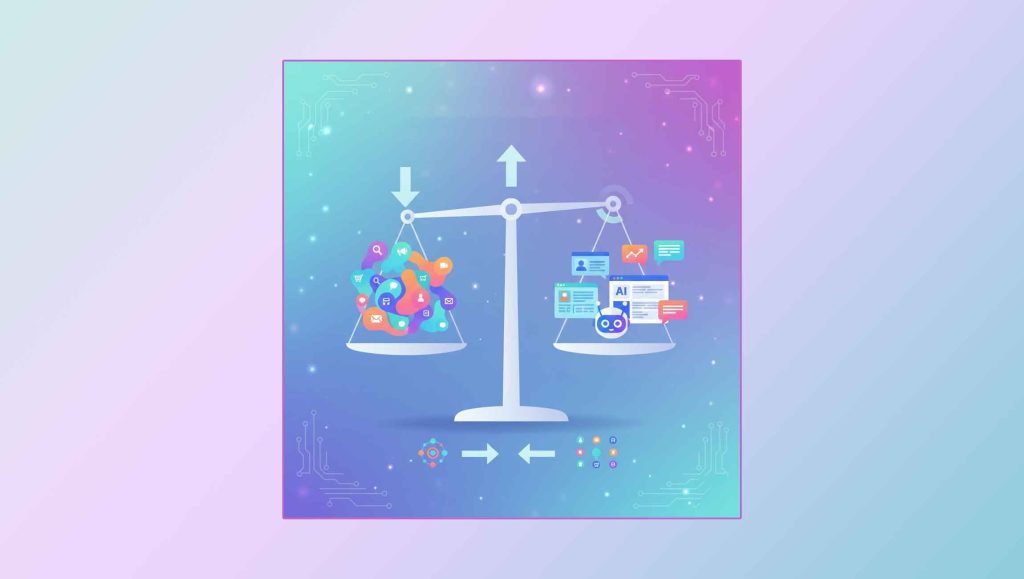
At the core of this change is a basic conflict: safety vs productivity. Sales teams are always under pressure to move quickly, connect with buyers better, and close sales more quickly. At the same time, businesses need to keep their customers’ trust, their intellectual property, and their standing with the law. Modern salestech is right in the middle of these two competing goals, which means that businesses have to find a way to balance speed with control.
Understanding salestech as the front door to business data changes the whole discourse about adoption. It’s not only a matter of whether a technology helps salespeople do their jobs better; it’s also a matter of whether it fits with the company’s overall data governance and risk posture. Companies that get this change can build sales systems that are both effective and responsible. Those that don’t may find that their biggest data weaknesses are not in the back office, but right at the start of the client relationship.
The Tension Between Sales Productivity and Enterprise Risk
Modern revenue companies are being tugged in two different directions. On one side, there is a constant push to grow, with faster pipelines, shorter sales cycles, and higher conversion rates. On the other hand, there is an increasing need to preserve business data, customer trust, and compliance with the law. This conflict is at the heart of salestech, where tools that help people sell faster are simultaneously becoming huge sources of danger.
Growth Pressure on CROs and Revenue Leaders
People mostly judge Chief Revenue Officers by their results, like bookings, pipeline speed, and growth from one year to the next. To get these results, CROs are using more and more salestech platforms that claim to boost productivity through automation, intelligence, and scale. In very competitive markets, AI-driven prospecting, conversation analysis, forecasting, and deal coaching all have great benefits.
The issue isn’t intent; it’s urgency. When money is short and deadlines are coming up, speed generally beats caution. CROs are pushed to swiftly deploy tools, test them thoroughly, and constantly improve them. In this setting, governance can feel more like a problem than a solution. Every extra step in the review process could slow down adoption, push back the effect, and ultimately cause you to fail your revenue goals.
The Counterpressure on Legal and IT Teams
Revenue directors want things to move quickly, but legal and IT departments have completely different goals. Their job is to stop breaches, keep the organization from getting fined by regulators, and defend its brand. From their point of view, salestech platforms are no longer safe instruments for getting things done; they are high-risk systems that take in a lot of sensitive data.
Sales tools now handle client conversations, pricing talks, call recordings, and behavioral signals that are subject to privacy, data protection, and industry-specific rules. A single improper integration or unclear policy on how to use data can put you at risk in more than one place. Because of this, legal and IT leaders have to look closely at vendors, data flows, and AI models in ways that sales teams might find too much or get in the way.
AI Features Escalating Compliance Complexity
The emergence of AI has made things a lot more dangerous. AI-powered sales technology capabilities like call recording, real-time transcription, intent recognition, enrichment, and predictive scoring all need a lot of personal and business data to work. These features often make it hard to tell the difference between enabling and spying, which raises difficult problems about consent, transparency, and data retention.
For instance, in some places, you may need to get specific permission to record sales calls. Using third-party sources to add to prospect data raises problems about how legal it is to acquire data. AI-driven conversation analysis can mistakenly reveal sensitive information or create inferred data that is hard to control. Every new feature makes compliance more difficult, even while it promises to make work easier.
Why Faster and Safer Feel Misaligned?
Speed and safety seem to be at odds with each other at first appearance. Sales teams see governance as a delay, while legal teams see quick deployment as dangerous. Organizational silos make this apparent misalignment worse because salestech decisions are made in isolation, and risks are only dealt with after problems arise.
But the truth is that you can’t have faster and safer at the same time. In the long run, productivity advantages that come at the cost of trust, compliance, or data security are not worth it. A single event, whether a breach, regulatory action, or public outcry, can wipe out years of growth and permanently hurt consumer relationships.
Reframing the Tension as a Shared Responsibility
The way to move forward is to see the tension between productivity and protection as a shared obligation instead of a battle with no winners. When judging salestech platforms, you should not only look at how well they make money, but also how well they fit within the rules and regulations of the business. CROs, legal teams, and IT leaders need to be able to talk about trade-offs, risks, and protections in the same way.
This means working together earlier, having clearer rules, and realizing that governance is not an enemy of sustainable growth, but a way to make it happen. When security, compliance, and data ethics are built into the adoption of salestech from the start, businesses can go forward with confidence instead of doubt.
The Inescapable Reality
The relationship between sales efficiency and enterprise risk is not a fleeting phase; it is an inherent characteristic of contemporary selling. As salestech gets stronger and more important to how businesses run, it costs more and more to ignore this tension. Companies that do well will be those that stop having to choose between speed and safety and instead build technologies that provide them both.
The Governance Quad: Who Makes the Decisions About SalesTech Now?
For most of its history, the choice to use new sales technologies was firmly in the hands of revenue leadership. Sales managers tried out different things. CROs gave the green light to budgeting. The main thing that people looked at when judging tools was how well they helped teams sell quickly or close more sales.
That time is definitely over. As salestech has gone from being productivity software to becoming a key part of a business’s infrastructure, the power to approve, manage, and use it has been spread out across many different departments.
No one executive “owns” salestech today. Instead, the CRO, RevOps, Legal & Compliance, and IT & Security teams are making more and more decisions. They all have different goals, risk levels, and definitions of success. To understand how modern sales technology decisions are really made, you need to know this quad and the conflicts that exist inside it.
a) The CRO: Growth Targets and Pipeline Efficiency
The Chief Revenue Officer is still the most well-known supporter of salestech projects. CROs are in charge of making sure that growth, pipeline speed, and prediction accuracy are all good. From their point of view, sales technology is a tool that can help sellers get more done, speed up deal cycles, and find new ways to make money.
CROs look at salestech from a performance point of view. Does it make things happen? Does it help you win more? Does it help representatives make better decisions on what to do first or close deals faster? Adoption is very important because no tool gives you a return on investment if sellers don’t use it. Because of this, CROs tend to like systems that are easy to use and function well with their regular tasks.
But CRO influence alone isn’t enough anymore. It is still important to know how revenue will affect things, but it is no longer the most important thing. Now, urgency driven by growth must coexist with rules set by governance, regulation, and long-term risk management.
b) RevOps: Keeping data safe and making systems bigger
Revenue Operations has become one of the most important voices in making decisions about salestech. The RevOps teams are in charge of making sure that the systems work the same way for sales, marketing, and customer success, and that the data is accurate. They can see for themselves how tools that don’t work together can cause problems with reporting, reconciliation, and operations.
From the point of view of RevOps, salestech needs to be part of a well-designed system. Questions are about how deep the integration goes, how the data models function together, how well the workflows work together, and how consistent the reports are. People often think that a tool that makes one team more productive but splits apart data is a bad thing overall.
Scale is another thing that RevOps directors are worried about. What works for 50 people might not work for 500. Downstream turmoil is caused by manual workarounds, fragile integrations, and inconsistent data definitions. Because of this, RevOps typically becomes the gatekeeper, turning CRO goals into processes that can truly support growth.
c) Legal & Compliance: Data Privacy and Regulatory Exposure
Legal and compliance teams are now very important to salestech governance, especially as data privacy laws spread around the world. Sales tools now handle personal information, record conversations, and figure out what people want to do. These are all things that are required by law under GDPR, CCPA, consent legislation, and rules that are specific to certain industries.
For Legal, salestech choices are about visibility. Where do you keep data? Who can get in? Is consent recorded correctly? Are recordings legal in your area? How long does data stay? What happens if a vendor is hacked or bought?
These questions sometimes come up late in the purchase process, which can cause problems when tools have already been tested or used informally. More and more, companies are moving Legal up the chain, making compliance review a must instead of an afterthought.
d) IT & Security: Access, Identity, and Vendor Risk
The IT and security teams make up the last part of the governance quad. Their job is to keep corporate systems safe, control who has access to them, and lower the risk of working with vendors. Modern sales technology platforms frequently need a lot of rights, like access to CRM information, email systems, calendars, and occasionally even contracts and invoicing data.
Security executives look at tools from a zero-trust point of view. How do you know who is trying to get in? What rights do you need? How is data protected? What happens when someone quits? Does the vendor meet your company’s security criteria and certifications?
IT also thinks about how easy it will be to keep things running in the long run. Can the tool work with modifications to the infrastructure? Does it add to technological debt? Will it still work as a system change? These factors make salestech decisions as important as choices about infrastructure architecture.
e) Key Insight: No Single Function Owns SalesTech Anymore
This is the most important change: sales no longer owns salestech. A coalition runs it. Negotiation between growth, operations, compliance, and security leads to decisions. Vendors that only grasp one side of this equation are having a harder and harder time, while those that design for all four have a clear edge.
The Morality of “Passive Surveillance” in SalesTech
Sales technology has become smarter and more aware as it has expanded. Conversation intelligence, call recording, activity tracking, and behavioral analytics now run all the time in the background. A lot of this data collecting is done passively, meaning it is always on, always listening, and always logging.
This change makes us think about a basic moral question: should we be able to record everything?
a) Always-On Monitoring Is Now the Default
Most modern salestech platforms automatically record sales calls, write down what was said, and look for trends in the language used for coaching, forecasting, or finding risks. Email tools keep track of clicks and openings. Buyer intent platforms keep an eye on how people act online across different channels.
This visibility promises accountability and optimization for sales leaders. For businesses, it gives them insights based on data at scale. But it makes both salespeople and prospects feel like they’re always being watched, which is often without real choice or knowledge.
b) Sales Reps Under Continuous Observation
More and more, the tools that are supposed to help sales reps are keeping an eye on them. You can keep track of, score, and look at every call, email, and conversation. This is portrayed as enabling, but it puts pressure on people and, in some cultures, makes them anxious.
Organizations need to think about how they use salestech data inside the company. Is it for spying or coaching? Punishment or improvement? Being open is important. When reps feel like they’re being watched instead of helped, trust goes down, and adoption suffers.
c) Prospects as Unwitting Data Subjects
Prospects are also a part of this. A lot of people don’t know that their talks are being recorded, looked at by AI, or kept forever. Disclosures may meet legal requirements, but ethical obligation goes above and beyond.
As salestech collects more data about people’s behavior and environment, businesses need to think about limits. Just because you can guess what the data means doesn’t imply you should act on it. Not only does ethical design demand skill, but it also requires restraint.
d) Cultural and Legal Risks of Passive Surveillance
There are a lot of different cultural conventions about privacy. What is okay in one place may not be okay in another. Always-on sales tech solutions could go against what people in the area expect, which could hurt brand trust even if they are technically correct.
Legal risk is simply one element of the picture. Reputational harm from perceived spying can be much more expensive. As people become more aware, both customers and staff are asking who has access to their data and how it is utilized.
Ethical Design Becomes a Buying Criterion
There is a big change happening: ethical design is now a factor in choosing salestech. Customers are asking sellers how they acquire data, how long they keep it, and how they make sure it is open. Tools that automatically harvest the most data without any rules are raising more and more red flags.
Platforms that don’t just check off ethics as a regulatory requirement but also as a core design philosophy will be the ones that do well in the future.
The Risk of Standalone Tools
For a long time, integration was seen as a way to make things easier. Nice-to-have connectors made tools easier to use, but they didn’t always make a big difference. That way of thinking doesn’t work anymore. Integration is now a legal requirement in the age of governance and compliance.
a) Deep Integration as Risk Reduction
Standalone salestech tools make data silos. It is tougher to manage, audit, and delete data that has been transferred into parallel systems. When authorities inquire where customer data is, diverse systems make it hard to give an explanation.
Disconnected tools also make it more likely that data will be incorrect, that people will get into systems without permission, and that shadow workflows will happen. Every silo could be a place where compliance is lacking.
b) Deep integration to lower risk
Deep integration with CRM and ERP systems puts all control in one place. When salestech works as an extension of systems of record instead of a separate world, it is possible to have governance. You can always use permissions, retention policies, and audit logs.
Integration cuts down on redundancy, keeps data from spreading out of control, and makes it easier to report compliance. It turns sales tools from things that make risks worse into parts of corporate architecture that can be managed.
c) Accountability, Traceability, and Auditability
Regulators are asking for auditability more and more. Who looked at the data? When? What is the reason? These queries can be answered by integrated salestech systems. Standalone tools often can’t do this.
Traceability is also important inside the company. Organizations need to know where data went and why when anything goes wrong. Integration doesn’t just make things more efficient; it also makes people responsible.
d) Integration as a Sign of Business Readiness
In the end, integration shows that you have grown up. Companies that spend money on deep, well-governed integrations show that they know how businesses work. People who use shallow connectors show that they are focused on tactics.
Integration is no longer an option as salestech gets better. It shows that a platform is made not only to sell more quickly, but also to run well at a large scale.
The changes in salestech are similar to those in corporate technology as a whole: from tools to systems, from speed to stewardship, and from ownership to governance. Institutions now make choices that used to be made by people. Ethics, integration, and shared accountability are no longer just ideas; they are now important aspects.
Companies that get this change will make sales technology plans that find the right mix between growth and trust. People who don’t may find out that the main danger was never going too slowly, but going too fast without authorization.
Final Thoughts
The modern revenue organization is entering a new phase—one where growth is no longer driven by unchecked speed, but by responsibility, resilience, and trust. Salestech has evolved from a collection of productivity tools into a governed growth system that sits at the core of how enterprises engage customers, manage data, and scale revenue.
This shift marks the emergence of what can best be described as the responsible growth engine.
In this new model, speed is not achieved by bypassing controls, but by designing them in from the start. When governance, security, and compliance are embedded into salestech architectures, organizations move faster with confidence.
Sales teams no longer need to pause or backtrack when questions arise about data usage, consent, or system risk. Instead, trust becomes an accelerant. Clear rules, transparent data flows, and auditable processes remove uncertainty and enable sustained execution.
Enterprises that recognize this reality are rethinking how they build revenue engines. Rather than optimizing for short-term gains, they are investing in salestech platforms that support long-term scalability and regulatory alignment. These organizations understand that revenue growth and compliance are not opposing forces.
On the contrary, in highly regulated and data-sensitive environments, compliance is what makes growth durable. Systems that protect customer data, respect privacy, and withstand scrutiny are the ones that can scale globally without friction.
This evolution also reshapes the vendor landscape. The most successful salestech providers of the future will not win by promising the most features or the fastest deployment. They will win by proving they can be trusted. Compliance, auditability, and seamless integration into existing enterprise systems will become primary differentiators. Buyers will increasingly ask not just what a platform can do, but how safely, transparently, and sustainably it does it.
Ultimately, the next era of enterprise growth will be defined by governance as much as innovation. Organizations that treat salestech as a responsible growth engine—rather than a shortcut around controls—will build stronger customer relationships, reduce risk, and create revenue systems that endure. In this environment, governance is no longer a constraint on growth. It is the foundation that makes growth possible.
Read More: The Psychology Of Sales Enablement: How Tools Are Designed To Empower And Motivate Sales Reps?