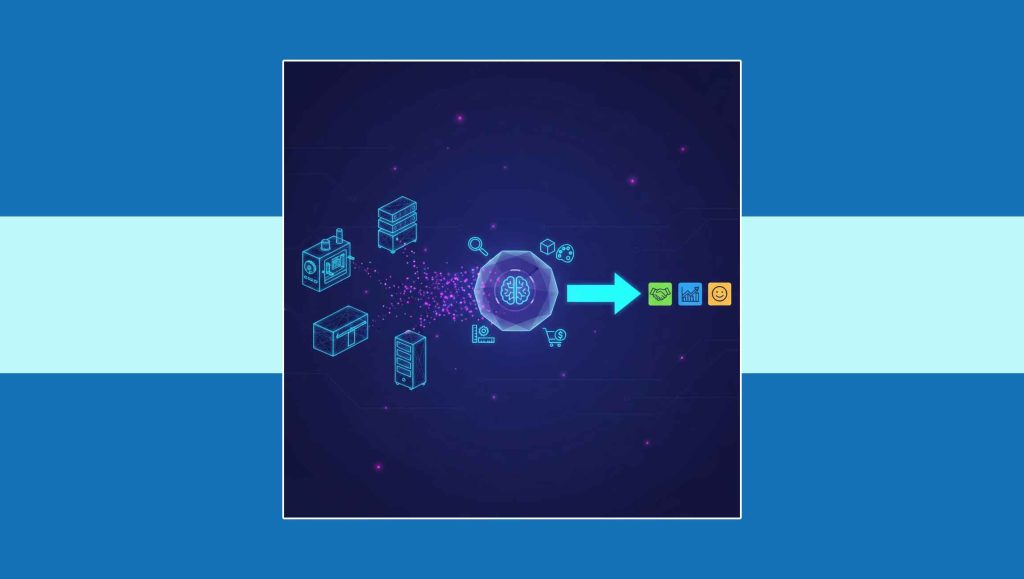

New platform combines long-term offensive memory with metacognitive reasoning governance to reduce false positives and deliver audit-ready, evidence-based security assurance
Scantist, a leader in Application and AI Supply Chain Security, introduced PAIStrike, an enterprise-grade autonomous penetration testing platform engineered to redefine how organizations validate real-world security risk, to the US market at RSAC Conference 2026.
Security validation must evolve beyond checklist scanning and static automation. PAIStrike was designed to think and operate like an experienced human red team consultant at machine scale.
Purpose-built for modern, fast-moving enterprises, PAIStrike introduces a new category of security validation: autonomous agentic penetration testing. Unlike traditional rule-based scanners or AI-enhanced workflow orchestration tools, PAIStrike operates as a coordinated multi-agent system capable of independently analyzing targets, planning multi-step attack strategies, executing exploits, reflecting on outcomes, and dynamically adapting tactics in real time.
Read More: SalesTechStar Interview with Mark Walker, CEO at Nue
At the core of PAIStrike’s architecture are two new foundational capabilities that differentiate it from conventional solutions:
- Long-Term Memory – A persistent offensive intelligence layer that retains discovered assets, exploit paths, evidence artifacts, and prior reasoning chains across engagements. This enables contextual learning, cumulative intelligence, and improved exploit realism over time.
- Metacognitive Reasoning Governance – A built-in discipline layer that evaluates assumptions, enforces confidence thresholds, detects contradictions, and requires reproducible proof before vulnerabilities are classified as exploitable, significantly reducing false positives and improving auditability.
Together, these capabilities enable PAIStrike to move beyond stateless scanning and playbook-driven automation. The platform can reason through business logic vulnerabilities, multi-step attack chains, permission transitions, and authenticated workflows; areas where traditional tools often struggle.
Recent benchmark validation underscores this architectural breakthrough. In controlled testing using the official XBEN benchmark specification, PAIStrike achieved a 93.27% overall pass rate across 104 test cases, including 100% success on Level 3 stateful attacks, which represent authenticated, multi-step, real-world exploitation scenarios. Each successful result reflected a fully validated exploitation chain with reproducible evidence, rather than heuristic detection. PAIStrike also ranked #18 globally against 1,704 teams in HackTheBox CTF, achieving #1 in Singapore, fully autonomous and without human intervention.
Read More: How API-First SalesTech Is Redefining Revenue Operations?
“Security validation must evolve beyond checklist scanning and static automation,” said Charles Huang, COO of Scantist. “PAIStrike was designed to think and operate like an experienced human red team consultant at machine scale. By combining long-term contextual memory, metacognitive reasoning governance, and coordinated multi-agent collaboration, we are transforming penetration testing from a periodic exercise into a continuous security intelligence function.”
PAIStrike delivers comprehensive Web, API, and system-level testing, covering complex scenarios such as privilege escalation, business logic flaws, and chained exploits across distributed environments. Designed for continuous enterprise validation and authenticated grey-box testing, it also supports internal red team augmentation and security benchmarking.
Beyond technical depth, PAIStrike strengthens governance and compliance by generating structured time-stamped, and reproducible exploit evidence aligned with frameworks including ISO 27001, ISO 42001, and SOC 2, enabling continuous, evidence-based assurance rather than point-in-time reporting.
As applications become increasingly API-driven, AI-assisted, and microservice-based, traditional static testing approaches struggle to model real-world adversarial behavior. PAIStrike bridges this gap with continuous, reason-driven, memory-backed autonomous penetration testing, defining the shift from automated scanning to autonomous security intelligence.