Jagan Reddy, Founder and CEO of RightRev chats about the benefits of revenue automation systems and what’s missing in most adoption processes for these technologies in this SalesTechStar catch-up:
_________
Hi Jagan, take us through RightRev’s story and your recent funding.
RightRev was founded with a clear mission to simplify revenue management for agile businesses exploring dynamic, recurring, and usage-based business models. Having spent over three decades in finance and technology, including building Leeyo Software, which Zuora acquired, I saw firsthand how legacy systems and manual processes slow down even the most innovative companies. Simply put, our overall vision is to be the most trusted brand for the Office of the CFO in all aspects of revenue accounting.
Since launching in 2020, we’ve focused on building a comprehensive, AI-assisted revenue automation platform that streamlines everything from revenue recognition to compliance and reporting. And perhaps, as importantly, RightRev helps ensure that upstream data from systems like CPQ and Billing is accurate, as well as the validation of revenue accounting through AI-based methods. Today, we’re trusted by both large enterprises and fast-growing startups, helping them manage complex revenue scenarios with speed, accuracy, and confidence.
In May 2025, we closed our $13 million Series A financing, co-led by Cheyenne Ventures and Innovius Capital, with participation from Snowflake Ventures, Salesforce Ventures, and Norwest. This brings our total funding to over $31 million. The new capital will accelerate our product innovation and expand our market reach, especially as demand for AI-assisted, automated revenue management continues to surge.
What about modern automated revenue management, do B2B SaaS teams not fully grasp yet?
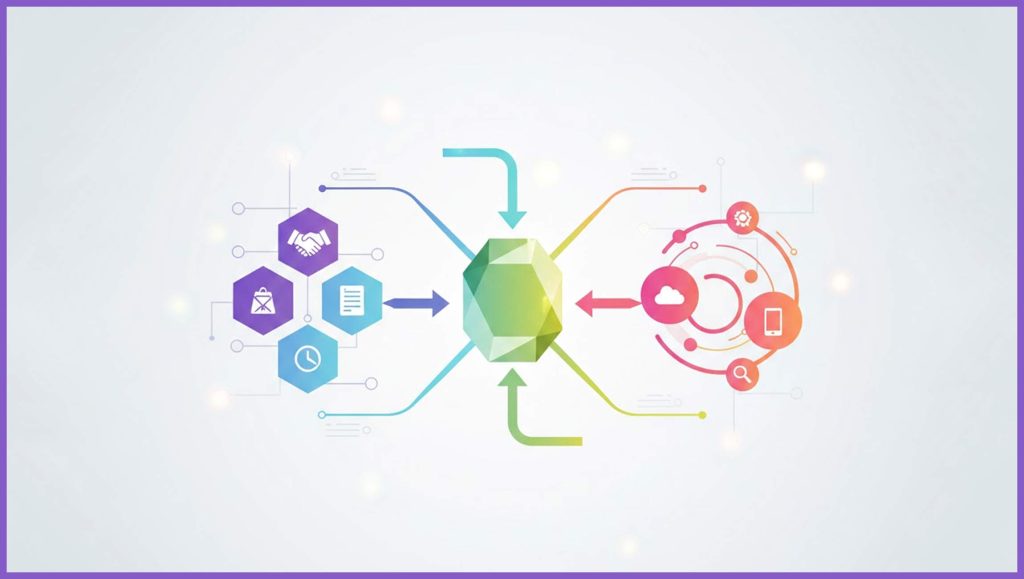
Many B2B SaaS companies still underestimate the complexity of modern pricing models, contract terms, and global compliance requirements in revenue management. It’s not just about generating invoices or recognizing revenue. It’s about managing a dynamic, interconnected data web across CRM, ERP, billing, and product systems. While AI currently plays a limited role in this process, judiciously utilizing AI-based technology to automate repeatable tasks for revenue accounting will increase in importance.
What’s often missed is that automation isn’t just a “nice-to-have” for efficiency. Automation is essential for:
- Ensuring compliance with standards like ASC 606 and IFRS 15
- Reducing manual errors that lead to revenue leakage
- Providing real-time, actionable insights for decision-making
- Enabling flexibility to experiment with new pricing models or enter new markets
Without automation, teams get bogged down in manual reconciliations, fragmented data and delayed closes, ultimately stifling growth and innovation.
As B2B team structures evolve, who should be more responsible for revenue management, in addition to revenue and sales leaders? How will better automated revenue management tools help here?
While revenue and sales leaders have always played a central role, today’s B2B SaaS environment requires a cross-functional approach. Revenue management now sits at the intersection of sales, finance, operations, and, increasingly, RevOps (Revenue Operations).
- RevOps teams are becoming the backbone, aligning sales, marketing, and customer success with finance to ensure data consistency and process efficiency.
- Finance teams remain critical for compliance, reporting, and audit readiness.
- Sales and customer success teams are the primary point of contact for customers, providing the data and context necessary for accurate revenue forecasting and recognition.
One thing we’re seeing more of is that – while CFOs traditionally left revenue accounting to the technical accountants – today’s CFOs are moving more into the ‘front office’ and as a result are much more interested in how complex or hybrid sets of products and services impact what revenue will be reported and how that affects Gross Margin and overall profitability.
AI-based, automated revenue management tools empower all these stakeholders by centralizing data, automating workflows and providing role-based dashboards. This system reduces manual work and ensures everyone is working from the same source of truth, driving better alignment and faster, more strategic decisions.
Read More: SalesTechStar Interview with Nima Hakimi, CEO of Convoso
What alignment tips would you share with revenue and finance leaders, as better internal processes will help teams manage inflows, deal cycles, structures, and more?
Alignment between revenue and finance leaders is critical for managing inflows, deal cycles and deal structures. Today’s innovation isn’t just in engineering; it’s also in how innovative companies price and package their offerings to gain a larger share of wallet from their customers and accelerate growth. Here are a few of my practical tips:
- Establish a single source of truth by integrating systems and applications so all teams access the same real-time data for forecasting, reporting, and analysis. Data hygiene is fundamental to success in the revenue area, and we regularly see companies struggle with this essential objective.
- Set shared KPIs and targets to define common goals around revenue growth, churn reduction, profitability, and track them collaboratively.
- Collaborate on process design by involving both sales and finance in designing compensation, discounting, and approval workflows to balance flexibility with compliance.
- Automate wherever possible to eliminate manual handoffs, reduce errors and expedite the quote-to-cash cycle.
- Foster open communication with regular cross-functional meetings to help surface issues early and build mutual understanding between teams. New revenue models (most notably, consumption models) don’t just affect reported revenue; they impact margins and revenue visibility as well.
Five tips you’d share with revenue, sales, finance teams, as revenue automation tools become more mainstream.
- Embrace Automation Early:Don’t wait until manual processes break down. Start automating repetitive tasks like invoicing, revenue recognition and reporting to free up time for strategic work. AI will increasingly play a role in this automation over time. What we’ve seen is remediation off of manual processes where accuracy was compromised, creating more work for accounting teams to reconcile to historically reported results.
- Integrate Your Systems:Ensure your CRM, ERP, billing and revenue management tools are tightly integrated for seamless data flow and real-time insights. And data volume is high, ensure the technology used by these tools is built to handle that volume.
- Prioritize Compliance:Use automation to enforce ASC 606/IFRS 15 compliance and create audit-ready documentation and reporting to reduce risk and simplify audits.
- Focus on Data Quality:Automation is only as good as the data it processes. Invest in data hygiene and governance to ensure accurate, actionable outputs.
- Invest in Cross-Functional Training:Equip teams across sales, finance and RevOps with the skills to interpret and act on automated insights, fostering a culture of continuous improvement.
The future of revenue management is automated, integrated, and collaborative. By embracing these principles, B2B SaaS companies can gain new efficiencies, stronger compliance and higher growth. At RightRev, we’re excited to help lead that transformation.

RightRev tracks the entirety of your revenue contracts, from quote, order, invoice, all the way to revenue recognition and management reporting.
Jagan is the Founder and CEO of RightRev and a pioneer of revenue recognition software, leading the company’s corporate vision and product development. Before founding RightRev, Jagan’s extensive accounting, IT and ERP background led him to build the first-to-market revenue recognition software, RevPro by Leeyo, in 2009. At Leeyo, he grew the company to over 200 employees and 100+ customers, with several Fortune 1000 companies among its clients. Jagan then joined Zuora in June 2017 as part of Zuora’s acquisition of RevPro. At Zuora, he led the revenue recognition franchise and was responsible for sales, engineering, product and customer success. His accomplished background, which combines accounting and software engineering, helped him solve a massive gap in revenue accounting. Jagan holds a Bachelor of Commerce in Accounting and Finance.