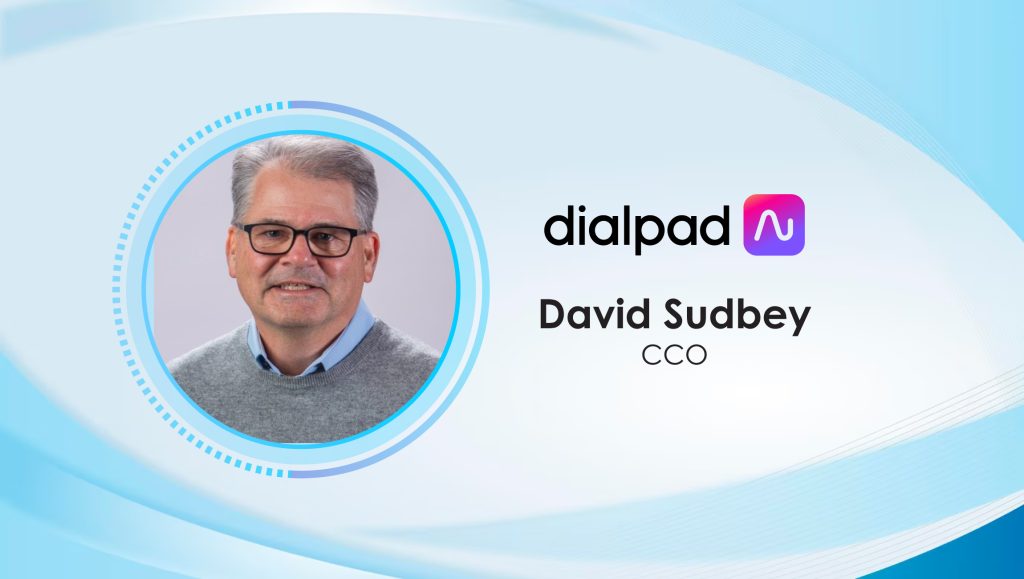
David Sudbey, Chief Customer Officer at Dialpad chats more about the evolving B2B buying trends impacting SaaS buyer-seller cycles in this Q&A with SalesTechStar:
_________
Hi David, take us through the highlights of your SaaS journey so far.
I’ve spent over three decades in this industry, watching how SaaS has completely transformed customer experience, unified communications, and now AI. My career actually started in telecommunications before I found my way into applications and SaaS as business communications needs evolved. During my 20+ years at Genesys, I was fortunate to help scale the company from a $10M startup to $1.5B in revenue, which gave me a front-row seat to see how SaaS became the most flexible approach for deploying emerging technology.
The pandemic really accelerated everything, and fundamentally changed how businesses communicate. Software became crucial because they offered the flexibility companies desperately needed through regular updates and tool consolidation as their workforces adapted to massive changes.
What excites me most right now is how AI is becoming more accessible. Most companies simply don’t have the resources to build AI capabilities from scratch, but AI at the application level is opening up new possibilities for collaboration, decision-making, and productivity for businesses of all sizes and industries.
What should modern Chief Customer Officers be focusing on more as customer cycles and trends evolve through 2025?
There are a couple of things I think are critical. First, in this era of rapid innovation, CCOs need to deeply understand their customers’ individual experiences. Having great products isn’t enough anymore – we’re operating in an environment overwhelmed with buzzwords, flashy tech demos, and hastily added features. To break through that noise, we need to meet customers where they are—like tailoring our messaging to address specific industry pain points and showing immediate ROI on AI investments rather than pushing the next feature update.
In communications specifically, it’s fascinating – voice communication remains fundamental and is actually growing in importance as companies look for better ways to analyze these interactions with AI. It’s the most natural way to communicate, and companies are realizing they need solutions like Dialpad that provide mobility while also ensuring conversations can be analyzed for sentiment and improving customer experience.
Can you highlight more about a few top SaaS innovators that have cracked the customer cycle and customer success code?
The companies that I keep an eye on are the ones that take critical business processes and simplify them so they can focus on innovation and differentiation for growth.
Deploying enterprise applications ends up with a team of people trying to replicate the old legacy system they are replacing. When this happens, so much energy is spent on lifting and shifting, thus fatiguing the resources. So when they are done with Phase 1 for example, the project is complete and everyone moves on. I am a big fan of creating a strategic roadmap that results in incremental value creation along the way to show wins that build confidence while planning for the long term.
I have seen customers get promoted based on project success and move from company to company, repeating their success. I want to work with that customer for years and years, not just one project and if we can make them a hero, we have done our job. Happy customers renew and expand because they can depend on you solving their business problems.
Read More: SalesTechStar Interview with Abhi Anantharaman, CTO at Syndigo
Can you define the role of a typical B2B SaaS Chief Customer Officer the way it stands today in terms of scope and expectations?
Today’s B2B SaaS Chief Customer Officer owns the entire post-sale customer journey. We’re responsible for all aspects of customer success and support, with a focus on driving proactive outcomes rather than just reacting to problems.
In my role at Dialpad, my core mission is to drive customer delight, retention and expansion by ensuring businesses achieve their desired goals with our platform. But the best kept secret to success in this role is really taking the time to truly get to know your most valued customers and partners. These conversations help me formulate priorities and continuously learn something new about the business. That’s where I find the biggest opportunities to create meaningful impact.
For customer success and support teams; what processes and programs can be put in place to enable unique journeys from their end users?
It really comes down to equipping your team with the tools they need to succeed. When support agents and customer success representatives have access to resources and training, it naturally elevates the experience for both employees and customers. The most effective programs don’t just solve problems – they anticipate needs and create space for customers to develop their own value path aligned with the specific objectives.
Regarding the team, you really need to ensure that you hire, retain and promote the people that are truly passionate about taking the best care of your customers and with great urgency and empathy.
At Dialpad, we’re using our AI in customer-facing support to help solve real problems quickly, and then we share those best practices with our customers. The key is allowing customers their preferred channel of choice while ensuring effectiveness across all channels. When you combine this approach with AI-powered insights, you create more personalized experiences that recognize each customer’s unique context.
Few thoughts on the future of customer success and B2B customer buying cycles before we wrap up?
I see several important shifts happening that are changing how businesses connect with their customers. First, we’re moving from reactive customer service to proactive, intelligence-driven approaches. Organizations that are leveraging AI to anticipate customer needs before problems arise will simply outperform those just responding after issues occur.
Second, the B2B buying cycle is becoming much less linear. Today’s buyers expect enterprise-grade solutions with consumer-like purchasing experiences. They’re doing extensive independent research, and when they engage with sales, they want meaningful conversations about value and relevant outcomes – not product pitches.
One of the biggest challenges I see is information overload – customers are confused because so many companies are essentially saying the same things. At Dialpad, we recognize this challenge and work every day to cut through the noise by focusing on specific pain points and driving real business outcomes rather than just repeating industry buzzwords.

Dialpad is a leading Ai-Powered Customer Intelligence Platform that is completely transforming how the world works together, with one workspace that seamlessly combines the most advanced Ai Contact Center, Ai Sales, Ai Voice, and Ai Meetings with Ai Messaging.
David Sudbey, is CCO at Dialpad