There’s a tension sitting at the heart of most enterprise SaaS sales motions right now, and it doesn’t show up in CRM data. It shows up in the conversations sales teams are having — and losing — when they try to expand accounts.
The standard playbook goes something like this: a customer is on a base tier, they’ve seen reasonable results, and the next logical step is unlocking a higher-impact capability gated behind a more expensive package. The sales team makes the case. The customer is interested. Then it goes to procurement, and the whole thing stalls.
What happened? The model asked the customer to take on risk before they had the evidence to justify it internally.
This is not a new dynamic, but it’s getting worse. Signal loss has made performance harder to sustain across paid channels. Executive teams are scrutinizing every incremental dollar. Marketing leaders who once had latitude to experiment now need a defensible business case before they can get a PO approved. In that environment, “trust us, it works” is not a sales motion. It’s a stall.
The sequencing problem
SaaS vendors designed tier-based pricing and time-limited trials for good reasons. They simplify packaging, protect margin, and create clear upgrade paths. But they were also designed for a different buyer environment — one where teams had more room to absorb risk, and where a 30-day proof-of-concept could plausibly stand in for a real-world performance signal.
That environment no longer exists for most enterprise marketing teams.
Audience strategies don’t run on 30-day cycles. A team defines segments, activates across paid and owned channels, waits for downstream conversion data, and then refines. By the time a short-term trial window closes, they may have only partial results — not enough to build a compelling internal case, but enough to have already consumed budget and political capital on the evaluation.
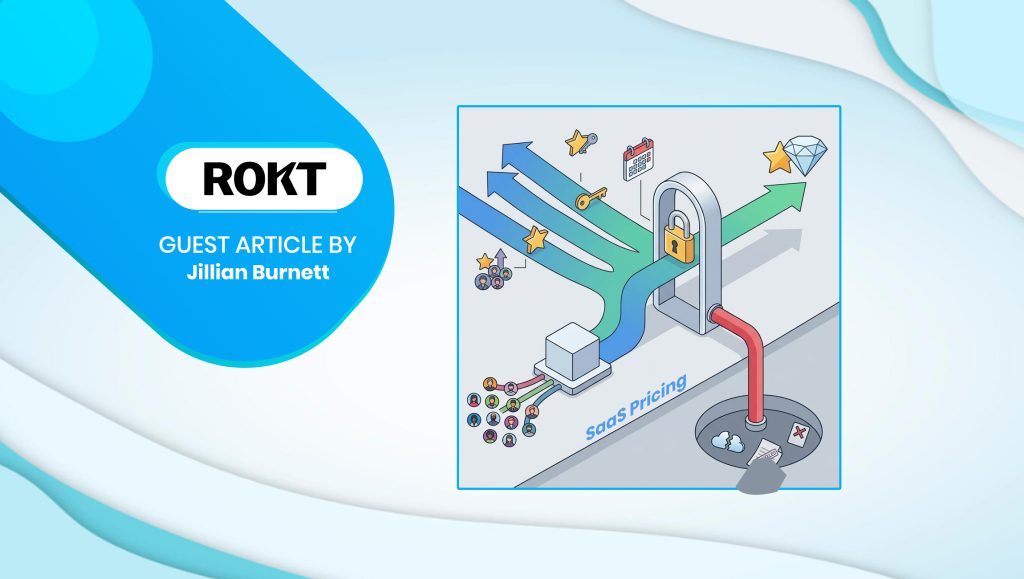
Tier gating creates a parallel problem. It asks broader organizational commitment — procurement, finance, executive sign-off — before the evidence exists to make that commitment feel rational. The sales team ends up in the position of arguing for expansion based on potential rather than proof. That’s a hard room to win.
The result is that product risk, which vendors are arguably best positioned to absorb, has quietly shifted onto customers. And customers, feeling that weight, are increasingly reluctant to move.
Read More: SalesTechStar Interview with Mark Walker, CEO at Nue
What the alternative looks like
The vendors who will win expansion business in this environment are the ones who restructure that risk sequencing. Specifically: make high-impact capabilities accessible within existing workflows, let customers measure results in production against their own benchmarks, and then have the commercial conversation once the evidence is visible.
This isn’t a freemium argument. It’s a sequencing argument. The capability should still sit within a governed, structured access model — but the commercial commitment should follow demonstrated impact, not precede it.
For sales teams, this changes the expansion conversation entirely. Instead of asking a customer to take a leap of faith backed by vendor case studies, you’re asking them to ratify a decision their own data has already made for them. That’s a fundamentally easier internal sell. Finance isn’t being asked to approve potential. They’re being asked to formalize an outcome already in evidence.
The broader implication for SaaS GTM
Enterprise buyers are under more scrutiny than they’ve been in years. The tolerance for speculative investment has narrowed considerably, and that pressure is flowing upstream into how vendors need to design both their products and their commercial motions.
Sales teams that are struggling to close expansion deals should ask an honest question: is the friction coming from the customer, or is it coming from a pricing model that asks customers to assume risk the vendor hasn’t been willing to absorb? In many cases, the answer is the latter.
The vendors who figure out how to let performance do the selling — by making meaningful capabilities available in production, with guardrails and clear measurement, before asking for expanded commitment — will find a materially shorter path to expansion revenue. More importantly, they’ll build the kind of trust that turns customers into long-term advocates rather than reluctant renewals.
Evidence-first isn’t just a better experience for customers. It’s a better pipeline strategy.
Read More: How API-First SalesTech Is Redefining Revenue Operations?