Revenue leaders have more AI tools and concepts to choose from than ever before. But the challenge lies in discerning which innovations will truly help teams win more, and which will fall by the wayside as another tool with dubious ROI.
Read More: SalesTechStar Interview with Nithin Mummaneni, Chief Executive Officer at Infinity Loop
CROs and sales leaders are under pressure to do the near impossible: separate hype from reality while protecting budgets, credibility, and competitive advantage. A recent MIT report highlights just how challenging this is, finding that 95% of generative AI pilots at companies fail to produce meaningful outcomes.
Working with our customers at Gong, I see how thousands of enterprise teams adopt AI in their sales processes. One thing is clear: buzzwords don’t close deals. Revenue leaders buy outcomes, not hype.
That’s why I thought that ‘vibe selling’ is a great, catchy term for applying AI in sales. But catchy terms aside, it’s worth asking: What can this actually help reps accomplish today and what parts of selling still very much require a human?
In this article, I’ll break down what vibe selling really means, the practical value it offers and how revenue teams can use it effectively without overstating what AI can do.
What is Vibe Selling?
“Vibe coding,” a term coined earlier this year by OpenAI co-founder Andrej Karpathy, resonated because it felt intuitive: describe your intent, see an output and refine it through conversation.
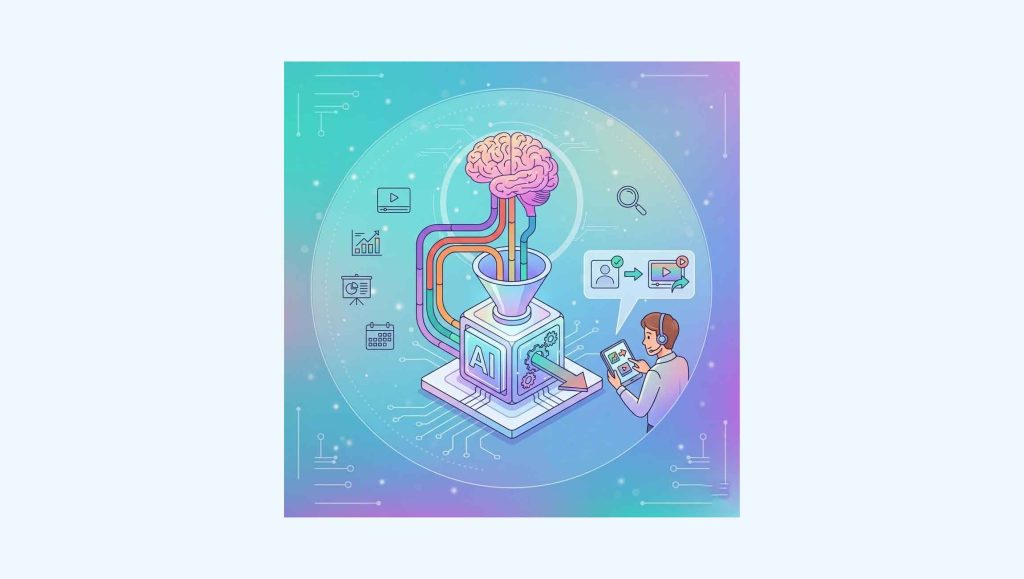
Vibe selling, which has taken hold in revenue circles, applies this same dynamic to sales tasks. Instead of writing documents from scratch — like an email, a proposal, or an account plan — revenue professionals talk with AI to streamline the creation. The AI produces an initial version, then the seller tweaks it, adds more context, and refines it until it’s ready to use with a prospect.
It’s not a breakthrough in core technologies, but in how we use them. Underneath the name are familiar AI chatbots, just used in specialized context in an iterative manner.
And importantly: this approach is broadly applicable. Whether a revenue professional works in SMB, mid-market, or enterprise, the act of conversing with an assistant to streamline work is universally valuable.
The real question isn’t who it’s for, but what it can help sellers accomplish today and where the human touch is still required.
What AI Can Do Today
In my experience, semi-autonomous AI already delivers clear value where it matters most: in the back office and during pre-meeting preparation (the unglamorous side of sales that sets the stage for every deal).
Think of all the tasks that drain a rep’s day — researching accounts, drafting outreach emails, creating playbooks, cleaning up CRM data, or building enablement materials. These are exactly the areas where AI excels with minimal intervention, working at scale and at speed.
Sellers can “vibe” the AI output — feeding it context, asking for revisions, and iterating until the result fits — just as a developer might refine code through conversation. This back-and-forth workflow turns what used to be hours of work into minutes.
Done right, this doesn’t just save time. It frees sales teams to focus on higher-order, distinctly human tasks: understanding nuanced customer needs, building trust, and steering complex deals to the finish line.
We Still Need Humans
Where AI still falls short is that it hasn’t cracked the code on what makes great sellers great. It can prepare reps, analyze mountains of data, and even automate the next steps in a sales cycle. But real-time buyer interactions still demand something no algorithm can replicate: trust, empathy, and adaptability. In high-stakes deals, those qualities aren’t just nice to have — they’re the differentiator.
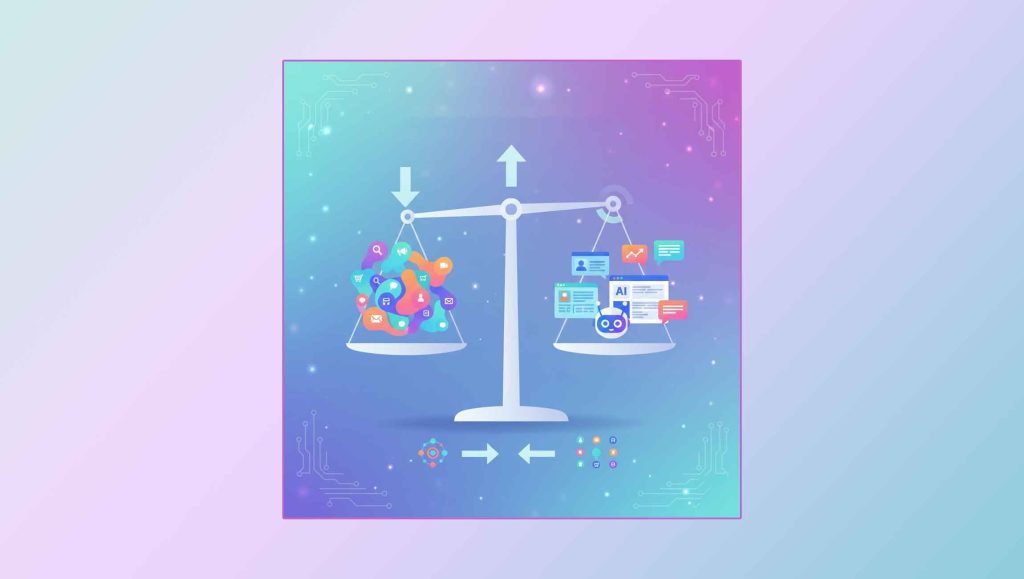
This isn’t about resisting AI; it’s about deploying it wisely. The winning teams draw clear boundaries between machine and human touch. They offload repetitive, research-heavy tasks to AI without compromising the buyer-facing moments where credibility matters most.
Think of it as a new kind of roadmap: use AI to accelerate preparation and follow-up, but keep humans in the room — literally and figuratively — for live interactions. That balance protects customer relationships, prevents over-reliance on immature tools, and keeps the human element at the heart of the deal where it belongs.
Vibes, Agents, Guided Selling – What’s Really Changing?
In many ways, “vibe selling” is just another word for conversational AI. Both point to the same underlying promise: let technology handle repetitive work so sellers can focus on outcomes. What’s changed is the wrapper — a conversational, iterative workflow built on familiar automation and assistant capabilities.
Right now, vibe selling is still semi-agentic. Humans are firmly in the loop, prompting, approving, and refining at each stage. It’s an assistive partner, not an autonomous operator.
But agentic AI is advancing quickly. The next generation of tools won’t always wait for human guidance. Once their output earns trust, some will act independently — updating records, triggering workflows, and initiating next steps on their own.
Understanding where semi-agentic ends and autonomous begins isn’t an academic exercise; it’s a practical roadmap for scaling AI within a sales organization. The teams that grasp the difference today are laying the groundwork to capture the upside tomorrow.
A Practical Framework for Sales Leaders
For leaders working to uncover real value with AIs, here’s a practical approach:
- Identify high-friction tasks: Begin with internal, repetitive work — account research, drafting outreach emails, data entry, and creating playbooks. These hidden time drains are where AI can deliver immediate impact without risking customer trust.
- Embed AI where revenue professionals already work: Instead of introducing yet another standalone tool, integrate capabilities into your existing platforms. Familiarity speeds adoption and makes AI feel like a natural extension of the workflow.
- Build trust incrementally: Start with semi-agentic AI you can supervise and approve. As confidence grows, hand off more routine steps to the technology.
- Draw the buyer-facing boundary: Keep human ownership of live interactions until trust and technology maturity align. This protects your credibility and ensures customer experiences stay consistent.
Follow this framework and you’ll reap the benefits of AI without over-promising or putting your reputation on the line. Done right, it also creates the runway for the next stage of adoption, where “vibing” with AI evolves from a prep tool into a true execution engine embedded in daily sales workflows.
Read More: Inside the AI Agent Failure Era: What CX Leaders Must Do Now
Have A Listen:
Episode 230: Al Agents And Their Impact on Sales, Marketing Experiences: with Ben Weikert, Senior Director, Product Marketing and GTM Innovation at Salesloft