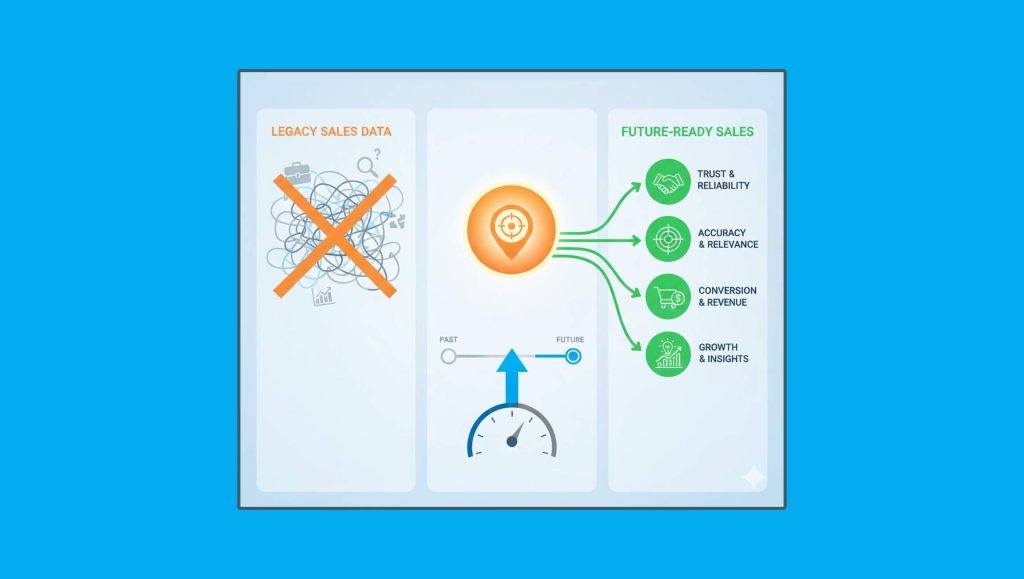

To date, B2B sales has maintained a constant rhythm: buyers discovered products via marketing play, engaged directly with sales reps for education and guidance, and then relied on demos to validate and solidify their decisions. This sequence is now broken.
AI has quietly taken the reins to become the first and most influential touchpoint in the B2B buying journey. Today, 45% of buyers turn to AI tools to help vet vendors, compare competing features, and even provide recommendations based on price and aligned goals, all before a human sales rep enters the picture. For many organizations, this shift has accelerated faster than leadership predicted, and faster than GTM teams trained and prepared for.
With 48% of B2B buyers saying they now use AI to circumvent sales reps entirely, this is no longer a tool change, but an entire power shift of the buying process as we know it. As we approach this turning point of the buying journey, understanding where AI can help, where it is hurting, and the best steps to prioritize moving forward will set apart the next generation of sales.
Marketers in Power
As buyers continue to rely on AI for early research, the content pulled and referenced (product pages, blog posts, reviews), is largely owned by marketers, not sales reps. Generative AI systems are trained on information already available online; they do not invent product narratives themselves. This means, the positioning and accuracy buyers come across on these models are predetermined by how well marketing teams structure said content. In doing so, marketing teams are gaining more influence and ownership over how buyers perceive value of software, often long before a sales conversation ensues.
Executives are noticing, with nearly half reporting that AI is forcing marketers to own more of the buyer relationship, with budget expanding alongside sales. Across companies, structural changes are being implemented to shift revenue ownership up the chain and redefining leadership roles. In practice, buyers are joining sales calls already equipped with recommendations and comparisons of software from AI. Leadership analyzes the increase or decrease of deals stemming from Generative Engine Optimization (GEO) and adjusts budgets and employee roles accordingly. In doing so, role and success is determined by who controls buyer perception earliest.
For sales teams, this may sound the alarm and feel like a threat. More than one-third of executives say AI is making sales teams less valuable, and many report declining entry-level sales hiring. However, sales teams aren’t becoming obsolete, rather evolving into this new era of more education driven quotas to meet.
New Buying Process Pain Point: Misinformation
AI may be helping buyers to work at speed, but this doesn’t equate to better informed buyers. In fact, almost half (46%) of executives say prospective customers receive misleading information from the AI tools they utilize. Product offerings are misunderstood and stand out traits are minimized into a generic summary, leaving buyers with a false sense of confidence despite being factually incorrect.
Redirecting and reeducating potential buyers now falls on the sales rep, taking away time to correct AI-driven inaccuracies instead of advancing a deal. Pressure increases from leadership down, to “un-teach” prospects quickly and effectively to be able to continue making meaningful buying progress. Creating friction from both sides of the table, buyers feel challenged, reps feel undetermined, and trust begins to erode at the moment it matters most.
The Moment of Truth: Demos
Despite the growing pains and challenges of this new era of sales and marketing, problem solving, validation and providing essential context reigns supreme for human reps. AI cannot explain to buyers how features will or will not perform within their specific environment, guidelines or goals – but experienced reps can.
In an AI-driven buying journey, what a product does is easy to find. How it actually works in practice is where humans will win. With 40% saying AI does a worse job explaining product value than a human, this is an opportunity for sales industry experts to dig deep into their years of product knowledge, industry fluency, and the ability to adapt in real time – skills that AI can support, but not replace.
As discovery moves earlier and faster, demos hold more weight than ever before. The demo is quickly becoming the first instance where buyers see the reality of the tools, not the trained hypotheticals AI told them. Static, one size fits all demo tools will not survive this new era. They don’t provide tangible, hands on experience to solidify and help buyers make a trusted and informed decision.
Rethinking demos as an interactive experience tailored to each unique buyer’s case will be key. This way, demos will help to bridge AI perception and the real-world value needed of a successful platform. Trust may be weakened in the re-education phase of the buying process, but via a personalized, encompassing demo experience, credibility is restored by showing not telling how the shoe fits for each buyer.
Humans Reign Supreme
AI doesn’t sign contracts, people do. The last mile of buying decisions will continue to rely on the trust and guidance of humans, with authentic expertise increasing in value as the market becomes more saturated with AI first tools.
The future of B2B sales is not about fighting against AI, but rather working alongside it knowing that this is the new era of discovery, and finding those moments where humans shine through as differentiators.
Read More: The Psychology Of Sales Enablement: How Tools Are Designed To Empower And Motivate Sales Reps?