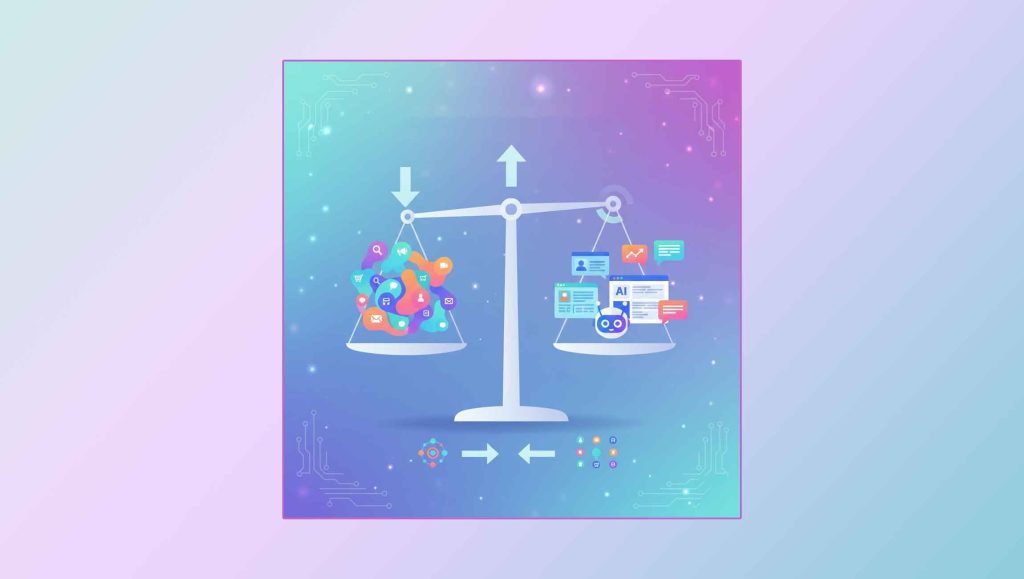
“Misaligned sales and marketing teams cost companies 10% or more of their annual revenue.” – HubSpot, 2024.
In today’s revenue-obsessed business climate, that statistic should stop leaders in their tracks. Misaligned sales and marketing teams cost companies 10% or more in revenue annually—a staggering figure that represents billions of dollars in lost opportunities across the business landscape.
Even though this is a well-known fact, businesses nonetheless work with the same dysfunctional dynamics that have been a problem in B2B trade for decades. The marketing team says they’re sending good leads to sales, but sales isn’t following up on them correctly. The sales team says that marketing is bringing in prospects that aren’t qualified, which wastes their time and makes their pipeline less effective. Many company leaders see this never-ending loop of blaming others as an unavoidable expense of conducting business since it has become such a part of corporate culture.
The problems between sales and marketing aren’t just bothersome at work anymore; they’re now a significant threat to the company’s bottom line. For a long time, these two crucial positions have had to work together in an uncomfortable way, sharing an office, quarterly goals, and a lot of rage. This isn’t only a problem with the way things are done. Not adapting is a strategic blunder. A new content calendar or a better team offsite won’t help. begins with changing how revenue teams work and ends with SalesTech becoming the exclusive source of truth.
What went wrong? A loop that never ends of blaming other people when goals aren’t met. Marketing criticises sales for not following up on leads. This blame isn’t just unhelpful; it’s also costly and getting harder to keep up with. 67% of modern purchasers finish their buying process before ever talking to a sales agent.
This changes the way that money is made. The usual handoff between marketing and sales has become a major weakness, allowing leads to fall through the cracks, chances to be missed, and customer service to deteriorate. Companies that still have separate departments and systems are falling behind competitors who have switched to unified salestech solutions.
This problem has only gotten worse because there are so many digital touchpoints. B2B buyers today interact with businesses across a variety of channels, including social media, email, webinars, content downloads, demo requests, and direct sales outreach. This makes for a complicated web of interactions that no one department can fully track or improve.
Without unified salestech platforms that give everyone the same information, marketing and sales teams work with incomplete data, which causes them to do the same things over and over again, send mixed signals, and upset prospects who get different experiences.
The economic effects go much beyond missed deals. When sales and marketing teams aren’t working together, companies lose 4% of their income each year. But when the teams are working together, they win 38% more often and make 208% more money from their marketing efforts. The numbers are clear: blaming others is bad for company culture and is also hurting profits and the company’s ability to compete. Companies who understand this and put money into unified salestech solutions can take business away from companies that are still stuck in the problems of departmental silos.
It has never been more important to fix this problem. Every lead is more valuable and every conversion is more important because of economic instability, longer sales cycles, and greater competition for buyers’ attention. When outside demands call for maximum efficiency and effectiveness, companies can no longer afford to have problems within their own ranks. Companies that stop blaming each other and instead use unified salestech solutions that align incentives, integrate data, and improve the whole process of making money will do well in the next ten years.
Read More: SalesTechStar Interview With Matt Quarles, Chief Revenue Officer, Tiugo Technologies
Why the Funnel Has Always Been Broken?
Awareness, Interest, Consideration, and Decision are the four stages of the conventional marketing-to-sales funnel. It was created when customers acted in a predictable way, firms controlled the story, and teams were cleanly divided. The job of marketing platters was platters was to get people interested and pass leads MIME The job of sales was to close them. The model thought that handoffs would be tidy, movement would be straight, and duties would be obvious.
But even then, the model wasn’t perfect. People who buy things don’t act in straight lines. They go back, stop talking, do their own research, or interact with content long before they’re ready to talk. And more and more, customers want a smooth experience at every brand touchpoint, which rigid funnels can’t provide.
What’s the truth? The funnel was made to be easy for the company to use, not to change how customers act. And it never really made sure that everyone was on the same page.
Different Goals, Different Languages
The main reason for the divergence is that marketing and sales don’t agree on how to assess success.
- Marketing keeps track of MQLs (Marketing Qualified Leads), engagement rates, impressions, and how well campaigns are doing. They are focused on the top of the funnel.
- Sales is all about the bottom of the funnel, pipeline, meetings booked, prospects produced, and revenue closed.
Not only are these measurements distinct, but they also don’t always work together. A campaign might bring in thousands of leads, but if they don’t turn into sales, sales sees it as a waste of time. On the other hand, sales might ignore marketing’s data if it doesn’t lead directly to booked revenue.
This difference in metrics is one of the oldest arguments in B2B: “What is a quality lead?” Depending on who you question, the answers can be very different. Without a single source of truth, it becomes a matter of opinion, not data.
Tools That Divide, Not Unite
The fragmentation doesn’t stop with goals. Technology stacks that keep data and insights separate make it even stronger. Marketing might employ a complex automation tool to score and nurture leads, but sales only has limited access to pre-pipeline activities through a CRM. The tools don’t talk to one other, and when they do, it’s usually through unstable integrations or manual exporting.
The time between talking to a lead and following up can make things worse. A lead might download a white paper today, but by the time sales calls a week later, the lead may have lost interest or gone on to a rival. When the lead doesn’t go anywhere, both parties blame each other.
What’s ironic? Most revenue teams still have problems with data latency, interpretation gaps, and process delays that seem old-fashioned, even though we live in a period of real-time data and machine intelligence. These problems aren’t merely technical; they’re signs that the system isn’t working right.
Cultural Finger-Pointing and the ‘Excuse Economy’
Culture is a bigger issue than the tools and analytics. When things don’t go as planned, teams naturally look for someone to blame. Sales didn’t meet their goal? It has to be the quality of the leads. Did marketing not hit the pipeline contribution? Sales must be messing up. Over time, this leads to what many business leaders now call the “excuse economy,” which is an implicit agreement to shift responsibility instead of sharing it.
The effects are corrosive:
- Even when goals are the same, teams don’t trust one other too much.
- People are putting off making decisions because they don’t want to commit without protection.
- Innovation paralysis happens when teams don’t take risks because they don’t want to be blamed for failing.
This cultural conflict costs a lot. It takes away energy from the customer and makes it harder for the business to adapt to changes in the market. And it keeps happening even though there are constant alignment meetings, cross-functional Slack channels, and “team-building” activities. Why? Because the system itself—its aims, tools, and incentives—still makes people feel separate.
The ‘Bad Lead’ Myth and Pipeline Fiction
If you ask a sales agent what a “bad lead” is, you’ll receive a dozen different answers, such as “wrong title,” “no budget,” “no urgency,” or “ghosted after the demo.” If you ask marketing why the identical lead was passed along, they’ll say it matched the ICP, interacted with three assets, and met the MQL score requirement.
Both are right in a technical sense. And yet, neither is complete. The tension never goes away if there isn’t a common story about what makes a true pipeline and everyone is responsible for turning it into anything.
This leads to a dangerous result: pipeline fiction. Overly optimistic predictions, weak commitments, and extra-large CRM stages that are meant to please management but don’t take into account what the buyer wants. The cycle starts over again when those transactions fall through.
This isn’t just a waste of time. It can’t last. We need to think about what the funnel is for and who it serves in order to change it. It can’t merely be a blueprint of how things are passed around inside. It needs to be a shared revenue operating system that is clear, flexible, and controlled by both sales and marketing.
In the next section, we’ll talk about how SalesTech platforms are changing into that operating system. They will operate as the truth layer that ends the blame cycle and brings revenue teams back together.
Why the Funnel Has Always Been Broken- The Historical Evolution of Siloed Revenue Operations
It wasn’t meant for the old marketing-to-sales funnel to break; it did so because organisations grew and technology advanced faster than the structure could adapt. In the beginning of B2B trade, sales and marketing had to be kept distinct for practical reasons. Salespeople built relationships and closed deals through face-to-face meetings and phone calls, while marketers used trade periodicals, direct mail, and trade exhibitions to raise brand recognition. When communication was limited and buyers acted in a predictable way, this division of labour made sense.
As companies got bigger and more specialised, these divisions came up with their own languages, metrics, and ideas of what success meant. Sales looked at conversion rates, deal sizes, and meeting quotas, while marketing looked at brand awareness, lead generation, and campaign involvement as ways to measure performance.
Without a unified salestech platform to connect these multiple points of view, each department focused on its own goals instead of making more money overall. This caused the construction of distinct technology stacks, data repositories, and reporting systems that made the organisational silos even stronger.
The digital revolution of the 1990s and 2000s sped up this splitting up. CRM systems, marketing automation platforms, and analytics tools all came out as independent solutions tailored to meet the demands of certain departments.
Sales teams used Salesforce, Pipedrive, and other CRM tools to keep track of leads and manage customer relationships. Marketing teams used HubSpot, Marketo, and Pardot to run campaigns and nurture leads. Because there wasn’t a unified salestech integration, data only went one way, from marketing to sales, with no feedback loop or way for everyone to see the whole customer journey.
The Incentive Misalignment Problem
The funnel doesn’t work right because the incentives are fundamentally out of whack, and this has been the case even when there are unified salestech solutions. Most of the time, marketing teams are rewarded for bringing in more leads, more website traffic, and more people who are interested in their campaigns.
Their success measurements usually just look at the top of the funnel, and they don’t have to be responsible for what happens once a lead is given to sales. This gives people a natural reason to put number ahead of quality, which can lead to the creation of marketing qualified leads (MQLs) that may not be ready to talk to sales.
On the other hand, sales teams are judged by the results they get, such how many deals they close, how much money they make, and how well they meet their quotas. They are motivated to focus on the leads that are most likely to convert, and they may swiftly throw away leads that don’t fulfil their urgent requirements for sales-ready prospects. This makes for a natural conflict: marketing thinks sales is wasting their time, while sales thinks they are being overwhelmed by unqualified prospects that take up their time and energy.
This misalignment is made worse by the problems with defining lead quality. People that are interested in your product or service and meet certain behavioural requirements, such downloading content, attending webinars, or interacting with email campaigns, are called marketing qualified leads (MQLs).
Sales qualified leads (SQLs), on the other hand, are those who are ready to buy, have the money, have the power, have a need, and have a timeframe. Without unified salestech tools that let everyone see lead scoring and qualification criteria, these definitions are still open to interpretation and disagreement.
The Cultural and Systemic Roots of Finger-Pointing
The blame game between sales and marketing isn’t simply a sign of bad communication; it’s a normal result of systemic organisational design faults that unified salestech solutions are expressly made to fix. Most businesses set up their revenue processes so that sales and marketing have their own budgets, reporting lines, and performance measures. This makes it so that each department sees the other as a separate group instead of a collaborator in the work.
The fact that these teams are physically and virtually apart makes this dynamic stronger. Marketing teams generally operate in distinct places, go to different meetings, and take part in different planning processes than sales teams. These teams work in parallel instead of together since they don’t have unified salestech platforms with integrated dashboards and workflows. This means that people don’t care about or comprehend the problems that each team has to deal with.
Data silos make these cultural problems worse since they make it impossible to get objective truth about lead quality, conversion rates, and revenue attribution. When marketing and sales teams use distinct sets of data, every conversation about performance turns into a dispute about how to do things instead of a way to work together to solve problems. Marketing can say they sent 500 qualifying leads last month, but sales might say they only got 200 good leads. Without unified salestech integration, both teams can be right from a technical point of view while working with insufficient information.
The typical funnel approach makes this problem worse by establishing fake handoff points where one team is responsible for something and then another team is responsible for it. Until the lead is qualified, marketing “owns” it. After that, sales “hands it off” to sales, who “owns” the opportunity until it is closed. This step-by-step plan misses the fact that modern customers interact with both marketing and sales touchpoints along the way, so departments need to work together instead of passing things off to one other.
Without unified salestech solutions, it’s hard to look at success stories and failures objectively. Both teams can take credit when the trade is done. Both teams might blame each other when they miss an opportunity. Organisations can’t learn from both their successes and failures because they don’t all have access to the full customer experience. This keeps dysfunctional patterns going that hurt revenue growth.
You shouldn’t try to get rid of the natural conflict between sales and marketing. Healthy debate about strategy, techniques, and objectives can lead to new ideas and better ways of doing things. The idea is to change that energy from pointing fingers defensively to working together to solve problems. Unified salestech platforms provide the basis for this change because they make blame meaningless and success measurable by giving everyone the same view, aligning incentives, and building procedures that everyone can work on together.
SalesTech: The Truth Layer; Beyond CRM: SalesTech as Alignment Engines
Modern SalesTech platforms are a big step forward from old-fashioned Customer Relationship Management systems. CRMs were made to keep track of client data and interactions, but today’s unified salestech solutions are like advanced alignment engines that run the whole process of making money. These platforms don’t only hold data; they also make a single operating system that links every touchpoint, contact, and result along the consumer experience.
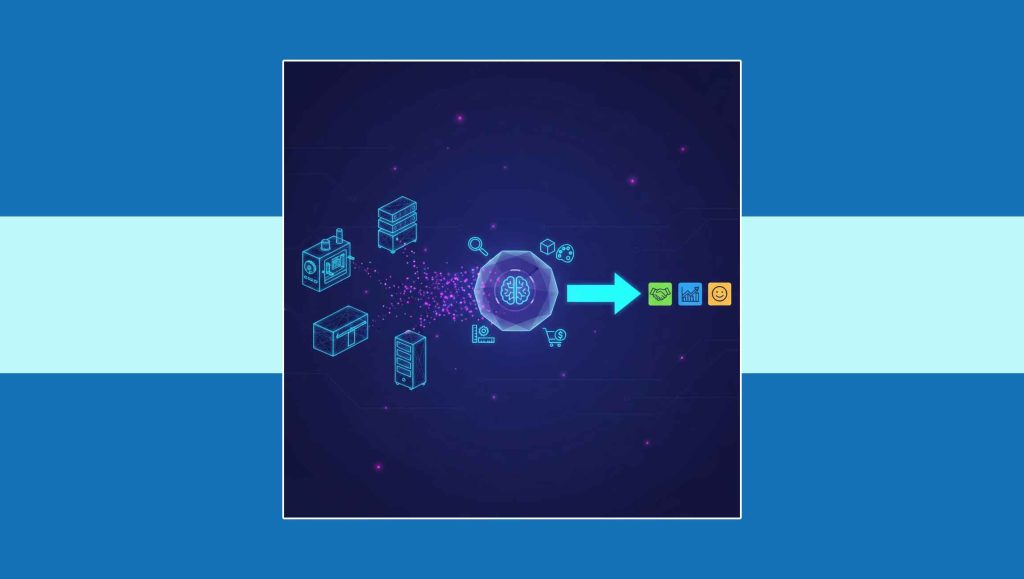
The change from separate tools to interconnected ecosystems is a major change in how businesses handle revenue operations. Old-fashioned CRM solutions needed people to enter data by hand, separate marketing automation platforms, and analytics tools that didn’t work together, which made information silos. Unified salestech platforms get rid of these problems by giving you a single source of truth that automatically records, sorts, and analyses every encounter with a customer, no matter what channel or department it happens in.
This change solves the main problem that has made it hard for sales and marketing to work together for decades: not being able to see how customers behave and engage with each other. When both teams work from the same set of data, working together becomes easy instead of forced. The platform itself acts as a mediator, getting rid of personal views and departmental prejudices that have always contributed to the blame game.
The Strength of a Unified Data Architecture
Unified salestech systems make things clear by integrating all of the data in a way that gives you an unmatched view of the entire client lifecycle. Contact history timelines keep track of every interaction across all channels, from the first time someone sees a website or downloads material to email exchanges, sales calls, and support tickets after a purchase.
This timeline of client behaviour gives sales and marketing teams the background they need to understand not only what happened, but also why it matters for future engagement tactics.
Unified salestech systems’ content engagement analytics show which marketing assets really affect buying choices instead of just tracking how often people use them. Sales teams may discover which whitepapers, case studies, or webinars a prospect looked at before asking for a demo. This lets them have better educated and relevant conversations.
Marketing teams can see which pieces of content lead to closed agreements, which lets them improve their content strategy based on how much money they make instead of just how many people engage with it.
Unified salestech systems with attribution tracking make it easy to see how multiple touchpoints help make money. Multi-touch attribution models provide the whole route of influence from first awareness to final purchase, so there is no more guessing about which actions lead to results. This broad view lets you measure how well both marketing and sales work without relying on personal perceptions.
Getting Rid Of The Excuse Economy
Unified salestech platforms can do rid of the excuse economy that has kept sales and marketing from working properly for decades. This is their best feature. With automatic tracking of all client contacts that both teams can see, there is no more “I didn’t know the prospect had downloaded our pricing guide” or “they didn’t follow up on the lead I sent them.” The shared data dashboard makes it impossible to create excuses and makes it necessary for people to work together.
Automated workflows and notifications in real time make sure that nothing gets missed. When a marketing qualified lead meets certain criteria, sales is automatically told about it, along with all the details about the prospect’s past interactions. When a sales opportunity stalls, marketing can know exactly where it is and provide the right nurturing content. This smooth handoff process gets rid of the old habit of pointing fingers at lead quality and follow-up timing.
Unified salestech platforms also make it easy to see how well teams are doing, which changes how they judge success. Both teams may view objective metrics on conversion rates, engagement quality, and revenue outcomes instead of marketing claiming credit for leads that sales says are not qualified. This shared visibility makes it easy for both teams to be accountable because they are both focused on increasing overall performance instead of defending their own work.
The end outcome is a big change from being defensive to working together to solve problems. When problems come up—and they will—teams can swiftly figure out what’s causing them and fix them instead of arguing about who is to blame. The platform has forensic tools that let you find the source of problems, like a marketing campaign that targets the wrong audience or a sales process that loses good leads.
This transparency also includes the visibility of leaders. Executives can access real-time performance indicators for the whole revenue production process. This lets them find problems and chances for improvement without having to rely on subjective departmental reports. The unified salestech platform becomes a strategic asset that lets everyone in the company make decisions based on facts.
KPIs That Unite, Not Divide
When sales and marketing don’t work together, it’s often because of how they assess things, not because of talent. For years, these two teams have been trying to improve their performance by utilising distinct scorecards.
Marketers keep track of clicks, impressions, and MQLs, while salespeople keep track of revenue, closure rates, and quotas. What happened? A broken funnel full with blame. But the rise of strong, shared KPIs, made possible by unified salestech platforms, is requiring a major change.
- The Issue with Vanity Metrics
For a long time, marketing dashboards have been full of vanity metrics like email open rates, ad impressions, and MQL volume. Sales teams, on the other hand, are only interested on deals won, pipeline stage conversions, and how they affect revenue.
These KPIs that are kept separate are useful for internal validation but not for the company very often. They make the gap between teams even bigger, which leads to finger-pointing when growth slows down.
Clicks that don’t convert are useless in today’s high-stakes revenue market. When leads don’t advance passed qualifying, they’re just wasting time. There needs to be a change to measures that cover the whole buyer journey, with KPIs that show shared ownership and reciprocal accountability.
- A New Group of Common KPIs
Enter a wiser framework of collaborative metrics, where both sales and marketing are assessed by the same revenue goals. Some of the most important shared KPIs are:
- Pipeline Contribution: Instead of focussing on how many leads come in at the top of the funnel, marketing is now judged by how much quality, sales-accepted pipeline it creates. Sales can then see how good that pipeline is and how well it works downstream.
- Lead-to-Win Conversion Rates: This metric from start to finish keeps both teams honest. It makes marketing think about whether its leads are really ready to buy, and it makes sales follow up and take care of them.
- Deal Velocity: It’s important how quickly leads become possibilities and eventually money. When the speed slows down, both teams look at what’s blocking the funnel, whether it’s faulty targeting, inadequate follow-ups, or not enough enablement content.
- Win Rate by Source or Campaign: Marketing now keeps track of not only how many leads a campaign gets, but also how many of those leads really become customers. Sales can discover which sources bring in the most promising leads. They work together to make things better based on facts, not guesswork.
These aren’t ideas for the future; they’re things that firms that want to develop need to do.
What Unified Salestech Can Do?
A unified salestech stack is what makes these shared KPIs useful. It is hard to match KPIs when sales and marketing utilise different platforms and dashboards that don’t talk to one other. But with a single salestech platform, both teams are connected to the same system of record.
Modern unified salestech platforms incorporate CRM, marketing automation, conversation intelligence, content engagement, and attribution reporting into one holistic picture. This means:
- Marketing can observe how its leads are moving through the pipeline in real time.
- Sales may find out which content, marketing, or channels led to each concluded deal.
- Leadership can keep an eye on the health of the pipeline without having to combine five distinct spreadsheets or dashboards.
- No one controls the data in isolation with unified salestech, and no one can hide from it either.
From Reporting to a Revenue Culture
This change from separate reporting to collaborative measurement does more than make reporting easier; it changes the way people work together. It gets revenue teams to meet once a week not to bicker over who is “performing” better, but to figure out what’s wrong with the funnel and solve it quickly. The focus changes from being defensive to being diagnostic, and from measurements for credit to metrics for clarification.
Companies that use unified salestech are experiencing real benefits, such as shorter feedback loops between teams, improved marketing ROI, shorter sales cycles, and more accurate forecasts. But more crucially, they’re developing cultures where working together is built into the tech itself, not just promised on PowerPoint slides.
Hence, in a world where revenue teams have to work together, KPIs that bring them together aren’t just nice to have; they’re necessary for existence. And without a unified salestech, that alignment will never be perfect. It’s not just about smarter measurement that makes performance better; it’s also about having a common goal, shared responsibility, and a shared source of truth. It’s not just about keeping track of results; it’s about making them happen together.
Breaking the Excuse Economy: Building a Culture of Accountability
In the usual sales and marketing environment, excuses thrive in the shadows: “the leads weren’t qualified,” “sales didn’t follow up,” and “the campaign failed because the messaging was off.” But these deflections are becoming old-fashioned in today’s fast-paced world of revenue. Blame is no longer a useful currency because everyone can see the funnel in real time and share info. Instead, accountability becomes the new operating system, and it’s run by unified salestech.
- Real-Time Visibility Ends the Guessing Game
The first step in the core shift is to make things clear. When sales and marketing can see the same funnel in real time, from the first touch to the concluded contract, the blame game stops. Unified salestech platforms get rid of the lag and lack of transparency that have kept people from doing well and understanding things in the past. Teams don’t have to guess anymore because they can all see the health of the pipeline, how engaged people are with the content, how leads are moving through it, and how they got there.
For instance, if a sales staff says that recent prospects are of poor quality, they don’t have to rely on stories or gut emotions anymore. With a single sales tech dashboard, they can look at the engagement metrics, lead source, and conversion rates, which gives them room for facts instead of aggravation. With this clarity, teams can stop guessing and start figuring things out.
- Shared Dashboards Create Shared Responsibility
The shared dashboard is at the centre of this culture change. It is an important part of any good unified salestech platform. These dashboards get rid of the old “us vs. them” mindset by putting performance metrics where both teams can view them and act on them.
Impressions and MQL volume are no longer the only things that matter in marketing, and sales are no longer left alone with tough quotas and not much more. Instead, everyone is responsible for KPIs like the lead-to-close rate, the opportunity velocity, and the pipeline contribution. If conversions go down or engagement goes down, it’s not “someone else’s problem.” It’s a warning that both teams need to look into it together.
When everyone can see the same data and timeframe of how buyers act, it becomes easier to hold people accountable. It’s not enough to protect numbers; we need to make them better.
- From Blame to Curiosity: A Mindset Revolution
The biggest change that unified salestech brings about isn’t in technology; it’s in people’s minds. When you take away the chance to blame someone, you have a team that is very interested in finding out what works, what doesn’t, and how to repair it collectively.
Marketing doesn’t mind hearing that their campaign didn’t do well anymore because the analytics will show them exactly where it went wrong and, more importantly, how to fix it. Sales is more willing to listen to feedback when everyone can see patterns in deal speed or stopped stages instead of having them buried behind the CRM veil.
This attitude of wanting to know more about each other promotes iteration. Every time a campaign runs, it gets smarter. Sales outreach changes depending on real data about how people are interacting with it. A/B testing are no longer just a marketing team’s side project; they’re now team-wide tests to see who can win. The prize? More wins, shorter cycles, and better investments.
- Eliminating Excuses, One Integration at a Time
Disconnected systems are great for excuses. It’s easy to pick and choose what information to use, put off reporting, or just avoid tough conversations when your CRM, marketing automation, content analytics, and pipeline data are all in different applications. But those gaps go away when you have a unified salestech stack.
Integrations bring together all of your contact timelines, content touches, meeting history, and transaction status into one spot. Attribution isn’t an imprecise science anymore; it’s a clear, trackable map of who has power. And that means that teams have to tell the truth at every meeting, not spin. The excuse economy doesn’t end because of pressure; it ends because there is no place left to hide.
- The New Standard of Team Performance
Unified salestech doesn’t just make systems work together; it also makes people work together. It creates a new culture where everyone is responsible for the results, and progress is always being made.
This is what modern go-to-market teams will look like in the future: they will work together to make sure that success isn’t based on luck or individual brilliance, but on shared truth, unified processes, and a dedication to always getting better. It’s a future where data speaks, teams listen, and excuses don’t get any time on the air.
The Blame-Free Funnel at Work
Think about this: RevSync, a mid-sized B2B SaaS company, has had the same problem for years: marketing brings in leads that sales won’t follow up on, and sales complain about quality without giving any details. What happened? Missed quotas, talks that didn’t go anywhere, and growing anger on both sides. That was until they started using unified salestech.
- Putting the Stack Together: From Chaos to Clarity
RevSync’s systems weren’t working together; email marketing were on one platform, lead scoring was on another, and CRM data was in a separate silo. The sales team often said that marketing was more interested in quantity than quality, while marketing said that sales wasn’t following up well. It was the perfect storm of things not being in sync.
The business chose to use a single salestech solution that combined its marketing automation, CRM, content engagement tracking, and attribution analytics into one Keshe. Both teams got access to the identical dashboards, lead timelines, and definition of a qualifying opportunity the next day.
- Lead Handoffs That Aren’t a Big Deal
One of the first things that stood out was how easy lead handoffs became. Marketing no longer just threw MQLs over the wall; instead, leads went into a shared funnel that kept account of every engagement, from the first click to the sales call. Sales could observe how people interacted with material, where they came from in a campaign, and even behavioural cues that showed they wanted to buy.
Because of the unified salestech stack, leads were automatically assessed and sent to the right person based on clear, data-driven rules. This cut the number of leads that were turned down by 60% and let SDRs talk to more people with more information, which greatly improved the success rate of first calls.
- Faster time to value and more wins
The speed of deals may have changed the most. The average sales cycle was 54 days before they switched to unified salestech. RevSync cut their average sales cycle down to 38 days by giving them real-time visibility into lead behaviour, personalised interaction, and shared insights. That’s a 30% faster way to make money.
The win rate went up by 18%, mostly because the sales team was more confident and ready. They didn’t have to guess what a lead was interested in or what was bothering them anymore. Every interaction was recorded, analysed, and made available through their unified salestech interface.
- Collaboration Over Confrontation
The tone and productivity of weekly sessions altered. There were no more defensive explanations or “he said/she said” fights. Instead, the talks were about trends, what material was working, where leads were getting stuck, and how both teams might work together to test and improve.
The marketing head of RevSync said it best: “Once we were all on the same platform, the conversation changed from ‘who dropped the ball?’ to ‘how do we lift results together?’ That’s what unified salestech can do: it turns friction into focus by using a single system.
Conclusion
There is no tolerance for delayed, blame-filled internal processes in today’s high-stakes, buyer-controlled market. Every day you spend pointing fingers is a day your competitors get more done, connect more deeply, and complete more transactions. Misalignment is no longer just a problem for businesses; it’s now a direct threat to their income. And the only genuine answer is unified salestech.
The old ways of doing things—metrics that are separate, handoffs that don’t make sense, and subjective interpretations—are falling apart because of real-time, data-driven growth. A culture of exposure, collaboration, and shared ownership is taking their place. But just wanting to change culture isn’t enough. It needs infrastructure.
That infrastructure is unified salestech. It’s not just a tech stack; it’s the thing that connects teams to a single truth. It doesn’t simply tell you what occurred; it also informs you why it happened and how to repair it. That’s the change from being reactive to proactive, from being emotional to being factual.
Shared truth drives shared success. When sales and marketing use the same data story, there is no need to point fingers. The numbers tell the story if a campaign doesn’t do well. Everyone can see where and why leads become stuck in the funnel. This openness makes teams stop hiding and start getting better. With unified salestech, KPIs like deal velocity, lead-to-win rates, and pipeline contribution stop being competitive and start becoming collaborative. Everyone learns from every triumph and every miss.
Teams that deal with data will be successful in the future. The teams that will do well in the next era of go-to-market strategy are those that can make decisions that are faster, smarter, and more in line with each other. More meetings or stricter micromanagement won’t help you get that alignment. It happens when systems make things clear, and that clarity generates trust.
Unified salestech isn’t just a nice-to-have in this future; it’s a must-have. It makes it possible to grow without causing problems, move quickly without being careless, and work together without giving up. RevOps chiefs, CMOs, and CROs need to understand that this isn’t a software argument; it’s a need for more money. Companies that bring together their tools, teams, and truths will win.
One Funnel. One Team. One Truth.
It’s not a dream; it’s already occurring in companies that have realised the benefits of unified salestech. These businesses aren’t wasting time arguing about definitions; they’re busy making deals. They aren’t blaming anyone; they’re pointing to growth.
Let this be your battle cry: no more hiding, only money. Unified salestech is what powers the alignment revolution.
Read More: Salestech for Network-Led Growth: Turning Internal Relationships into Pipeline