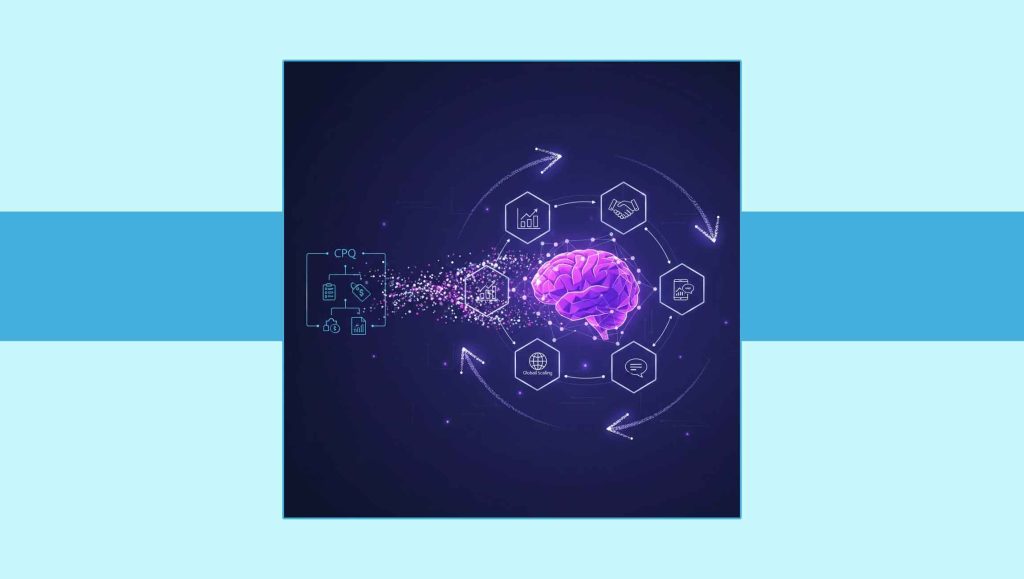
In the last ten years, enterprise selling has changed more than it did in the previous three years combined. What used to be a simple transaction based on price lists and standard quotes has turned into a complicated, multi-layered business journey. Deals now involve many people, changing prices, rules that must be followed, getting money approved, negotiating the law, and obligations that last the whole time the customer is with you. In this situation, you can’t just rely on CPQ anymore. Organizations are discovering that modern revenue execution requires Salestech beyond CPQ.
As B2B and enterprise sales become more complicated, sales teams are no longer just setting up products and giving quotes. They are making business results happen. Before a deal is signed, it may involve procurement, finance, legal, operations, compliance, and customer success.
At every step, buyers want speed, openness, and personalization. Sellers, on the other hand, have to protect their margins, manage risk, and make sure customers have a good experience all at the same time. Traditional CPQ was made to make configuration and pricing easier, not to handle the intelligence and coordination that modern business ecosystems need. This is where the shift toward Salestech beyond CPQ becomes essential.
Sales teams have also added too many tools to their Salestech stacks at the same time. CPQ links to CRM, which links to CLM, billing systems, enablement platforms, revenue operations tools, and analytics layers. Every platform promises automation, but not many of them have the same brain. Intelligence is split up between systems that don’t understand each other.
Pricing logic is in one place, contract risk is in another, approvals are in another, and customer context is in a whole other place. This sprawl doesn’t make selling easier; it often makes it take longer. Teams spend more time figuring out how to use tools than they do closing deals. Without a unified approach based on Salestech beyond CPQ, the promise of automation turns into operational friction.
Another problem that isn’t obvious is automation without intelligence. A lot of sales workflows are automated, but they don’t work together. It’s easy to make quotes, but approvals take a long time. You can use templates for contracts, but negotiations still don’t make sense when it comes to prices. Billing can happen, but customers’ expectations are not in line with what they want. When automation doesn’t have a common context, it speeds up individual steps instead of making the whole process better. Parts of sales go quickly, but the whole system is slow. This is why many companies today are moving toward Salestech beyond CPQ, where intelligence controls not only how tasks are done but also how workflows interact.
Businesses don’t need more tools right now; they need operational systems. Salestech beyond CPQ means moving from platforms that are based on features to systems that are based on revenue execution. Companies are starting to see selling as a continuous, programmable workflow instead of separate tasks like pricing, quoting, contracts, and fulfillment. Intelligence moves from one stage to the next. Orchestration makes sure that decisions are made. Governance protects compliance and profit margins. Automation and human judgment work together, not against each other. Selling changes from a series of unrelated actions to an adaptive system.
Ultimately, Salestech beyond CPQ is about changing sales from automated transactions to operational intelligence. CPQ is still important, but it is now just one part of a much bigger business brain. As selling to businesses gets more complicated, the companies that will win will not be the ones with the fastest quoting tools. Instead, they will be the ones with the smartest systems that help them make every business decision from the first signal to the signed contract and beyond.
The Limits of Traditional Salestech Tools
Many businesses are finding that their current sales technology stacks are no longer useful as enterprise selling gets more complicated. CPQ, CRM, CLM, billing, and enablement platforms promised to make things easier, but they were made for a time when selling was easier.
In today’s business world, you need to be able to coordinate, think, and adapt in ways that go far beyond basic automation. This is why more and more leaders are looking into salestech beyond CPQ as a way to grow their business strategically instead of just getting new tools.
- CPQ: A Configuration Engine, Not a Commercial Brain
CPQ systems are great at what they were made to do: setting up products, figuring out prices, and making quotes. But configuration is just one part of selling to businesses. Margin protection, regulatory compliance, negotiation logic, cross-sell intelligence, lifecycle risk, and post-sale obligations are all parts of modern deals.
A traditional CPQ that is traditional is more like a calculator than a decision-maker. It can follow rules, but it can’t think about the whole business context. Companies are realizing that CPQ alone can’t be the commercial brain as selling becomes more consultative and complex. This limitation is a major reason why salestech beyond CPQ is moving. With salestech, intelligence makes decisions throughout the entire revenue lifecycle, not just during pricing and quoting.
- Fragmented Workflows Across the Revenue Chain
Another big problem with traditional Salestech is that it is broken up. CPQ is where pricing logic lives. CRM is where customer context lives. CLM is where legal terms are. Invoicing lives in billing. Renewals may live in customer success systems. Each platform operates with its own data model, workflows, and priorities.
This fragmentation breaks up the flow. A change in price may not show the risk of a contract. A change to the contract might not match up with revenue projections. A chance to renew may not take into account the original deal. Even when tools work together technically, they don’t often work together logically.
Because of this, sales teams switch between systems instead of working within one business flow. Execution slows down because every handoff adds time, work, and misalignment. This is exactly what salestech beyond CPQ wants to do: replace separate workflows with complete commercial systems.
- Data Silos Between Sales, Finance, Legal, and Operations
Sales no longer own enterprise selling. Every deal has to do with finance for margins, legal for risk, operations for fulfillment, and leadership for forecasting. But traditional Salestech stacks keep these tasks separate from each other by using different tools and rules.
Sales might try to make things go faster. Finance aims to maximize profit. Legal is all about protection. Operations work best when they are ready to deliver. Without shared intelligence, these goals conflict instead of converging.
Data silos make it impossible to coordinate in real time. Sales can’t see the risk of a contract early. Finance can’t change the logic behind pricing on the fly. Legal cannot embed policy into workflows. Instead of planning, the organization reacts.
This is where salestech beyond CPQ changes the way we think about selling from a sales-only toolkit to a cross-functional operating system.
Read More: SalesTechStar Interview with Matt Price, CEO of Crescendo
Why Feature-Rich Salestech Still Produces Slow Execution?
It’s funny that a lot of companies buy more features when things get complicated. Every vendor promises faster service by adding “AI,” automation, and analytics. Execution, on the other hand, often gets slower.
Why? Because features without architecture make it harder for people to think and do things. Each platform makes its own workflow better, but it doesn’t care about the system as a whole. Intelligence is duplicated. Conflicts in logic. Users have to manually reconcile outputs.
Feature sprawl doesn’t speed things up; it slows them down. Instead of closing deals, teams spend time figuring out how systems work.
The lesson is clear: velocity does not come from more tools, but from better systems. This insight drives the move toward salestech beyond CPQ, where orchestration takes the place of fragmentation.
The Difference Between Business Insight and Business Action
Most Salestech platforms are good at giving you information, like deal scores, risk flags, discount analysis, and pipeline forecasts. But just having insight doesn’t close deals.
The real difference is between knowing and doing. Dashboards show intelligence, but action still needs to be done by hand. Reps look over suggestions, managers give the go-ahead for changes, and operations re-enter data. By the time action happens, the opportunity has shifted.
This delay makes it harder to stay ahead of the competition. Modern selling needs smart people who can do more than just give information. That execution layer is the basis for salestech beyond CPQ, where insight and action work together as one system.
The Change from Tool-Based to System-Based Sales Technology
Businesses are changing the way they design sales technology as the flaws in traditional tools become clear. They aren’t just putting together stacks of features; they’re making systems that work together. This change shows that salestech is no longer just a product category, but also a strategic architecture that goes beyond CPQ.
Why Intelligence Must Flow Across the Revenue Lifecycle?
Selling is not a single event; it is a process that lasts a long time. It starts with interest, goes through pricing and negotiation, then contracts and fulfillment, and finally renewals and expansion. Intelligence must be present at every step of the deal.
In tool-based Salestech, intelligence starts over at each boundary. There is no longer any context between the lead, quote, contract, and invoice. Decisions are made on a local level instead of a global one.
System-based Salestech makes sure that intelligence stays. Pricing logic knows about the risks of contracts. Renewal models know how to discount things the first time. Forecasting understands operational constraints.
This constant flow of information is what makes salestech beyond CPQ work. It turns steps that aren’t connected into steps that are.
Systems vs Point Solutions in Modern Salestech
Point solutions make tasks better. Systems make results better.
A CPQ tool makes configuration better. A CLM tool makes managing documents easier. A billing tool makes invoicing better. But no one solution works best for the whole commercial journey.
System-based Salestech links these features through shared layers of orchestration, identity, and policy. Not isolated, but coordinated decisions. You can program workflows, but you can’t do them by hand.
This is why salestech beyond CPQ isn’t so much about replacing CPQ as it is about adding intelligence, orchestration, and governance layers around it to make selling an operating system.
How to Treat Selling Like an Operating System?
People used to think of selling as a job. It needs to be treated as infrastructure now. An operational system for selling puts logic, policy, risk, and economics into workflows. It makes sure that every deal automatically follows the strategic intent.
The system makes sure that things are always the same, instead of relying on people’s memories and hard work. You can program pricing discipline, compliance, and experience design.
This is the philosophical change that makes salestech beyond CPQ possible: selling is no longer just a series of actions, but a system that is managed.
The Rise of Orchestration Layers in Salestech Beyond CPQ
Orchestration is the most important part of this change. Orchestration layers link data, intelligence, and execution across different platforms.
They choose when to use pricing logic, when to get approvals, when to change terms, and when to raise the risk. Instead of letting tools work on their own, they send decisions through workflows.
Orchestration is like the brain of salestech beyond CPQ. It plans actions, makes sure policies are followed, and shares information about pricing, contracts, and fulfillment.
Linking Pricing, Quoting, Contracts, and Revenue Operations
The last step in evolution is convergence. Pricing, quoting, contracting, provisioning, billing, and revenue operations are no longer separate areas of work.
In system-based Salestech, these tasks share data and logic. Pricing knows what the revenue goals are. Contracts show how money works. Billing shows what was agreed upon. Forecasting shows what is really going on in operations.
This convergence is the promise of salestech beyond CPQ: turning sales execution into one smart business system. Instead of accelerating pieces of the journey, organizations accelerate the whole revenue engine. This is what makes tool-based automation different from system-based intelligence and why salestech beyond CPQ is becoming the standard for modern business sales.
Mapping Commercial Workflows End to End as a Single System from Lead to Renewal
Enterprise selling doesn’t happen in separate steps anymore. What starts as a marketing-qualified lead now goes through a never-ending business loop that includes discovery, solution design, pricing, approvals, contracting, provisioning, billing, expansion, and renewal. But most companies still do these steps in separate parts of their CRM, CPQ, CLM, finance, and operations platforms.
This fragmentation is exactly why salestech beyond CPQ is becoming a new way of doing business instead of just another set of tools.
In traditional stacks, sales is in charge of managing opportunities, finance is in charge of pricing logic, legal is in charge of contracts, and operations is in charge of fulfillment. The system doesn’t work well for everyone, even though each team does its best. There are delays between stages, context is lost when data is handed off, and risk goes up when data is copied instead of shared. Salestech beyond CPQ changes the way we think about selling by making it a single, end-to-end system where commercial intelligence flows from the first touch to long-term customer value.
Instead of thinking about “lead,” “quote,” or “invoice,” businesses start to think about “commercial state.” A deal doesn’t go from one tool to another; it grows through them. Mapping workflows from start to finish changes selling from a series of tasks into a programmable revenue lifecycle that can be seen, controlled, and improved.
Pricing Logic, Discount Management, Risk Assessment, and Approvals
It’s not just math anymore when it comes to pricing. Execution includes policy, risk management, competitive positioning, and protecting margins. But in a lot of businesses, pricing rules are kept in spreadsheets, approvals are sent via email, and the rules for discounts change depending on the region, product, and salesperson. This is where salestech goes from being administrative to being operational.
When workflows are set up correctly, pricing logic turns into a real system. Instead of working separately, margin thresholds, partner rules, regional compliance, customer tiering, and risk scoring all work together. Discount governance is no longer based on what has happened; it is based on what will happen. Before a quote is made, the system can check the deal’s health, exposure, and profitability.
Approvals stop being roadblocks and become smart checkpoints. Instead of sending quotes through strict hierarchies, the workflow sends decisions based on the size of the deal, the level of risk, the mix of products, and the customer’s profile. This orchestration lets sales teams work faster while still keeping the business safe.
By putting pricing intelligence right into execution, salestech beyond CPQ changes pricing from a configuration step to a strategic control layer that keeps growth, speed, and governance in check in real time.
Quote-to-Cash Orchestration and Lifecycle Visibility
Most business systems fail at the quote-to-cash stage. CPQ makes the quote, CLM works out the details of the contract, ERP sends the bill to the customer, and operations carry out the service. Each platform only sees a part of reality. No one owns the whole lifecycle.
With salestech beyond CPQ, quote-to-cash works together instead of being put together. The deal has its own intelligence for quoting, contracting, provisioning, billing, and renewing. The company doesn’t see revenue as a series of transactions; instead, it sees it as a continuous commercial state machine.
The real difference is lifecycle visibility. Leaders can tell where deals get stuck, where margins drop, where risk builds up, and where customers stop paying attention. This visibility lets businesses improve their execution instead of having to deal with problems after they happen.
Orchestration also lets you automate things with context. Provisioning can start before contracts are signed. Billing logic can change depending on the terms that were agreed upon. Usage, signs of growth, and business history can all help with renewals. Salestech beyond CPQ turns quote-to-cash into a living revenue engine instead of a series of steps that don’t connect.
How Workflow Mapping Shows Problems in Salestech That Aren’t Obvious?
Most of the time, the problems in sales don’t show up until deals are late, margins drop, or customers leave. Workflow mapping shows what really caused the problem.
When businesses make a diagram of their entire commercial execution process, they find things like duplicate data entry, conflicting policies, manual approvals, shadow processes, and local workarounds. Salespeople skip systems, finance rewrites quotes, legal reinterprets terms, and operations rebuilds context that should already be there.
Salestech beyond CPQ by using workflow mapping as a way to find problems. It shows where intelligence stops working and where people make up for systems that don’t work. These friction points are not just technical; they are also architectural.
Leaders can see where automation should go, where people need to make decisions, and where rules need to be followed by making workflows clear. They don’t add more features; they change how execution works. That change turns salestech from tools for getting things done into parts of the business’s infrastructure.
Turning Sales Motions Into Programmable Processes
Selling used to be an art that needed tools. Now it is code that is backed up by intelligence.
Sales motions are no longer improvised; they can be programmed with salestech beyond CPQ. Discovery, pricing, negotiation, approvals, and renewals all work as structured flows with built-in intelligence and rules.
This doesn’t take away people’s creativity. It makes it stronger. Programmable processes get rid of low-value work, make sure things are done the same way every time, and make sure results are predictable. This lets sellers focus on relationships and strategy.
A programmable sales system changes in real time. The workflow changes automatically if the size, risk, or region of a deal changes. The system updates execution when compliance rules change. Pricing logic changes when the market changes. Salestech beyond CPQ makes selling strong, flexible, and always getting better.
Putting AI to Work in Salestech – From “Using AI” to “Running Sales on AI”
A lot of companies say they use AI in sales, but most of them just add models to broken processes. They score leads, suggest next steps, or create content, but the work is still done by hand and in pieces.
Salestech beyond CPQ changes how AI and sales work together. Instead of “using AI,” businesses start running sales on AI. Intelligence is built into the way things work, not just added on.
AI is no longer separate from the workflow. It is a part of pricing, approvals, negotiation, and contracts. It doesn’t just help with analysis; it also helps with execution. This change makes AI go from being a tool for getting ideas to being a tool for carrying them out.
When AI runs sales, it can understand context, risk, history, and policy all at the same time. Faster, smarter decisions are made with built-in governance.
Intelligence Inside Pricing, Deal Scoring, Approvals, Negotiation, and Contracts
True intelligence is not a dashboard. It is action. In salestech beyond CPQ, AI operates where decisions are made:
- Pricing engines look at margins, competition, and how customers act.
- Deal scoring models look at the risk, the chance of growth, and the chance of losing customers.
- Approval systems send work to different places in real time.
- Negotiation support suggests terms based on what has happened before and what the rules say.
- Contract intelligence makes sure that people follow the rules and speeds up the review process.
The system already has intelligence built in, so it doesn’t need to ask people to turn insight into action. That cuts down on the time it takes to think and do.
This makes a business system that is proactive instead of reactive. It sees problems coming before they happen and helps sellers get results that are good for both the customer and the company.
Context-Aware AI Instead of Generic Automation
Most automation doesn’t work because it doesn’t take context into account. Generic bots follow rules, but they don’t know what you want, what the risk is, or how to connect with you.
For salestech beyond CPQ, you need AI that knows what’s going on. That means models can take into account a customer’s past, the complexity of a product, regional policy, margin exposure, and strategic goals all at once. Not only does the system automate steps, but it also thinks about them.
For instance, discounting logic changes depending on how much a customer is worth over their lifetime. Approval paths change based on how unstable the deal is. The terms of a contract change depending on the jurisdiction and the mix of products. AI is not mechanical anymore. It depends on the situation.
This is how automation goes from being fast to being smart.
Human + AI Collaboration in Commercial Execution
Independent selling is the future of sales. It is smart to work together.
With salestech beyond CPQ, people still make decisions, but AI becomes the infrastructure for those decisions. Sellers make deals. Leaders make plans. AI makes sure that policies are followed, shows risks, and speeds up execution.
AI doesn’t replace salespeople; it makes things easier for them. It protects margins, speeds up cycles, and cuts down on operational drag so people can focus on making things better.
The result is not just automation for efficiency, but also augmentation for performance and trust.
Where Smartness Lives Inside Salestech Beyond CPQ Systems
Analytics tools are where intelligence lives in traditional stacks. In contemporary systems, intelligence resides within execution.
Intelligence is built into salestech beyond CPQ in:
- Pricing engines
- Workflow orchestration layers
- Contract governance systems
- Revenue operations platforms
- Renewal and expansion logic
It becomes a service that everyone in the revenue organization can use. Instead of using different tools, sales, finance, legal, and operations all work on the same intelligence substrate. That is the big change. Salestech changes from the software you use to the infrastructure that runs your business.
Why This Shift Redefines Enterprise Selling?
Putting AI into workflows from start to finish is not the same as optimization. It is a change.
Salestech beyond CPQ helps companies move from selling things to using operational intelligence. Deals go through, information moves, governance gets stronger, and people work with systems instead of against them.
Companies that accept this change don’t just sell more quickly. They sell in a smarter, safer, and larger way. They use programmable execution instead of fragmented motion and intelligent systems instead of isolated tools.
In the next phase of business commerce, superior features will not confer a competitive edge. It will come from systems that work better. And salestech beyond CPQ is the plan for making smart, strong, and scalable revenue infrastructure out of business processes.
Salestech Beyond CPQ: Making Enterprise Selling Smarter with Technology
Why CPQ Isn’t Enough Anymore?
For a long time, Configure-Price-Quote (CPQ) platforms were the most important tools for businesses to sell. They helped sales teams put together products, figure out prices, and make quotes faster than spreadsheets could ever do. But the way people sell things has changed. Prices are no longer fixed, deals are no longer linear, and execution is no longer limited to one department.
The business journey today includes marketing, sales, finance, the law, operations, and customer success. Customers want things to be personalized, fast, and consistent across all channels. Businesses, on the other hand, have to find a balance between margin, compliance, and risk at scale. In this situation, CPQ by itself is just a small part of a bigger problem that needs to be solved.
That’s why businesses are now moving toward salestech beyond CPQ. This approach sees selling not as a set of tools, but as a smart, organized operating system. Businesses are redesigning the whole revenue lifecycle as a connected, governed, and adaptable system instead of just looking at quotes in isolation.
The Growing Difficulty of Selling to Businesses
Product catalogs and negotiated prices used to be the main parts of enterprise sales. It has to do with ecosystems these days. Buyers look at solutions on digital channels, with partners, in marketplaces, and through long-term service agreements. A single deal could include subscriptions, usage-based pricing, services, renewals, cross-selling, and compliance obligations in different areas.
At the same time, different teams inside the company have different priorities. Sales wants things to move quickly. Finance keeps the margin safe. Law enforces policy. Operations makes sure that things are delivered. Customer success is all about keeping customers. When these functions work on systems that aren’t connected, there will always be problems.
This complexity shows how traditional stacks can’t keep up. Even platforms with a lot of features have trouble because they focus on improving local steps instead of the whole commercial system. Salestech beyond CPQ is a response to this truth: selling needs to be planned from start to finish, not just improved in parts.
The Drawbacks of Tool-Based Salestech
Most companies still put together salestech like a toolkit: they use CRM to find leads, CPQ to make quotes, CLM to make contracts, ERP to bill, and enablement tools to make content. Each tool is strong on its own, but working with them is slow and unreliable.
The problem isn’t that features are missing; it’s that architecture is missing. There are copies of the data. Policies are given a new meaning. Email is how approvals get through. The context is lost between stages. A change in price in one system may not show up in another.
Because of this, sales teams work harder instead of smarter. Leaders can see reports, but they can’t see what’s going on in the field. There is automation, but intelligence doesn’t flow. This is why salestech beyond CPQ is more about designing systems that let intelligence travel with the deal from the first contact to the renewal, rather than adding tools.
From Transactions to Commercial Systems
Selling is no longer a deal. It is a life cycle. A lead turns into an opportunity. A chance turns into a proposal. A proposal turns into a contract. A service becomes a contract. A service turns into a relationship. Stacks that are traditional treat each step as its own thing. Modern businesses see them as changes in the state of one business system that happen all the time.
Companies use salestech beyond CPQ to map out selling as a programmable workflow. Pricing logic, risk assessment, approvals, contract terms, provisioning, billing, and renewal are all now connected activities. They work together in one execution layer. This change in leadership behavior. Instead of asking, “How fast can we quote?” leaders ask, “How smart is our revenue system?” Architecture, not heroics, makes speed happen.
- Orchestration as the Brain of Modern Selling
Orchestration is at the heart of modern salestech. Orchestration is the control plane that links data, models, rules, and activation throughout the revenue lifecycle. Orchestration routes don’t force deals through fixed stages; instead, they change based on the situation. In real time, deal size, region, margin exposure, customer history, compliance rules, and product mix all have an effect on execution.
For instance, a low-risk renewal might automatically be approved and provided right away. A complicated business deal might lead to more in-depth pricing analysis, a legal review, and more visibility for executives. This is not automating workflows; it is operational intelligence.
In salestech beyond CPQ, orchestration replaces fixed pipelines with flexible systems that manage decisions about pricing, contracts, fulfillment, and revenue operations.
- Pricing, Governance, and Risk as Built-in Intelligence
Pricing isn’t just math anymore. It is the government. Policies for discounts, regional rules, partner rules, customer tiers, and margin thresholds all need to work together. A lot of companies keep these rules in different places, like documents, spreadsheets, and tribal knowledge. Execution becomes risky and unreliable.
With salestech beyond CPQ, pricing intelligence becomes a part of everyday tasks. Before making a quote, the system checks for compliance, profitability, and risk. Approvals are no longer manual escalations; they are smart checkpoints.
Governance speeds up deals by making things clear instead of slowing them down. Sales teams have more freedom within safe limits, and leaders feel more sure that growth won’t mean giving up control.
- Quote-to-Cash as a Constant Engine
Most of the money that gets lost happens between the quote and the cash. CPQ makes the quote, CLM works out the details, ERP sends the bill, and operations carries out the order. Every system sees a part of reality.
In a system-first model, quote-to-cash becomes organized. The deal includes intelligence for quoting, contracting, provisioning, billing, and renewing. Terms that are agreed upon in contracts automatically change how billing works. Usage guides offer for expansion. Renewal logic is based on past business events.
This is the operational promise of salestech beyond CPQ: revenue is no longer processed; it is managed as a living engine. Visibility goes up, latency goes down, and customers get a seamless experience instead of handoffs.
- Embedding AI Into Salestech Operations
Many businesses “use AI” to make sales. Not many people sell AI. Most deployments are focused on scoring leads or making content, but the work is still done by hand. When intelligence is built into operations like pricing engines, approvals, negotiation workflows, contract review, and renewals, real change happens.
With salestech beyond CPQ, AI becomes the infrastructure for execution. Models check for risk when setting prices, suggest negotiation terms based on past deals, route approvals in real time, and keep an eye on compliance in contracts.
The system works with intelligence already built in, so people don’t have to turn insight into action. This makes it easier to go from thinking to doing, and it turns AI into a source of income instead of just an analytics tool.
- Context-Aware Automation Instead of Generic Bots
When automation doesn’t take context into account, it doesn’t work. A bot that follows rules can move a task, but it can’t think about things like customer value, risk, or strategic intent.
Modern sales technology needs smart systems that know what’s going on. That means AI can understand a customer’s history, the structure of their margins, regional policy, and business goals all at the same time.
For instance, a request for a discount might be approved right away for a strategic account but put on hold for a low-margin deal. The workflow changes because intelligence is based on the situation, not on a general rule.
This is a key feature of salestech beyond CPQ: automation becomes flexible instead of rigid.
- Human and AI Collaboration in Selling
Selling on its own is not the future of sales. It is smart work together. People are still good at making relationships, negotiating, and making plans. AI becomes a policy enforcer, a risk analyzer, and a speed-up for execution. The system doesn’t replace sellers; it just makes things easier for them to do their jobs.
Sellers spend less time putting together quotes and more time adding value with salestech beyond CPQ. Leaders spend less time fixing problems and more time making systems work better. The result is not just efficiency, but also consistency, trust, and growth throughout the revenue organization.
Scaling Intelligence Across Regions and Teams
Selling to businesses is a global business. Policies change based on where you are, what industry you’re in, and who your customers are. Scaling gets messy when there isn’t architectural consistency.
System-first salestech lets federated execution work. Local teams work independently, but they share information with each other. Rules for pricing change based on where you are. Policies for compliance become part of workflows. Data lineage goes with the deal.
Scaling is no longer just about copying processes with salestech beyond CPQ. It’s about using intelligence as a shared service throughout the whole business.
Business Impact of a System-First Salestech Model
When selling becomes a system, things change a lot.
- Execution cycles get shorter because intelligence gets rid of handoffs.
- Governance built into operations lowers operational risk.
- Margins go up because prices are set in a way that makes sense.
- Customer experience gets better when journeys feel like they are going on without breaks.
Most importantly, companies stop responding to problems with sales and start designing how to make money. That is the strategic promise of salestech beyond CPQ.
How Does the Organization Look After CPQ?
In a modern revenue organization, sales tech is part of the infrastructure, not just a tool.
Marketing, sales, finance, legal, and operations all use the same business information. CMOs and CIOs work together. People who make money think in systems, not features. Platforms take the place of point solutions. Intelligence becomes a service layer for the whole business.
This is not an upgrade to the technology. It is a change in the way things work. Salestech beyond CPQ changes selling from a bunch of apps into a smart, manageable, and scalable business platform.
hence, the future of selling is architectural. Faster quotes alone won’t win the next generation of enterprise sales. Better systems will win it. As markets become more complicated, regulated, and digital-first, businesses need to stop thinking about how to make their tools work better and start thinking about how to build their systems. They need to plan their income the same way they plan their software: in parts, with rules, and with intelligence.
This change is shown by salestech beyond CPQ. It replaces doing transactions with operational intelligence. It puts AI into workflows. It makes commercial motion into systems that can be programmed.
In the future, the company with the smartest revenue infrastructure will have the edge over its competitors, not the one with the most features. And in that future, technology doesn’t just help with selling; it runs it.
Scaling Intelligence Across Teams and Regions
As businesses grow around the world, selling becomes much more difficult. Prices differ from one market to the next. Different countries have different rules. Different cultures have different expectations for buyers. The terms of contracts differ from one industry to the next. But most revenue organizations still use broken systems and workarounds that only work in certain places to handle this complexity.
Intelligence can’t live in silos if it wants to work at scale. It needs to move between teams, regions, and channels in a consistent and controlled way. This is where salestech beyond CPQ. It is not only a sales platform, but also a revenue system that can be used anywhere in the world.
The Challenge of Multi-Region Commercial Execution
Businesses that operate around the world don’t sell the same way everywhere. The way prices work in North America is different from how they work in APAC or EMEA. Execution is affected by tax laws, rules about discounts, laws about data privacy, how to handle currency, and how to work with partners.
Without a system-level approach, companies deal with this complexity by hand. Local teams make changes to spreadsheets. Approval chains get longer. Policies change. What starts as flexibility in the region quickly turns into operational chaos.
Salestech beyond CPQ changes the way we think about this problem. Instead of copying processes from one region to another, businesses put intelligence into their workflows. Prices change based on where you are. Enforcement of compliance happens automatically. The rules for negotiation change all the time, depending on the market. Architectural intelligence, not human memory, is what the global scale depends on now.
Localization of Logic and Governance in Salestech
Localization is more than just translating words. It is a translation of logic. In the past, global companies would set up one CPQ and then make endless changes to it for each region. Governance gets weaker over time because each market works in its own way. Risk goes up because no one can see how policies are different.
When salestech beyond CPQ, localization becomes a regular part of the process. Governance rules can be changed. Instead of being hardcoded, pricing rules, approval thresholds, tax handling, and contract clauses are set up as parameters. Local teams have the freedom to make their own decisions, but they must stay within the same global limits.
This method makes sure that regional speed doesn’t get in the way of global control. Businesses can be more flexible without losing margin, compliance, or brand integrity.
Multi-Region Pricing and Negotiation Complexity
One of the most important parts of selling around the world is pricing. Exchange rates, competition, channel partners, the size of the customer, and legal limits all affect how prices are set.
Because systems can’t figure out these variables, sellers have to negotiate by hand in a lot of businesses. The outcome is margins that are not consistent, approvals that take longer, and a higher risk of not following the rules.
Salestech beyond CPQ by adding pricing intelligence to execution. The system checks profitability, regional policy, customer tier, and risk in real time. Advice on how to negotiate is specific to the situation, not general.
The platform makes decisions in real time instead of sellers having to guess what is acceptable. Pricing discipline can grow because intelligence takes the place of tribal knowledge.
Federated Intelligence Models for Selling to Businesses
A single monolithic model won’t work for global businesses. Markets act in different ways. Different products work in different ways. Customers buy in different ways. That’s why salestech beyond CPQ supports federated intelligence. Instead of putting all the logic in one place, businesses use shared intelligence layers that are specialized for each region.
Core policies, like margin thresholds, brand rules, and compliance standards, stay the same around the world. However, market-specific models change to fit each market. APAC may focus on growth, EMEA on compliance, and North America on expansion. But they all work within the same architectural framework.
This federation lets businesses grow their intelligence without losing its usefulness. Selling happens on a global and local level at the same time.
Reliability, Performance, and Resilience at Scale
As revenue systems get bigger, performance becomes important. Deals die when approvals take too long. When systems are slow to respond, it hurts the customer experience. Downtime stops money from coming in.
Traditional sales technology stacks were made to work, not to last. They have a hard time when there are a lot of transactions and execution is spread out.
Architecture puts reliability first when it comes to salestech beyond CPQ. Batch processes are no longer used; event-driven systems take their place. APIs make sure that pricing, contracts, billing, and fulfillment all work together. Intelligence works closer to the workflow instead of waiting for bottlenecks to happen in one place.
Resilience is no longer just good IT practice; it is now a way to protect revenue. Selling never stops, so the system needs to work all the time, everywhere, and in a predictable way.
Making Salestech Beyond CPQ Global-Ready
It’s not about putting tools everywhere that makes a company ready for the world. It’s about making selling a part of the infrastructure.
Companies need to think in layers, such as data fabric, identity management, policy engines, orchestration, AI services, and activation channels. Each area connects to the same intelligence core but can adapt to its own needs. With salestech beyond CPQ, growth becomes an architectural challenge instead of an operational firefight. New markets get intelligence instead of having to rebuild.
This turns scale from a cost center into a strategic advantage.
Business Impact: When Salestech Becomes an Intelligence Layer
When sales technology changes from tools to intelligence, it has a structural effect on the business, not a small one. Companies stop making tasks easier and start improving how much money they make.
- Faster deal cycles and less friction
In traditional settings, deals take longer because people have to move information between systems. Pricing is waiting for money. Contracts are on hold until they are legal. Operations wait for provisioning.
With salestech beyond CPQ, intelligence manages the execution. Approvals happen on their own. Risk is assessed in real time. Contracts get their pricing context from other contracts. Fulfillment is directly related to the structure of the deal.
The space between making a decision and carrying it out goes away. The speed of deals goes up not because people work faster, but because systems make things easier.
- Better Pricing Discipline and Margin Protection
Margin erosion is often hard to see until it’s too late. Discounts add up. There are more and more exceptions. Local practices don’t always follow the rules. When pricing intelligence is built in, discipline becomes proactive. The system keeps profits safe while still allowing for change.
Salestech beyond CPQ makes sure that pricing decisions are based on the situation, not on what has always been done. Businesses get consistency without making sales into red tape.
Margin is planned, not talked about.
- Improved Compliance and Risk Management
It’s no longer optional to follow the rules when selling. Data privacy, contract obligations, partner governance, and regulatory exposure all affect how revenue is made.
Manual enforcement doesn’t work on a large scale. Sellers get around controls. Systems become hard to audit. Execution hides risk.
When salestech beyond CPQ goes then governance becomes architectural. Policies are a part of workflows. Contracts automatically enforce rules. AI keeps an eye on how things are done. Audit trails follow the deal through all systems.
Risk management goes from being reactive to being proactive. Compliance is not just something that happens after the fact; it is now part of how selling works.
- Consistent Buyer Experience Across All Channels
People who buy from you don’t see your organizational chart; they see your system.
Customers feel like things are broken when marketing, sales, contracting, billing, and service all work on their own. Prices go up and down without warning. Terms are reset. The context is gone.
Beyond CPQ, salestech keeps things going. The intelligence that shapes the first interaction stays with the buyer throughout the quoting, contracting, onboarding, and renewal processes.
Being consistent builds trust. Trust leads to growth. Expansion increases lifetime value.
Making Salestech a tool for making money
The most important change is in how we think. Sales tech is no longer software that helps sales; it is now infrastructure that makes money. Instead of asking, “Which tools should we buy?” leaders should ask, “How does our revenue system work?”
With salestech beyond CPQ, companies can program pricing, negotiation, contracting, fulfillment, and renewal. Intelligence is no longer an extra layer; it is part of the execution itself.
Revenue is designed to grow and able to be controlled.
The Strategic Benefit of Selling First
Selling based on the system first changes how leaders act. Sales leaders don’t use escalation to manage performance; they use architecture. Policy papers don’t protect margin; intelligence does. Legal makes sure that people follow the rules through workflows, not just contracts. Operations works through orchestration, not handoffs.
Salestech beyond CPQ brings all departments together around a single commercial system.
The benefits go beyond quicker deals or higher margins. It is strategic control over how the business grows.
Intelligence as the New Sales Framework
Adding more people or tools to your sales team is no longer the way to scale. It is about making revenue operations smarter. As markets become more global and complicated, businesses that see selling as a system will do better than those that see it as a series of tasks.
This change is shown by salestech beyond CPQ. It changes execution into orchestration, pricing into intelligence, governance into architecture, and growth into infrastructure. The next generation of business sales will not be won by those who give the fastest quotes, but by those who have the smartest ways to make money.
Conclusion
It’s not how many tools a company uses that will decide the future of enterprise selling. It’s how well those tools work together. For years, companies spent a lot of money on platforms with a lot of features, thinking that automation would be enough to improve performance. But automation that isn’t coordinated just makes things more complicated. The new competitive edge comes from systems that work together to think, adapt, and do things. In this change, systems win, not tools. Sales teams that see technology as infrastructure instead of software can better control how money moves through the business.
CPQ is still an important part of the stack, but it can’t stand on its own anymore. Pricing, approvals, contracts, provisioning, billing, renewals, compliance, and customer experience across regions and channels are all parts of modern selling. When CPQ runs by itself, it stops being a business brain and becomes a configuration engine. This is why salestech beyond CPQ is important. It changes the way we think about selling by making quoting just one part of a much bigger intelligence network that controls how deals are made, approved, carried out, and grown over time.
Orchestration is at the heart of this change. Orchestration links data, rules, AI, and activation throughout the revenue lifecycle. Instead of people putting together workflows, systems do it in real time. Pricing logic starts the approval process. The language of a contract is based on risk assessment. Fulfillment automatically gets the context of the deal. Intelligence is no longer in dashboards; it’s in execution. The practical foundation of salestech beyond CPQ: the rise of intelligence layers that help make decisions all the time instead of just after the fact.
This means that leaders need to think about how businesses are built in a new way. Now the question isn’t which features to buy, but how to make money. Sales, finance, legal, and operations need to work together on shared systems instead of separate apps. Governance should be built in, not forced by hand. AI needs to work within workflows, not outside of them.
When leaders think of systems first, they stop managing deals and start managing the infrastructure that brings in money. That change determines whether scale makes things move or slows them down.
Beyond CPQ, the end goal for salestech is clear: it will become the operating system for revenue. Modern salestech coordinates pricing, intelligence, compliance, experience, and execution across the whole company, just like operating systems coordinate hardware, applications, and users.
It turns selling from a series of tasks into a programmable business engine. In that future, growth won’t come from heroic acts or manual workarounds. Instead, it will come from systems that can think, learn, and do things on a large scale. In the end, the companies that win aren’t the ones with better tools; they’re the ones with better revenue systems that use salestech beyond CPQ.
Read More: Salestech for Network-Led Growth: Turning Internal Relationships into Pipeline