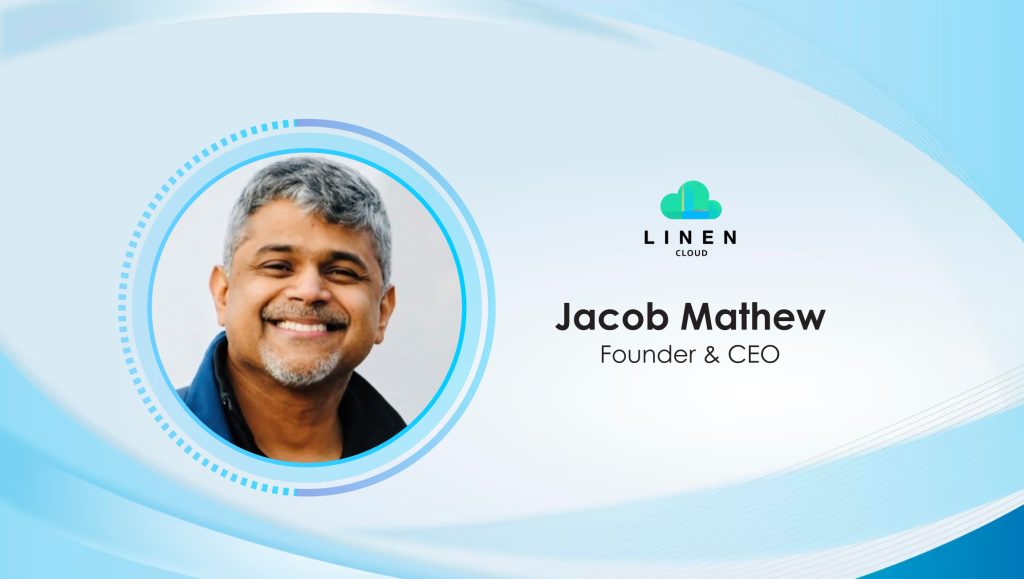
Are sales planning platforms becoming more integral to the salestech ecosystem today? Jacob Mathew, Founder & CEO of LINEN Cloud weighs in with his thoughts:
____________
Hi Jacob, tell us about your time in SaaS and more about LINEN Cloud?
I’ve spent most of my career in sales operations and finance planning roles across large, global enterprises. At Cisco, I supported a ~$50B business and saw the same challenge year after year: territory, quota, and capacity planning still relied heavily on spreadsheets and manual coordination, even within highly sophisticated organizations.
It wasn’t that people lacked talent or effort. The underlying systems and frameworks simply weren’t built for scale, transparency, or iteration. That gap became the foundation for LINEN Cloud: a platform designed to align people, territories, quotas, and compensation in one place, so planning is structured, traceable, and easier to adjust when the business shifts.
What inspired LINEN Cloud and can you take us through your recent funding experience?
The idea came from lived experience. Planning across multiple tools, email threads, and offline logic slows decisions and makes it difficult to keep teams aligned. I wanted a system where planning is consistent and transparent, while still flexible enough to adapt as assumptions evolve.
Our latest funding round included CIOs and CTOs who have managed large-scale operational systems themselves. Their support reflects the value of solving real operational problems with measurable business impact rather than focusing on surface-level innovation.
How are sales planning platforms becoming more integral to the salestech stack today?
Planning has shifted from a once-a-year exercise to a continuous process. Territory, quota, and capacity decisions are now expected to integrate with CRM, finance, and compensation systems in near real time because GTM models, markets, roles, and products change faster than they used to.
Platforms that can connect planning and execution are becoming a foundational part of the stack. When planning lives in a structured system, teams can make decisions with clearer context, less rework, and fewer surprises downstream.
For sales teams today, what tips would you share as they look to optimize salestech use and investments?
Prioritize usefulness over volume and adopt tools that materially improve decision quality, along with activity tracking.
Go deeper on integration. Choose systems that stay connected to your CRM and compensation platforms every day.
Bring transparency into planning decisions because when people understand how territories or quotas were shaped, trust and adoption improve.
Measure confidence over metrics as usage data matters, but belief in the system matters more if you want consistency and accountability.
What about today’s salestech landscape most interests you?
There’s a growing emphasis on decision support that guides action. Many organizations have dashboards and reporting, and they are now advancing toward tools that provide clarity and enable confident decisions in moments of ambiguity or incomplete information.
I’m encouraged by products built by people with firsthand experience inside complex GTM and operational environments. That perspective leads to software that respects nuance and aligns with the realities of how organizations operate.
Can you talk about the latest AI-powered salestech that has piqued your interest?
AI is making meaningful progress in areas such as territory balancing, quota calibration, and capacity modelling, where small refinements can have a measurable downstream impact on revenue. The area I find most relevant is leaders needing to understand how recommendations were made, which data influenced them, and the trade-offs embedded.
Without that transparency, adoption slows, regardless of model quality.
Any closing thoughts for salestech innovators and sales teams before we wrap up?
Planning will always involve imperfect inputs, changing assumptions, and unexpected events. The goal isn’t to create a perfect plan, but to build a planning system that can adapt quickly, maintain alignment, and preserve fairness and clarity while things evolve.

LINEN Cloud’s no-code SaaS platform gives GTM and RevOps teams a unified system for headcount, territory, quota and compensation planning, streamlining what was once spreadsheet chaos into real-time alignment across CRM, ERP and comp systems. It’s built to help organizations plan faster, operate smarter and execute with confidence.
Jacob Mathew is Founder & CEO of LINEN Cloud, bringing 15+ years of sales operations and finance leadership at companies like Cisco to help enterprises build more innovative go-to-market planning. He drives a vision of planning that connects strategy to execution using no-code, AI-powered tools.