For over a decade, customer experience (CX) strategy has been propelled by incremental efficiency: shorter handle times, improved routing, and frictionless omnichannel integration. We’ve streamlined contact centers, invested in digital self‑service, and added chatbots and virtual assistants on top. But despite billions of dollars invested, the basic playbook hasn’t shifted: humans continue to bear most of the cognitive load, tools still respond to events instead of anticipating them, and AI is added as an afterthought instead of being built into the core operating model.
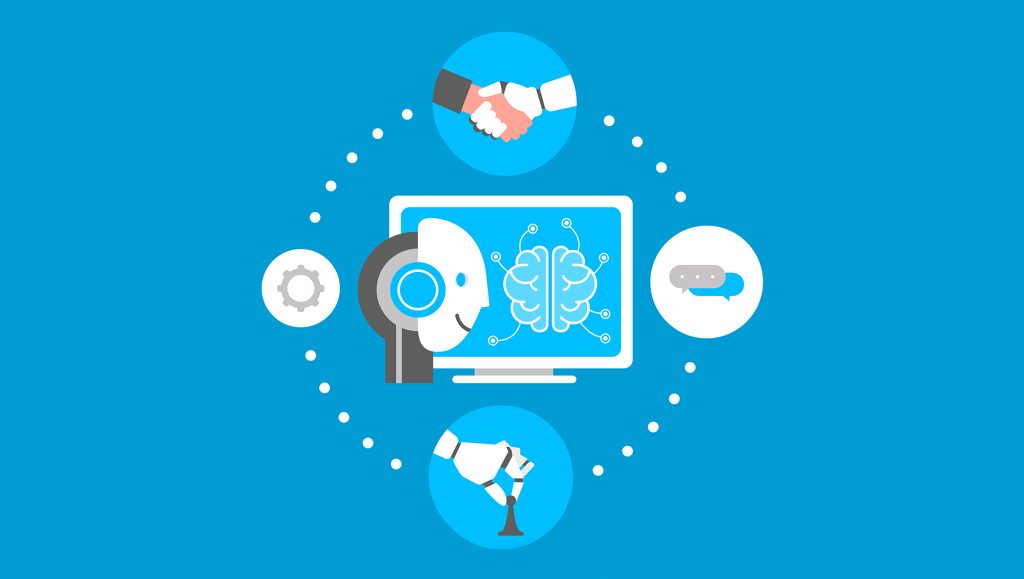
That period is coming to a close. Agentic AI — autonomous, context‑aware systems that can reason, act, and learn without perpetual human intervention — is silently taking apart the old playbook. And in contrast to the majority of the generative AI hype cycle of the last two years, agentic AI is already having quantifiable business influence in live customer environments.
This is not a chatbot story. It’s a story of how work itself gets done in CX.
The Myth of “Help”
The majority of enterprise AI so far has been built to aid human agents: listen, transcribe, summarize, and recommend. Helpful, but essentially reactive. It is optimizing the status quo without challenging the model.
Agentic AI turns the tables. It not only assists a human in getting a job done, but it can own that job from beginning to end, escalating only when human judgment is necessary. It pulls data, runs workflows, schedules follow-ups, and finalizes resolutions — all too often without a single human keystroke.
The distinction is crucial. Support accelerates the way you work today; autonomy enables entirely new operating models.
Read More: SalesTechStar Interview with Travis Rehl, CTO and Head of Product at Innovative Solutions
Why This Matters Now
The old model (highly human‑driven workflows assisted by static tools) is collapsing under modern pressures:
- Labor constraints make human‑only models impossible to scale. Contact centers still face recruitment and retention challenges, and the labor cost continues to rise.
- Customer demands for real-time, one-to-one service are now the norm. Anything less diminishes satisfaction and loyalty.
- Cost pressures punish inefficiency, especially in low-margin businesses where the expense of services directly eats into profitability.
Agentic AI takes in the cognitive and operational overhead. It doesn’t merely surface information; it acts on it. That translates to reduced time‑to‑resolution, increased speed‑to‑answer, and being able to operate 24/7 without burning out human personnel.
Notably, this doesn’t substitute for people. It liberates them. Humans remain best at dealing with the 10–20% of interactions that demand empathy, negotiation, or subtle judgment. Agentic AI does the rest, with customers receiving swift, consistent resolutions and human talent concentrated on where it actually makes a difference.
The Strategic Implication for Business Executives
To treat agentic AI as another tool in the CX stack is to miss the point. This is an architectural change. The sort that requires leaders to reimagine the foundations of service delivery.
Three consequences stand out:
-
Organizational Design Modifications
Roles, organizational design, and KPIs will shift. If AI can close a high volume independently, do you need as many tier‑one agents? Do you shift people into supporting the AI agents via complex “exception handling” roles, reviewing and improving AI agent performance, or proactive customer outreach?
-
Technology Investment Shifts
Legacy systems designed for human‑first workflows will bottleneck AI’s value. Leaders will need to re‑platform or re‑architect to allow AI to interact directly with core business systems, not just via awkward middleware.
-
Governance and Trust Take Center Stage
When AI is autonomous, decisions must all be explainable, measurable, and auditable. Governance frameworks must shift from “AI as a helper” to “AI as an accountable actor” with established escalation pathways and guardrails for compliance.
Those who use agentic AI as a tactical experiment will be outcompeted by those rivals that redesign their operations around it.
Pragmatic Adoption, Not Blind Automation
The temptation is to automate everything at once. That’s a mistake. The pragmatic path is:
- Start Small: Identify repeatable, high-volume, low-risk interactions where automation delivers near-term ROI. This creates early wins and sets organizational faith in the technology.
- Build in Guardrails: Autonomous does not mean unsupervised. Implement escalation procedures, audit trails, and performance metrics from day one.
- Continuously Optimize: AI must evolve with your company. Feed it new instructions, adjust workflows, and adapt based on real-world performance, not theoretical accuracy.
- Focus on Building Trust: The key with deploying AI successfully at scale is to focus on results, underpinned by accuracy as well as visibility into any mistakes. A handful of delightful human-sounding conversations make for a good demo, but precision and trust are the keys to business outcomes.
Responsibility is not just a matter of preventing errors. It’s about making AI reinforce customer trust. Each independent interaction is a brand moment; it needs to be as consistent and compassionate as a human‑driven one.
Signals From the Field
We’re already witnessing what occurs when companies adopt agentic AI at scale. In high‑volume customer settings, resolution times decrease by double‑digit percentages, first‑contact resolution enhances, and customer satisfaction increases — all while operational expenses go down.
Yet the strongest indicator is cultural: teams begin to view AI not as “the bot” but as a colleague. They architect workflows with the assumption that AI will take on most of the execution, with humans playing strategic and exception‑handling roles. The CX center of gravity moves from reactive manual firefighting to proactive service design.
Rewriting the Playbook
Agentic AI is not the future of CX. It is the present — just not uniformly distributed. Some early adopters are already transforming their operations, reshaping jobs, and measuring success differently. Others are in “wait and see” mode, layering agentic capabilities on top of legacy workflows and asking why the impact is limited.
The choice is stark: Incrementally enhance yesterday’s model, understanding that the gains will plateau very quickly or reconstruct for a human‑AI collaborative future, with autonomy as the default for routine work and humans concentrated on high‑value engagement.
The winners will be the ones who opt for the latter — not because it’s the fashionable thing to do, but because it’s the only viable way to address the scale, velocity, and personalization requirements of today’s customer experience.
The Bottom Line
Agentic AI is silently revolutionizing the CX playbook. The earlier leaders understand its strategic significance, the faster they can turn AI from an accessory to a fundamental operating capability — and unlock its full potential to drive efficiency, scale, and competitive advantage. The actual question is not if you will take it up. It is if you will design your business to succeed in a world where AI is not just supporting the work — it’s doing the work.
Read More: Why Pipeline-Driven Sales Will Dominate and Become the New Era of Sales Efficiencies