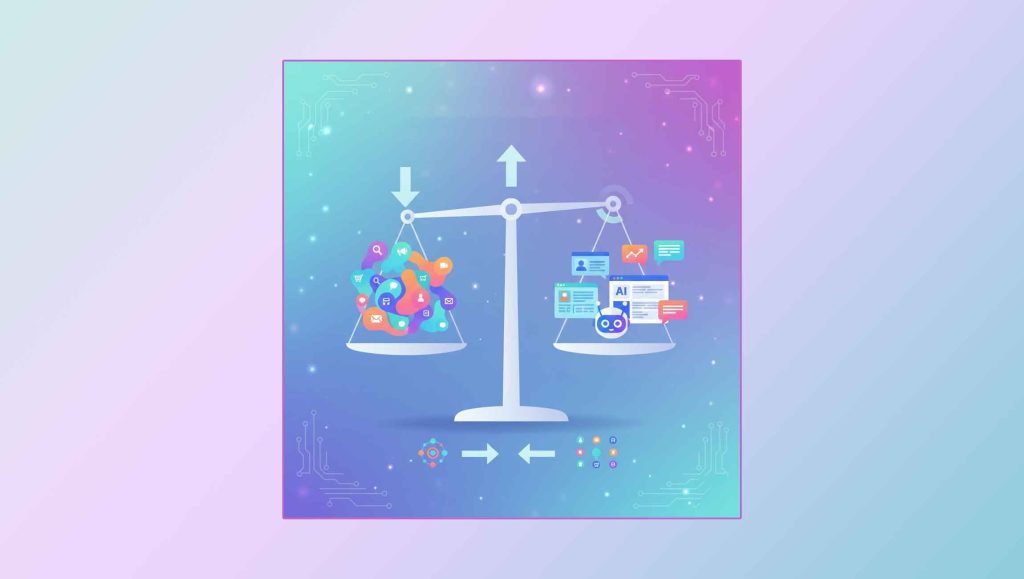
Sales teams have never had more technology at their disposal, but they spend more time managing their tools than closing deals. CRMs, dialers, forecasting engines, conversation intelligence platforms, and a million other plug-ins were supposed to make selling easier, but instead they’ve made it so that reps have to run the systems instead of make money.
Instead of focusing on leads and the sales pipeline, they are busy manually syncing, reconciling data across platforms, updating fields, changing workflows, and fixing mistakes that happen because tools are not working together. The gap between how complicated tools are and how productive they are at making sales is getting bigger. This is what led to the rise of the Autonomous sales stack, a new era in SalesTech.
SalesTech is a powerful system today, but it still needs people to help it work. You have to keep an eye on automations all the time, integrations can break without warning, and workflows depend on predefined triggers that don’t always work in real-time selling situations. Even the most advanced systems work in separate areas, which means that reps have to connect what one platform “knows” with what another “needs.”
As buyer journeys speed up and revenue teams are under pressure to respond quickly, accurately, and consistently, the flaws in this model are becoming clearer. Leaders are starting to realize that small steps toward automation aren’t enough anymore. This is why the Autonomous sales stack is becoming the next big thing in business.
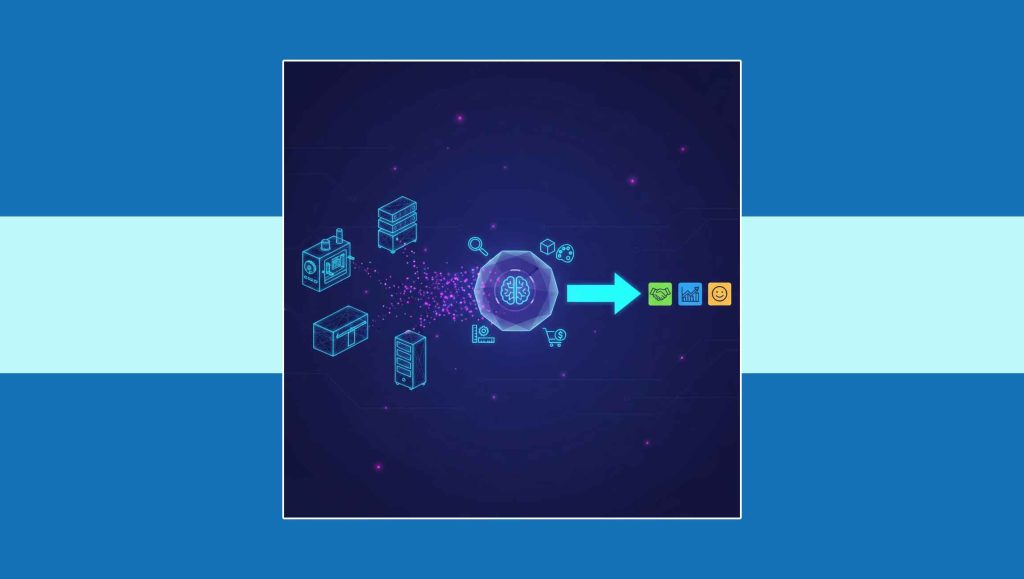
This change is a big deal: it means going from automation that is triggered by people to workflows that run on their own. AI-powered workflows can read signals, figure out what they mean, and take action across systems on their own. This means you don’t have to wait for a rep to update a field, send a follow-up, route a lead, or raise a risk.
These workflows do more than just automate tasks; they also make choices that used to need human judgment. The Autonomous sales stack doesn’t just follow rules; it also thinks, makes predictions, and changes in real time. This change is similar to what happened in the car world, where cruise control became self-driving cars. SalesTech is making the same jump.
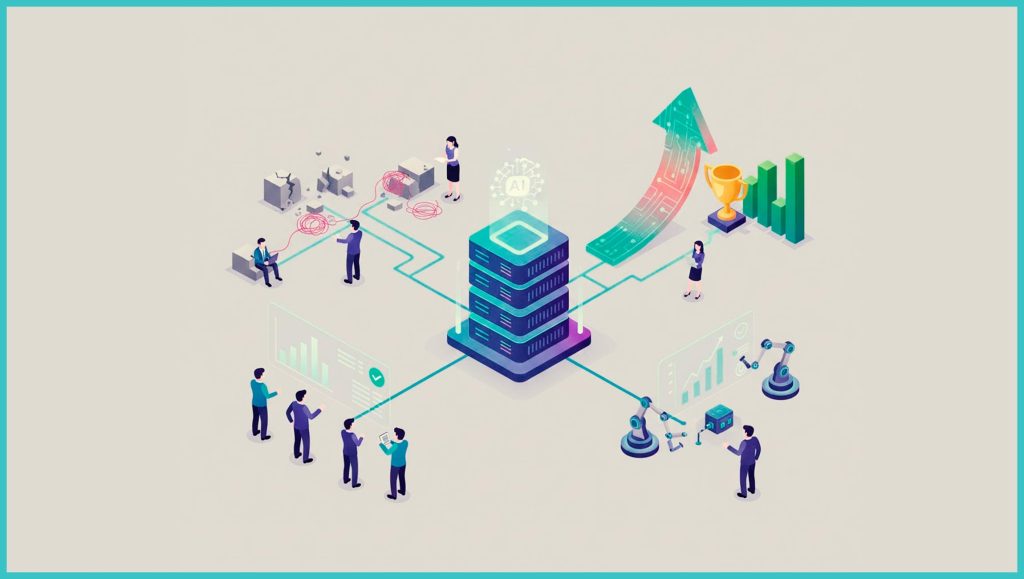
The thesis is simple but deep: the future of SalesTech isn’t more tools, dashboards, or automations; it’s self-driving sales workflows. Sales teams can spend more time building relationships, negotiating strategically, and coming up with creative solutions to problems when systems are smart enough to take care of the operational load. The Autonomous sales stack makes it so that the technology layer is less noticeable and works quietly and smartly in the background. Tools don’t change for sales reps; they change for the reps. The system handles processes from start to finish instead of RevOps having to do it all by hand.
The Autonomous sales stack promises more than just efficiency; it also promises independence. It shows a future where revenue teams work with more speed, less waste, and more accuracy than ever before. This is the start of a world where SalesTech doesn’t just help the seller; it also takes part in the selling process.
State of Play: SalesTech Stacks Are Strong, but Not All Together
In the last ten years, there has been a huge amount of new salestech. CRMs have become dynamic systems of record, conversation intelligence platforms have opened up insights that were previously hidden in call recordings, forecasting tools give accurate predictions of revenue, and intent-data systems help reps prioritize the right accounts. Along with these, revenue teams have seen a rise in enablement platforms, meeting intelligence, sales engagement tools, and AI copilots.
These tools are strong on their own. But when they work together, they often make an ecosystem that has a lot of potential but isn’t very cohesive.
Integration does not mean coordination.
Integrations are the building blocks of modern sales tech stacks. But just because tools are connected through APIs doesn’t mean they work together smartly. A CRM might sync notes from a conversation intelligence platform, but that doesn’t mean it will automatically change the forecast, update the deal strategy, or start the right workflow across all channels.
To put it another way, data changes, but choices don’t.
Most automations depend on fixed rules and triggers, which means that people have to constantly watch over, update, and fix them.
The Unseen Burden of Manual Oversight
Even though automation has come a long way, the salestech ecosystem still needs a lot of human help. Revenue operations teams spend a lot of time fixing sync problems, changing field mappings, changing workflow logic, and making sure that automations don’t conflict between systems.
Reps, on the other hand, are like “system operators” because they switch between dashboards, fix data errors, make sense of insights, and decide what to do.
Instead of making things easier, each new tool usually makes maintenance more difficult. Every new tool makes things more complicated. Adding more platforms to the stack makes it much more complicated. Each tool has its own data model, rules for setting it up, automations, and possible failure points.
Because of this, sales reps have to deal with:
- Tool overload
- Context switching
- Duplicate tasks
- Alert fatigue
- Conflicting insights
- Longer response times
Even when teams use the latest sales technology, the problems that come up in the course of business often cancel out the benefits.
Why Fragmentation Creates Revenue Leakage?
Customers have never had higher expectations. Customers want quick answers, personalized service, and smooth experiences. But fragmented systems cause delays and problems.
Some examples are:
- Intent signals are missed because they are on a different dashboard.
- Forecasts that are wrong because the data is old or not synced
- Missed follow-up steps because the automation rules were too strict or incomplete
These problems aren’t the rep’s fault; they’re caused by workflows that don’t connect and can’t understand context across the stack.
What Traditional Sales Automation Can’t Do?
Even though many solutions are well-established, traditional salestech has a limit:
- Integrations only link things together; they don’t coordinate them.
- Automations only do things; they don’t think.
- People still have to read signals and start actions in systems.
This leads to a “productivity tax,” where a lot of time spent selling is lost not because of talking to customers, but because of managing tools and reconciling data.
Why the Industry Needs a Different Way to Do Things?
Adding more automation isn’t the next big thing. It’s about making smart, self-directed systems that can talk to each other, share their reasoning, and act on their own.
The stack itself should be able to read signals, make decisions, and carry out end-to-end processes in real time, rather than relying on people to manage workflows.
In short, the future of salestech won’t be about more tools. Instead, it will be about autonomous workflows that turn a disjointed stack into a coordinated, self-running ecosystem.
The Next Evolution: Autonomous Workflows That Think, Link & Execute
For years, salestech has focused on small improvements like better CRM workflows, smarter alerts, faster sequencing tools, and AI-driven insights. But even with these improvements, most sales operations still use linear, rule-based automation. When a trigger goes off, an action happens, and the system stops until another rule is met.
This structure works well, but it doesn’t think for itself. It speeds up tasks, but it can’t understand context, guess what someone wants, or change when things change.
The next step is very different: it’s a shift from automation to autonomy, where the system doesn’t wait for people to tell it what to do; it does it on its own.
What Sets Autonomous Workflows Apart?
Autonomous workflows are a big step forward for salestech. These workflows don’t just follow simple if-this-then-that rules. They understand the context, look at signals across the revenue stack, and make decisions on the fly.
- They don’t just collect data; they use it to think.
- They don’t just start steps; they also connect systems in real time.
- They don’t just automate tasks; they also carry out plans.
This is the point at which workflows change from being reactive helpers to proactive operators.
What are Autonomous Workflows?
AI-powered autonomous workflows can:
- Find the next best thing to do based on how the deal or account is changing.
- Start the right processes on multiple platforms right away
- Make sure that CRM, engagement tools, forecasting platforms, and operations layers all work together with other AI systems.
- Adapt without having to be told to, and keep learning from what happens.
- Self-correct and self-validate to lower risk and get rid of the need for human oversight.
Autonomous workflows act like smart connectors, connecting all the parts of the salestech stack through reasoning instead of strict rules.
From Logic Based on Rules to Cognitive Orchestration
People have to define every step in traditional automation. Autonomous workflows get rid of this need. They look at signals like buyer activity, sentiment, intent, pipeline risk, product usage, or contract timelines and then figure out the best order of actions to take.
This change is very important. A rule-based workflow executes a plan. The plan is made by an autonomous workflow.
This means that you have to deal with fewer workflows, exceptions, and mistakes that happen because of missing data or human error.
Autonomous Workflows in the Real World
1. Dynamic Lead Prioritization
The workflow finds high-propensity buyers, adds information to the account, updates the CRM, starts outreach sequences, and changes messaging based on how buyers act, all without having to be told to.
2. Deal Health Stabilization
The system automatically reassigns tasks, escalates internally, or sends targeted content to re-engage decision-makers if a deal shows risk, such as stalled engagement, calls with less positive sentiment, or a lack of stakeholder alignment.
3. Forecast Reinforcement
Autonomous workflows notice changes in deal speed, pipeline cleanliness, or buyer activity. They then change forecast categories, let managers know, and make sure that all salestech tools are up to date.
Each example shows workflows that can think, connect, and carry out tasks in ways that traditional automation can’t.
Why Autonomous Workflows Are Important Right Now?
There are more data, signals, and operational layers than ever before because of the rise of salestech. People can’t connect every touchpoint or understand every insight by hand.
Autonomous workflows fix this by acting as real-time conductors:
- Getting rid of manual steps
- Cutting down on operational friction
- More time to sell
- Making customers more responsive
- Making sure that everything works the same on all platforms
- They turn disorganized stacks into coordinated ecosystems.
The Strategic Benefit
Sales leaders who use autonomous workflows go from having too many employees to having performance intelligence. Their businesses become faster, more flexible, and less dependent on people to coordinate things.
This is the future of salestech: a world where workflows not only automate tasks but also run revenue operations with intelligence and independence.
Understanding Autonomous Workflows in SalesTech: From Signal Collection to Signal Interpretation
In most companies today, salestech systems gather a lot of signals, like CRM updates, spikes in buyer intent, email interactions, call transcription insights, product usage activity, and pipeline movements. But these signals usually stay separate unless someone connects them by hand.
This changes the whole dynamic of autonomous workflows. AI doesn’t just record signals; it also interprets them in real time, putting together buyer behavior, rep actions, and other factors.
For instance, if a potential customer watches a video about prices, answers the phone positively, and asks for security documentation, an automated workflow sees this as a sign that the customer is ready to buy. It doesn’t wait for a rep to notice; it gets ready for the next steps right away.
AI That Reads the Entire Sales Environment
AI’s ability to read and connect signals from many platforms at once is what makes true autonomous workflows possible. These are some of the things that make up modern salestech ecosystems:
- CRMs for information about accounts and opportunities
- Tools for getting people involved and responding
- Conversation intelligence tools that record tone, mood, and objections
- Intent data platforms that show active research
- Forecasting tools detecting risk or momentum
AI looks at these signals as a whole instead of separately.
It knows that a CRM stage move with bad call sentiment is not the same as a CRM stage move with high email engagement. This understanding of context lets autonomous workflows make decisions that are similar to how people think, but they do it faster, more consistently, and without getting tired.
From Next Best Action to Automated Action Execution
The big step forward is when AI doesn’t just figure out what to do next; it actually does it. This is the point at which workflows go from being semi-automated to fully automated.
Some examples are:
- Automatically updating an opportunity when there are signs that someone is interested in buying
- When intent data spikes, start a custom email sequence
- Letting a rep know when a deal is at risk
- When SLA thresholds are missed, leads are given to someone else.
- Scoring patterns across channels to determine if a lead is qualified
In every instance, AI takes decisive action, bridging the gap between understanding and implementation.
Not Reactive, but Anticipatory
- Old systems wait.
- They wait for a rep to make changes to the CRM.
- They wait for a manager to see that the pipeline is breaking down.
- They wait for a person to put the pieces together.
Autonomous workflows change from reacting to things to being able to predict what will happen. They don’t wait for a problem or chance to happen; instead, they guess what will happen next and act before it does.
This anticipation changes the speed, accuracy, and customer experience of the whole revenue engine.
AI That Does Things Before Reps Have to
The biggest change is that AI doesn’t wait for a rep to start a task anymore. It starts tasks for the rep.
- It doesn’t say, “Would you like to send a follow-up?”
- It sends the follow-up.
- It doesn’t say, “Think about updating the deal stage.”
- It changes the stage of the deal.
- It doesn’t mark an account for review.
- It starts the review process and lets the right people know.
This is the basis for a self-driving sales organization, where salestech is more than just a way to help with operations; it also helps make money. Autonomous workflows make things easier, get rid of the need for manual oversight, and let sellers focus on what they do best: getting buyers interested and closing deals.
The Cost of Manually Linking in Sales Operations
Sales teams still have a lot of paperwork to do, even though sales technology is getting better. Reps spend hours every week, and sometimes every day, entering data, changing the stages of opportunities, logging activities, cleaning their pipeline, and manually routing leads. This isn’t just busy work; it’s time that could be spent selling and making money.
Studies show that reps still spend 30–40% of their time on administrative tasks, which means that almost half of their workweek is spent doing things that AI could do right away. When sellers have to manually compare data from CRMs, intent platforms, outreach tools, call intelligence systems, and forecasting dashboards, they lose momentum. Deals take longer to close not because buyers aren’t ready, but because the internal workings of GTM operations are too slow to keep up.
This is where old-fashioned salestech stops working. It gives information, but people still have to “connect the dots,” which creates bottlenecks that autonomous workflows are specifically designed to get rid of. People who keep an eye on things make mistakes, miss SLAs, and keep old records.
Linking by hand doesn’t just waste time; it also makes mistakes worse. Reps forget to change stages. Lead scores get old. Follow-ups get lost in the shuffle. Deadlines for SLAs get pushed back because no one sees signals in real time.
Even the best-trained teams will eventually miss important cues when they have to keep an eye on changes across many platforms. And every missed cue means money that could have been made is lost.
For instance:
- A lead with a lot of intent goes unnoticed for 48 hours.
- For three weeks, a deal stays stuck in the wrong stage.
- There is never a signal from product use that someone is at risk of leaving.
- A conversation intelligence insight never gets into the CRM.
These gaps aren’t because people didn’t try hard enough; they’re because the architecture is bad. Modern sales technology tools work in separate areas, so someone has to keep an eye on them to make sure that data flows, updates sync, and workflows start on time. Mistakes happen all the time, and each one causes friction that slows down revenue growth.
Operational Drag Across RevOps, Sales, and Marketing
Every second spent reconciling tools slows down the whole revenue engine. For sales to work, CRM data needs to be up to date. For marketing to work, engagement signals need to be correct. For RevOps to work, records need to be clean.
When tools don’t work together or when people act as the API between them, things get more complicated:
- Sales says that marketing sends leads that aren’t good enough.
- Sales updates stages, but RevOps forecasts don’t get new ones.
- Conversations with customers don’t match up with pipeline risks.
This mismatch is more than just a problem with the workflow. It’s a structural problem caused by broken salestech ecosystems that need people to keep them running.
The Hidden Cost: Latency and Inconsistency Cause Revenue Losses
The biggest cost of manual linking might not be obvious: money that slips through the cracks because of delays, inconsistencies, and missing information. Deals fall apart when insights come too late or actions depend on people to do them. Times to respond get longer. Opportunities are getting less and less. Signals for renewal go unnoticed.
What happened?
Millions in pipeline value evaporate quietly.
Autonomous workflows get rid of this delay by acting on signals right away, accurately, and without waiting for a rep to notice or a manager to step in. They close the operational gaps that manual processes leave behind, and in doing so, they open up levels of revenue efficiency that even the best salestech tools can’t reach on their own.
This is the true cost of manual linking: lost time, lost accuracy, and lost revenue. Autonomous workflows don’t just reduce the burden—they remove it entirely.
How AI Workflow Architecture Works?
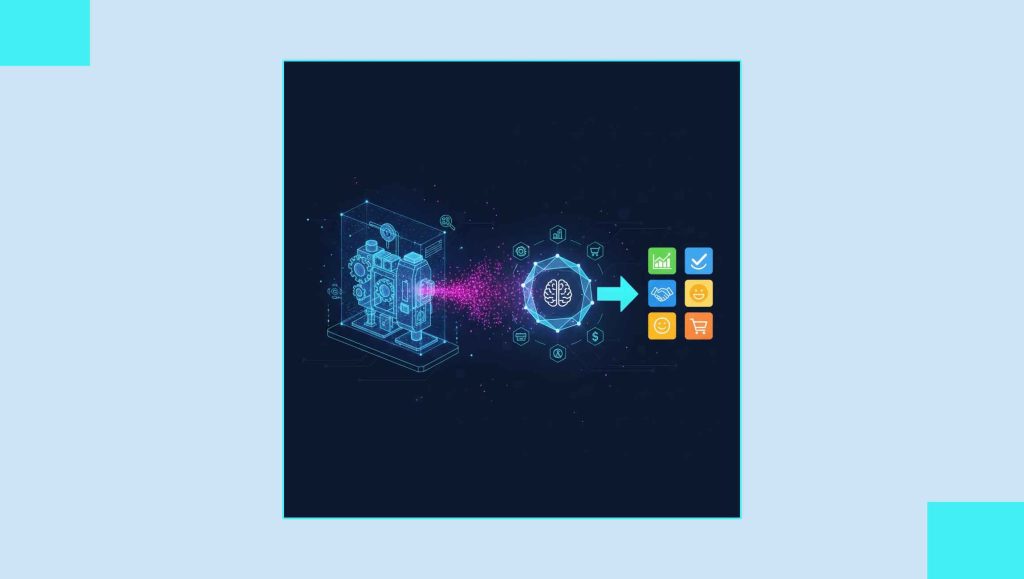
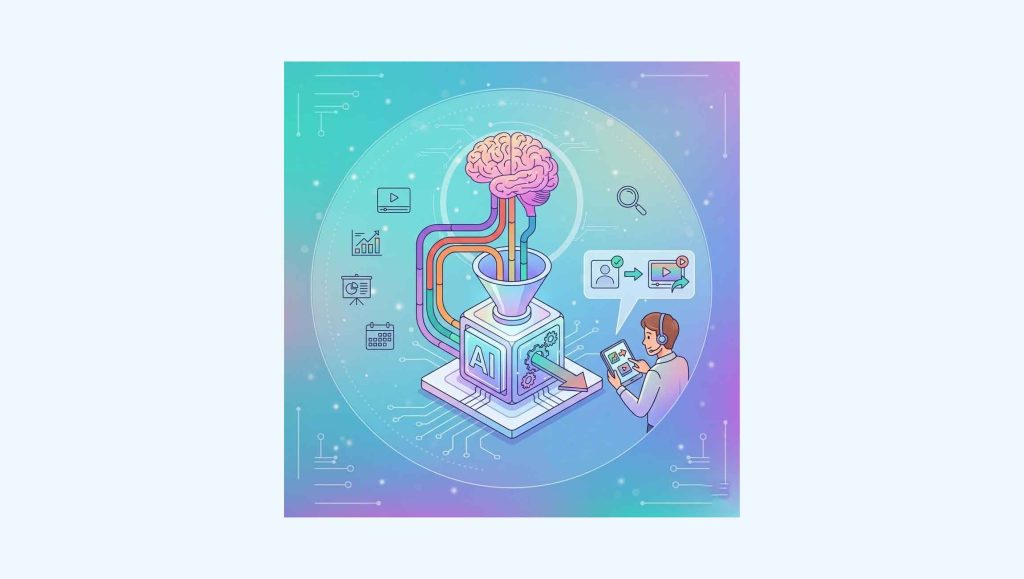
The rise of autonomous workflows is changing what modern sales technology can do. AI now takes care of everything, from collecting signals to understanding context to figuring out what to do next and carrying out actions across all the tools in the stack. This means that people no longer have to move data from one system to another.
We break the architecture down into five layers that work together to make an autonomous sales engine. This helps us understand how this change happens.
a) Layer 1: Collecting Signals
Every independent workflow starts with full, real-time signal capture. Traditional sales tech tools only collect data from their own platform, but an autonomous architecture brings together signals from all systems, such as:
- CRM updates
- Email engagement
- Call transcripts
- Product usage analytics
- Website intent behavior
- Calendar patterns
- Conversation intelligence outputs
- Support tickets and chat logs
AI takes in these signals as they happen, so it doesn’t have to wait for someone to enter them manually. This gets rid of lag, makes it so that people don’t have to update things, and makes sure that no insight is ever lost in the noise.
This signal mesh is what higher layers use to build context and help people make decisions.
b) Layer 2: The Context Graph
Just signals aren’t enough. AI needs to know what they mean. This is where the context graph comes in.
The context graph makes a living, changing picture of every buyer, deal, account, and interaction. It shows:
- What took place
- Why it matters
- How it changes the momentum of the pipeline
- What new risks or dependencies it brings
- What should happen next in a logical way
The graph doesn’t just show signals as separate events; it puts them together to tell a story about buyer intent and deal health.
This is where old salestech systems fail: they keep data but don’t make sense of it. Autonomous workflows, on the other hand, find connections between signals and turn them into meaning.
c) Layer 3: The Reasoning Engine
After establishing the context, the reasoning engine figures out the best next step.
This layer uses:
- Predictive models
- Pattern recognition
- Deal-health scoring
- Intelligent ranking
- Behavioral forecasting
Real-time reasoning models
The reasoning engine doesn’t have strict rules. Instead, it uses patterns from thousands of past interactions to figure out the best way to move forward.
Some examples are:
- Finding a deal that is in danger based on mood, silence, and a drop in stakeholder interest
- Figuring out which leads need to be routed right away
- Predicting movement based on how people use products
- Suggesting messages based on a person’s role, goal, and past success rates
This reasoning layer is different from earlier generations of salestech, which could start automations but couldn’t think strategically about timing, relevance, or buyer psychology.
d) Layer 4: The Autonomous Execution Layer
The execution layer carries out the next best action across all connected systems as soon as the reasoning engine figures it out, without waiting for a rep.
Things to do are:
- CRM updates
- Lead and account routing
- Sequence enrollment
- Calendar schedulin
- Deal-risk alerts
- Forecasting model adjustments
- Pipeline hygiene tasks
- Lead enrichment
- Stakeholder mapping
- Follow-ups based on conversation
This layer connects insight and action.
In the past, salestech needed people to turn insights into workflows. Now, autonomous execution does it automatically, so there is no delay and no missed chances.
e) Layer 5 — Human-in-the-Loop Oversight
Even in a self-driving architecture, people are still needed to set the direction and keep an eye on things.
Reps, managers, and RevOps teams can:
- Give the go-ahead for actions
- Override choices
- Improve workflows
- Make corrections based on the situation
- Give the models feedback to train them
- Add a human touch where it needs it.
People don’t do the work; they just watch it. AI takes care of monitoring, execution, and repetition, while teams work on building relationships, being creative, and making plans.
This new hybrid dynamic in salestech is the next step: operations that run on their own but are controlled by people in a strategic way.
In a world full of signals, autonomous workflow architecture makes things easier to understand. This layered system changes sales from a manual, tool-heavy field into one where processes run themselves, insights act right away, and teams work as quickly as possible.
Strategic Value for Sales Leaders
AI-driven automation is more than just an upgrade to how things work; it’s a big change for sales organizations. Sales leaders get a force multiplier that directly affects productivity, revenue, consistency, and scalability when autonomous workflows take over monitoring, updating, routing, and execution. As a result, the sales engine works faster, makes fewer mistakes, and gives results that are more predictable.
a) Productivity Surge: Reps Reclaim High-Value Hours
One of the best things about being a sales leader is that reps become much more productive. A seller’s day is mostly taken up by administrative tasks like updating their CRM, cleaning up their pipeline, taking notes, researching leads, and doing manual follow-ups. Reps get back hours every week by letting AI handle these tasks. They can then spend that time on actual sales activities.
This change greatly increases the amount of time reps spend actively selling, boosts their morale, and speeds up the closing of deals. Having less time to click through systems means having more time to make connections, qualify leads, and close deals.
b) Operational Consistency: AI Automatically Enforces Process Compliance
Every sales manager knows that even the best processes fall apart when people have to remember to follow them. AI fixes this by automatically making sure that processes are followed.
AI becomes the guardian of operational standards by updating deal stages, keeping track of activities, and making sure leads follow the right routing sequence. It fills in the gaps that are caused by reps not paying attention, being tired, or having trouble setting priorities.
Instead of telling reps to keep the CRM clean or follow certain steps, leaders can relax knowing that workflows run the same way every time, for every rep, and for every account.
c) Revenue Acceleration: Cleaner Data and Faster Interventions
When follow-up happens right away, pipeline data stays correct, and risk is found early, revenue naturally goes up. AI speeds up sales cycles by cutting down on the time it takes for things to happen:
- Leads are sent to the right place in seconds.
- Follow-up sequences start right away.
- Deal-risk signals make people act right away.
- Renewal and churn indicators never get lost.
Clean, up-to-date data also helps leaders make decisions faster and figure out where sales are growing, slowing down, or leaking. This level of speed and discipline leads to clear rises in retention and closed-won rates.
Real-time, AI-driven updates to the pipeline improve forecast accuracy.
For a long time, one of the hardest jobs for sales leaders has been making predictions. Incorrect deal stages, old notes, and missing activity logs can make it hard to see what’s really going on in the pipeline.
AI fixes this by constantly updating the pipeline. Every email, call, meeting, product action, and buyer signal is automatically added to the CRM. Leaders receive:
- Current health of the pipeline
- Alerts about risks right away
- Scoring based on behavior
- Correct predictions of what comes next
Forecasts become more dynamic, based on data, and less reliant on manual inputs.
d) Scalable Processes Without Scaling Headcount
When teams get bigger, manual sales operations grow in a straight line, but autonomous workflows grow in a curve. AI does the work of many operations staff, which lets teams grow without hiring a lot of new people.
This lets sales leaders add reps, expand their territories, and enter new markets without having to hire too many people in operations. The end result is a go-to-market engine that is smaller and works better.
e) Reduction of Tech Fatigue: AI Orchestrates the Stack
Sales teams today often use 8 to 12 tools at the same time, which can cause confusion, context switching, and burnout. AI takes care of this problem by coordinating actions across the whole stack. Instead of worrying about which tool to use, reps should focus on what needs to be done.
AI makes it easier for people to use tools by reducing tool fatigue. This makes it easier for sellers to do their jobs and makes the whole process more seamless.
Sales leaders can get a huge strategic edge with autonomous workflows. They can boost productivity, speed up revenue, make forecasts more accurate, and create a scalable, consistent operating model that drives long-term growth.
The Big Picture: Revenue Operations That Work on Their Own
As autonomous workflows get better in SalesTech, the effects go beyond just making sales more efficient. The change spreads to all parts of the revenue engine. Revenue Operations (RevOps) used to be in charge of putting together tools and keeping workflows running by hand.
Now, thanks to reasoning AI, autonomous execution, and continuous optimization, it is becoming a new field. The change is big: RevOps goes from managing workflows to understanding them.
a) From Workflow Management → to Workflow Intelligence
In the past, RevOps has been in charge of making sure that all the systems talk to each other, setting up rules, automating tasks, reconciling data, and making sure that everything runs smoothly. But even the smartest teams have had problems because of the limits of workflows that are started by people.
Autonomous systems get around these limits. AI reads signals throughout the entire revenue lifecycle, understands them in real time, and takes the right action without waiting for a person to change rules or start sequences.
RevOps doesn’t have to spend time keeping workflows running in this model; instead, they create the intelligence layer that controls them. The focus changes to:
- System-level optimization
- Signal interpretation
- Cross-functional coordination
- Predictive intervention
RevOps is no longer the safety net for operations; it is now the organization’s strategic nerve center.
A Coordinated AI Ecosystem Across Sales, CS & Marketing
For autonomous revenue operations to work, all go-to-market systems need to work together as one ecosystem instead of separate departments. Sales, customer success, and marketing all create a lot of data, but in the past, these data flows have not always been connected.
- AI becomes the glue that holds everything together with autonomous workflows.
- Sales actions are triggered by marketing intent.
- Sales interactions start the CS onboarding process.
- Usage signals for a product can lead to upselling or stopping customers from leaving.
- Support conversations help shape future marketing and sales plans.
The whole customer journey is in sync. AI keeps an eye on every touchpoint—acquisition, expansion, and renewal—and lets each team act with the same information. The revenue engine stops working as separate parts and starts working as one whole.
a) The Unified Revenue Graph: A Context That Moves You to Action
The unified revenue graph is the most important part of autonomous revenue operations. This graph links:
- Buyer signals
- Pipeline status
- Product usage
- Engagement history
- Risk indicators
- Territory and account context
- Renewal timelines
AI can figure out what happened, why it matters, and what needs to happen next by putting all of these signals into one contextual model.
This creates a real-time, always-on revenue engine where:
- No lead goes untouched
- No signal goes unprocessed
- No risk goes unnoticed
- No opportunity goes stale
The unified graph acts like a brain, making sure that every revenue signal leads to the right action downstream—right away, every time, and on its own.
b) Predictable Revenue Through Self-Regulating Systems
Because human-driven systems are inconsistent, revenue leadership has always had trouble making predictions. The quality of the data changes, the follow-up changes, and the workflows break.
These gaps go away with autonomous revenue operations. When workflows enforce themselves and the system updates itself, revenue becomes more stable.
- Predictions get more accurate.
- The pipeline gets cleaner.
- The risk of churn becomes clear sooner.
- Opportunities for growth come up on their own.
Systems that can control themselves make things stable. AI keeps the discipline that RevOps has always wanted, but it does it at a speed and consistency that people can’t match.
The next big thing is autonomous revenue operations, where information flows freely between systems, signals trigger coordinated action, and revenue becomes predictable because the systems that power it are consistent, adaptable, and self-sustaining.
Call to Action — Where Should Leaders Start?
The journey toward autonomous SalesTech doesn’t require a massive transformation on day one. It starts with being aware and willing to look at the hidden problems in your current stack.
Revenue leaders should examine their SalesTech ecosystem for four critical patterns:
1. Manual Handoffs
Where are humans moving data from one system to another?
Where do reps have to start sequences, change fields, or fix mistakes by hand?
These places are great for autonomous workflows.
2. Repeated “Human Glue” Tasks
If your team performs the same admin tasks over and over, AI can likely do them faster, more accurately, and at scale.
Find processes that seem to be the same, mechanical, or take a long time.
3. Latent Signals Not Triggering Actions
Intent data, product usage signals, email activity, call transcripts, and calendar updates are just a few examples of signals that often go unused.
Ask: Where are we collecting rich signals but not acting on them instantly?
This is where independence pays off right away.
4. Delays That Autonomy Could Eliminate
Where does pipeline slow down because a task waits for human intervention? Every delay is a revenue leak.
Every time you have to check something by hand, you can automate it. Start small. Start with a big impact.
Identify three workflows that would unlock immediate revenue value if they were automated from end to end. Some examples are:
- Lead routing
- Pipeline updates
- Sequence enrollment
- Renewal risk alerts
- Meeting scheduling
- Workflows for qualifications
Then ask the question that will change everything:
“What would happen if this workflow ran itself?”
This one question changes the whole future of your SalesTech plan.
It changes the way people think about automation from small steps to full independence.
And it shows how to create the kind of hidden intelligence that will shape the next era of revenue operations.
Leaders who embrace this change now won’t just work better; they’ll work ahead of the curve.
Final Thoughts
SalesTech’s future will see a shift from visible tools to invisible intelligence—systems that run revenue operations without needing constant human help. Sales teams have relied on reps, managers, and RevOps teams to patch up workflows, keep systems up to date, fix data that doesn’t match, and keep processes clean for years to make up for the fact that technology is so fragmented.
Even with a lot of automation, technology still needs people to set it off, watch over it, and fix it. But the next chapter of SalesTech changes this dynamic in a big way. Tools will finally start to manage themselves instead of people doing it. Invisible intelligence is what makes sales systems that read signals, reason across contexts, and act on their own across platforms possible.
This change opens up a level of speed, consistency, and accuracy that manual work can never match. Reps don’t spend hours on administrative tasks anymore; managers don’t have to chase down pipeline updates anymore; RevOps doesn’t have to deal with integration problems anymore; and leadership doesn’t have to deal with forecasts that are behind schedule or execution that isn’t consistent anymore. Sales teams get cleaner, faster, and more proactive—not because people work harder, but because the systems around them get smarter.
When autonomous workflows take over tasks that are repetitive, follow rules, and have strict deadlines, sales teams can focus on what makes them unique: building relationships, understanding customer nuance, coming up with winning strategies, and closing deals.
Latency drops, revenue loss is kept to a minimum, and operations move with the kind of real-time accuracy that was once impossible. Invisible intelligence makes sure that the right things happen at the right time, even when people are busy, offline, or not paying attention. It creates a new way of doing things where technology doesn’t wait for orders but works with the team to keep the pipeline moving.
More apps, dashboards, or integrations won’t determine the future of SalesTech. Instead, it will be systems that just work—quietly, intelligently, and on their own. Companies that embrace this change will have a long-lasting edge over their competitors. They will be able to work faster, better, and make more money at the speed that customers expect.